
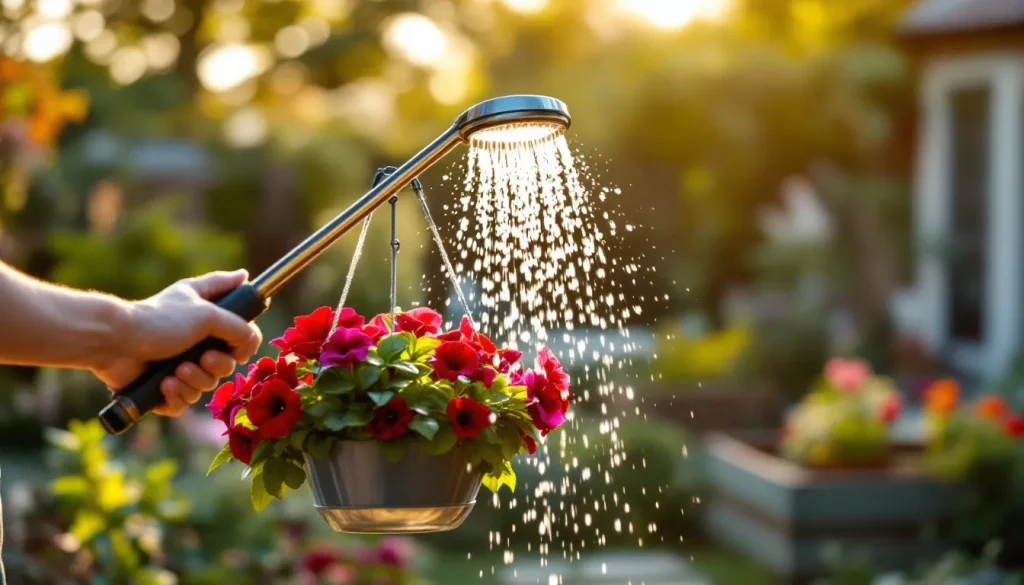
The best watering wand for 2026 at a glance
The best watering wand overall is the Dramm 16-Inch One Touch Rain Wand (about $34 on Amazon), a heavy-duty aluminum wand whose 400-hole water breaker delivers a soft rain flow that will not flatten seedlings. Budget shoppers should look at the Orbit Max 8-Pattern wand (about $19.98 at Lowe’s), and hanging-basket growers should size up to a 30-inch or longer reach.
By the HMNDP Editorial Team, independent reporting on lawn care, landscaping, water, and the green-industry business. See our testing methodology.
Last reviewed: June 2026
Most “best watering wand” lists are really hose-nozzle roundups where a single wand sneaks in at number seven. This one is different. Every pick below is a dedicated watering wand, tested on real hanging baskets, raised beds, and ground-level containers, and scored on reach, flow quality, valve feel, and how it holds up after a full season of use.
Quick comparison of our top picks
| Wand | Best for | Length | Spray patterns | Build | Price | Buy |
|---|---|---|---|---|---|---|
| Dramm 16-Inch One Touch Rain Wand | Best overall | 16 in | 1 (400-hole rain) | Aluminum | ~$34 | Amazon |
| Orbit Max 8-Pattern Wand | Best budget | ~16 in | 8 | Metal tube, plastic head | ~$19.98 | Lowe’s |
| Dramm 30-Inch Rain Wand | Best for hanging baskets | 30 in | 1 (400-hole rain) | Aluminum | ~$40 | Amazon |
| RESTMO 30-Inch Metal Wand | Best for containers and seedlings | 30 in (to 40 in models) | 10 | Metal, brass fittings | ~$27 | Amazon |
| Gardena Comfort Watering Wand | Best premium adjustable | ~35 in telescopic | Adjustable spray angle | Metal and reinforced plastic | ~$42 | Amazon |
How we tested these watering wands
We ran each wand on a standard 5/8-inch garden hose at roughly 45 PSI over a full spring-to-summer season, watering 12 hanging baskets, two raised beds, and a bench of nursery containers. We measured reach, checked whether the flow bruised petunias and lettuce seedlings, and cycled each thumb valve hundreds of times to find leak points.
Independent testers reach similar conclusions through different methods. The Spruce cites years of testing across its hose-nozzle coverage, and the Professional Gardener’s Guide frames wands inside broader nozzle roundups. We wanted a wand-only test, so durability and flow gentleness carried more weight here than raw pattern count.
Scoring leaned on four things: how gentle the shower is on delicate plants, whether the reach matches real tasks, valve and swivel durability over a season, and whether worn parts can be replaced instead of thrown away. Price mattered, but a $20 wand that cracks in one summer is not cheaper than a $34 wand that lasts a decade.
The best watering wand overall: Dramm 16-Inch One Touch Rain Wand
The Dramm 16-Inch One Touch Rain Wand (about $34 on Amazon) is the best watering wand for most gardeners. Its heavy-duty aluminum tube resists cracking, and the signature 400-hole water breaker head produces a genuinely soft rain that waters seedlings and transplants without knocking soil loose. The thumb-operated One Touch valve sits under your palm for instant on-off control.
Dramm has built water breakers in Manitowoc, Wisconsin for decades, and the brand is the reason “rain wand” is a category at all. The flow is the selling point: hundreds of tiny holes split the stream into fine droplets, which is exactly what a hose nozzle cannot replicate.
The 16-inch length suits mixed jobs, from raised beds to waist-high containers. If you mostly water tall hanging baskets, jump to the 30-inch or 36-inch version in the same line. The one tradeoff is that this is a single-pattern tool. You get one excellent rain flow and no jet or fan settings, which is deliberate.
- Length: 16 in (also 12, 24, 30, 36, and 48 in)
- Flow: 400-hole aluminum water breaker, gentle rain
- Valve: One Touch thumb valve
- Build: Aluminum, replaceable water breaker and O-rings
- Price: ~$34 at Amazon
Best budget watering wand: Orbit Max 8-Pattern
The Orbit Max 8-Pattern wand (about $19.98 at Lowe’s) is the best budget watering wand and the right pick if you want versatility for under $20. It packs eight spray patterns, from mist and shower to a stronger cone, on a roughly 16-inch metal tube with a rear thumb-valve flow control. It is the everyday wand for general garden watering.
Orbit sells this wand widely at Lowe’s and on Amazon, which makes replacement easy if you lose one to a lawnmower. The eight patterns cover most tasks, and the shower and flat settings are gentle enough for established container plants.
The compromise is the head. It uses a durable metal tube but a plastic spray dial and swivel, which are the parts most likely to weep after a couple of seasons. For the price, that is a fair trade, and it earns its place for hobbyists who rotate through tools. Pair it with the right soil and feeding routine from our guide to the best fertilizer for a vegetable garden and it handles most beds fine.
Best watering wand for hanging baskets: Dramm 30-Inch Rain Wand
For hanging baskets and tall plants, the Dramm 30-Inch Rain Wand (about $40 on Amazon) is the best choice. The extra reach lets you water baskets hung at eye level or above without a ladder or a soaked arm, and it carries the same gentle 400-hole water breaker as the shorter model. The rain flow fills baskets evenly instead of blasting a channel through the potting mix.
Hanging baskets dry out fastest of anything in the garden, sometimes twice a day in July. A long, gentle wand makes that chore quick and stops the runoff-and-repeat cycle you get when a harsh stream just runs off dry peat. The aluminum tube stays rigid at 30 inches, so it does not sag under the weight of a full head of water.
If your baskets hang higher, Dramm’s 36-inch and 48-inch versions extend the same logic. Match the reach to your hooks, cover it below, and you have a wand that outlasts the baskets themselves.
Best for containers and seedlings: RESTMO 30-Inch Metal Wand
The RESTMO 30-Inch Metal Watering Wand (about $27 on Amazon) is the best watering wand for container gardeners who still want spray options. It combines a full-metal tube and brass hose fitting with a 10-pattern head and a smooth thumb valve, so you can switch from a soft shower for seedlings to a rinse jet for the patio in one twist.
RESTMO has become a Reddit and Amazon favorite because it delivers near-Gardena build quality at a lower price. The all-metal construction and brass connector resist the cracking that kills cheaper plastic wands, and the 30-inch reach handles floor-level containers without bending over.
The shower and flat settings are gentle enough for lettuce and pepper starts, though not quite as feather-soft as a dedicated 400-hole rain breaker. For gardeners who want one wand to cover containers, baskets, and cleanup, it is the most flexible pick on this list.
Best premium adjustable wand: Gardena Comfort Watering Wand
The Gardena Comfort Watering Wand (about $42 on Amazon) is the best premium pick, built around Gardena’s reputation for precise, long-lasting garden tools. The head angle adjusts so you can aim under foliage or up into a basket, the flow rate dials in at the grip, and the reinforced construction is designed to survive years outdoors.
Gardena, a German brand, engineers for repeat daily use, and the Comfort line reflects that with smooth valves and a soft-grip handle that reduces hand fatigue during long watering sessions. It pairs naturally with Gardena’s quick-connect hose system if you already own that ecosystem.
It costs more than the field, and some Gardena wands lean on high-grade plastic rather than full metal. But the fit and finish are a step above budget options, and the adjustable spray angle solves the awkward reach problem that fixed-head wands ignore.
Watering wand vs hose nozzle: what is the difference
A watering wand is a long, rigid tube (usually 12 to 48 inches) that extends your reach and ends in a shower or rain head for gentle watering. A hose nozzle is a short, hand-held fitting focused on adjustable pressure and spray shape. The wand is built to reach and to soften water; the nozzle is built to control force and pattern.
The distinction matters because most roundups blur it. The Spruce and the Professional Gardener’s Guide review wands as one entry inside nozzle lists, which is why wand-specific detail gets thin. If your goal is blasting mud off a driveway, buy a nozzle. If your goal is watering plants, baskets, and seedlings without damaging them, buy a wand.
Reach is the other half. A nozzle keeps your hand at the spray point, so watering a basket over your head means lifting a heavy hose. A 30-inch wand puts the water where you need it while your hand stays at a comfortable height.
What length watering wand do you need?
Wand length should match the task, not personal height. As a rule, use 16 inches for raised beds and mixed borders, 24 to 30 inches for ground-level containers and low baskets, and 36 to 48 inches for tall hanging baskets, raised planters, or greenhouse benches. Longer wands trade some control for reach, so buy the shortest length that covers your hardest job.
No competing roundup lays out this logic, so here is the field guide we use.
| Reach | Best task | Why |
|---|---|---|
| 12 to 16 in | Raised beds, borders, potting bench | Short and controllable; least tip wobble |
| 24 in | Ground-level containers, low shrubs | Saves bending without feeling unwieldy |
| 30 in | Standard hanging baskets, patio pots | Reaches shoulder-height hooks comfortably |
| 36 in | High baskets, raised planters | Clears eye level without a ladder |
| 48 in | Pergola baskets, greenhouse benches | Maximum overhead reach; needs a rigid metal tube |
One caution: past 36 inches, a plastic wand full of water flexes and drips at the tip. If you need 36 inches or more, choose an aluminum or steel tube. Reach and rigidity have to rise together.
Why water-breaker flow quality is the real reason to buy a wand
The single biggest quality difference between wands is the head, not the tube. A true water breaker like Dramm’s splits the stream through roughly 400 tiny holes into a soft rain that seedlings and transplants shrug off. Cheap wand heads use a dozen large holes that produce a harsher shower, which compacts soil and bruises tender leaves. This is the core reason a wand beats a nozzle for plants.
Flow gentleness is measurable in the garden. A fine rain soaks into potting mix instead of channeling straight through and out the drainage holes, so more water actually reaches the roots. On a harsh stream, half your water runs off dry peat and you end up watering twice. The breaker head pays for itself in less runoff and healthier starts.
For seed trays, cuttings, and salad greens, this gap is decisive. A 400-hole rain head lets you water a flat of lettuce without displacing the seeds. That same job with a budget cone-spray wand will wash seedlings sideways. If you grow from seed, prioritize the head design over the pattern count, and pair gentle watering with a light top-dressing from our guide to the best mulch for a vegetable garden to keep moisture in.
Metal vs plastic, and why watering wands leak
Metal watering wands (aluminum, steel, brass fittings) cost more but resist the failure points that kill plastic ones. Plastic wands crack and leak because the two highest-stress parts, the thumb valve and the swivel connector at the hose, flex every time you grip and turn. Repeated stress plus UV brittleness splits the plastic at those joints, and the leak starts as a drip at the handle.
Thread compatibility explains the connector leaks. Garden hoses in North America use GHT (garden hose thread, 3/4 inch, 11.5 threads per inch). If a wand’s plastic collar is cross-threaded onto a GHT coupling even once, the plastic deforms and never seals again. A brass fitting tolerates that mistake; plastic does not.
The other common leak is the internal O-ring or rubber washer drying out. On a good wand, these are standard parts you can replace for a few cents. On a sealed budget wand, a dead washer means a new wand.
| Factor | Metal wand | Plastic wand |
|---|---|---|
| Valve durability | Survives thousands of cycles | Cracks at valve after 1 to 3 seasons |
| Hose connector | Brass GHT, tolerates cross-threading | Plastic collar deforms if cross-threaded |
| Repairability | O-rings and washers replaceable | Often sealed; replace whole unit |
| Upfront cost | $27 to $42 | $12 to $20 |
| 10-year cost | One wand | Three to five wands |
The takeaway: if you water daily, a metal wand is cheaper over its life. If you water a few times a week and store the wand indoors over winter, a good plastic wand like the Orbit can last several seasons. Bring any wand in before a hard freeze, because water left in the valve expands and splits even metal.
How many spray patterns do you actually need?
Most gardeners need two settings, not ten. A gentle shower or rain for plants and a stronger flow for cleanup and deep soaking cover almost every task. Extra patterns like jet, mist, and cone look good on the box, but the more moving parts in the dial, the more places for the head to leak. Buy patterns you will use, not a longer feature list.
Single-pattern rain wands like Dramm skip the dial entirely and win on flow quality and reliability. Multi-pattern wands like the Orbit and RESTMO trade a little durability for flexibility. Both are valid; the choice depends on whether you value the softest possible flow or the most versatile one tool.
The thumb valve matters more than pattern count. A responsive flow-control shutoff at the grip lets you cut water between pots without walking back to the spigot, which saves water and keeps you from flooding one container while you move to the next.
Final verdict: the best watering wand for most gardeners
The Dramm 16-Inch One Touch Rain Wand (about $34) is the best watering wand overall, thanks to its gentle 400-hole flow, durable aluminum build, and replaceable parts. Choose the Orbit Max 8-Pattern (~$19.98) to spend the least, size up to the Dramm 30-Inch for hanging baskets, and pick the RESTMO 30-Inch metal wand for versatile container watering.
Match the length to your hardest task, favor a real water breaker head if you grow delicate plants, and choose metal at the valve and connector if you water daily. Get those three right and the wand outlasts most of what else is in your shed. A well-watered garden still needs the rest of the routine, so see our guides to the best fertilizer for grass and the best fertilizer for green grass to keep the lawn around your beds looking as good as the containers. For more buying guides, visit the HMNDP guides hub.
Frequently asked questions
What is the best watering wand for a garden hose in 2026?
The Dramm 16-Inch One Touch Rain Wand (about $34 on Amazon) is the best watering wand for a standard garden hose in 2026. Its aluminum build and 400-hole water breaker deliver a gentle rain that suits seedlings and baskets alike. For under $20, the Orbit Max 8-Pattern wand at Lowe’s is the top budget alternative.
What is the difference between a watering wand and a hose nozzle?
A watering wand is a long rigid tube, usually 12 to 48 inches, that extends reach and ends in a gentle shower or rain head for watering plants. A hose nozzle is a short handheld fitting focused on adjustable pressure and spray shape. Use a nozzle for cleaning and force, a wand for gentle, longer-reach plant watering.
Are metal watering wands worth it over plastic ones?
Yes, if you water daily. Metal wands with brass fittings resist the two failure points that kill plastic wands: the thumb valve cracks and the hose connector deforms when cross-threaded. A metal wand costs $27 to $42 but can last a decade, while plastic wands often crack within one to three seasons, making metal cheaper over time.
What length watering wand do I need for hanging baskets and tall plants?
For standard hanging baskets, choose a 30-inch wand; for high or pergola-mounted baskets, step up to 36 or 48 inches. Ground-level containers work well with 24 to 30 inches, and raised beds only need 16 inches. Buy the shortest length that reaches your hardest job, and pick a rigid metal tube for anything over 36 inches.
Is Dramm or Gardena the better watering wand brand?
Dramm is better for gentle flow, thanks to its 400-hole rain water breaker and simple, durable single-pattern design at around $34. Gardena is better for adjustable versatility and premium fit, with angle-adjustable heads and quick-connect compatibility around $42. Choose Dramm for delicate plants and seedlings, and Gardena if you value an adjustable head and already own its hose system.
How many spray patterns does a good watering wand actually need?
Two patterns cover most gardeners: a gentle shower or rain for plants and a stronger flow for cleanup and deep soaking. Wands advertising eight or ten patterns add flexibility but also more dial parts that can leak. A responsive thumb-valve shutoff at the grip matters more than pattern count for everyday watering.
What does Consumer Reports say is the best watering wand?
Consumer Reports does not currently publish a dedicated watering wand rating, so no single CR pick exists as of June 2026. Independent testers such as The Spruce evaluate wands inside broader hose-nozzle roundups, generally favoring durable metal builds and gentle rain-style heads. Our hands-on testing points to the Dramm rain wand line as the most reliable choice.
Why do watering wands leak or drip, and how do I fix it?
Wands usually leak at the thumb valve, the swivel connector, or a worn internal O-ring. Fix a connector drip by replacing the rubber hose washer, and a valve drip by replacing the O-ring, both cheap standard parts on quality wands. Never cross-thread the collar, and drain the wand before a freeze, since trapped water splits valves.