
By the HMNDP Editorial Team, independent reporting on soil, lawn care, and the green industry.
Last reviewed: June 2026
What is soil pollution?
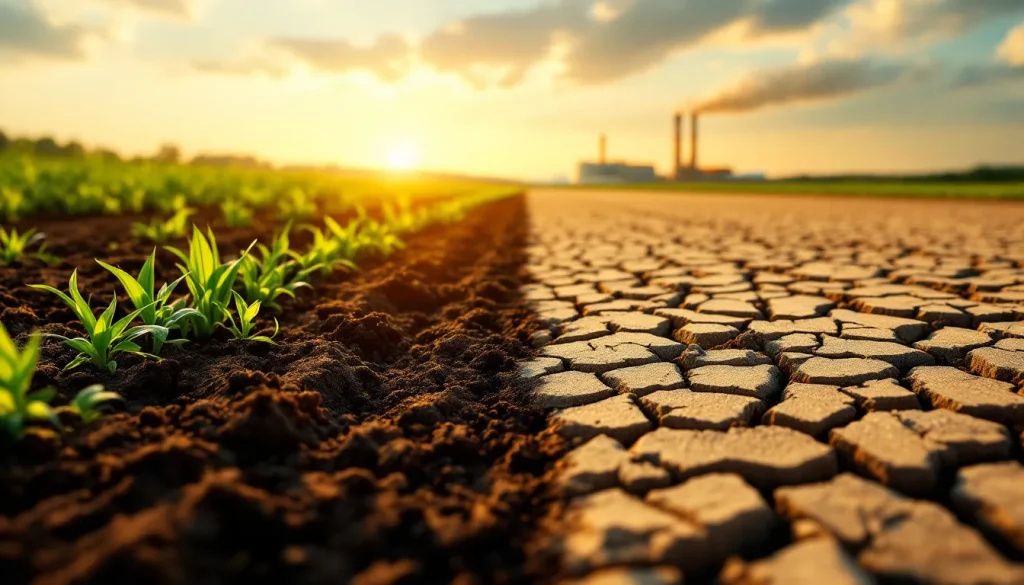
Soil pollution is the buildup of harmful chemicals, heavy metals, salts, plastics, or other toxic substances in soil at concentrations high enough to harm plants, animals, human health, or the wider environment. It is one form of land degradation, it sits alongside air and water pollution, and it is frequently called soil contamination when the concern is a specific hazardous substance in one defined location.
The three terms overlap but carry different emphasis. Soil pollution usually describes the broad problem of degraded, poisoned land. Soil contamination points to a measurable substance (say, lead above a legal threshold) at a specific site. Land pollution is the widest umbrella and includes surface damage such as litter, mining scars, and dumped waste that may or may not have soaked into the soil itself.
Healthy soil is a living system of minerals, water, air, organic matter, and billions of microbes per gram. Pollution disrupts that system. It can kill the microbes that recycle nutrients, bind toxic metals that later enter crops, and turn productive farmland into ground that grows less food each year. Understanding how different soil types behave helps explain why the same pollutant harms one field badly and another only slightly.
Natural versus human-caused soil pollution
Soil pollution is either naturally occurring or human-caused (anthropogenic). Natural contamination comes from the parent rock and normal earth processes, so some soils are high in arsenic, cadmium, or selenium with no human input. Human-caused pollution, the far larger share, comes from industry, farming, mining, and waste, and often introduces xenobiotic substances, meaning man-made chemicals that soil organisms never evolved to break down.
The distinction matters for cleanup. Naturally elevated metals are usually spread thinly across a region and are hard to remove, so management focuses on avoiding crops that absorb them. Human-caused pollution is often concentrated at identifiable sites (a former factory, a fuel spill, a dump), which makes the source easier to trace and the site easier to target for remediation.
Xenobiotic compounds are the hardest problem. Pesticides, industrial solvents, and PFAS “forever chemicals” can persist in soil for years or decades because no local microbe has the enzymes to digest them. That persistence is why a single spill can keep contaminating groundwater long after the original activity has stopped.
What causes soil pollution?
Soil pollution is caused mostly by human activity: industry, agriculture, waste disposal, mining, fuel and chemical spills, and atmospheric fallout such as acid rain. A smaller share is natural, from metal-rich bedrock. The sections below break down each major source, the pollutants it releases, and where you are most likely to find it.
Industrial activity and waste
Factories, smelters, tanneries, power plants, and chemical works release heavy metals, solvents, and persistent organic pollutants into nearby soil through spills, leaks, ash, and unlined waste pits. Decades of operation can leave contamination that stays in the ground long after a plant closes. Old industrial land, often called brownfield, is one of the most common sources of localized, high-concentration soil pollution.
The European Environment Agency estimates roughly 2.8 million sites across Europe are potentially contaminated, with industrial and commercial activity plus waste disposal as the leading causes. Many need assessment, and a large share still require active cleanup.
Agricultural chemicals: pesticides, fertilizers, and herbicides
Farming adds pollutants through pesticides, herbicides, and synthetic fertilizers applied year after year. Excess nitrogen and phosphorus from fertilizer acidify soil and wash into waterways. Some pesticides break down slowly and accumulate. Certain phosphate fertilizers also carry trace cadmium, a toxic metal that builds up in soil and can move into food crops over time.
Overuse is the core issue. Chemicals applied beyond what plants can take up do not vanish; they bind to soil particles, leach downward, or run off with rain. The fix is not zero inputs but matching inputs to actual plant need, a principle at the center of building healthy soil that stays productive.
Improper waste disposal, landfills, and plastic
Garbage, e-waste, and poorly managed landfills leak contaminants into soil. As buried waste breaks down it produces leachate, a toxic liquid carrying metals, chemicals, and pathogens that can seep into surrounding ground and groundwater. Plastic waste fragments into microplastics that are now found in agricultural soils worldwide and can alter soil structure and microbial life.
Electronic waste is a fast-growing concern. Informal recycling that burns or acid-strips circuit boards releases lead, mercury, and brominated flame retardants directly into the soil around the site, often in dense residential areas.
Erosion and loss of organic carbon
Soil degradation is not only about added toxins. Erosion strips away topsoil, and intensive tillage burns off soil organic carbon, the decomposed matter that holds nutrients and water. Losing that carbon weakens the soil’s ability to buffer pollutants, so contamination hits harder on already-degraded land. The FAO estimates about a third of the world’s soils are moderately to highly degraded.
Mining, oil spills, and heavy metals
Mining exposes and scatters heavy metals such as lead, arsenic, cadmium, and mercury, while oil and fuel spills coat soil in hydrocarbons that smother roots and microbes. These pollutants are dangerous because metals do not degrade. Once lead or arsenic is in the soil, it stays until it is physically removed or locked in place, which is why old mining regions can stay contaminated for a century or more.
Mercury from gold mining and coal ash is a particular hazard because soil microbes can convert it into methylmercury, a form that climbs the food chain and concentrates in fish and, eventually, people.
Acid rain and atmospheric deposition
Pollution does not have to be dumped on soil to reach it. Sulfur and nitrogen oxides from vehicles and power plants form acid rain that lowers soil pH, strips out nutrients, and frees up toxic aluminum. Airborne metal particles from smelters and traffic settle onto soil over wide areas, a process called atmospheric deposition that spreads contamination far beyond any single source.
Types of soil pollution
Soil pollution is usually grouped by where it happens: agricultural, industrial, and urban. Each type has a signature set of pollutants and sources. The table below compares them so students and homeowners can quickly identify which kind is most likely in a given place and what it is made of.
| Type | Main sources | Typical pollutants | Where you find it |
|---|---|---|---|
| Agricultural | Pesticides, herbicides, synthetic fertilizer, animal waste, irrigation salts | Nitrogen, phosphorus, cadmium, pesticide residues, salts | Farmland, orchards, market gardens |
| Industrial | Factories, smelters, mines, fuel and chemical spills, ash | Lead, arsenic, mercury, chromium, solvents, hydrocarbons, PFAS | Brownfields, mining regions, port and factory zones |
| Urban | Traffic, construction, landfills, littered plastic, old lead paint and pipes | Lead, zinc, microplastics, road salt, hydrocarbons, leachate | Cities, roadsides, vacant lots, former dumps |
Effects of soil pollution on human health
Soil pollution harms human health mainly through heavy-metal and chemical exposure: people breathe contaminated dust, eat crops grown in polluted soil, or drink water that the soil has poisoned. Long-term exposure is linked to cancer, cardiovascular disease, kidney and nervous-system damage, and developmental harm in children, who are the most vulnerable group.
Lead is the clearest example. There is no safe level of lead exposure, and soil-borne lead from old paint, leaded fuel, and industry lowers children’s IQ and damages the nervous system. Arsenic is a known human carcinogen. Cadmium accumulates in the kidneys, and mercury attacks the brain. Because these metals enter through food and dust, communities can be exposed for years without realizing the source is the ground beneath them.
The cardiovascular link has drawn recent attention. A 2022 review led by Thomas Münzel, published in Cardiovascular Research, argued that soil pollution from heavy metals, pesticides, and plastics is an underrecognized contributor to heart disease through oxidative stress and inflammation. It fits the broader picture from the 2022 Lancet Commission on Pollution and Health, which attributed about 9 million premature deaths a year to all pollution, with chemical and soil-related pollution a rising share.
Effects on the environment and crops
Soil pollution reduces crop yields, contaminates groundwater, kills soil life, and cuts biodiversity across whole ecosystems. Polluted soil grows less food and passes toxins into that food. It also loses fertility as the microbes that recycle nutrients die off, and it acts as a slow-release source that keeps feeding pollution into water and the food chain long after the original spill.
The water link is direct. Rain and irrigation carry soil pollutants downward into aquifers and sideways into rivers, so soil pollution and water pollution are two stages of one problem. A field contaminated with nitrates or pesticides becomes a source that steadily poisons the drinking water below it.
The food-chain effect compounds the harm. Plants take up metals such as cadmium and arsenic from soil, animals eat the plants, and each step up concentrates the toxin. This bioaccumulation means a low soil concentration can still deliver a dangerous dose to whatever, or whoever, sits at the top of the chain. Restoring damaged ground toward genuinely fertile soil is slow precisely because the pollutants keep cycling through living things.
How polluted soil gets cleaned up: remediation
Soil remediation is the process of removing, breaking down, or locking up pollutants so contaminated land becomes safe. The main approaches are biological (using living organisms), physical or chemical (digging out or treating soil), and containment (sealing pollutants in place). The right method depends on the pollutant, the site, the budget, and how fast a result is needed.
Two biological methods come up most often, and they are worth understanding beyond the buzzwords. Bioremediation uses bacteria and fungi to digest pollutants: microbes break oil, fuel, and many organic chemicals down into harmless compounds, sometimes helped along by adding oxygen or nutrients to feed them. Phytoremediation uses plants, some species (such as sunflowers, willows, and certain ferns) pull heavy metals up into their roots and shoots, which are then harvested and disposed of safely.
These green methods are cheaper and gentler than excavation, but they are slow, often taking several growing seasons, and they work best on shallow, moderate contamination. Severe or deep pollution usually needs faster physical or chemical treatment. The table compares the common options.
| Method | How it works | Best for | Trade-off |
|---|---|---|---|
| Bioremediation | Microbes digest pollutants into harmless compounds | Oil, fuel, many organic chemicals | Low cost, slow (months to years) |
| Phytoremediation | Plants absorb metals into roots and shoots, then harvested | Lead, cadmium, arsenic in shallow soil | Very low cost, slow, needs safe plant disposal |
| Excavation and disposal | Contaminated soil is dug out and hauled to a licensed site | Severe, concentrated contamination | Fast and certain, expensive, disruptive |
| Soil washing | Water and additives strip pollutants from soil particles | Metals and some organics | Effective, needs treatment of wash water |
| Stabilization (containment) | Binders lock pollutants in place so they cannot spread | Metals that cannot be removed cheaply | Cheaper than removal, pollutant stays on site |
How to prevent soil pollution
Preventing soil pollution is cheaper and more effective than cleaning it up. Prevention works at two levels: system-wide policy and industry practice, and everyday individual choices. Reducing chemical use, managing waste properly, recycling, and shifting to sustainable or regenerative farming address the biggest sources, while household actions keep many small contaminants out of the ground.
At the large scale, the strongest levers are matching fertilizer and pesticide use to real crop need, treating industrial waste before disposal, lining and monitoring landfills, and cutting emissions that cause acid rain. Regenerative and sustainable agriculture, using cover crops, reduced tillage, compost, and crop rotation, rebuilds soil carbon so land resists pollution and needs fewer chemicals in the first place.
Individual action gets left out of most explainers, but it adds up. Here is what a household can actually do:
- Test your soil before planting food, especially near old houses, painted structures, or busy roads where lead is common.
- Use fertilizers and pesticides only at labeled rates, or switch to compost and organic matter to feed soil naturally.
- Dispose of paint, motor oil, batteries, and electronics at proper collection points, never in the trash or on the ground.
- Cut single-use plastic and recycle correctly so less waste fragments into microplastics.
- Grow vegetables in raised beds with clean soil if you suspect contamination, and wash produce well.
- Keep soil covered with plants or mulch to prevent the erosion that spreads pollutants.
Heavier ground such as clay soils holds onto both nutrients and pollutants tightly, which changes how quickly contaminants move and how you manage them, so the same prevention step can behave differently depending on your soil.
Soil pollution by the numbers: a quick study aid
Most explainers stop at description. This summary pulls the key figures and the cause-effect-solution logic into one place you can screenshot, sketch into a diagram, or cite in an assignment. The figures come from the FAO and UN Environment Programme, the European Environment Agency, the WHO, and the Lancet Commission on Pollution and Health.
- Roughly one third of the world’s soils are moderately to highly degraded (FAO estimate).
- About 2.8 million sites in Europe are potentially contaminated (European Environment Agency).
- About 9 million premature deaths a year are linked to pollution overall, with chemical and soil pollution a growing share (Lancet Commission, 2022).
- No safe level of lead exposure exists, and soil is a major exposure route for children (WHO).
- The FAO and UNEP called soil pollution a “hidden reality” in their 2021 Global Assessment, warning that monitoring still lags far behind air and water.
| Cause | Main effect | Practical solution |
|---|---|---|
| Industrial waste and spills | Heavy-metal contamination, groundwater risk | Waste treatment, brownfield remediation, containment |
| Overused farm chemicals | Acidified soil, water pollution, cadmium buildup | Match inputs to need, regenerative farming, compost |
| Landfills and plastic | Leachate, microplastics in soil | Lined landfills, recycling, less single-use plastic |
| Mining and oil spills | Persistent metal and hydrocarbon pollution | Bioremediation, phytoremediation, site cleanup |
| Acid rain and fallout | Nutrient loss, wide-area contamination | Cut vehicle and power-plant emissions |
For deeper reporting on soil science and green-industry practice, the HMNDP research hub tracks the studies and data behind these numbers.
Frequently Asked Questions
What is soil pollution and how is it defined?
Soil pollution is the presence of harmful chemicals, heavy metals, plastics, or other toxic substances in soil at levels that damage plants, animals, human health, or the environment. It is a type of land degradation and sits alongside air and water pollution. When the focus is one measurable substance at a specific site, it is usually called soil contamination.
What are the main causes of soil pollution?
The main causes are human activities: industrial waste and spills, overused agricultural chemicals (pesticides, herbicides, fertilizers), poorly managed landfills and plastic waste, mining, oil and fuel spills, and acid rain that falls from polluted air. Erosion and loss of soil carbon make the damage worse. A smaller share is natural, from bedrock that is naturally rich in metals such as arsenic.
What are the effects of soil pollution on human health?
People are exposed by breathing contaminated dust, eating crops grown in polluted soil, and drinking water the soil has poisoned. Long-term exposure to heavy metals such as lead, arsenic, cadmium, and mercury is linked to cancer, cardiovascular disease, kidney damage, and nervous-system harm. Children are most vulnerable, and there is no safe level of lead exposure according to the WHO.
How does soil pollution affect the environment and crops?
Soil pollution lowers crop yields, kills the microbes that keep soil fertile, and reduces biodiversity. Pollutants leach into groundwater and run into rivers, linking soil pollution directly to water pollution. Plants absorb metals from contaminated soil, and those toxins concentrate as they climb the food chain, so even low soil concentrations can deliver harmful doses to animals and people.
What are the main types of soil pollution?
Soil pollution is usually grouped into three types. Agricultural pollution comes from pesticides, fertilizers, and irrigation salts on farmland. Industrial pollution comes from factories, mines, and spills, and carries heavy metals and solvents. Urban pollution comes from traffic, construction, landfills, and littered plastic in cities. Each type has its own signature pollutants and typical locations.
How can soil pollution be prevented or reduced?
Prevention works at two levels. At scale, it means treating industrial waste, lining landfills, cutting emissions that cause acid rain, and matching farm chemicals to real crop need through sustainable and regenerative agriculture. At home, test soil before growing food, dispose of paint, oil, and electronics properly, reduce single-use plastic, keep soil covered to stop erosion, and use compost instead of excess fertilizer.
What is the difference between soil pollution and soil contamination?
The terms overlap and are often used interchangeably. Soil pollution usually describes the broad problem of degraded, toxic land. Soil contamination points to a specific measurable substance, such as lead above a legal threshold, at a defined location. Land pollution is the widest term and also includes surface damage such as litter, dumping, and mining scars.
How is polluted or contaminated soil cleaned up (remediation)?
Remediation removes, breaks down, or locks up pollutants. Bioremediation uses bacteria and fungi to digest oil and chemicals. Phytoremediation uses plants such as sunflowers and willows to pull metals from soil for safe disposal. Severe contamination may need excavation, soil washing, or stabilization that seals pollutants in place. The method depends on the pollutant, site, cost, and how quickly results are needed.