
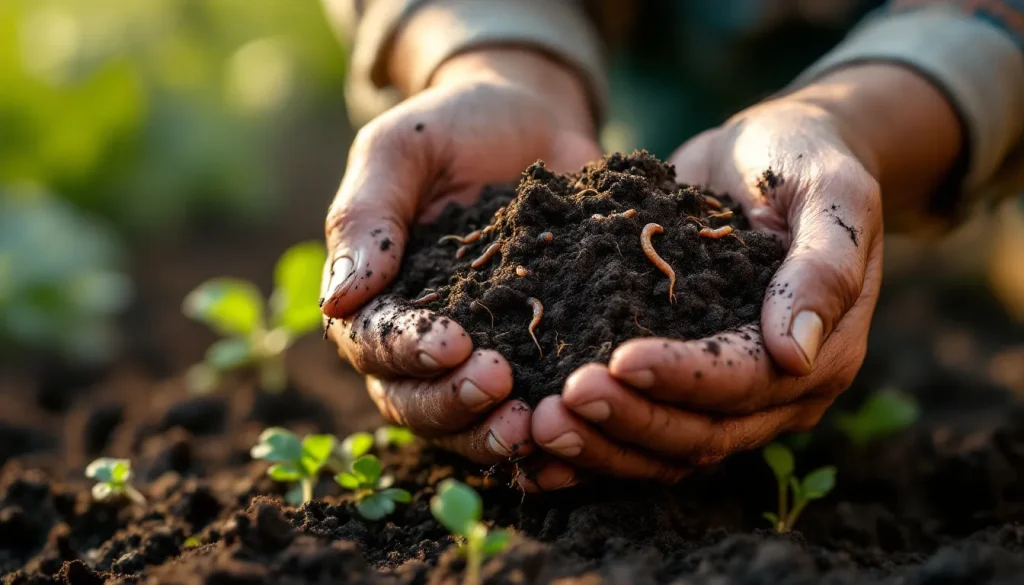
What Is Fertile Soil?
Fertile soil is soil that can sustain plant growth by supplying the nutrients, water, air, and root support that plants need to complete their life cycle. It combines available nutrients (especially nitrogen, phosphorus, and potassium), organic matter, a crumbly structure, and a living population of microbes and earthworms. Fertility is the soil’s chemical and biological capacity to feed plants, measured most reliably by a soil test.
By: HMNDP Editorial Team, independent reporting on lawn care, landscaping, and soil.
Last reviewed: June 2026.
A quick distinction matters here. Soil fertility is the soil’s ability to supply nutrients. Soil productivity is the actual crop or plant yield a soil delivers, which also depends on climate, water, sunlight, and management. Fertile soil can still be unproductive if it sits in shade or drought, and this is why agronomists and the USDA treat the two terms separately.
The rest of this guide covers what makes soil fertile, how to read your own soil, how to build fertility from scratch, and which soil types are naturally the most fertile. For the geology behind these traits, see how soil is formed over decades from rock, climate, and living matter.
What Makes Soil Fertile?
Soil becomes fertile when three things line up: available plant nutrients, organic matter, and a physical structure that lets roots, water, and air move freely. Nutrients feed the plant, organic matter stores and releases those nutrients while holding moisture, and structure decides whether roots can reach them. Remove any one and fertility drops, even if the other two are strong.
Think of it as a stool with three legs: chemistry (nutrients and pH), biology (microbes and earthworms), and physics (structure and texture). A gardener chasing only fertilizer bags is fixing one leg and ignoring two.
The Major Macronutrients: Nitrogen, Phosphorus, and Potassium
Plants need three macronutrients in the largest amounts: nitrogen (N), phosphorus (P), and potassium (K). These are the N-P-K numbers printed on every fertilizer bag. Nitrogen drives leaf and stem growth, phosphorus builds roots and flowers, and potassium regulates water use and disease resistance. Fertile soil supplies all three in forms plant roots can absorb.
Here is what each nutrient does and how a plant signals it is running short.
| Nutrient | What it does for the plant | Common deficiency sign |
|---|---|---|
| Nitrogen (N) | Fuels leaf and stem growth, gives the green color (chlorophyll) | Older, lower leaves turn pale yellow first; stunted, slow growth |
| Phosphorus (P) | Builds strong roots, flowers, and fruit; moves energy in the plant | Dull green or purple-tinged leaves; poor flowering and rooting |
| Potassium (K) | Controls water balance, stem strength, and disease and cold resistance | Yellow or brown scorching along leaf edges (margins) |
Fertile soil also carries secondary nutrients (calcium, magnesium, sulfur) and micronutrients (iron, zinc, manganese, boron) in trace amounts. A soil test from a county extension lab, often 15 to 35 US dollars, reports these so you fertilize only what is missing.
The Role of Organic Matter
Organic matter is decomposed plant and animal material (humus, compost, old roots, leaf litter) mixed into the soil. It is the single strongest lever for fertility. Organic matter stores nitrogen and other nutrients, holds up to several times its weight in water, feeds soil microbes, and binds mineral particles into a crumbly structure. Most fertile garden soils hold 3 to 5 percent organic matter.
Organic matter releases nutrients slowly as microbes break it down, which is why compost-rich soil rarely burns roots the way a heavy dose of synthetic fertilizer can. Adding compost, leaf mold, or aged manure is the most reliable way to raise fertility. See our guide to soil amendments for how to choose and apply them.
Soil Structure and Texture
Soil structure is how mineral particles clump into crumbs and aggregates, and it decides whether water, air, and roots can move through the soil. Fertile soil has a loose, crumbly structure that drains yet still holds moisture. Texture (the mix of sand, silt, and clay) sets the baseline: too much sand drains too fast, too much clay compacts and starves roots of oxygen.
The ideal texture is loam, a balanced blend of sand, silt, and clay that both drains and retains water. You can improve poor structure without changing texture by adding organic matter, which glues fine particles into stable crumbs. Learn how texture varies across the main types of soil and which one you likely have.
Soil Biology: Microbes, Fungi, and Earthworms
Fertile soil is alive. One teaspoon of healthy soil can hold billions of bacteria plus fungi, protozoa, nematodes, and earthworms. These organisms decompose organic matter, release nutrients into plant-available forms, and build structure. Without soil biology, nutrients stay locked in dead material and never reach roots. Earthworm activity is one of the clearest visible signs of a living, fertile soil.
Mycorrhizal fungi deserve a mention. They form partnerships with plant roots, extending their reach for water and phosphorus in exchange for sugars. Tilling heavily, leaving soil bare, and overusing some fungicides all reduce this biology, which is why no-dig and cover-cropping methods are gaining ground with home gardeners.
Nitrogen Fixation: How Soil Gains Free Nitrogen
Nitrogen fixation is the process where certain bacteria convert nitrogen gas from the air into fixed nitrogen (ammonium and nitrate) that plants can absorb. Air is 78 percent nitrogen, but plants cannot use the gas directly. Rhizobia bacteria living in the root nodules of legumes (beans, peas, clover, alfalfa) do the conversion, adding free nitrogen to the soil.
This is why farmers and gardeners plant legume cover crops. A clover or field-pea cover crop can add roughly 50 to 150 pounds of nitrogen per acre when tilled or cut in, cutting the need for synthetic fertilizer. It is the oldest fertility trick in agriculture, documented for thousands of years across crop rotations.
What Are the Characteristics of Fertile Soil? A Self-Diagnosis Checklist
You can judge your own soil’s fertility in about 20 minutes using observable traits, no lab required for a first read. Fertile soil is dark, crumbly, moist, and full of earthworms, with a pH between 6.0 and 7.0. Run the checklist below on a handful of your own garden soil, then confirm the chemistry with a paid soil test.
| Trait | Fertile soil | Poor soil | How to check it yourself |
|---|---|---|---|
| Color | Dark brown to near-black | Pale tan, gray, or bright orange-red | Look at a fresh handful in daylight; dark means more organic matter |
| Structure (crumb) | Loose, crumbly aggregates | Hard clods or loose single grains | Squeeze moist soil, then poke it; it should break into crumbs, not a slick ball or dust |
| Earthworm count | 10 or more per shovelful (30 cm cube) | 0 to 2 per shovelful | Dig a spade-deep hole and count worms |
| Water retention | Absorbs water, stays moist, drains within a day | Puddles on top or dries within hours | Pour water in a dug hole; time how fast it drains |
| Smell | Earthy, sweet (from actinomycetes) | Sour, metallic, or no smell | Smell a fresh handful |
| pH | 6.0 to 7.0 (slightly acidic to neutral) | Below 5.5 or above 7.5 | Home pH kit (about 10 to 20 US dollars) or extension lab test |
No single trait proves fertility, but hitting four or more of these six is a strong sign. The pH range of 6.0 to 7.0 matters because it is where nitrogen, phosphorus, and potassium stay most available to roots. Outside that band, nutrients get chemically locked even when they are present in the soil.
How Do You Make Soil More Fertile? A Step-by-Step Plan
You make soil more fertile by adding organic matter, correcting pH, feeding soil biology, and protecting the surface, in that order. Most home gardeners can move poor soil to good in one to three growing seasons. The steps below work for a lawn, a raised bed, or a vegetable plot, and they cost less than repeatedly buying synthetic fertilizer.
- Test first. Send a sample to a county extension or university lab (often 15 to 35 US dollars). The report gives pH plus N-P-K and organic matter, so you amend what is actually missing instead of guessing.
- Correct pH. If pH is below 6.0, add lime; if above 7.5, add elemental sulfur. Aim for 6.0 to 7.0. This one fix can unlock nutrients already in the soil.
- Add compost or aged manure. Spread 1 to 3 inches of finished compost and work it into the top few inches, or leave it on top for no-dig beds. This is the fastest way to raise organic matter and feed microbes.
- Plant a cover crop. Sow clover, field peas, or vetch in the off-season. These legumes fix nitrogen and, when cut or turned in, become free organic matter (green manure).
- Mulch the surface. Cover bare soil with straw, shredded leaves, or wood chips. Mulch holds moisture, moderates temperature, suppresses weeds, and slowly feeds the soil as it breaks down.
- Disturb less. Reduce tilling. Heavy digging destroys structure and fungal networks. No-dig gardening lets earthworms and roots build fertility for you.
Repeat the compost and mulch steps every season. Fertility is a stock you build over years, not a switch you flip once. Beginners can find more starter walkthroughs in the HMNDP learn hub.
What Is the Most Fertile Soil Type?
Loam is the most fertile common soil type for gardeners, and chernozem (black earth) is the most fertile natural soil on Earth. Loam balances sand, silt, and clay so it drains yet holds nutrients and water. Chernozem, alluvial, and volcanic soils are the naturally rich types that feed the world’s most productive farming regions.
| Soil type | Why it is fertile | Where it is found |
|---|---|---|
| Loam | Balanced sand, silt, clay; drains and retains water and nutrients | Prized in gardens and farms worldwide |
| Chernozem (black earth) | Very high organic matter, deep, dark, near-neutral pH | Ukrainian and Russian steppes, Canadian Prairies, US northern Great Plains |
| Alluvial soil | Nutrient-rich sediment deposited by rivers and floods | Nile Valley, Ganges Basin, Mississippi Delta |
| Volcanic (andisol) | Weathered ash rich in minerals; light and moisture-holding | Java (Indonesia), Pacific Northwest, Central America |
Most home gardeners do not start with loam or chernozem, and that is fine. Adding organic matter over a few seasons moves sandy or clay soil toward loam-like behavior, which is the practical goal for any backyard plot.
Frequently Asked Questions
What is fertile soil?
Fertile soil is soil that can sustain plant growth by supplying nutrients, water, air, and root support. It combines available macronutrients (nitrogen, phosphorus, potassium), organic matter, a crumbly structure, and living organisms like microbes and earthworms. Fertility is the soil’s capacity to feed plants, and a soil test from an extension lab measures it most reliably.
What makes soil fertile?
Three factors make soil fertile: available plant nutrients, organic matter, and a loose structure that lets roots, water, and air move. Nutrients (especially N-P-K) feed the plant, organic matter stores nutrients and moisture while feeding microbes, and structure decides whether roots can reach it all. A living biology of bacteria, fungi, and earthworms ties the system together.
How do you make soil more fertile?
Make soil more fertile by testing it first, correcting pH to 6.0 to 7.0, adding 1 to 3 inches of compost or aged manure, planting nitrogen-fixing cover crops like clover, mulching bare surfaces, and tilling less. Most gardeners move poor soil to good in one to three seasons. Organic matter is the strongest single lever for raising fertility.
What are the characteristics of fertile soil?
Fertile soil is dark brown to near-black, loose and crumbly, moist but well-draining, and rich in earthworms (10 or more per shovelful). It smells earthy and sweet and holds a pH between 6.0 and 7.0. You can check color, crumb, worm count, drainage, and smell yourself in about 20 minutes, then confirm pH and nutrients with a soil test.
What is the most fertile soil type?
Loam is the most fertile common garden soil because it balances sand, silt, and clay to drain freely while holding nutrients and water. Globally, chernozem (black earth) of the Ukrainian steppes and North American prairies is the richest natural soil. Alluvial soils of river valleys like the Nile and volcanic andisols are also naturally very fertile.
What nutrients does fertile soil need?
Fertile soil needs three macronutrients in large amounts: nitrogen (leaf and stem growth), phosphorus (roots and flowers), and potassium (water regulation and disease resistance). It also needs secondary nutrients (calcium, magnesium, sulfur) and micronutrients (iron, zinc, manganese, boron) in trace amounts. A soil test shows which are short so you add only what is missing.
What is the ideal pH for fertile soil?
The ideal pH for fertile soil is 6.0 to 7.0, slightly acidic to neutral. In that range, nitrogen, phosphorus, and potassium stay most available to plant roots. Below 5.5, nutrients like phosphorus get chemically locked even when present; above 7.5, iron and manganese become hard to absorb. Lime raises low pH and elemental sulfur lowers high pH.
How can you tell if your soil is fertile?
Tell if soil is fertile by checking observable traits: dark color, crumbly structure, 10 or more earthworms per shovelful, water that soaks in and drains within a day, and an earthy smell. Hitting four or more of these is a strong sign. Confirm with a soil test measuring pH (target 6.0 to 7.0) and N-P-K from a county extension lab.