
By the HMNDP Editorial Team | Last reviewed: June 2026
What an irrigation valve box is and what it does
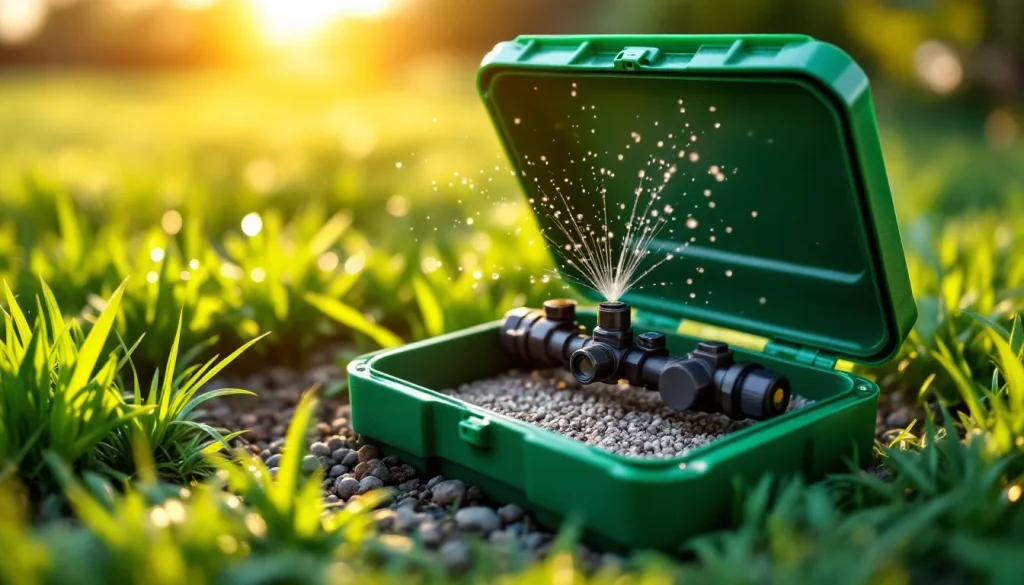
An irrigation valve box is a below-grade plastic enclosure that houses and protects the valve manifold of an in-ground sprinkler system. It keeps soil, mulch, water, and dust off the control valves and wiring while leaving them accessible for repair. The box sits flush with grade, and its removable lid opens for hand access without excavation.
Without a box, buried valves clog with dirt, corrode faster, and become almost impossible to find when a zone fails. The box creates a clean, dry cavity around the irrigation valves so a solenoid swap or diaphragm cleaning takes minutes rather than a dig.
The box also marks the manifold location. Once landscaping fills in, a green lid at grade is often the only visible clue to where your zones are controlled.
Where the valve box sits in the system
The valve box sits over the valve manifold, the cluster of solenoid valves that route water to each zone. It is installed downstream of the mainline and backflow preventer and upstream of the lateral lines feeding sprinkler heads. Control wire from the timer enters the box and connects to each solenoid inside.
Most residential systems place one manifold near the water source, though larger properties split valves into two or three boxes by area. The box is buried so its rim meets finished grade, keeping the lid mowable and walkable.
Valve box materials: plastic, HDPE, and structural foam
Valve boxes are molded from three plastic types: standard polyolefin/polypropylene, high-density polyethylene (HDPE), and structural foam. Standard plastic suits foot-traffic lawn areas. HDPE resists cracking in cold and UV. Structural foam is thicker and stiffer for higher load ratings near driveways or paths.
| Material | Best for | Trade-off |
|---|---|---|
| Standard plastic (PP) | Turf, low traffic, budget builds | Can crack under vehicle loads or hard frost |
| HDPE | Cold climates, UV exposure | Slightly higher cost |
| Structural foam | Near paths, occasional loads | Heavier, more expensive |
None of these are rated for repeated vehicle traffic. For driveways, use a traffic-rated concrete or ductile-iron enclosure instead.
Valve box shapes: rectangular vs round
Round boxes are compact and cheap, sized for one or two small valves or a single shutoff. Rectangular boxes hold a full manifold of three to six valves in a line and give room to work with a wrench. Choose round for a single valve or a wiring splice, rectangular for a multi-valve zone cluster.
| Shape | Typical use | Valve capacity |
|---|---|---|
| Round | Single valve, shutoff, wire splice | 1 to 2 small valves |
| Rectangular | Manifold of several zones | 2 to 6 valves |
Standard irrigation valve box sizes and dimensions
Irrigation valve boxes come in four common footprints: 6-inch round (mini), 10-inch round, standard rectangular, and jumbo rectangular. Dimensions vary slightly by brand (Rain Bird and NDS differ by up to an inch), but the ranges below reflect the industry-standard classes you will see on retail listings.
| Class | Approx. top dimensions | Depth | Common label |
|---|---|---|---|
| Mini round | 6 in diameter | ~9 in | 6″ round |
| Round | 10 in diameter | ~10 to 12 in | 10″ round |
| Standard rectangular | ~14 x 19 in top, ~11 x 16 in base | ~12 in | Standard / 1419 |
| Jumbo rectangular | ~20 x 26 in top, ~16 x 21 in base | ~12 to 18 in | Jumbo |
Rectangular boxes taper, so the opening at grade is wider than the base. Read listings by the base or working dimension, not just the lid, because that is the space your valves actually occupy.
Valve box sizing chart: matching box to valves
Here is the sizing logic the retail pages skip. Match the box to both the number of valves and the pipe diameter, because 1.5-inch valves are wider and taller than 1-inch valves and eat manifold space fast. Leave at least 2 inches of clearance around each solenoid so you can turn a wrench.
| Box class | 1-inch valves | 1.5-inch valves |
|---|---|---|
| 6″ round | 1 valve | Not recommended |
| 10″ round | 1 to 2 valves | 1 valve |
| Standard rectangular | 2 to 3 valves | 2 valves |
| Jumbo rectangular | 4 to 6 valves | 3 to 4 valves |
Undersizing is the most common DIY mistake. A jumbo box costs a few dollars more than a standard, and the extra room pays off every time you service the manifold. When in doubt, size up.
Valve box covers, lids, and color codes
Lids come in three fastening styles and two meaningful colors. Snap or drop-in lids are quickest. Bolt-down lids use a stainless bolt to deter tampering and stay put under mower wheels. Locking lids add a keyed or pentagon-bolt mechanism for public or theft-prone sites. Green is standard; purple signals reclaimed (non-potable) water.
| Lid type | Security | Where used |
|---|---|---|
| Drop-in / snap | Low | Home lawns |
| Bolt-down | Medium | Commercial, high-traffic |
| Locking | High | Parks, roadsides, reclaimed systems |
Purple lids and boxes follow the industry color for reclaimed water so crews and homeowners know the line is not for drinking. If your system runs on recycled or greywater, code often requires the purple marking (check your local water authority).
Major brands and where to buy
The valve box market centers on two brands: Rain Bird and NDS. Both sell 6-inch round through jumbo rectangular in standard green and reclaimed purple. Carson and Oldcastle also serve the commercial tier. You can buy from specialty retailers like Sprinkler Supply Store, plus Home Depot, Lowes, SiteOne, and Amazon.
Rain Bird boxes pair naturally with Rain Bird valves and controllers if you want one ecosystem. NDS often wins on price and carries more traffic-rated options. Big-box stores stock the common sizes; specialty and pro suppliers carry jumbo, locking, and reclaimed variants.
Installation basics: setting the box at grade with a gravel base
A correctly installed valve box sits flush with grade over a gravel drainage base, so water drains out instead of pooling around the solenoids. Skipping the gravel is why so many boxes flood and freeze. Follow these steps for a new install.
- Dig the manifold pit 4 to 6 inches deeper and wider than the box footprint.
- Add 3 to 4 inches of clean 3/4-inch gravel or pea gravel to the bottom for drainage.
- Set the assembled manifold on supports so valves sit clear of the gravel.
- Cut the knockouts so pipe passes through the box walls, not under the rim.
- Lower the box over the manifold and backfill around it, tamping in layers.
- Set the rim so the lid finishes 1/2 inch above soil, keeping mulch and runoff out.
For zone layouts and manifold planning that feed into this, see our broader coverage of drip irrigation kits and drip irrigation for raised beds, where the same manifold-and-box logic applies at smaller scale.
How deep should a valve box be, and does it need gravel?
Install the box so its rim meets grade and the valves inside sit above the frost line for your region, typically 8 to 12 inches of cover in mild climates and deeper where ground freezes. Yes, put gravel in the bottom. A 3 to 4 inch clean-gravel base gives water somewhere to drain, which prevents the standing water that corrodes solenoids and cracks boxes in winter.
The gap nobody covers: replacing a cracked or sunken box without digging up the manifold
You can swap a cracked, crushed, or sunken valve box without disturbing the plumbing below it. Because the box is just a shell around the manifold, the valves stay in place while you cut the old box away and slip a new one over the same pipes. Here is the field method.
- Shut off the zone at the controller and close the mainline shutoff so nothing is under pressure.
- Remove the lid and clear soil and mulch from around the rim by hand.
- Cut the old box vertically in two or three places with a reciprocating saw or hacksaw blade, keeping the blade clear of pipe and wire.
- Peel the cut sections away from the manifold and lift them out.
- Check and correct the gravel base, adding clean gravel if the old box sank from washout.
- Cut fresh knockouts in the new box to match pipe entry points, then split one side if needed to fit it over the pipes.
- Seat the new box over the manifold, level the rim to grade, and backfill in tamped layers.
A sunken box almost always means the gravel base failed or was never there. Fixing the drainage during the swap stops the box from sinking again. For systems where you are also upgrading controls, our 2026 smart irrigation adoption report covers the controller side of these retrofits.
Frequently Asked Questions
What size irrigation valve box do I need for my valves?
Match the box to your valve count and pipe size. One 1-inch valve fits a 6-inch round; two or three 1-inch valves fit a standard rectangular; four to six fit a jumbo. For 1.5-inch valves, drop capacity by one or two per box. Leave 2 inches of clearance around each solenoid for wrench access, and size up when unsure.
What are the standard irrigation valve box sizes and dimensions?
Four classes dominate: 6-inch round (mini), 10-inch round, standard rectangular (about 14 x 19 inches at top, roughly 12 inches deep), and jumbo rectangular (about 20 x 26 inches at top, 12 to 18 inches deep). Rectangular boxes taper, so the base is narrower than the lid. Rain Bird and NDS dimensions vary by up to an inch, so confirm the working base size.
What is the difference between a round and rectangular valve box?
Round boxes are compact and cheap, built for one or two small valves, a shutoff, or a wire splice. Rectangular boxes hold a full manifold of three to six valves in a row and give room to service them with a wrench. Use round for single valves and rectangular for multi-zone manifolds where you need working space.
How do you replace a cracked or sunken valve box without digging up the valves?
Shut off the zone and mainline, clear soil from the rim, then cut the old box vertically in two or three places with a reciprocating saw, keeping the blade off the pipe and wire. Peel the pieces away, refresh the gravel base, cut knockouts in the new box, and slip it over the manifold. The valves never move.
How deep should an irrigation valve box be installed?
Set the rim flush with grade and keep the valves above your local frost line, generally 8 to 12 inches of cover in mild regions and deeper where ground freezes hard. The lid should finish about 1/2 inch above soil so mulch and runoff stay out. Depth also depends on your box class, since jumbo boxes run 12 to 18 inches deep.
Should you put gravel in the bottom of a valve box?
Yes. Add 3 to 4 inches of clean 3/4-inch or pea gravel below the manifold. Gravel gives water somewhere to drain, which prevents the standing water that corrodes solenoids, floods the box, and cracks it during a freeze. A missing gravel base is the most common reason valve boxes sink and flood over time.
Why is my valve box purple, and what does the color mean?
Purple is the industry color code for reclaimed, recycled, or non-potable water. A purple lid or box tells crews and homeowners the line is not safe to drink. If your system runs on reclaimed or greywater, local code often requires purple marking on boxes and lines. Standard potable-water systems use green boxes and lids.
How many valves fit in one irrigation valve box?
A 6-inch round holds one 1-inch valve, a 10-inch round holds one to two, a standard rectangular holds two to three, and a jumbo holds four to six. Larger 1.5-inch valves reduce those counts by one or two per box. Always leave clearance around each solenoid so you can service or replace it without pulling the whole manifold.