
By the HMNDP Editorial Team, independent reporting on lawn care, landscaping, water, and the green-industry business.
Last reviewed: June 2026
What an irrigation valve is and what it does
An irrigation valve is the device that starts and stops water flow to one zone of a sprinkler or drip system. It sits between the pressurized mainline and the zone piping. When the valve opens, water reaches the heads or emitters in that zone. When it closes, that zone shuts off. Most residential systems use one valve per zone, opened in sequence by a controller.
The valve is the on/off switch for water. Without it, every zone would run at once, and the system could not match flow to the available supply. A typical home system has 3 to 8 valves, each rated for a specific flow and pressure range.
For a full picture of how valves fit alongside controllers, heads, and piping, see our irrigation system guide.
Irrigation valve types compared
Irrigation valve types split into two groups: automatic zone valves (inline/globe and anti-siphon, both usually solenoid-operated) and isolation or protection valves (gate, ball, butterfly, check). Each type has a distinct job, flow range, and price tier. The table below maps type to use case, typical GPM and PSI ranges, and approximate 2026 retail cost.
| Valve type | Primary use | Typical flow (GPM) | Pressure range (PSI) | Price tier (2026) |
|---|---|---|---|---|
| Inline / globe (solenoid) | Automatic zone control, valve in a box | 0.25 to 40 | 15 to 150 | $15 to $45 |
| Anti-siphon (solenoid) | Zone control plus built-in backflow protection | 1 to 30 | 20 to 80 | $20 to $50 |
| Gate | Manual full-open/full-close isolation | Pipe-size dependent | Up to 200 | $10 to $30 |
| Ball | Quick manual shutoff, mainline isolation | Pipe-size dependent | Up to 600 | $8 to $35 |
| Butterfly | Large-diameter mains (2 in and up) | High volume | Up to 200 | $40 to $150+ |
| Check | One-way flow, prevents drain-back / siphon | Pipe-size dependent | Varies by spring | $8 to $40 |
Inline and anti-siphon valves do the automatic work. Gate, ball, and butterfly valves are manual isolators you turn by hand. Check valves move water one direction only.
Solenoid valves and 24V electric actuation
A solenoid valve is the controller-operated type. An electric solenoid (an electromagnet coil with a plunger) sits on top of the valve and responds to a 24-volt AC signal from the timer. When the controller sends current, the solenoid lifts the plunger, the diaphragm releases, and the valve opens. Cut the current and it closes.
Nearly all automatic residential zone valves use 24V AC solenoids drawing roughly 0.3 amps inrush and 0.2 amps holding. That low voltage is why sprinkler wire is safe to bury and splice in a valve box without a permit in most jurisdictions.
How an irrigation valve works
An automatic irrigation valve works on a pressure differential across a rubber diaphragm. Line pressure fills a chamber above the diaphragm and holds it shut. The solenoid opens a tiny bleed port that releases that upper-chamber pressure. Higher pressure below then pushes the diaphragm up, and water flows to the zone. Re-pressurize the chamber and the valve reseats.
- The controller sends 24V to the solenoid.
- The solenoid opens a bleed port, venting the upper chamber.
- Inlet pressure lifts the diaphragm off the seat.
- Water flows downstream to the zone.
- Power off: the chamber re-fills, the diaphragm drops, flow stops.
Most valves also have a manual bleed screw so you can open the zone by hand for testing, without the controller.
Selecting an irrigation valve by flow, pipe size, and pressure
Select an irrigation valve by matching its rated flow (GPM) to your zone demand, its body size to your pipe, and its pressure rating to your static line pressure. Size the valve to the zone’s peak flow, not the pipe alone. Running a valve far below its minimum rated flow can cause weeping; running above maximum causes high pressure loss and noise.
| Valve body size | Recommended flow window (GPM) | Common use |
|---|---|---|
| 3/4 in | 0.25 to 12 | Small drip zones, a few spray heads |
| 1 in | 5 to 35 | Standard residential spray and rotor zones |
| 1.5 in | 20 to 100 | Large rotor zones, light commercial |
Connection types include female NPT threaded, slip (solvent-weld) for PVC, and barbed or compression for poly. The 1-inch threaded inline valve covers the majority of home zones.
Inline versus anti-siphon valves
An inline valve installs below grade in a valve box and needs separate backflow prevention upstream. An anti-siphon valve combines a zone valve with an atmospheric vacuum breaker in one body, and it must be installed above ground. Code generally requires the anti-siphon valve sit at least 6 inches above the highest sprinkler head it feeds.
Choose inline valves grouped in a manifold for a clean, freeze-protected layout. Choose anti-siphon valves where local code allows them as the sole backflow device and you want fewer parts. Always confirm your local backflow requirement; many areas mandate a pressure vacuum breaker or reduced-pressure assembly instead.
Manifolds, valve boxes, and where valves sit
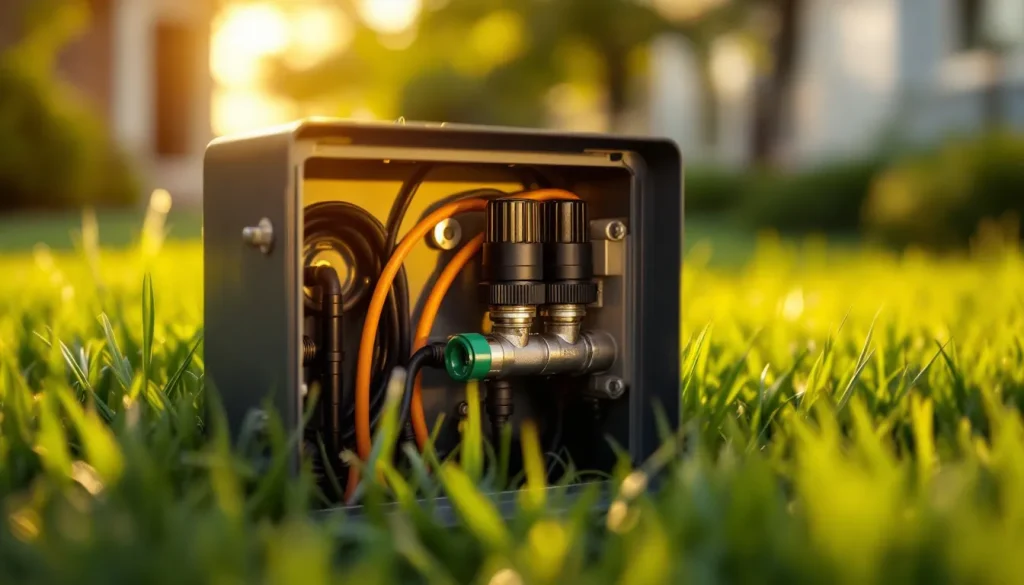
Valves usually live on the mainline, grouped on a manifold inside an underground valve box. A manifold tees several inline valves off one pressurized supply, keeping wiring and shutoffs in one accessible spot. The box protects the assembly from soil, foot traffic, and freezing while leaving the bleed screws and solenoids reachable for service.
Anti-siphon valves are the exception: they mount above ground at the required backflow height. Drip and spray systems use the same zone valves; drip zones simply add a pressure regulator and filter downstream. For drip-specific layout, see our drip irrigation system guide.
Diagnosing a failing irrigation valve before you replace it
Diagnose the symptom first, because most valve faults are repairable without swapping the whole body. A zone that will not shut off usually means debris under the diaphragm or a stuck solenoid. A zone that will not turn on usually means a wiring or solenoid fault. Weeping points to the diaphragm; a chattering solenoid points to low voltage. Use the matrix below.
| Symptom | Likely cause | First fix |
|---|---|---|
| Zone will not shut off | Debris on diaphragm seat, stuck solenoid, low controller voltage | Manually flush valve, clean or replace diaphragm |
| Zone will not turn on | Broken wire, failed solenoid, no 24V signal | Test solenoid resistance (20 to 60 ohms typical), check wiring |
| Valve weeps / slow drip | Torn or worn diaphragm, debris on seat | Replace diaphragm and clean seat |
| Solenoid chatters / hums | Low transformer voltage, corroded splice | Verify 24V at valve, redo waterproof splice |
| Low zone pressure | Flow control screwed down, partial blockage | Open flow control, inspect for grit |
A multimeter reading 20 to 60 ohms across the solenoid leads confirms the coil is intact; an open or shorted reading means replace the solenoid (often a $10 part) before condemning the valve. For deeper diagnostics, our irrigation repair resource walks through controller and wiring tests.
How to replace or repair an irrigation valve
Repair the diaphragm or solenoid when the valve body is sound; replace the whole valve when the body cracks or threads strip. Match the replacement to the same brand and body size when possible, because internal parts are not cross-compatible between manufacturers. Always shut off the main supply first.
- Turn off the system mainline and the controller.
- Open a downstream zone to relieve pressure.
- Diaphragm or solenoid fix: unscrew the bonnet (or solenoid), lift out the part, clean the seat, drop in the matching replacement, and reassemble.
- Full replacement: note the brand and inlet/outlet size, cut or unthread the old valve, install the same-size unit with the flow arrow pointing downstream.
- Reconnect the two solenoid wires with waterproof gel-filled connectors.
- Restore pressure slowly, then run the zone to check for leaks and clean shutoff.
Identifying the right replacement starts with the brand stamped on the bonnet. Rain Bird, Hunter, Irritrol, and Toro are the common residential makers; Rain Bird and Hunter parts are widely stocked at irrigation suppliers and big-box stores. Keep the model number for diaphragm and solenoid orders. New homeowners can build their fundamentals at our learn hub.
Frequently Asked Questions
What is an irrigation valve and what does it do?
An irrigation valve is the device that turns water on and off to one zone of a sprinkler or drip system. It sits between the pressurized mainline and the zone piping. A controller opens each valve in sequence so zones run one at a time, matching flow to the available water supply. A typical home has 3 to 8 valves, one per zone.
How does an irrigation valve work?
An automatic irrigation valve works on a pressure differential across a rubber diaphragm. Line pressure fills a chamber above the diaphragm and holds the valve closed. A 24-volt solenoid opens a tiny bleed port, venting that chamber, so inlet pressure pushes the diaphragm up and water flows. Cut the power and the chamber re-pressurizes, dropping the diaphragm to stop flow.
What are the different types of irrigation valves?
The main types are inline/globe and anti-siphon (both automatic, solenoid-operated zone valves), plus gate, ball, and butterfly valves for manual isolation, and check valves for one-way flow. Inline and anti-siphon valves do the automatic zone switching. Gate, ball, and butterfly valves are turned by hand to isolate sections. Check valves prevent water from draining or siphoning backward.
What is the difference between an inline valve and an anti-siphon valve?
An inline valve installs below grade in a valve box and needs a separate backflow device upstream. An anti-siphon valve combines a zone valve and an atmospheric vacuum breaker in one body and must mount above ground. Code generally requires an anti-siphon valve sit at least 6 inches above the highest head it feeds. Local rules vary, so confirm your backflow requirement.
How do I know what size irrigation valve I need?
Match the valve’s rated flow (GPM) to your zone’s peak demand, then match its body to your pipe size and your line pressure. A 3/4-inch valve suits 0.25 to 12 GPM, a 1-inch valve suits 5 to 35 GPM, and a 1.5-inch valve suits 20 to 100 GPM. Most residential zones use the 1-inch threaded valve.
How do I tell if my irrigation valve is bad or needs replacing?
Test the solenoid with a multimeter; 20 to 60 ohms means the coil is good, while an open or shorted reading means replace it. Weeping or a slow drip usually means a torn diaphragm, a cheap repairable part. A cracked body or stripped threads means replace the whole valve. Many faults are debris on the seat, fixable by flushing.
How do you replace an irrigation valve?
Shut off the mainline and controller, then relieve pressure by opening a zone. For a full swap, note the brand and inlet/outlet size, remove the old valve, and install a same-size unit with the flow arrow pointing downstream. Reconnect the two solenoid wires with waterproof connectors, restore pressure slowly, and run the zone to check for leaks.
Why won’t my sprinkler zone turn off (or on)?
A zone that will not shut off usually has debris under the diaphragm or a stuck solenoid; flush the valve and clean or replace the diaphragm. A zone that will not turn on usually has a wiring fault, a failed solenoid, or no 24V signal. Test for 24 volts at the valve and check the solenoid resistance before replacing parts.