
By the HMNDP Editorial Team. Last reviewed: June 2026.
What is timothy grass?
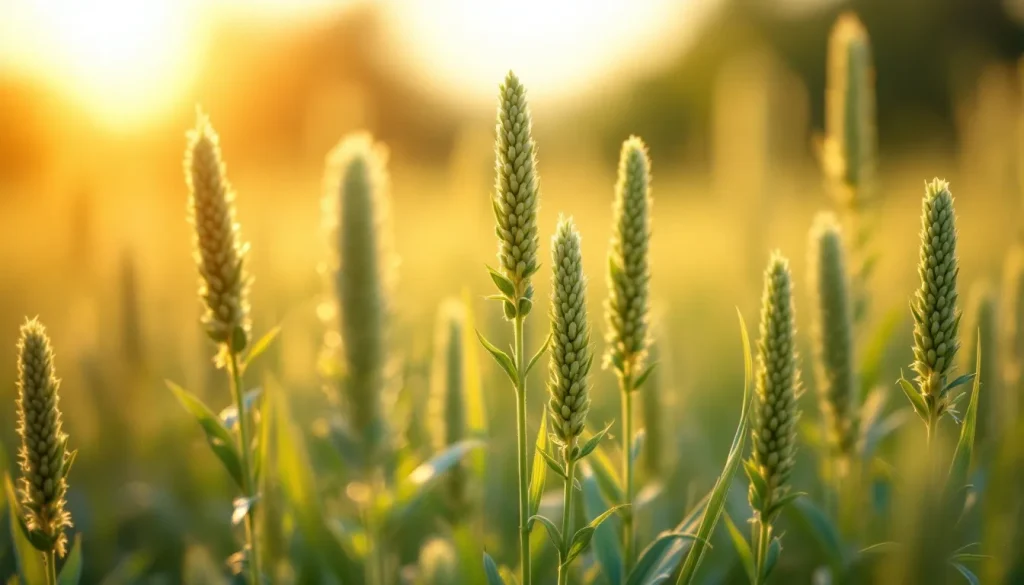
Timothy grass (Phleum pratense) is a cool-season, perennial bunchgrass in the family Poaceae, grown mainly for hay and forage. It is native to most of Europe and was introduced and naturalized across North America in the 1700s. It reaches 20 to 60 inches tall and is easiest to recognize by its long, cylindrical, spike-like flower head and swollen bulb-like stem base.
Farmers, horse owners, and small-animal keepers value it because it produces clean, high-fiber, low-protein hay. Gardeners and naturalists usually meet it as a common meadow and roadside grass. The two audiences ask the same first question and get answered here in one place.
The name honors Timothy Hanson, an American farmer who promoted the grass as a hay crop in the early 1700s, which is why it is sometimes called Timothy or Herd’s grass.
Timothy grass scientific classification and family
Timothy grass is scientifically named Phleum pratense. It belongs to the genus Phleum and the grass family Poaceae (the true grasses). The species epithet pratense is Latin for “of meadows,” which describes exactly where it grows. It is a perennial, meaning a single plant lives and regrows for several years rather than dying after one season.
| Rank | Classification |
|---|---|
| Family | Poaceae (grasses) |
| Genus | Phleum |
| Species | Phleum pratense |
| Common names | Timothy, timothy grass, Herd’s grass, meadow cat’s-tail |
| Life cycle | Perennial |
| Season type | Cool-season (C3) |
| Growth habit | Bunch-type (tufted), not spreading by runners |
Because it grows in tight clumps rather than spreading by stolons or rhizomes, timothy behaves differently from creeping turf species such as Bermuda grass, which spreads aggressively across a lawn. Timothy stays where you plant it.
How do you identify timothy grass?
Identify timothy grass by three features together: a long, narrow, cylindrical flower head that looks like a dense green or tan cattail, a swollen bulb-like base (a corm, also called a haplocorm) at the bottom of the stem, and a bunch-type clumping habit. It grows 20 to 60 inches tall with flat, rough-edged, blue-green leaf blades. No single feature is proof; check all three.
The flower head is the giveaway. It is a compressed panicle 2 to 6 inches long, cylindrical and firm, and it does not open into a loose branching shape the way most grass seedheads do. When you bend the stem, the head stays stiff and spike-like.
Use this quick-ID checklist:
- Flower head: cylindrical, spike-like, 2 to 6 inches, resembles a slim green cattail or a pipe cleaner.
- Stem base: swollen, bulb-like corm (haplocorm) just above the roots, a near-unique timothy trait.
- Growth form: upright clumps (bunchgrass), no creeping runners.
- Height: 20 to 60 inches (roughly 50 to 150 cm) at maturity.
- Leaves: flat, 6 to 17 inches long, rough to the touch along the edges, blue-green.
- Ligule: a membranous ligule up to about 3 mm where the leaf meets the stem.
The corm at the stem base is the feature most other grasses lack. If you dig up a clump and find a small onion-like swelling at the base of each stem, you are almost certainly holding timothy.
Growth habit, timing, and maturity
Timothy is a cool-season bunchgrass that grows fastest in spring and fall and slows in summer heat. It is medium-to-late maturing, with peak growth and the ideal first-cut window arriving in late spring to early summer, typically late May through June across the northern United States and Canada, depending on latitude and year.
As a C3 (cool-season) plant, timothy photosynthesizes best at 60 to 70 degrees Fahrenheit and struggles above 90 degrees. It has shallow roots and low drought tolerance, which is why it thrives in cool, moist northern climates and fails in the hot South.
Maturity timing drives hay quality. Cut too late and the plant pushes energy into stems and seedheads, dropping protein and digestibility. That timing is exactly why cutting stage (covered below) matters so much to buyers.
Habitat, distribution, and cultivation preferences
Timothy grass is native to most of Europe and temperate Asia and is now naturalized across North America, where it grows in meadows, pastures, roadsides, and disturbed ground. It prefers cool, humid climates and does best on fertile, moisture-retentive loam or clay-loam soils with a pH of roughly 6.0 to 7.0.
It tolerates heavy, poorly drained soils better than most forage grasses, which helps it hold ground where alfalfa or orchardgrass would struggle. It does not tolerate drought, heat, or heavy grazing pressure well, so it is more common in hay fields than in continuously grazed pastures.
| Condition | Timothy preference |
|---|---|
| Climate | Cool, humid, northern; poor heat tolerance |
| Soil texture | Loam to clay-loam; tolerates wet, heavy soils |
| Soil pH | About 6.0 to 7.0 |
| Drought tolerance | Low (shallow-rooted) |
| Grazing tolerance | Low to moderate; better as cut hay |
| USDA zones (typical) | 3 to 7 |
Soil condition matters more than most beginners expect. If you are new to how ground quality shapes what will grow, our explainer on the difference between dirt and living soil is a useful starting point before you seed a field.
Is timothy grass good for horses?
Timothy hay is widely regarded as one of the best all-around hays for horses because it is high in fiber, moderate in energy, and relatively low in protein (typically 7 to 11 percent crude protein) and calcium. That balance suits most adult horses, easy keepers, and horses prone to metabolic issues, without the excess protein and calcium found in legume hays like alfalfa.
Most mature horses at maintenance eat roughly 1.5 to 2 percent of their body weight in forage per day. For a 1,000-pound horse that is about 15 to 20 pounds of hay daily, though exact amounts depend on the horse’s workload, body condition, and whether pasture is available. Consult an equine veterinarian or nutritionist for individual rations.
Its consistent stem-to-leaf ratio and low dust (when properly cured) also make timothy a common choice for horses with respiratory sensitivity. It is often fed alone or blended with alfalfa to lift protein for growing or working horses.
Can rabbits and guinea pigs eat timothy hay?
Yes. Timothy hay is the standard recommended grass hay for adult rabbits, guinea pigs, and chinchillas, and it should be available free-choice at all times. Its high fiber content keeps the gut moving and its abrasive texture wears down continuously growing teeth. Its low calcium and moderate protein make it safer than alfalfa for adult small animals.
Grass hay should make up about 80 percent of a rabbit’s or guinea pig’s diet, with vegetables and a small measured amount of pellets making up the rest. Unlimited timothy hay supports both digestion and dental health, two of the most common reasons these animals see a vet.
Alfalfa is usually reserved for young, pregnant, or nursing animals because its high calcium and protein can contribute to urinary stones in healthy adults. For grown pets, timothy is the safer default. Ask an exotic-animal veterinarian about diet changes.
First, second, and third cutting timothy hay: what is the difference?
Cutting number refers to the order of harvests within one growing season. First cutting is the spring growth, second cutting is the summer regrowth, and third cutting is later regrowth. Each cut has a different balance of stem, leaf, protein, and softness, which is why buyers care which cutting they are getting.
| Cutting | Timing | Texture | Protein / leaf | Often chosen for |
|---|---|---|---|---|
| First | Late spring / early summer | Coarser, more stem, visible seedheads | Lower protein, high fiber | Easy-keeper horses, adult rabbits and guinea pigs needing high fiber |
| Second | Mid to late summer | Softer, greener, more leaf | Higher protein, less stem | Picky eaters, general feeding |
| Third | Late summer / early fall | Softest, very leafy | Highest protein, least fiber | Palatability; used cautiously with metabolic animals |
For small pets and metabolic horses, many owners prefer first or second cutting because the higher fiber and lower calorie load suit free-choice feeding. Softer third cutting is more palatable but richer, so it is fed with more care. There is no single “best” cutting, only the right match for the animal.
Can timothy grass cause allergies or hay fever?
Yes. Timothy grass (Phleum pratense) is one of the most significant grass pollen allergens worldwide and a leading cause of seasonal hay fever (allergic rhinitis) in temperate regions. It pollinates in late spring and early summer, and its pollen, especially the major allergen Phl p 5, triggers sneezing, runny nose, itchy eyes, and asthma symptoms in sensitive people.
Because it is such a reliable, well-characterized allergen, timothy pollen is a standard antigen in allergy skin testing and in allergen immunotherapy. Grass pollen allergy tablets and shots often use timothy extract to gradually reduce sensitivity over time. Any allergy treatment decision should be made with an allergist or physician.
Practical note for hay handlers: dust and pollen from timothy can bother allergic humans even when the hay is otherwise excellent. Feeding in a ventilated area and lightly misting dusty hay can reduce exposure for both people and animals. This is a medical topic, so specific advice depends on the individual.
How and when do you plant timothy grass seed?
Plant timothy grass seed in early spring or late summer to early fall, when soil is cool and moist. Sow at roughly 6 to 10 pounds per acre for a pure stand, or 4 to 6 pounds per acre when mixed with a legume like clover or alfalfa. Timothy seed is tiny, so plant it shallow, about a quarter inch deep, into a firm, weed-free seedbed.
Follow these steps for a basic pure stand:
- Test and prepare soil: aim for pH 6.0 to 7.0 and a firm, fine seedbed; correct pH and fertility before seeding.
- Time it: sow in early spring (as soon as soil can be worked) or late summer, roughly 6 weeks before the first hard frost.
- Set the rate: 6 to 10 lb/acre pure, or 4 to 6 lb/acre in a legume mix.
- Sow shallow: place seed about a quarter inch deep; timothy needs light and firm soil contact to germinate.
- Firm and water: cultipack or roll after seeding, and keep the surface moist until seedlings establish.
- First harvest: take the first hay cut when heads emerge (early head stage) for the best balance of yield and quality.
Weed control before and during establishment matters because timothy seedlings are slow and easily crowded out. Growers sometimes use a pre-plant herbicide program to clear the seedbed, and consistent moisture through establishment, whether from rainfall or an irrigation system, greatly improves the take rate. Always follow label directions and local regulations.
Timothy vs. alfalfa, orchardgrass, and ryegrass
Timothy is a cool-season grass hay prized for high fiber and low protein, alfalfa is a legume with much higher protein and calcium, orchardgrass is a faster-regrowing cool-season grass, and ryegrass is a fast-establishing, high-sugar grass. The right choice depends on the animal, the climate, and how many cuttings you want.
| Forage | Type | Crude protein (typical) | Key trait | Best fit |
|---|---|---|---|---|
| Timothy | Cool-season grass | 7 to 11% | High fiber, low calcium, clean hay | Adult horses, rabbits, guinea pigs |
| Alfalfa | Legume | 15 to 20% | High protein and calcium | Growing, working, pregnant animals |
| Orchardgrass | Cool-season grass | 8 to 13% | Faster regrowth, more cuttings, softer | Horses; often blended with alfalfa |
| Ryegrass | Cool-season grass | 8 to 15% | Fast to establish, high sugar | Quick pasture; caution with metabolic animals |
Orchardgrass is timothy’s closest competitor for hay. It tolerates heat and drought a little better and regrows faster for more cuttings per season, but many buyers still prefer timothy’s firmer stem and lower dust. For animals sensitive to sugar or protein, timothy’s lower-and-steadier profile is often the deciding factor.
Frequently Asked Questions
What is timothy grass and what is it used for?
Timothy grass (Phleum pratense) is a cool-season perennial bunchgrass in the family Poaceae, native to Europe and naturalized in North America. Its main use is high-fiber, low-protein hay for horses, rabbits, guinea pigs, and other small animals. It also serves as pasture forage and appears widely as a wild meadow and roadside grass across temperate regions.
How do you identify timothy grass?
Check three features together: a long, cylindrical, spike-like flower head that looks like a slim green cattail, a swollen bulb-like base (a corm or haplocorm) at the bottom of each stem, and an upright bunch-type clumping habit. It stands 20 to 60 inches tall with flat, rough, blue-green leaves. The corm at the stem base is the most distinctive giveaway.
Is timothy grass good for horses?
Yes. Timothy hay is a popular all-around horse hay because it is high in fiber and relatively low in protein (about 7 to 11 percent) and calcium, which suits most adult and easy-keeper horses. A typical 1,000-pound horse eats roughly 15 to 20 pounds of hay daily, but amounts depend on workload and body condition. Consult an equine veterinarian for individual rations.
Can rabbits and guinea pigs eat timothy hay?
Yes. Timothy hay is the standard grass hay for adult rabbits and guinea pigs and should be offered free-choice at all times. Its high fiber supports digestion and its abrasive texture wears down continuously growing teeth. It should make up about 80 percent of the diet. Alfalfa is usually reserved for young or nursing animals. Ask an exotic-animal vet before diet changes.
What is the difference between first, second, and third cutting timothy hay?
Cutting number is the harvest order within one season. First cutting is coarser with more stem and seedheads and higher fiber. Second cutting is softer, leafier, and higher in protein. Third cutting is the softest and richest. Many owners of small pets and metabolic horses prefer first or second cutting for higher fiber and lower calories. Match the cutting to the animal.
Can timothy grass cause allergies or hay fever?
Yes. Timothy grass pollen is one of the most significant grass allergens worldwide and a leading trigger of seasonal hay fever in temperate regions, releasing pollen in late spring and early summer. Its major allergen Phl p 5 causes sneezing, itchy eyes, and asthma symptoms. Timothy extract is also a standard antigen in allergy testing and immunotherapy. Discuss treatment with an allergist.
How and when do you plant timothy grass seed?
Plant timothy seed in early spring or late summer to early fall into cool, moist, firm soil at pH 6.0 to 7.0. Sow about 6 to 10 pounds per acre for a pure stand or 4 to 6 pounds mixed with a legume. The seed is tiny, so plant it about a quarter inch deep and keep the seedbed moist until seedlings establish. Control weeds early.
How is timothy hay different from alfalfa and orchard grass?
Timothy is a cool-season grass hay with high fiber and low protein (about 7 to 11 percent). Alfalfa is a legume with much higher protein and calcium (15 to 20 percent), better for growing or working animals. Orchardgrass is a grass like timothy but regrows faster for more cuttings and tolerates heat better, though it is often softer and dustier. Choose by the animal’s needs.