
By the HMNDP Editorial Team, independent reporting on lawn care, landscaping, water, and the green-industry business.
Last reviewed: June 2026
What an area drain is and how it works
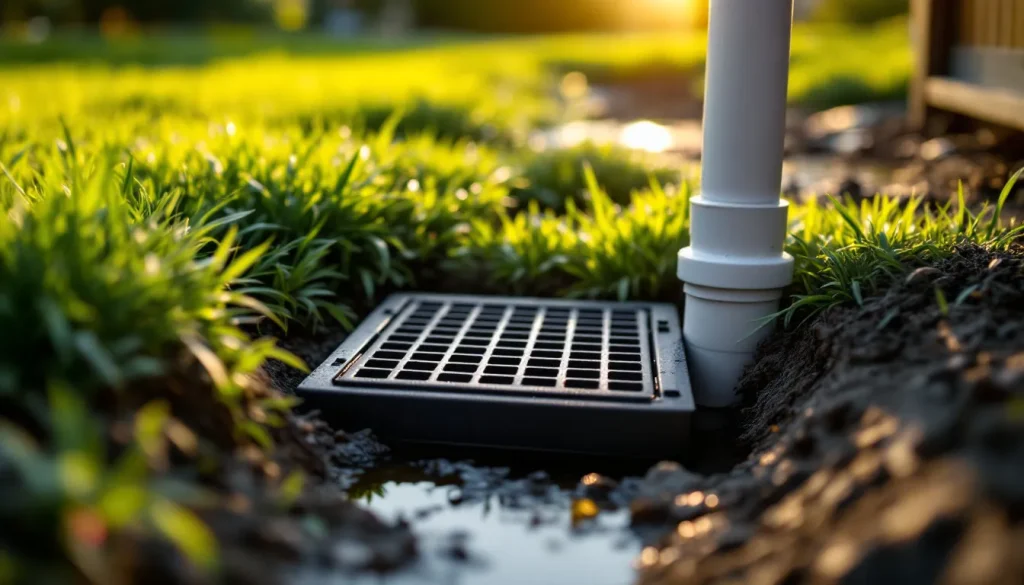
An area drain is a point drain that collects surface water from a single low spot and sends it underground through a solid pipe to somewhere safer. It is a small basin (also called a catch basin box or drain box) set flush with the ground, capped by a grate. Water pools at the low point, falls through the grate into the basin, then flows out a pipe outlet by gravity.
The mechanism is simple. Gravity does the work. The grate keeps out leaves and mulch, the basin gives sediment a place to settle, and the outlet pipe carries clean water downhill to a discharge point (a pop-up emitter, a dry well, a swale, or a storm sewer where local code allows).
Because it drains one location, an area drain is the right fix for a defined puddle: a patio corner, a driveway dip, a courtyard, or a soggy spot in the lawn. It is not designed to intercept water spread across a long line. That distinction drives most of the comparison questions below.
Where area drains are installed
Area drains go wherever water collects at a single point and has nowhere to go. The basin is buried at the lowest elevation of the problem area so the surrounding grade sheds water toward it. Common locations include patios, driveways, courtyards, planting beds, window wells, and low spots in a yard.
- Yards and lawns: a persistent puddle or a bowl-shaped low area that stays wet after rain.
- Patios and driveways: a dip in hardscape where water sits instead of running off to the edge.
- Near foundations: to move roof and grade runoff away from the house (paired with downspout routing).
- Landscaped beds and planters: to stop root rot in areas that hold water.
- Window wells and stairwells: below-grade pockets that flood in heavy rain.
If the wet zone is a broad low bowl, a single area drain at its bottom often solves it. If water sheets across a line (the base of a slope, the edge of a driveway), a linear drain fits better.
Area drain vs catch basin, trench drain, and French drain
The four solutions do different jobs. An area drain is a point drain for a puddle. A catch basin is essentially an area drain with a deeper sediment sump. A trench (channel) drain is a linear drain for water crossing a line. A French drain is a subsurface, perforated system for groundwater, not surface pooling. Pick by how the water arrives.
| System | Shape | Best for | Water type | Key trait |
|---|---|---|---|---|
| Area drain | Point (single box) | One defined puddle or low spot | Surface | Small grated basin, solid outlet pipe |
| Catch basin | Point (deeper box) | Low spot with heavy sediment or debris | Surface | Built-in sump traps silt below the outlet |
| Trench / channel drain | Linear (long run) | Driveways, garage aprons, pool decks | Surface, spread across a line | Continuous grated channel intercepts sheet flow |
| French drain | Linear (buried gravel + perforated pipe) | Soggy soil, groundwater, wet slopes | Subsurface / groundwater | Perforated pipe collects water from the soil |
Two practical rules settle most cases. If your water is a puddle at a point, use an area drain (or a catch basin when leaves and silt are heavy). If the ground itself is saturated rather than pooling on top, you want a DIY French drain with the right cost and failure-point guidance, since a grated box on the surface will not pull water out of wet soil.
Materials, grates, and common sizes
Area drain basins are made from PVC, ABS plastic, or (for spec-grade and commercial use) cast iron, ductile iron, or epoxy-coated metal. Residential yards use plastic; commercial and code-driven jobs use metal for load rating and durability. The grate is a separate choice sized to the flow and the traffic.
Grate and strainer options:
- Flat round or square grates: standard for lawns, patios, and beds.
- Atrium (beehive) grates: domed to stay clear of leaves in planted areas.
- Snap-in and screw-down grates: for cleanout access and pedestrian safety.
- Load-rated ductile grates: for driveways and any vehicle traffic.
| Basin / pipe size | Typical use |
|---|---|
| 2 inch | Small planters, window wells, very light flow |
| 3 inch | Small patios, tight landscaped areas |
| 4 inch | Most residential yards and patios (the default) |
| 6 inch | Large catchment, driveways, heavy-rain regions, commercial |
Major manufacturers include Zurn, Watts, Oldcastle Infrastructure, and Jones Stephens, which supply both residential kits and specification-grade drains. NDS is the dominant residential-catalog brand for plastic basins and grates.
What size area drain do I need
Size the drain to the water it must move, not the box that looks big enough. A 4 inch basin and outlet handle most residential yards and patios. Move up to 6 inch when the drainage area is large, the roof or paving feeds a lot of runoff into one spot, or your region sees intense downpours. Drop to 2 to 3 inch only for small, low-flow pockets.
A rough field method: estimate the square footage draining to the point, then match the outlet so the pipe can carry a heavy local rainfall without backing up. A single 4 inch outlet at a proper slope handles a surprising volume, but two smaller basins tied together can outperform one undersized box on a big patio. When in doubt, upsize the outlet pipe rather than the grate.
How to install an area drain
Installing an area drain means burying a basin at the lowest point and running a solid pipe downhill to a legal discharge. The two specs that make or break it are location (the basin must sit at the true low point) and slope (the outlet pipe should fall 1 to 2 percent, about 1/8 to 1/4 inch per foot). Skip either and water sits or the pipe silts up.
- Find the true low point. Watch where water pools after rain, or use a level. The basin goes at the bottom of that bowl.
- Confirm a downhill discharge. You need somewhere lower to send water: a pop-up emitter in the lawn, a dry well, a swale, or a storm connection where code permits.
- Dig the basin hole and the pipe trench. Set the trench so the pipe falls at least 1 percent (1/8 inch per foot); 2 percent (1/4 inch per foot) is better for self-cleaning.
- Set the basin flush. The grate should sit slightly below the surrounding grade so water runs into it, not around it.
- Connect solid outlet pipe. Use solid (not perforated) SDR-35 or Schedule 40 PVC so water leaves the basin instead of leaking into the trench.
- Backfill, compact, and test. Pour a bucket of water at the grate and confirm it drains and exits at the discharge.
Regrading the surrounding area to slope toward the grate is often as important as the drain itself. If the surface does not shed water to the basin, the basin never gets the chance to work.
How much does an area drain cost
An area drain is one of the cheaper drainage fixes because it is small and localized. A DIY residential install commonly runs about 150 to 500 dollars in parts (basin, grate, pipe, fittings, gravel). Professional installs typically land around 1,000 to 3,000 dollars for a single drain with a short pipe run, and more for long runs, hardscape cutting, or multiple basins.
| Item | Typical range |
|---|---|
| Basin + grate (residential plastic) | $20 to $80 |
| Solid PVC pipe + fittings | $1 to $3 per foot |
| DIY total (single drain) | $150 to $500 |
| Professional install (single drain) | $1,000 to $3,000 |
Cost climbs fast when the pipe must run through a driveway, under a patio, or a long distance to a legal outlet. These figures are general estimates; local labor, permits, and soil conditions can move them up or down.
How to unclog and maintain an area drain
The most common area-drain failure is a clog, not a broken part. Leaves and mulch cover the grate, and silt settles in the basin and outlet. Clear the grate seasonally, scoop sediment out of the basin, and flush the outlet pipe once or twice a year. A drain that stops working almost always needs cleaning, not replacing.
- Lift and clean the grate after heavy leaf drop; debris on top starves the drain first.
- Scoop the basin sump where silt collects. Catch basins with a deep sump hold more before it reaches the pipe.
- Flush the outlet pipe with a hose; if water backs up, snake it or use a pressure nozzle.
- Check the discharge end so a buried pop-up emitter or dry well has not silted shut.
If a well-installed drain still holds standing water, suspect a clogged outlet, a discharge point that is now higher than the basin, or a basin that was never set at the true low point. In freezing climates, a shallow outlet can ice up; a slightly deeper, well-sloped pipe drains before it freezes. For clearing the wet, weedy patches that often surround a failing drain, see our guide on the best way to remove weeds from a large area.
Where the water can legally go
An area drain only works if it has a legal, downhill place to discharge. Many jurisdictions bar you from piping stormwater onto a neighbor’s property or, in some areas, into the sanitary sewer. Common legal outlets are a pop-up emitter on your own lot, a dry well, a swale, or a municipal storm sewer where local code and permits allow the connection.
Downspouts can tie into an area-drain system, and doing so is a frequent reason to install one near the foundation, but rules on where that combined flow may end up vary by municipality. Whether a downspout or drain may connect to the storm sewer depends on local ordinances, so confirm with your city or a licensed drainage contractor before you dig. Getting the discharge right is often the difference between a drain that solves the problem and one that just moves the puddle.
Frequently Asked Questions
What is an area drain and how does it work?
An area drain is a point drain: a small grated basin set flush at a low spot that collects surface water and carries it away through a solid underground pipe. Water pools at the low point, falls through the grate into the basin, sediment settles, and gravity moves the clean water downhill to a discharge point such as a pop-up emitter, dry well, or storm sewer.
Area drain vs catch basin: what is the difference?
Both are point drains, but a catch basin has a deeper sump below the outlet that traps sediment before it reaches the pipe. An area drain is the simpler, shallower box for cleaner water. Choose a catch basin where leaves and silt are heavy (near trees or unpaved areas) so debris settles instead of clogging the outlet line.
Area drain vs French drain: which do I need?
Use an area drain when water pools on the surface at a point; it captures visible standing water through a grate. Use a French drain when the soil itself is saturated, because a French drain uses buried perforated pipe and gravel to pull groundwater out of the ground. Surface puddle means area drain; soggy, wet soil means French drain.
What size area drain do I need?
A 4 inch basin and outlet is the default for most residential yards and patios. Use 6 inch for large catchment areas, driveways, heavy runoff, or intense-rain regions. Use 2 to 3 inch only for small, low-flow pockets like planters or window wells. When unsure, upsize the outlet pipe rather than the grate to avoid backups.
How do you install an area drain?
Set the basin at the true low point with the grate flush to grade, then run solid PVC outlet pipe downhill at a 1 to 2 percent slope (1/8 to 1/4 inch per foot) to a legal discharge. Confirm a downhill outlet exists first, regrade the surface to shed water toward the grate, backfill, then test with a bucket of water.
How much does an area drain cost?
A DIY residential area drain typically costs 150 to 500 dollars in parts. Professional installation of a single drain with a short pipe run commonly runs 1,000 to 3,000 dollars, and more for long runs, cutting through hardscape, or multiple basins. Costs rise sharply when the outlet pipe must cross a driveway or reach a distant legal discharge point.
How do I unclog or maintain an area drain?
Lift and clear the grate after leaf drop, scoop settled silt from the basin sump, and flush the outlet pipe with a hose once or twice a year. If water still backs up, snake the pipe and check that the discharge end has not silted shut. Most drains that stop working need cleaning, not replacement.
Can an area drain connect to a downspout or the storm sewer?
Yes, downspouts commonly tie into an area-drain system, and that is a frequent reason to install one near the foundation. Whether the combined flow may then enter a municipal storm sewer depends on local ordinances and permits, which vary by city. Confirm with your municipality or a licensed drainage contractor before connecting, since some areas prohibit certain discharges.