
By the HMNDP Editorial Team | Last reviewed: June 2026
Should you be dethatching your lawn at all?
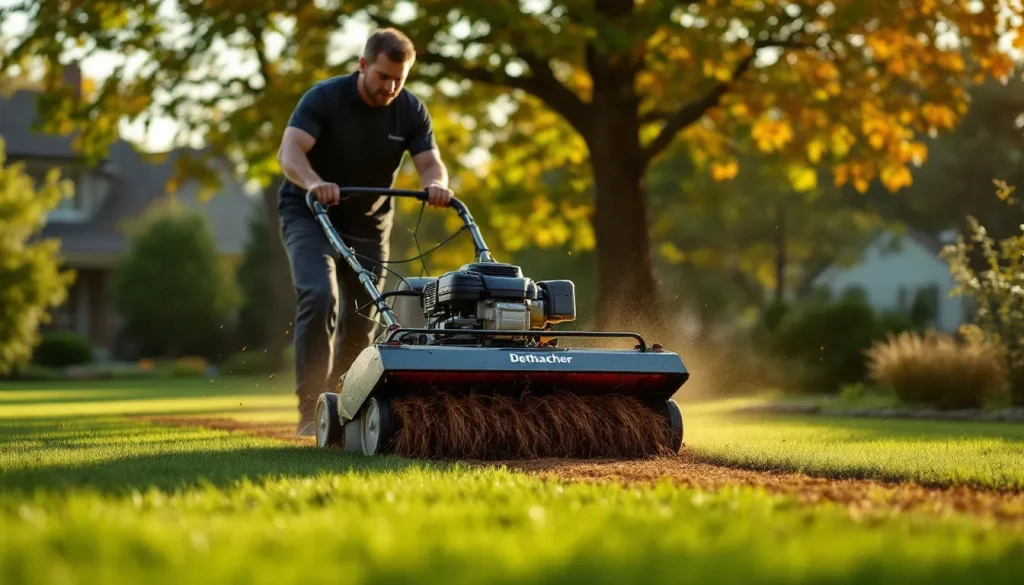
Dethatching your lawn is the mechanical removal of thatch, a matted layer of dead and living organic matter that builds up between the soil and the green blades. You only need to do it when that layer is thicker than about 1/2 inch. Below that, thatch is healthy. Above it, water, air, and nutrients get blocked and the lawn declines.
Most lawns do not need dethatching every year. Many DIY homeowners tear up healthy turf chasing a problem they do not have, or dethatch when the lawn only needed aeration. Measure first, then decide.
What thatch is and what dethatching removes
Thatch is a spongy, brown, mat-like layer of stems, roots, and dead grass tissue that sits between the soil surface and the green grass above. A thin thatch layer (under 1/2 inch) insulates roots and holds moisture. A thick layer acts like a roof, shedding water and blocking air. Dethatching physically rips that excess mat out with tines or blades.
Thatch is not grass clippings. Clippings from a mulching mower break down within weeks and rarely add to thatch. Thatch comes from stems and roots that decompose slower than they accumulate, common in vigorous grasses like Kentucky bluegrass and Bermuda.
How to measure your thatch (the 1/2-inch trigger)
Cut a small wedge of turf about 3 inches deep with a spade, or pull a soil-probe core. Look at the brown spongy band between the green blades and the dark soil. Measure it. Under 1/2 inch means leave it alone. Between 1/2 and 3/4 inch means a light dethatch. Over 3/4 inch means aggressive treatment, likely more than one pass or a pro.
Why dethatch: the benefits
Dethatching removes the barrier that stops water, oxygen, fertilizer, and grass seed from reaching the soil and roots. With the mat gone, roots grow deeper, the lawn drinks and breathes better, and pesticides and nutrients actually reach where they work. The result is denser, healthier turf that resists drought and disease.
Thick thatch also harbors pests and fungal disease and can make a lawn feel spongy underfoot. Removing it restores firm footing and cuts the moisture pockets that feed lawn diseases like brown patch.
When to dethatch: best timing by grass type
Dethatch only during active growth, so the lawn can recover fast. That means late summer to early fall for cool-season grasses and late spring to early summer for warm-season grasses. Never dethatch dormant, drought-stressed, or wet-soil turf. Timing wrong is one of the most common ways homeowners damage a lawn.
Cool-season grasses (fescue, Kentucky bluegrass, ryegrass) recover best in early fall. Warm-season grasses (Bermuda, Zoysia, St. Augustine) recover best in late spring after full green-up. Use this quick reference:
| Grass type | Season | Best dethatching window | Notes |
|---|---|---|---|
| Kentucky bluegrass | Cool | Late Aug to early Oct | Heavy thatch producer, check yearly |
| Tall/fine fescue | Cool | Early to mid fall | Rarely needs it, thatches slowly |
| Perennial ryegrass | Cool | Early fall | Low thatch, dethatch only if measured |
| Bermuda | Warm | Late spring to early summer | Aggressive thatch, verticut common |
| Zoysia | Warm | Late spring after green-up | Dense, thatches heavily, go gentle |
| St. Augustine | Warm | Late spring | Fragile, hand-rake only, never power-rake hard |
Which method to use: a decision framework
Match the tool to your measured thatch depth, not to what the store rents you. A manual dethatching rake handles thin thatch on a small lawn. A powered dethatcher or tow-behind unit handles moderate thatch on a mid-size lawn. A verticutter (vertical mower) and a professional service handle heavy thatch or large yards. St. Augustine and fragile turf should only ever be hand-raked.
| Thatch depth | Lawn size | Best method | Typical tool cost |
|---|---|---|---|
| Under 1/2 in | Any | Do nothing, or aerate instead | $0 |
| 1/2 to 3/4 in | Under ~2,000 sq ft | Manual dethatching rake | $25 to $45 (buy) |
| 1/2 to 3/4 in | 2,000 to 8,000 sq ft | Power dethatcher or tow-behind | $70 to $100 (rent/day) |
| Over 3/4 in | Any large lawn | Verticutter or hire a pro | $80 to $120 (rent) or hire |
How to dethatch a lawn step by step
Dethatching a lawn is a four-step process: mow low, pull the thatch, rake up the debris, then water and feed. Work on slightly moist (not wet) soil so tines grab thatch without tearing roots. Plan for the lawn to look rough for one to three weeks before it fills back in.
- Mow to about half your normal height and remove clippings so the machine reaches the thatch.
- Make one pass with your rake, power dethatcher, or verticutter set to just skim the soil surface. Do a second perpendicular pass only for heavy thatch.
- Rake up and remove all the loosened thatch. A power dethatcher can pull surprising volumes, often several bags per 1,000 sq ft.
- Water deeply, apply a starter fertilizer, and overseed any bare spots the same day.
The pros and cons of dethatching (the honest version)
Dethatching helps a genuinely thatch-bound lawn but stresses a healthy one. The upside is better water, air, and nutrient flow and denser turf. The downside is real: aggressive tines tear living crowns, thin the stand, and can invite weeds into the openings. Done at the wrong time or on the wrong lawn, dethatching sets you back a full season.
| Pros | Cons and risks |
|---|---|
| Restores water, air, nutrient flow to roots | Over-dethatching tears healthy crowns and thins turf |
| Deeper roots, denser, more drought-tolerant lawn | Wrong timing (dormant/summer heat) stalls recovery |
| Cuts disease and pest habitat | Opens bare soil that weeds colonize fast |
| Improves seed-to-soil contact for overseeding | Wet-soil dethatching rips roots instead of thatch |
The single biggest mistake is dethatching a lawn that only needed aeration. If your soil is hard and compacted but thatch is under 1/2 inch, dethatching does nothing useful and only damages grass.
Dethatching vs aerating: which does your lawn actually need?
Dethatching removes an organic mat on the surface. Aeration pulls soil plugs to relieve compaction below. They solve different problems and are often paired in the same fall visit, but you should not automatically do both. Diagnose first: measure thatch for dethatching, and test compaction (can you push a screwdriver 6 inches into moist soil?) for aeration.
| Symptom | Do this |
|---|---|
| Spongy feel, brown mat over 1/2 in | Dethatch |
| Hard soil, water pools, heavy foot traffic | Aerate |
| Both mat and compaction present | Dethatch, then aerate, then overseed |
| Thin thatch and soft soil, lawn just tired | Neither, just fertilize and overseed |
For the compaction side of that decision, see our full guide to aerating a lawn to confirm which treatment your turf needs before you rent anything.
What dethatching costs: DIY vs hiring a pro
Dethatching a lawn yourself runs roughly $0 to $100 depending on the tool, while hiring a lawn service typically costs $150 to $700, most often $175 to $400 for an average yard. Machine rental sits in between. Your break-even depends on lawn size, how often you will do it, and whether you also want aeration and overseeding bundled in.
| Option | Typical cost | Best for |
|---|---|---|
| Manual dethatching rake (buy) | $25 to $45 one-time | Small lawns, thin thatch |
| Power dethatcher rental | $70 to $100 per day | Mid-size lawns, one-time job |
| Buy a dethatcher/tow-behind | $150 to $400 | Recurring need, larger lots |
| Hire a lawn service | $150 to $700 per visit | Large or heavy-thatch lawns, no equipment |
These are 2026 US ballpark figures and vary by region and lawn size. For current local pricing benchmarks, check the 2026 US lawn care price index, and if you are weighing the whole job yourself against a contractor, our lawn repair service vs DIY breakdown walks through the trade-offs. For broader market context, see the 2026 US lawn care and landscape industry report.
Aftercare: helping the lawn recover
A dethatched lawn looks thin and torn for one to three weeks, so aftercare decides whether it bounces back or stays patchy. Water deeply right away, apply a starter or balanced fertilizer, and overseed bare spots the same day while the soil is exposed. Keep the seed bed consistently moist and hold off heavy foot traffic and low mowing until new grass is established.
Fall dethatching pairs naturally with overseeding because the open, debris-free soil gives seed excellent contact. Keep watering light and frequent for the first two weeks, then taper to deep, infrequent watering as roots take hold.
Frequently Asked Questions
How do I know if my lawn needs dethatching?
Cut a 3-inch wedge of turf and measure the brown spongy layer between the green blades and the soil. If that thatch layer is thicker than about 1/2 inch, the lawn needs dethatching. Under 1/2 inch, leave it alone. A spongy, bouncy feel underfoot and water that runs off instead of soaking in are common warning signs.
What is the difference between dethatching and aerating a lawn?
Dethatching removes a matted organic layer on the soil surface using tines or blades. Aerating pulls small soil plugs to relieve compaction underneath. Dethatching fixes a thatch problem; aeration fixes a hard, compacted soil problem. They are different treatments that are often paired in fall, but you should diagnose each issue separately before doing both.
When is the best time of year to dethatch a lawn?
Dethatch during active growth so the grass recovers quickly. Cool-season grasses like fescue and Kentucky bluegrass do best in late summer to early fall. Warm-season grasses like Bermuda, Zoysia, and St. Augustine do best in late spring to early summer after full green-up. Never dethatch dormant, heat-stressed, or wet-soil lawns.
How much does it cost to dethatch a lawn or hire someone to do it?
Doing it yourself costs roughly $0 to $100: a manual rake runs $25 to $45, and a power dethatcher rents for about $70 to $100 per day. Hiring a lawn service typically costs $150 to $700 per visit, most often $175 to $400 for an average yard. Prices vary by region, lawn size, and whether aeration is bundled in.
What are the pros and cons of dethatching your lawn?
The pros: better water, air, and nutrient flow to roots, deeper roots, denser turf, and less disease and pest habitat. The cons: over-dethatching tears healthy grass crowns, thins the stand, and opens bare soil to weeds. Wrong timing or wet soil can stall the lawn for a season. Only dethatch when the thatch layer truly exceeds 1/2 inch.
Can dethatching damage or kill my grass?
Yes, dethatching can damage a lawn if done wrong. Aggressive tines on a healthy or thin-thatch lawn tear living crowns and thin the turf. Dethatching dormant grass, drought-stressed grass, or wet soil rips roots instead of thatch. Fragile grasses like St. Augustine should be hand-raked only, never power-raked hard. Measure your thatch and time it right to avoid harm.
What machine or tool do I use to dethatch a lawn?
Options include a manual dethatching rake for small lawns and thin thatch, a powered dethatcher or power rake for mid-size lawns, a tow-behind dethatcher pulled by a mower, and a verticutter (vertical mower) for heavy thatch. Match the tool to your measured thatch depth and lawn size. Fragile turf like St. Augustine should only be hand-raked.
What should I do after dethatching (watering, fertilizing, overseeding)?
Right after dethatching, rake up all loosened debris, water deeply, and apply a starter or balanced fertilizer. Overseed any bare spots the same day while the soil is exposed for the best seed-to-soil contact. Keep the seed bed lightly and consistently moist for about two weeks, and avoid heavy foot traffic and low mowing until new grass is established.