
By the HMNDP Editorial Team. Last reviewed: June 2026.
What a water drainage system is and how it works
A water drainage system is a set of components that collects excess surface or subsurface water and moves it away from a structure or low spot to a safe discharge point. It works by gravity: water enters a catch basin, channel, or perforated pipe at a high point and flows down a graded slope to daylight, a dry well, or a storm drain. The goal is to keep water off your lawn and away from your foundation.
Most residential systems combine two or more parts. A downspout carries roof water to a buried pipe, that pipe runs to a pop-up emitter in the yard, and a French drain intercepts groundwater in a soggy low area. Each piece solves a different water problem, which is why matching the system to the symptom matters more than picking the most popular option.
Types of water drainage systems
There are four main categories of residential water drainage system: surface, subsurface, downspout/gutter, and slope/grading. Surface systems move standing water off the top of the ground. Subsurface systems (like French drains) pull water from below grade. Downspout systems handle roof runoff. Grading changes the ground shape itself so water flows away by design. Most wet yards need a combination.
| Type | What it moves | Best for | Typical lifespan |
|---|---|---|---|
| Surface (channel/trench drain, catch basin) | Standing water on top of the ground | Pooling on patios, driveways, low turf spots | 15 to 25 years |
| Subsurface (French drain) | Saturated soil and groundwater below grade | Soggy lawn, spongy low areas, hillside seepage | 30 to 40 years if fabric-wrapped |
| Downspout/gutter extension | Concentrated roof runoff | Water dumping next to the foundation | 10 to 20 years |
| Slope/grading | Sheet flow across the yard | Yards that slope toward the house | Permanent if maintained |
Signs you need a drainage system
You likely need a water drainage system if water stands in your yard for more than 24 hours after rain, your lawn stays spongy, or moisture shows up near the foundation. These symptoms point to poor grading, saturated soil, or roof runoff that has nowhere to go. Catching them early is far cheaper than repairing a cracked foundation or a flooded basement later.
- Standing water or puddles 24+ hours after rain
- Soggy, spongy, or mossy patches in the lawn
- Water stains, efflorescence, or dampness on basement/foundation walls
- Mulch or soil washing away in the same spot repeatedly
- Gutters overflowing or downspouts dumping right at the wall
- A yard that visibly slopes toward the house
- Cracks in the foundation or basement seepage after storms
Which drainage system do I need? A symptom-to-fix chooser
The right water drainage system depends on where the water is and where it comes from. Match your specific symptom to the correct fix below instead of installing a generic French drain everywhere. This chooser is the step most guides skip, and picking the wrong system is the most common reason a drainage project fails to solve the problem.
| Your symptom | Likely cause | Correct system |
|---|---|---|
| Soggy low spot in the middle of the lawn | Groundwater collecting below grade | French drain to a pop-up emitter or dry well |
| Water sheeting off the roof next to the wall | Downspouts ending at the foundation | Buried downspout extension to a dry well |
| Water pooling on a patio, driveway, or slab | Flat hardscape with no fall | Channel (trench) drain across the surface |
| Water running downhill toward the house | Negative grade | Regrading, plus a swale or catch basin |
| Basement dampness after every storm | Saturated soil against the wall | Exterior footing drain (call a pro) |
How much a yard drainage system costs
Installing a yard drainage system typically costs between $10 and $75 per linear foot depending on the system type and whether you hire a contractor. A DIY French drain runs roughly $10 to $20 per foot in materials, while a professionally installed one usually falls between $25 and $75 per foot because of labor, excavation, and haul-away. Cost is the buyer’s first question, so here are the ranges before you spend.
| System | DIY materials (per linear ft) | Installed by pro (per linear ft) | Notes |
|---|---|---|---|
| French drain | $10 to $20 | $25 to $75 | Gravel and excavation drive the cost |
| Surface/channel drain | $8 to $15 | $30 to $150 | Concrete cutting raises pro price |
| Downspout extension to dry well | $150 to $400 per drain | $500 to $1,500 per drain | Dry well size is the variable |
| Regrading/swale | $1 to $3 per sq ft (soil) | $1,000 to $5,000 project | Depends on how much fill is moved |
Ranges reflect national averages reported by home-services cost aggregators in 2025 and vary by region, soil, and access. Rocky soil, long runs, and tying into a municipal storm line all push prices toward the top of each range.
French drains explained
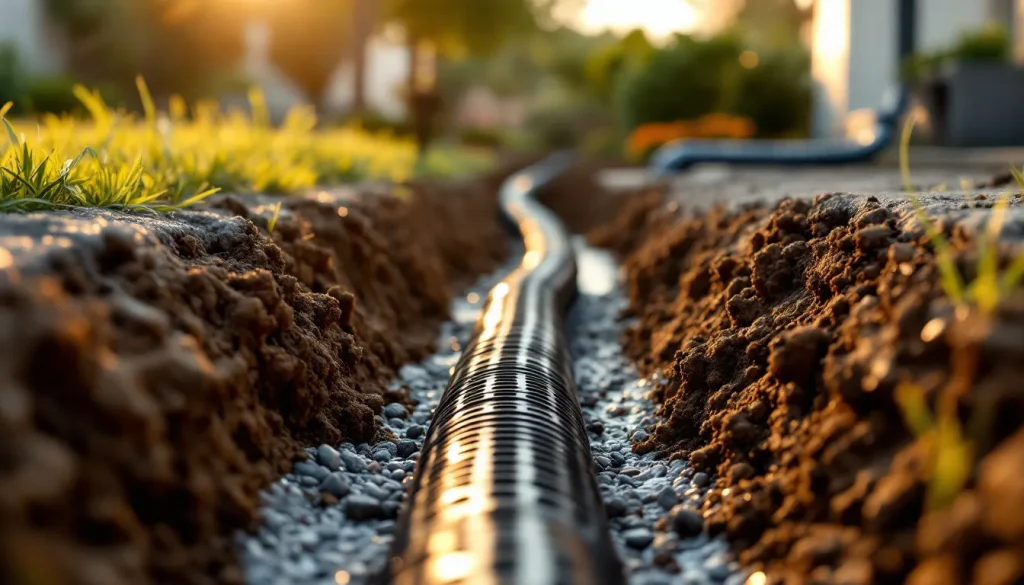
A French drain is a gravel-filled trench with a perforated pipe at the bottom that collects groundwater and carries it downhill to a discharge point. Water seeps through the gravel, enters the pipe through its holes, and flows away by gravity. Use one when you have a soggy low area, a spring line on a slope, or saturated soil that surface drains cannot reach.
The pipe must slope at least 1 percent, meaning it drops about 1 inch every 8 feet, so water keeps moving. Wrap the pipe or line the trench with landscape fabric to keep soil from clogging the perforations, which is the single biggest reason older French drains fail. A properly built, fabric-wrapped French drain can last 30 to 40 years.
Core components of a drainage system
A residential water drainage system is built from a small set of standard parts, and brands like NDS (National Diversified Sales) make most of the fittings sold at home centers. Knowing each component helps you spec a job and compare a contractor’s quote line by line. Below is what each part does and where it goes.
- Perforated pipe: slotted 3 to 4 inch pipe (rigid PVC or corrugated) that collects and carries subsurface water.
- Gravel: 3/4 inch washed stone that surrounds the pipe and creates space for water to move.
- Landscape fabric: nonwoven filter fabric that blocks silt while letting water pass, protecting the pipe from clogging.
- Catch basin: a boxed grate inlet (NDS makes 9 inch and 12 inch models) that collects surface water at a low point.
- Pop-up emitter: a spring-loaded outlet that opens under water pressure to release flow at daylight, then closes to keep debris and animals out.
- Solid pipe: non-perforated pipe used to carry collected water the last stretch to the discharge point without releasing it.
DIY installation: how to build a French drain step by step
Installing a DIY French drain takes a weekend for an average 30 to 50 foot run and requires digging a sloped trench, laying fabric and gravel around a perforated pipe, then backfilling. Call 811 before you dig to mark utilities. Follow these ordered steps for a system that drains reliably and lasts decades.
- Call 811 at least 2 to 3 business days ahead to locate buried utilities.
- Plan the route from the wet area to a lower discharge point (pop-up emitter, dry well, or daylight).
- Dig a trench 8 to 12 inches wide and 18 to 24 inches deep, sloping it at least 1 percent (1 inch per 8 feet).
- Line the trench with nonwoven landscape fabric, leaving extra to fold over the top later.
- Add 2 to 3 inches of 3/4 inch washed gravel as a base.
- Lay perforated pipe with the holes facing down, checking slope with a level.
- Cover the pipe with gravel to within a few inches of the surface.
- Fold the fabric over the gravel, then backfill with soil and reseed or add sod on top.
- Confirm the outlet discharges to a legal, safe point away from the house and off neighboring property.
Directing water away from your foundation (the highest-stakes part)
Keeping water off your foundation is the most important job of any drainage system because water against a wall causes cracks, seepage, and expensive structural repair. The fix is to grade soil to slope away from the house and to carry roof runoff well past the wall. The standard target is a drop of 6 inches over the first 10 feet, roughly a 5 percent slope.
Downspouts should discharge at least 4 to 6 feet from the foundation, and many building codes and lenders reference this distance. Buried downspout pipes running to a pop-up emitter or a dry well move that water even farther out. Where water can legally discharge (a storm drain, a swale, or daylight, but usually not directly onto a neighbor’s lot) varies by municipality, and some areas require a permit or restrict tie-ins, so check local rules before you route an outlet.
Grading and discharge rules can also fall under HOA covenants or local stormwater ordinances, so confirm requirements with your building department or HOA before committing to a route. For yards on water-restricted properties, coordinate drainage changes with irrigation planning; see our 2026 US turf water-use restriction tracker for state-level rules that may affect landscape changes.
Handling rainwater and stormwater runoff
Rainwater and stormwater runoff is the water that leaves your property during and after a storm, and a good drainage system slows it, spreads it, or infiltrates it rather than sending a torrent toward your house or the street. Dry wells, rain gardens, and swales all capture runoff on site, which many stormwater ordinances now encourage or require for new impervious surfaces.
A dry well is a buried, gravel-filled or perforated chamber that holds runoff and lets it soak into the soil over hours. It pairs well with buried downspout extensions and keeps roof water from overwhelming the lawn. Sizing depends on your roof area and local rainfall intensity, so size the well to the drainage area it serves.
Maintenance and lifespan comparison
Every water drainage system needs periodic maintenance, and neglect is why systems fail before their expected lifespan. Surface catch basins need debris cleared a few times a year, French drains benefit from occasional flushing, and pop-up emitters should be checked so they open freely. Matching maintenance to system type keeps a properly built system working for decades.
| System | Maintenance | Frequency |
|---|---|---|
| Catch basin/surface drain | Clear leaves and silt from the grate and sump | 2 to 4 times/year |
| French drain | Flush pipe, check outlet for clogs | Every 1 to 2 years |
| Pop-up emitter | Clear debris, confirm it opens | Twice/year and after big storms |
| Dry well | Inspect inlet, watch for slow drainage | Annually |
Sound watering habits also reduce the load on any drainage system by preventing over-saturation. Our guides on the best time to water grass and drip irrigation systems can help you avoid adding water your drains then have to remove.
Frequently Asked Questions
What is a water drainage system and how does it work?
A water drainage system is a network of pipes, basins, and graded slopes that collects excess water and moves it away from your yard or foundation by gravity. Water enters at a high point through a catch basin or perforated pipe, flows down a sloped line, and exits at a lower discharge point such as a pop-up emitter, dry well, or storm drain.
What are the different types of water drainage systems?
The four main types are surface drains (channel drains and catch basins for standing water), subsurface drains like French drains (for saturated soil below grade), downspout and gutter extensions (for roof runoff), and slope or grading solutions (which reshape the ground so water flows away). Most wet yards need two or more of these working together.
How much does it cost to install a yard drainage system?
A yard drainage system typically costs $10 to $75 per linear foot. A DIY French drain runs about $10 to $20 per foot in materials, while a pro-installed French drain runs $25 to $75 per foot. Downspout-to-dry-well projects usually cost $500 to $1,500 per drain installed. Rocky soil, long runs, and storm-drain tie-ins push prices higher.
What is the best drainage system for a yard with standing water?
For standing water in a low lawn spot, a French drain that carries groundwater to a pop-up emitter or dry well is usually best. For standing water on a patio or driveway, a surface channel drain works better. If water sheets toward the house, regrading plus a catch basin is the fix. Match the system to where the water sits.
How do I install a water drainage system myself (DIY)?
Call 811 to mark utilities, then dig a sloped trench (at least 1 inch of drop per 8 feet), line it with landscape fabric, add gravel, lay perforated pipe holes-down, cover with gravel, fold the fabric over, and backfill. Route the outlet to a legal discharge point away from the house. A 30 to 50 foot run is a realistic weekend DIY project.
What is a French drain and when should I use one?
A French drain is a gravel-filled trench with a perforated pipe that collects and redirects groundwater downhill. Use one when you have a soggy low spot, spring seepage on a slope, or saturated soil that surface drains cannot reach. Wrap the pipe in landscape fabric and slope it at least 1 percent so it keeps flowing and resists clogging for 30 to 40 years.
How do I stop rainwater from pooling near my house foundation?
Grade the soil to slope away from the house, aiming for a 6 inch drop over the first 10 feet (about 5 percent). Extend downspouts at least 4 to 6 feet from the wall, ideally to a pop-up emitter or dry well. Adding a swale or exterior footing drain handles persistent seepage. Check local codes and HOA rules before choosing a discharge point.
How do I drain water away from my house downspouts?
Connect each downspout to a buried solid pipe that carries roof water at least 4 to 6 feet past the foundation, then release it through a pop-up emitter, a dry well, or to daylight on a downhill slope. Keep the pipe sloped so it self-drains, and avoid dumping onto a neighbor’s property, which many municipalities prohibit.