
By the HMNDP Editorial Team, independent reporting on lawn care, landscaping, soil, water, and the green-industry business.
Last reviewed: June 2026
What Wind Erosion Is and How It Works
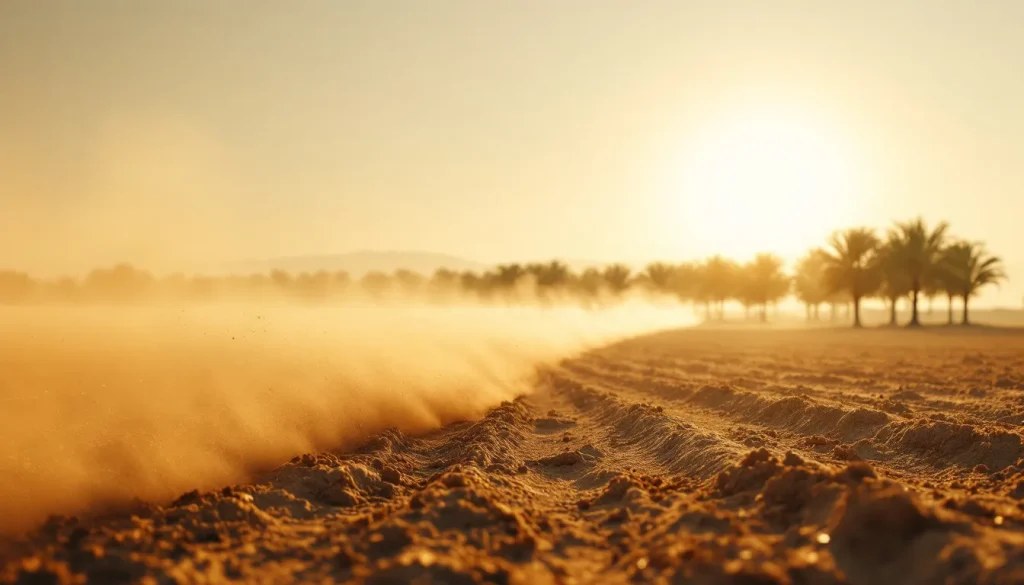
Wind erosion is a natural physical process in which moving air detaches, transports, and deposits loose soil and sediment particles across a landscape. It happens when strong wind passes over dry, bare, finely textured ground with nothing to hold the surface in place. The process strips away the lightest, most fertile topsoil first, moving particles by rolling, bouncing, and floating. Unlike chemical or biological soil change, wind erosion is purely mechanical: air does the work of cutting and carrying.
The lifted material ranges from microscopic clay and silt to sand grains up to about 0.5 mm across. Wind sorts these particles by size and weight as it moves them, which is why the process builds such different landforms in different places.
For a broader grounding in how soil loss happens overall, see our explainer on what erosion is and the forces that drive it.
What Causes Wind Erosion
Wind erosion needs four conditions present at once: strong wind, loose particles, dry soil, and a bare or sparsely covered surface. Remove any one and the process slows or stops. Soils richest in fine sand and silt erode fastest, while wet ground, plant roots, and crop residue anchor particles against the wind. Most damage starts above a wind speed of roughly 13 miles per hour at the soil surface, the threshold where grains begin to move.
The four drivers in plain terms:
- Strong wind: Sustained gusts above the threshold velocity lift and carry particles. Open, flat terrain with long unobstructed fetch raises wind force at ground level.
- Loose, fine particles: Sandy and silty soils with weak structure detach easily. Clay that has dried and cracked into dust does too.
- Dry soil: Moisture binds grains together. Drought, low humidity, and long dry spells leave the surface vulnerable.
- Bare surface: Tilled fields, overgrazed pasture, construction sites, and burned land expose soil with no vegetation or residue to block the wind.
Human land use sharply accelerates the natural process. Overcultivation, removing windbreaks, overgrazing livestock, and clearing native cover all expand the bare, dry surface that wind needs.
The Three Mechanisms: Deflation, Abrasion, and Transport
Wind erosion works through two erosive actions, deflation and abrasion, plus three transport modes that move particles by size. Deflation lifts and removes loose material from the surface. Abrasion is the sandblasting effect of wind-driven grains wearing down rock, soil clods, and plant stems. Transport then carries the freed particles by suspension, saltation, or surface creep, depending on how heavy each grain is.
Deflation
Deflation is the lifting and removal of loose, dry particles directly off the land surface by wind. It lowers the ground over time and leaves behind coarser, heavier material. In severe cases deflation scours out shallow basins called blowouts or deflation hollows, and it can strip an entire field of its fine topsoil in a single windy season, exposing gravel or hardpan beneath.
Abrasion
Abrasion is the wearing away of surfaces by particles the wind is already carrying, acting like natural sandblasting. Bouncing sand grains chip at soil aggregates, scratch crop seedlings, pit rock, and sculpt features such as ventifacts and yardangs. Abrasion also breaks larger clods into smaller, more erodible fragments, which feeds even more material into the wind and makes the next storm worse.
Transport: suspension, saltation, and surface creep
Wind moves eroded particles three ways, sorted by grain size. The mode matters because it controls how far soil travels and how it is best controlled.
- Suspension: The finest particles, clay and silt under 0.1 mm, lift high into the air and travel hundreds or thousands of miles. Saharan dust regularly crosses the Atlantic to the Americas this way.
- Saltation: Medium sand grains, roughly 0.1 to 0.5 mm, bounce along in short hops, usually within about a meter of the ground. Saltation drives 50 to 75 percent of total soil movement and triggers most abrasion when grains strike the surface.
- Surface creep: The largest grains, above 0.5 mm, are too heavy to lift, so wind rolls and pushes them along the ground. Creep accounts for roughly 5 to 25 percent of movement.
Aeolian Processes and the Landforms Wind Builds
Aeolian processes are the family of geological actions driven by wind, named after Aeolus, the Greek keeper of the winds. The term covers wind erosion, transport, and deposition together. Where wind drops its load, it builds distinctive depositional landforms; where it scours, it leaves erosional ones. These features record wind direction and strength over long spans of time.
Wind sorts material as it deposits it, which is why deposits are so well organized by grain size:
- Sand dunes: Mounds and ridges of saltating sand. Common types include barchan (crescent), transverse, linear, and star dunes, with shape set by wind direction and sand supply.
- Loess: Thick blankets of wind-deposited silt. Loess covers about 10 percent of Earth’s land surface and forms some of the most fertile farmland on the planet, including parts of the U.S. Midwest and the Loess Plateau of China.
- Sand sheets and ripples: Flat spreads and small surface waves where wind energy is lower.
- Deflation features: Blowouts, desert pavement, and yardangs left where wind has removed fine material.
Wind Erosion as a Driver of Soil Degradation
Wind erosion is a leading cause of soil and land degradation because it removes the topsoil layer where nutrients, organic matter, and seeds are concentrated. The UN estimates that erosion by wind and water strips roughly 24 billion tonnes of fertile soil from the world’s land each year. Once that top layer is gone, productivity drops, the land holds less water, and full recovery can take centuries because soil forms slowly.
The loss compounds. Wind takes the finest, most fertile particles first and leaves coarse, less productive material behind. Drifting soil also buries crops, fills ditches and roads, and damages plants downwind through abrasion.
The 1930s American Dust Bowl is the defining case study. Drought combined with widespread plowing of native grassland across the Southern Plains stripped an estimated 75 percent of the topsoil from the hardest-hit counties. One storm in May 1934 carried an estimated 300 million tons of soil eastward, darkening skies over New York City and Washington. The disaster directly prompted creation of the U.S. Soil Conservation Service in 1935.
Wind Erosion vs Water Erosion
Wind erosion and water erosion both strip soil, but they differ in the force at work, the particles they move, where they occur, and how you control them. Wind erosion dominates flat, dry, open land and moves the finest particles long distances. Water erosion dominates sloped, wetter land and cuts channels as it carries soil downhill. The table below compares them on the points that matter most for planning protection.
| Factor | Wind Erosion | Water Erosion |
|---|---|---|
| Driving force | Moving air | Moving water (rain, runoff, rivers) |
| Where it dominates | Flat, dry, open arid and semi-arid land | Sloped land in humid and high-rainfall regions |
| Particles moved | Fine sand, silt, clay; sorted by size | All sizes, dragged together downslope |
| Direction | Horizontal, follows wind; can move soil any direction | Downhill, follows gravity and slope |
| Visible signs | Dust clouds, drifts, blowouts, exposed subsoil | Rills, gullies, sheet wash, muddy runoff |
| Trigger condition | Dry, bare soil plus strong wind | Wet, bare soil plus rainfall or runoff |
| Main control | Windbreaks, residue, cover, surface roughness | Terracing, contour planting, drainage, ground cover |
The two often work in tandem on the same land at different times of year: bare soil that erodes by wind in a dry, windy spring can erode by water in a heavy summer storm. A backyard rain garden is one residential tactic that targets the water side of that pairing.
How to Prevent and Control Wind Erosion
You control wind erosion by keeping soil covered, moist, rough, or sheltered, so the four required conditions never line up. Practical control combines living cover, crop residue, reduced tillage, windbreaks, and surface roughening. Most working farms layer several methods, because no single tactic stops every grain. Done well, these practices can cut field soil loss by 50 to 90 percent and keep land productive through dry, windy seasons.
Step-by-step control practices
- Keep the ground covered with vegetation. Living plants and their roots are the strongest defense. Maintaining permanent grass, pasture, or dense turf holds soil year round. For lawns and bare patches, knowing how long grass seed takes to grow helps you plan cover before the windy season arrives.
- Plant cover crops. Sow rye, wheat, clover, or vetch between cash crops so soil is never bare. Roots bind particles and the canopy slows surface wind.
- Use conservation or no-till. Reducing or eliminating plowing leaves crop residue on the surface and keeps soil aggregates intact. The U.S. NRCS reports that leaving residue can cut wind erosion dramatically compared with clean tillage.
- Manage crop residue. Leave stalks, stubble, and straw standing or anchored after harvest. Standing residue traps moving grains and slows wind at the surface.
- Plant windbreaks and shelterbelts. Rows of trees, shrubs, or tall grass placed across the prevailing wind reduce wind speed and protect the field downwind (covered in detail below).
- Roughen the surface. Tillage that leaves ridges and clods, oriented across the wind, traps saltating grains in the troughs and raises the threshold wind speed.
- Strip cropping. Alternate narrow strips of erosion-prone crops with protective close-growing crops across the wind so each sheltered strip catches soil from the next.
- Keep soil moist and avoid overgrazing. Irrigation timed before windy periods and controlled grazing both preserve the cover and moisture that hold particles down.
How windbreaks and shelterbelts work
Windbreaks and shelterbelts are rows of trees, shrubs, or tall grasses planted across the prevailing wind to slow it near the ground. A windbreak protects a downwind distance of roughly 10 to 20 times its height, so a 30-foot row shelters 300 to 600 feet of field. The most effective barriers are moderately porous, around 40 to 60 percent open, because they filter and diffuse wind rather than creating turbulent eddies that a solid wall would produce.
During the Dust Bowl recovery, the U.S. Prairie States Forestry Project planted roughly 220 million trees in shelterbelts from Texas to North Dakota between 1935 and 1942, one of the largest erosion-control efforts ever attempted. Many of those belts still protect farmland today.
Frequently Asked Questions
What is wind erosion and how does it work?
Wind erosion is a natural physical process in which moving air detaches, lifts, transports, and deposits loose, dry soil and sediment. It works when strong wind passes over bare, fine-textured ground, picking up particles and carrying them by suspension, bouncing (saltation), and rolling (surface creep). The process removes fertile topsoil first and reshapes the land into dunes and other features.
What causes wind erosion?
Wind erosion requires four conditions at once: strong wind, loose particles, dry soil, and a bare or thinly covered surface. Fine sandy and silty soils erode fastest, and grains begin moving near 13 miles per hour at the surface. Human activities like overcultivation, overgrazing, removing windbreaks, and clearing vegetation expand the bare, dry ground that wind needs, sharply accelerating the natural process.
How can you prevent or control wind erosion?
You prevent wind erosion by keeping soil covered, moist, rough, or sheltered. Effective practices include planting permanent vegetation and cover crops, using conservation or no-till to leave residue, managing crop stubble, planting windbreaks and shelterbelts across the wind, roughening the surface with ridges, strip cropping, and avoiding overgrazing. Layering several methods can cut field soil loss by 50 to 90 percent.
What is the difference between wind erosion and water erosion?
Wind erosion is driven by moving air and dominates flat, dry, open land, moving fine particles long distances horizontally. Water erosion is driven by rain and runoff, dominates sloped wetter land, and cuts rills and gullies as it drags soil downhill by gravity. Wind needs dry bare soil plus strong wind; water needs wet bare soil plus rainfall. Each calls for different controls.
What are examples of wind erosion and the landforms it creates?
Wind erosion built the 1930s American Dust Bowl, where one 1934 storm carried about 300 million tons of soil eastward. Its landforms include sand dunes (barchan, transverse, linear, star), loess deposits of wind-laid silt covering about 10 percent of Earth’s land, blowouts and deflation hollows, desert pavement, and wind-sculpted rock features like yardangs and ventifacts.
What is the difference between deflation, abrasion, and saltation?
Deflation is wind lifting and removing loose particles off the surface, lowering the ground. Abrasion is the sandblasting wear caused by wind-driven grains striking rock, soil, and plants. Saltation is a transport mode, not an erosive action: medium sand grains bounce along in short hops near the ground, driving 50 to 75 percent of soil movement and causing most abrasion when they land.
How do windbreaks and shelterbelts reduce wind erosion?
Windbreaks and shelterbelts are rows of trees, shrubs, or tall grass planted across the prevailing wind. They slow wind near the ground, protecting a downwind distance of roughly 10 to 20 times the barrier’s height. The best barriers are 40 to 60 percent porous, so they filter wind rather than create turbulent eddies. Lower wind speed at the surface keeps soil particles below the threshold needed to move.
What types of soil and conditions are most vulnerable to wind erosion?
Dry, bare soils with loose, fine particles are most vulnerable. Sandy and silty soils with weak structure detach easily, as does dried, powdered clay. Risk peaks on flat, open land with long unobstructed wind fetch, during drought or low humidity, and where vegetation has been removed by tillage, overgrazing, fire, or construction. Moisture, roots, and surface residue all reduce vulnerability.
Explore more soil and landscape science in the HMNDP Learn hub.