
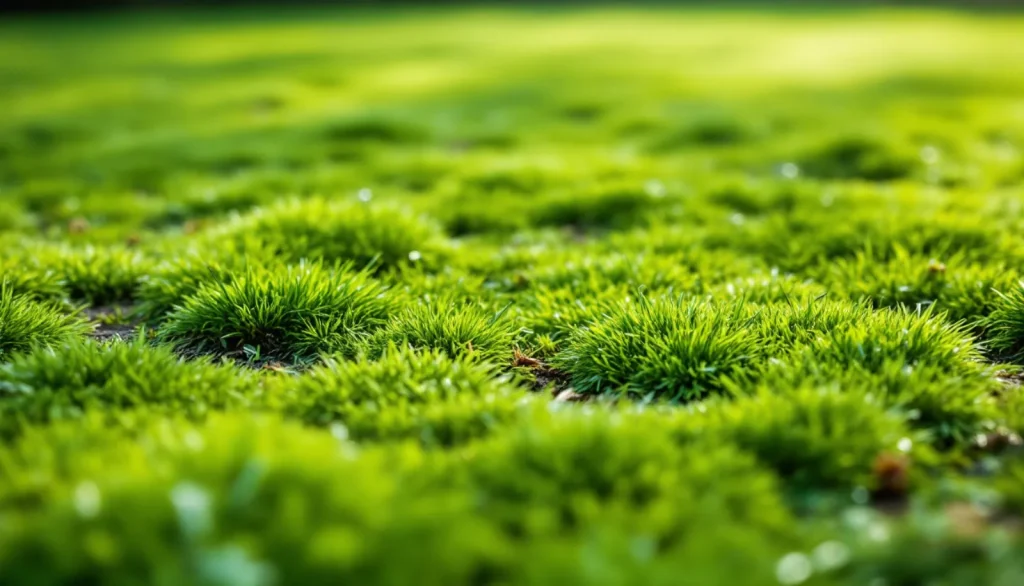
How to Get Rid of Moss in Lawn (and Keep It Gone)
How to get rid of moss in lawn turf has two halves: kill it with a ferrous (iron) sulfate product, rake out the blackened moss in 2 to 3 weeks, then fix the condition that let it move in: shade, soil compaction, low pH, poor drainage, or low fertility. Moss is a symptom, not the disease. Iron clears the surface fast, but moss returns within a season or two unless you correct the cause. The full process below covers both halves: the quick kill and the permanent fix.
Will killing moss actually fix my lawn?
No, not by itself. Moss does not kill grass and it does not poison soil. It simply fills the bare, damp, shaded gaps where grass already failed. Iowa State University Extension and Fairway Green both describe moss as a symptom of poor growing conditions, not the cause of lawn decline. Kill the moss and the gap stays open, so spores (which travel on wind and germinate in any damp spot) recolonize it.
That is why a two-step approach matters. Step one knocks the moss back so grass can compete. Step two changes the conditions so grass wins long term. Skip step two and you are buying a cosmetic reset that lasts one wet season.
What causes moss in a lawn?
Five conditions drive almost every mossy lawn, and most yards have two or three at once. Moss thrives where grass struggles: cool, damp, shaded, acidic, compacted ground with thin or hungry turf. Identify which apply to your yard before you spend a dollar on product, because the fix is different for each.
| Cause | How to spot it | The real fix |
|---|---|---|
| Shade | Moss heaviest under trees, on the north side, or where grass gets under 4 to 6 hours of sun | Prune limbs below 10 feet, thin the canopy, or overseed fine fescue; in deep shade, switch to groundcover or mulch |
| Soil compaction | Thin turf on clay or high-traffic paths, water pooling, screwdriver hard to push in | Core aerate in spring or fall (see lawn aeration timing below) |
| Low pH (acidic soil) | Soil test reads below 6.0; moss prefers pH 5.0 to 5.5 | Apply lime to reach pH 6.0 to 6.5 (UGA target), based on a soil test |
| Poor drainage / wet soil | Soggy low spots, moss in chronically damp areas, clay subsoil | Regrade, add a French drain, water deeply but less often |
| Low fertility / thin turf | Pale, sparse grass that loses to weeds and moss | Fertilize on a real schedule so grass thickens and shades out moss |
Note that low pH gets blamed too often. Acidic soil favors moss, but the University of Georgia and Fairway Green both caution that liming alone is rarely the answer. Shade and compaction usually matter more, so test before you lime.
How to get rid of moss in a lawn, step by step
The fastest reliable method to get rid of moss in a lawn is a ferrous sulfate application, a 2 to 3 week wait, a hard rake, then root-cause correction and overseeding. Iron blackens moss within hours to a few days, but the dead moss has to come out by hand or rake because moss has no true roots and lifts easily. Work the steps in order during the active-growth window.
- Apply iron (ferrous) sulfate. Use 4 to 7 oz of ferrous sulfate, or 10 oz of ferrous ammonium sulfate, mixed in 3 to 5 gallons of water per 1,000 square feet (University of Georgia rate). Iron stains concrete, so keep it off driveways and walks.
- Wait 2 to 3 weeks for the moss to turn black. Iron burns moss down quickly; the color shift from green to brown or black confirms the kill. Branded options like Scotts Turf Builder with Moss Control combine iron with fertilizer.
- Rake or scarify out the dead moss. Use a spring-tine rake or a dethatcher to pull the blackened mat. A flail-type dethatcher can remove up to 75% of surface moss in one pass.
- Soil test, then correct pH and fertility. Send a sample to your county Extension office. If pH is below 6.0, lime toward 6.0 to 6.5. UGA lists 2 to 3 lb of hydrated lime in 3 gallons of water per 1,000 sq ft, but rate depends on your test.
- Core aerate to fix compaction. Run a core aerifier in spring or fall to open the soil, improve drainage, and let grass roots breathe.
- Overseed the bare ground. Seed shade-tolerant fine fescues (creeping red, hard, and chewings fescue per Iowa State) into the now-open canopy so grass, not moss, claims the gap.
- Fertilize and mow on schedule. Feed grass through its growing season and mow weekly, removing no more than one-third of the blade. Dense, well-fed turf is the only permanent moss control.
What iron sulfate rate and timing should I use?
Apply iron-based moss killer in spring or fall when moss is actively growing, at the UGA rate of 4 to 7 oz ferrous sulfate (or 10 oz ferrous ammonium sulfate) in 3 to 5 gallons of water per 1,000 square feet. The single best window in cool-season regions is mid-March through April: the weather is warming, moss is vigorous and easy to kill, and the lawn fills back in fast once you overseed.
Iron is a contact knockdown, not a soil treatment, so it does nothing to the cause. The table below compares the common moss-removal options so you can match method to situation.
| Method | Speed | Cost | Best for | Limitation |
|---|---|---|---|---|
| Ferrous sulfate (iron) | Hours to days | Low | Heavy moss you want gone fast | Stains concrete; cosmetic only, no cause fix |
| Hand raking / scarifying | Immediate | Labor only | Light moss, small areas | Temporary; moss regrows if cause remains |
| Baking soda spray (DIY) | Days | Very low | Spot treatment, chemical-free yards | Inconsistent; King County notes it as a milder option |
| Core aeration + overseed + lime | 1 to 2 seasons | Moderate | Permanent prevention | Slow; this is the actual fix, not a kill |
For a no-chemical option, King County, Washington publishes a baking soda recipe: 1 tablespoon baking soda, 2 tablespoons canola oil, 1 gallon water, and a quarter teaspoon of mild liquid castile soap, sprayed to saturate the moss and repeated weekly as needed. It is gentler than iron and better for spot work than whole-lawn treatment.
How do I stop moss from coming back?
Stop moss from returning by removing the conditions it needs: add light, relieve compaction, fix drainage, raise pH if acidic, and keep grass thick and fed. Moss cannot establish in dense, vigorous turf that gets adequate sun, so every prevention step is really a grass-health step. Pick the one or two causes from the table above that match your yard and fix those first.
- Add light. Prune limbs below 10 feet and thin dense canopies so grass gets the 4 to 6 hours of sun cool-season turf needs.
- Relieve compaction. Aerate annually or every other year; track timing with our year-round grass maintenance schedule.
- Water deeply, less often. Apply about 1 inch per week to a 6-inch depth instead of frequent shallow watering that keeps the surface damp.
- Feed the grass. Match fertilizer rate and timing to your grass type; our fertilizer selection guide covers NPK by season.
- Seed for the conditions. In persistent shade, reseed fine fescue rather than fighting it; see how to get grass to grow in shade.
Soil temperature matters for the overseed step, because cool-season seed germinates best in a specific range. Time your reseeding with our soil temperature guide so the new grass establishes before moss recovers. If the mossy patch is one isolated dead zone rather than a whole-lawn problem, our brown patches diagnosis guide walks the wider symptom tree.
Is moss actually bad for my lawn?
Moss is not harmful to grass and does not spread aggressively; whether it is a problem depends on what you want from the yard. Moss does not kill grass, perennials, or other plants, and even in ideal conditions it spreads slowly. The RHS notes that some homeowners keep moss on purpose: it needs no mowing, watering, or feeding and stays green year-round.
If you want uniform turf, moss is a problem because it creates a spongy, uneven, patchy surface where grass should be. If you have a deeply shaded, damp corner where grass has failed for years, a managed moss area or a shade groundcover may be a smarter, cheaper end state than fighting a battle the conditions will keep winning.
Last reviewed: June 2026
HMNDP Editorial Team, reviewed by HMNDP turf and horticulture editors.
Frequently asked questions
Will killing moss fix my lawn?
Not by itself. Moss is a symptom of poor growing conditions, not the cause of lawn decline. Iowa State Extension confirms moss does not kill grass; it only fills bare, damp, shaded gaps where grass already failed. Iron sulfate clears the surface, but spores recolonize the same gap within a season unless you fix the shade, compaction, pH, or drainage that let moss in.
Does moss kill grass?
No. Moss does not kill grass, perennials, or other plants. It moves into spaces where grass has already thinned or died from shade, compaction, acidic soil, poor drainage, or low fertility. Treating moss as the enemy misses the point: the grass failed first, then moss filled the open ground. Fix the cause and grass outcompetes moss naturally.
What kills moss in a lawn fast?
Ferrous sulfate (iron sulfate) is the fastest moss killer. The University of Georgia rate is 4 to 7 oz of ferrous sulfate, or 10 oz of ferrous ammonium sulfate, in 3 to 5 gallons of water per 1,000 square feet. Moss turns black within hours to a few days, then you rake it out in 2 to 3 weeks. Iron stains concrete, so keep it off driveways and walks.
When is the best time to kill moss?
Treat moss in spring or fall when it is actively growing. The single best window in cool-season regions is mid-March through April: the weather is warming, moss is vigorous and easy to kill, and the lawn fills back in fast once you overseed. Fall is the second-best window. Killing moss in dormant conditions wastes product.
What causes moss in a lawn?
Five conditions drive most mossy lawns, usually in combination: excessive shade (grass needs 4 to 6 hours of sun), soil compaction, low soil pH (moss prefers 5.0 to 5.5), poor drainage or chronic moisture, and low fertility or thin turf. Moss thrives exactly where grass struggles. Identify which apply to your yard with a soil test before buying any product.
How do I stop moss from coming back?
Remove what moss needs: add light by pruning limbs below 10 feet, relieve compaction with core aeration, water deeply but less often, lime to pH 6.0 to 6.5 if your soil test is acidic, and keep grass thick and fed. Overseed shade-tolerant fine fescue into bare spots. Dense, vigorous turf is the only permanent moss control.
Can I get rid of moss without chemicals?
Yes. Hand-rake or scarify light moss, since moss has no true roots and lifts easily. King County, Washington publishes a baking soda spray: 1 tablespoon baking soda, 2 tablespoons canola oil, 1 gallon water, and a quarter teaspoon mild liquid castile soap, applied weekly as needed. Then correct the cause with aeration, overseeding, and drainage so grass reclaims the space.
Is moss in a lawn actually bad?
It depends on what you want. Moss is not harmful to grass and spreads slowly, but it creates a spongy, uneven, patchy surface where uniform turf should be. The RHS notes some homeowners keep moss on purpose because it needs no mowing, watering, or feeding. In a deeply shaded, damp corner where grass keeps failing, managed moss can be a smarter end state than fighting the conditions.