
How to Test Soil pH: DIY Methods and How to Amend It
To test soil pH, pull a clean sample from the root zone, then read it with one of four methods: a digital meter, a color-change chemical kit, a mailed extension lab test, or a quick baking soda and vinegar check. The right method depends on the decision you are making. For a yes or no on acidic versus alkaline, a $15 kit or kitchen test works. For a lime or sulfur application rate, you need a lab buffer test. This guide walks the full process in order, then shows how to amend the result.
What soil pH is and why it decides whether your grass eats
Soil pH measures how acidic or alkaline your soil is on a 0 to 14 scale, where 7 is neutral. Most turfgrasses run best between 6.0 and 7.0, slightly acidic to neutral. Inside that band, nitrogen, phosphorus, iron, and other nutrients stay chemically available to roots. Outside it, the soil locks nutrients up even when fertilizer is present.
The cost of getting this wrong is concrete. Industry and extension sources estimate that off-target pH can waste 20 to 70 percent of the fertilizer nutrients you apply, because the plant cannot absorb what the soil holds back. Below 5.5, hydrogen builds up, roots struggle, and aluminum can turn toxic. Above 7.5, iron and manganese become unavailable and turf yellows and thins.
Grass species shift the target. Kentucky bluegrass prefers 6.0 to 7.0, while centipedegrass tolerates a more acidic 5.0 to 6.0, per Lawnstarter and university turf guidance. Match your test result to your grass type before you reach for any amendment. Our year-round grass maintenance schedule shows where a pH check fits in the seasonal calendar.
How to test soil pH step by step
Testing soil pH is a sampling job first and a reading job second. A wrong sample produces a wrong number no matter how good your meter is. Use clean, non-galvanized tools (galvanized, bronze, or brass can skew results), pull from the correct depth, and blend several spots into one composite sample. Then run your chosen method.
- Pick your zones. Test problem areas, slopes, and low wet spots separately. Each distinct area gets its own composite sample, because pH varies across a single yard.
- Pull subsamples. Take 6 to 10 small cores or scoops from across each zone. For lawns, sample the top 3 to 4 inches; for vegetable beds, go to 6 to 8 inches, the root zone.
- Clean and dry. Remove grass, thatch, roots, and stones. Mix the subsamples in a clean plastic (not metal) bucket. Each finished sample should be about half a cup. A trace of fertilizer on tools or gloves can throw the reading off.
- Run the method. Follow the meter, kit, lab, or home-test steps below. For meters and kits, mix soil with distilled water (never tap, which carries its own pH and minerals) at the ratio the product specifies.
- Read and record. Note the number, the date, and the zone. Repeat the test in two or three spots and average, since single readings drift.
- Retest after amending. If you apply lime or sulfur, test yearly to track the slow change. A healthy, untouched lawn only needs testing every 3 to 5 years.
Which soil pH test method should you use
Pick the method by precision needed, not by price. A baking soda and vinegar test tells you direction only. A color kit or meter gives a rough number for interim checks while you correct pH. A state extension lab gives the lab-grade reading plus the buffer test that tells you exactly how much lime to add. The table below compares all four.
| Method | Typical cost | Precision | Turnaround | Best for |
|---|---|---|---|---|
| Baking soda + vinegar (home test) | Pennies | Direction only (acidic vs alkaline) | Minutes | A free first screen before you spend anything |
| Color-change chemical kit (e.g. Rapitest) | $10 to $20 | Roughly plus or minus 1 pH unit | Minutes | Quick acidic, neutral, or alkaline read |
| Digital pH meter | $15 to $60+ | To 0.1 unit if calibrated; cheap probes drift | Seconds per spot | Many spots, interim checks while correcting pH |
| State extension lab test | $10 to $30 per sample | Highest; includes buffer pH and nutrients | 1 to 3 weeks by mail | Setting an exact lime or sulfur rate |
One caution on cheap two-prong meters: many garden myth tests have shown they read soil moisture and conductivity more than true pH, so calibrate against a known buffer solution or cross-check with a kit before trusting a number. For correction decisions, the buffer pH from a lab matters more than the surface pH, because it accounts for how much your soil resists change.
The baking soda and vinegar home test
This kitchen test gives direction, not a number. Split a soil sample into two cups. Add half a cup of white vinegar to one: fizzing means alkaline soil (roughly above 7). Add distilled water and half a cup of baking soda to the other: fizzing means acidic soil (roughly below 7). No reaction in either cup points to near-neutral. Treat it as a free first screen, then confirm with a kit, meter, or lab before amending.
Reading a meter or color kit
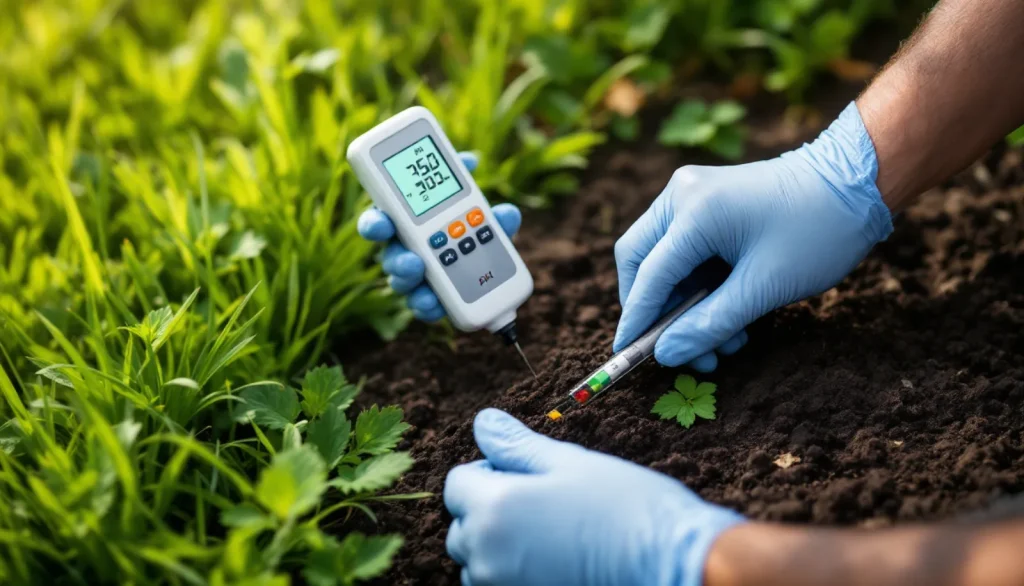
Both give a usable number in minutes. For a color kit, mix the supplied soil and powder with distilled water, shake, wait for the color to develop, then match it against the chart in good light. For a meter, calibrate it in a known buffer solution first, insert the clean probe into a moistened soil and distilled-water slurry, and let the reading settle before recording. Test two or three spots and average, since both methods carry meaningful spot-to-spot variation.
How to amend soil pH after you test
Once you know the number, lime raises pH and elemental sulfur lowers it. Do not guess the rate from pH alone. A buffer test from an extension lab tells you the exact amount, because identical pH readings in sandy versus clay soil need very different doses. Soil texture, organic matter, and cation exchange capacity all change how much amendment the soil demands.
| Goal | Amendment | Rate guidance | How fast it works |
|---|---|---|---|
| Raise pH (too acidic) | Ground or pelletized lime | No more than 50 lb per 1,000 sq ft per application; split larger needs across seasons | Slow: pelletized lime can take 100+ days to reach maximum effect; full reaction in 2 to 3 years |
| Lower pH (too alkaline) | Elemental sulfur | No more than 20 lb per 1,000 sq ft per year; split across years if more is needed | Slow; soil microbes must convert sulfur, so allow months |
| Lower pH faster (use with care) | Aluminum sulfate | Up to 50 lb per 1,000 sq ft per application; needs about 6x the weight of sulfur for the same drop | Faster than sulfur, but easy to overdo and harm plants |
These caps come from extension guidance (Iowa State, Ohio State Ohioline, and others). Stay under them, then retest yearly. Because lime and sulfur both react slowly, expect to wait a season or more before the pH settles into its new range. Patience prevents the common mistake of stacking a second application before the first finishes working, which overshoots the target.
After you correct pH, the rest of your feeding plan starts to pay off. Our NPK fertilizer guide explains which numbers to apply once nutrients are actually available, and the best fertilizer for grass guide matches products to grass type. If yellow patches persist after pH is correct, work through the brown patches diagnosis tree before adding more product.
Local soil and temperature change your reading
Your pH and the right amendment both depend on local soil type and timing. Calcareous, alkaline soils common across the arid Southwest sit naturally at 7.8 to 8.5 and resist lowering, while high-rainfall regions trend acidic. Check what your ground is made of before you treat it, and sample when soil temperature supports microbial activity so amendments can react.
Look up your dominant soil series and texture through the NRCS Web Soil Survey, summarized in our soil survey lookup guide, then time your sampling and any sulfur application using our soil temperature guide, since sulfur conversion stalls in cold ground. Pairing the test result with local soil and temperature data keeps your lime or sulfur rate realistic instead of generic.
Last reviewed: June 2026
HMNDP Editorial Team, reviewed by HMNDP turf and horticulture editors.
Frequently asked questions
How often should I test my lawn’s soil pH?
Test a healthy, untouched lawn every 3 to 5 years, ideally in spring or early fall. If you have applied lime or elemental sulfur, test yearly instead, because pH changes slowly and you need to track whether the amendment is moving the number toward your target before you apply again.
What does a lawn with low soil pH look like?
A lawn in acidic soil below about 5.5 often thins out, shows weak root growth, and lets acid-tolerant weeds and moss spread. Fertilizer stops working well because hydrogen builds up and locks nutrients away, so the grass can yellow and stay hungry even after you feed it. Confirm with a test before treating.
What happens when lawn soil pH is too high?
Above roughly 7.5, alkaline soil locks up iron and manganese, so turf yellows, weakens, and thins despite normal feeding. This is common in calcareous Southwest soils that sit at 7.8 to 8.5 naturally. Lower it slowly with elemental sulfur, no more than 20 pounds per 1,000 square feet per year, and retest annually.
Does vinegar lower lawn soil pH?
No. Vinegar is used in the home baking soda and vinegar test to detect alkaline soil, where it fizzes, but it does not durably lower soil pH for a lawn. The acid effect is brief and shallow, and repeated use can harm grass and soil life. Use elemental sulfur for a lasting, controlled pH drop instead.
Are cheap digital soil pH meters accurate?
Often not on their own. Many inexpensive two-prong meters respond to soil moisture and conductivity more than true pH, and the probes drift over time. Calibrate against a known buffer solution, cross-check against a color kit, and average two or three spots. For setting a lime or sulfur rate, trust a state extension lab test.
How long does it take lime to change soil pH?
Expect a slow change. Pelletized lime can take more than 100 days to reach its maximum effect, and ground lime reacts fully with the soil over 2 to 3 years, though some benefit shows within the first few months. Apply no more than 50 pounds per 1,000 square feet at once and retest yearly rather than reapplying early.
Can I test soil pH without a kit?
Yes, for direction only. Split a soil sample into two cups: vinegar fizzing on one signals alkaline soil, and baking soda with distilled water fizzing on the other signals acidic soil. No reaction points to near-neutral. This free screen cannot give a number, so confirm with a kit, meter, or lab before amending.
What is the ideal soil pH for grass?
Most turfgrasses do best between 6.0 and 7.0, slightly acidic to neutral, where nutrients stay available and microbes stay active. Targets shift by species: Kentucky bluegrass prefers 6.0 to 7.0, while centipedegrass tolerates a more acidic 5.0 to 6.0. Match your test result to your grass type before choosing lime or sulfur.