
Crab Grass Control: Pre-Emergent Timing and Removal
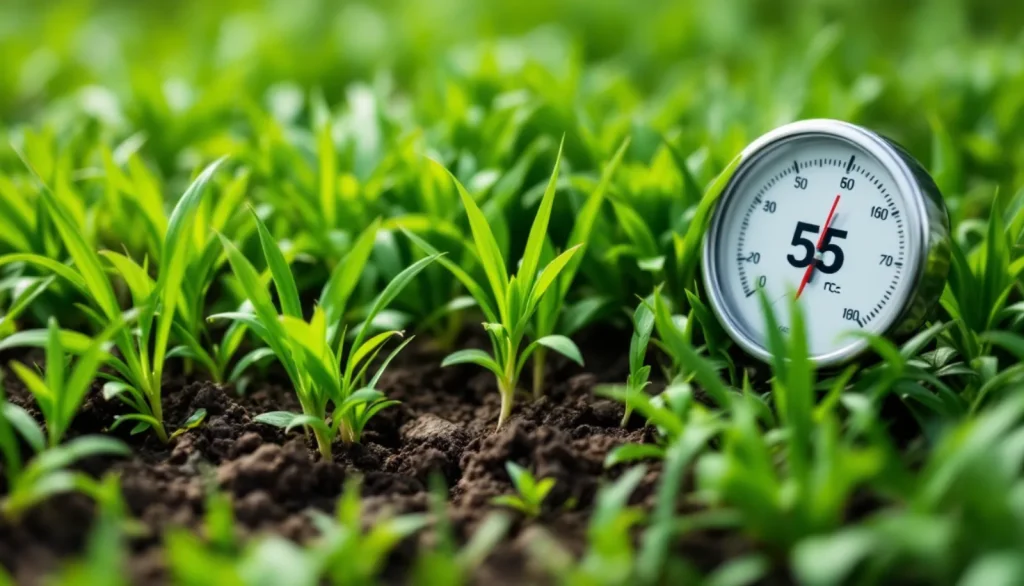
Crab grass control comes down to one decision made at the right soil temperature: stop the seeds before they sprout, or kill the plants after they do. Pre-emergent herbicide laid down 10 to 14 days before soil hits 55 degrees Fahrenheit at the 2-inch depth blocks roughly 80 percent of germination. Miss that window and you switch to post-emergent products, where the plant’s growth stage decides which chemical still works. This guide gives you the soil-temperature trigger, the product-by-product picks, and the lawn habits that keep crabgrass out for good.
What is crabgrass and why timing decides everything
Crabgrass is a summer annual grassy weed, mostly smooth crabgrass (Digitaria ischaemum) and large crabgrass (Digitaria sanguinalis). It germinates in spring, sprawls through summer, and a single plant can set thousands of seeds before frost kills it, per University of Minnesota Extension. Those seeds wait in the soil for years. Because it lives and dies in one season, control is all about interrupting the seed-to-seed cycle at the right moment.
Germination is driven by soil temperature, not the calendar. Iowa State University Extension and University of Minnesota Extension both put the trigger at about 55 degrees Fahrenheit, sustained for four to five days at the top 0 to 2 inches of soil. The bulk of germination (roughly 80 percent) happens once that 0 to 2 inch layer holds steadily between 60 and 70 degrees, per Michigan State University Extension. Knowing your local soil temperature is the whole game, which is why we tie timing to a live trigger rather than a date. See our note on reading soil temperature before you treat.
When to apply pre-emergent crabgrass control
Apply pre-emergent herbicide 10 to 14 days before soil temperature reaches 55 degrees Fahrenheit at the 2-inch depth. The product forms a chemical barrier in the top layer of soil that kills crabgrass seedlings as they sprout, so it has to be down and watered in before germination starts, not after. A pre-emergent applied to crabgrass that has already emerged does nothing.
Three signals tell you the window is open. Use whichever you can measure:
- Soil temperature: the most direct trigger. Treat when a soil thermometer at the 2-inch depth reads in the low 50s and climbing. Our soil temperature guide explains how to read it and where to find local data.
- Forsythia bloom: a phenological indicator land-grant extensions have used for decades. Michigan State University Extension notes the optimum pre-emergent window often lines up with full forsythia bloom, because both respond to the same spring warming.
- Growing degree days (GDD): the precise method. Michigan State University Extension models the application window at 250 to 500 GDD (base 32 degrees Fahrenheit, tracking from February 15), and publishes a free GDD tracker.
Timing varies by region. In the southern US and the transition zone, soils cross 55 degrees in late February or March; in the upper Midwest and Northeast, it is April into early May. A reader in a warm-season climate can sanity-check local spring timing against our year-round grass maintenance schedule.
Pre-emergent herbicides compared
The common pre-emergent active ingredients for crabgrass are prodiamine, dithiopyr, pendimethalin, benefin, bensulide, and siduron. They differ in how long the barrier lasts and whether the product does anything once crabgrass is already up. Prodiamine and dithiopyr give the longest residual; pendimethalin is shorter and usually needs a second application; siduron is the one safe to use the same spring you seed new cool-season grass.
| Active ingredient | Common product names | Residual | Notes |
|---|---|---|---|
| Prodiamine | Barricade | Longest (up to ~3 months per application at homeowner rates) | Pre-emergent only. Performs well in the South and transition zone. |
| Dithiopyr | Dimension | Long | Pre-emergent plus early post-emergent on crabgrass under about 1 tiller. Most forgiving if you are a few days late. |
| Pendimethalin | Pendulum, Scotts Halts | Shorter | Usually needs a second application about 6 weeks later, even in spring. |
| Benefin / trifluralin blend | Team, Hi-Yield Crabgrass Control | Moderate | Granular, widely sold for homeowner use. |
| Siduron | Tupersan | Moderate | The only pre-emergent safe to apply when seeding new cool-season grass the same spring. |
Source: University of Minnesota Extension, Iowa State University Extension, and K-State Research and Extension. Always water the product in per the label, and never apply a standard pre-emergent on an area you plan to seed, because it stops your desirable grass seed from rooting just as it stops crabgrass. Use siduron, or wait.
How to kill crabgrass that is already growing
Once crabgrass has sprouted, switch to a selective post-emergent herbicide, and the plant’s growth stage decides which one works. Stage is measured in tillers (the side shoots a grass plant pushes out as it matures). Most post-emergents lose effectiveness past 4 to 5 tillers, with one exception. Treat early, while plants are small and actively growing, for the cleanest kill.
| Active ingredient | Product | Best growth stage | Key detail |
|---|---|---|---|
| Quinclorac | Drive XLR8 | Newly emerged through mature (handles past 4 tillers) | The widest stage window. Needs methylated seed oil. Source: Penn State Extension. |
| Fenoxaprop-p-ethyl | Acclaim Extra | Up to 4 to 5 tillers | Do not tank-mix with 2,4-D or other phenoxy herbicides. Source: Penn State Extension. |
| Mesotrione | Tenacity | Fewer than 4 tillers | Add a nonionic surfactant. Can be used near new seedings of tolerant grasses. Source: Penn State Extension. |
| Topramezone | Pylex | Fewer than 4 tillers | Use methylated seed oil or crop oil concentrate. Source: Penn State Extension. |
One hard caution on warm-season lawns: several of these are not safe on every turf species. Quinclorac, fenoxaprop, and the rest each have a label list of tolerant grasses, and applying the wrong one to St. Augustine, centipede, or bermuda can injure the lawn. Read the label’s turf-tolerance section first. When in doubt on a warm-season lawn, a local applicator is cheaper than a renovation; see our guide on how to find a reputable landscaper.
For very small patches, hand-pulling works when the soil is moist and you get the roots. The point is to remove plants before they seed, since stopping seed-set this year shrinks next year’s problem.
Do natural and organic methods work?
Some organic options help and some are overstated. Corn gluten meal is the legitimate organic pre-emergent: it suppresses germinating seeds, carries about 10 percent nitrogen so it feeds the lawn, and Iowa State University Extension notes it takes 2 to 3 years of consistent use to build real suppression. It is not an instant fix and will not kill crabgrass that is already up.
Household vinegar and baking soda are weak tools. Vinegar at 5 percent acidity will burn the top of a crabgrass plant but rarely kills the roots, so it regrows and needs repeat sprays. Baking soda results are inconsistent. Both are non-selective and will damage your good grass on contact. They are a spot option for cracks and edges, not a lawn-wide strategy.
The cultural habits that prevent crabgrass for good
A dense, healthy lawn is the strongest crabgrass control there is, because thick turf shades the soil and crabgrass seed needs light and warmth to germinate. No herbicide substitutes for a thick stand of grass. Three habits move most of the result:
- Mow high. Keep cool-season turf at 3 to 4 inches, per Iowa State University Extension. Taller grass shades the soil surface and suppresses germination directly.
- Water deeply and less often. Frequent shallow watering keeps the top inch moist, which is exactly the zone where crabgrass seed germinates. Deep, infrequent watering favors your turf’s roots instead.
- Feed and overseed to fill gaps. Bare and thin spots are where crabgrass moves in. Match feeding to your grass type with our guide to the best fertilizer for grass, and patch thin areas before weeds claim them.
If crabgrass left a brown, dead patch after summer, repair it in the cool season so the gap does not invite a fresh infestation next spring. Our walkthrough on diagnosing and fixing brown patches in the lawn covers the renovation steps.
Your crabgrass control plan, by season
Crabgrass control runs on the calendar of your soil, not a fixed date. Watch the soil temperature, treat ahead of 55 degrees, and keep the lawn thick the rest of the year. The sequence below works in any region once you slot in your local spring timing.
- Late winter to early spring: Track soil temperature and forsythia. Apply pre-emergent 10 to 14 days before soil reaches 55 degrees at 2 inches.
- Spring: If you used pendimethalin, plan a second application about 6 weeks later. If you are seeding, use siduron or skip pre-emergent on those areas.
- Late spring to summer: Scout for escapes. Treat any crabgrass that broke through with a stage-appropriate post-emergent while plants are small.
- Summer: Mow at 3 to 4 inches, water deep and infrequent, and pull stragglers before they seed.
- Fall: Overseed and repair thin or damaged turf so the lawn enters spring dense enough to crowd crabgrass out.
Last reviewed: June 2026
HMNDP Editorial Team, reviewed by HMNDP turf and horticulture editors.
Frequently asked questions
How do I get rid of crabgrass in my lawn?
Stop it before it sprouts with a pre-emergent herbicide applied 10 to 14 days before soil reaches 55 degrees Fahrenheit at the 2-inch depth. If it is already growing, switch to a selective post-emergent such as quinclorac (Drive XLR8), which handles plants past 4 tillers. Long term, mow at 3 to 4 inches and keep turf dense to crowd it out.
When should pre-emergent crabgrass control be applied?
Apply 10 to 14 days before soil temperature reaches 55 degrees Fahrenheit at the 2-inch depth, so the barrier forms before seeds germinate. Use a soil thermometer, full forsythia bloom, or a growing degree day model (250 to 500 GDD, base 32) to find the window. In the South that is February to March; in the North it is April into May.
Does pre-emergent work after crabgrass has germinated?
No. Pre-emergent herbicides kill crabgrass seedlings as they sprout by forming a barrier in the soil, so they do nothing once the plant has emerged. Dithiopyr (Dimension) is the partial exception, with some early post-emergent activity on crabgrass under about one tiller. Past that stage you need a true post-emergent product.
What soil temperature does crabgrass germinate at?
Crabgrass germinates when soil at the top 0 to 2 inches holds about 55 degrees Fahrenheit for four to five consecutive days, per Iowa State and University of Minnesota Extension. Roughly 80 percent of germination occurs once that layer stays between 60 and 70 degrees, per Michigan State University Extension. Soil temperature, not the calendar, sets the timing.
What is the best post-emergent herbicide for crabgrass?
It depends on growth stage. Quinclorac (Drive XLR8) has the widest window and works on mature plants past 4 tillers. Fenoxaprop (Acclaim Extra), mesotrione (Tenacity), and topramezone (Pylex) work best under 4 to 5 tillers. Per Penn State Extension, treat while plants are small, and check the label for turf tolerance before spraying warm-season grasses.
Does corn gluten meal kill crabgrass?
Corn gluten meal is an organic pre-emergent that suppresses germinating crabgrass seed and adds about 10 percent nitrogen as fertilizer. It does not kill crabgrass that is already growing, and Iowa State University Extension notes it takes 2 to 3 years of consistent use to build meaningful suppression. Treat it as a slow, long-term tool, not an instant fix.
Will vinegar kill crabgrass?
Vinegar at 5 percent acidity burns the top growth of crabgrass but rarely kills the roots, so it regrows and needs repeat sprays. It is also non-selective and will damage your good grass on contact. Baking soda gives inconsistent results. Both work only as spot treatments for cracks and edges, not as a lawn-wide strategy.
What mowing height prevents crabgrass?
Mow cool-season turf at 3 to 4 inches, per Iowa State University Extension. Taller grass shades the soil surface, and crabgrass seed needs light and warmth to germinate, so a high cut suppresses it directly. Combined with deep, infrequent watering and overseeding thin spots, a dense lawn is the strongest crabgrass prevention there is.