
Lawn Edging Ideas: Materials, Cost, and Durability
The best lawn edging ideas come down to one decision: which material matches your budget, your mowing habits, and the look you want. Plastic and trench edging cost the least ($1 to $3.50 per foot for plastic, free for a spade-cut trench), steel and aluminum hold the sharpest line for 20 to 50 years, and brick or paver mowing strips let you run a mower wheel right over the edge. This guide compares seven common edging materials on cost per foot, durability, DIY difficulty, and look, then walks the install depth and steps so the border you pick actually stays put.
The 7 lawn edging materials compared (cost, durability, DIY)
Seven materials cover almost every lawn edging idea you will see: trench (spade-cut), plastic, rubber, steel or aluminum metal, brick and paver, natural stone, and concrete curbing. They split cleanly by budget and effort. Trench costs nothing and plastic runs $1 to $3.50 per foot, while poured concrete curbing reaches $14 to $28 per foot installed. The table below is the comparison most edging “ideas” lists skip.
| Material | Material cost / linear ft | Installed cost / linear ft | Typical lifespan | DIY difficulty | Look |
|---|---|---|---|---|---|
| Trench (spade-cut) | $0 | $0 (your labor) | Re-cut every 4 to 8 weeks | Easy (spade only) | Clean, invisible, informal |
| Plastic (HDPE roll) | $0.80 to $3.50 | $5 to $12 | 5 to 10 years | Easy (no-dig pound-in) | Low profile, utilitarian |
| Rubber (recycled) | $1.50 to $4 | $5 to $12 | Around 10 years | Easy (preset spikes) | Soft curves, matte black |
| Steel / aluminum | $2 to $11 | $10 to $28 | 20 to 50+ years | Moderate (trench + stake) | Crisp modern line |
| Brick / paver | $2.50 to $14 | $18 to $38 | 25+ years | Moderate to hard (trench, level, sand) | Traditional, mowable strip |
| Natural stone | $3 to $21.50 | $15 to $40+ | Decades | Hard (heavy, dry-stack) | Rustic, organic |
| Concrete curbing | Poured on site | $14 to $28 (stamped $20 to $40) | Decades | Pro install (extruder machine) | Continuous, custom color |
Cost ranges reflect 2026 retail and installed pricing from LawnStarter and Rivendell Distribution material guides. Installed numbers include labor of roughly $1.50 to $10 per linear foot, so a 180-foot border lands around $630 to $1,584 depending on material. Prices vary by region, retailer, and season, so treat these as relative differences rather than fixed quotes.
Cheapest lawn edging ideas under $2 per foot
For a tight budget, three options come in under $2 per foot of material: a spade-cut trench (free), plastic strip edging ($0.80 to $3.50, or roughly $10 to $15 for a 20-foot roll), and landscape timber (under $5 for an 8-foot section). A trench plus plastic backer reads cleaner than plastic alone and resists grass creep. Repurposed brick or buried glass bottles also cost near zero if you already have them.
The longest-lasting lawn edging
Aluminum is the longest-lasting common edging, rated 25 to 50+ years with zero rust because it forms a protective oxide layer instead of corroding. Steel is stronger and resists ground movement but galvanized steel typically lasts 20+ years, dropping to 10 to 15 years in coastal salt air. Weathering (Corten) steel lasts 20 to 50+ years and bends for curves. Brick, stone, and concrete last decades when installed on a proper base.
Which lawn edging idea fits your yard?
Match the edging to the job, not the trend. Pick by the line you mow against and how much digging you want to do. Curved beds favor flexible steel, aluminum, or rubber. Straight formal runs suit brick or concrete. If you mow weekly and hate trimming the edge by hand, a flush brick or paver mowing strip removes the trimming step entirely.
- Tight budget, fast result: spade-cut trench or plastic roll edging. Lowest cost, easiest to install, redo as needed.
- Crisp modern line, set and forget: aluminum or steel. Higher upfront cost, decades of service, minimal upkeep.
- No more hand-trimming the edge: brick or paver mowing strip laid flush so a mower wheel rides on it.
- Curved cottage beds: rubber, flexible steel, woven willow, or a low boxwood living edge.
- Rustic or natural look: dry-stacked fieldstone, river rock, or reclaimed brick.
If you are still planning the overall layout, our 2026 yard design guide covers how edging, plant selection, and hardscape fit together before you commit to a material.
The mowing strip: edging that ends hand-trimming
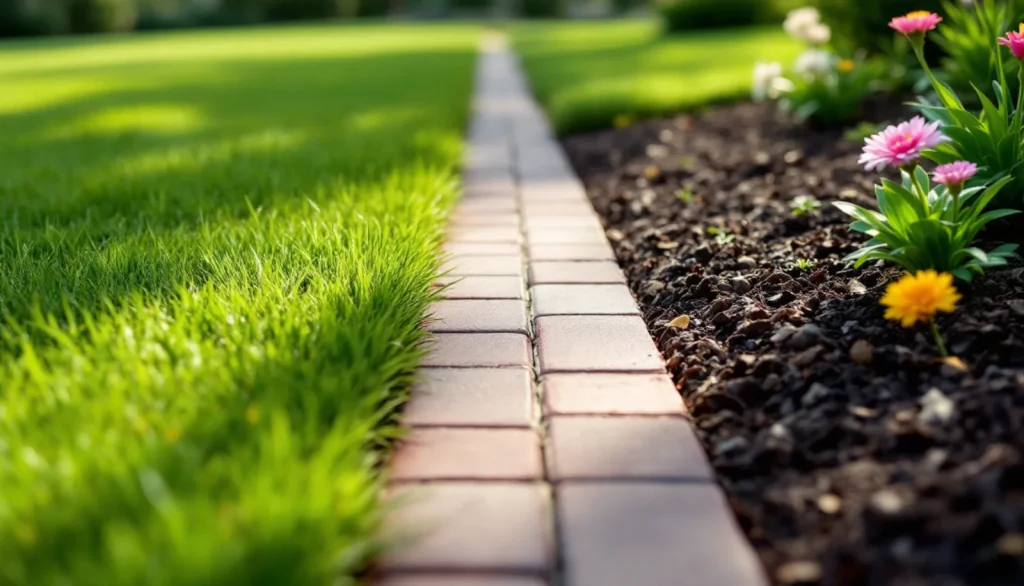
A mowing strip is the gap most edging guides leave out, and it is the single idea that saves the most ongoing labor. It is a flush row of brick, paver, or concrete set level with the lawn so the mower wheel rolls onto it and cuts the grass right at the edge. Done right, you never string-trim that border again. Pavers should sit about a half inch above grade or dead flush so they do not catch the mower deck.
Width matters. On domestic lawns a 200 mm (about 8 inch) wide strip is usually enough; commercial jobs run 300 mm (12 inch) flags. Bed brick or paver on a 25 to 50 mm grit-sand layer, or 50 to 100 mm of mortar for permanence. A gravel or pebble strip, a shallow trench about 6 inches wide lined with weed barrier and filled with pea gravel or crushed stone, gives the same mow-over benefit at lower cost and a looser look.
How deep should lawn edging go?
Bury 4 to 6 inches of edging, or 50 to 60 percent of its height, to stop frost heave and grass roots from pushing it loose. Metal and plastic edging set in a 4 to 5 inch trench, left sticking about a half inch proud of the soil. A no-dig pound-in board lets you control exposure by how far you drive it. Mowing-strip pavers need only a 60 to 70 mm (2.4 to 2.8 inch) dig, plus the depth of any sand or mortar bed.
Shallow edging is the most common failure. Anything set less than a few inches deep gets shoved sideways by roots, freeze-thaw cycles, or a mower bump, and the line wanders within a season. When in doubt, dig deeper and backfill firm.
How to install metal lawn edging (step by step)
Metal edging gives the sharpest line for the money and a confident DIYer can install a typical run in an afternoon. The process is the same for steel and aluminum; aluminum is lighter and easier to cut and bend, steel resists ground movement better. Steel stakes anchor it every 30 to 36 inches.
- Mark the line with a garden hose or marking paint, then set landscape stakes to preview the shape and adjust curves.
- Dig a trench 4 to 5 inches deep, about a half inch shallower than the edging height so the top sits a half inch above grade.
- Set the edging in the trench and check the top edge is even along the run.
- Drive the included stakes through the edging into firm soil every 30 to 36 inches.
- Overlap panel ends, drive a stake at the overlap, and secure with self-drilling metal screws.
- Backfill both sides, tamp firm, and water to settle the soil.
Aluminum cuts with a hacksaw or tin snips; steel may need an angle grinder. For curves, make small relief cuts on the inside flange so the edging bends without kinking. Before you start any cut-in along beds, our guide to measuring lawn square footage helps you order the right number of linear feet.
Living edges and low-maintenance alternatives
A living edge uses plants instead of hard material to define the border, and it suits gardeners who want softness over a crisp line. Low boxwood and dwarf juniper give year-round evergreen structure; hardy geranium, dianthus, or liriope give a looser flowering edge. The trade-off is upkeep: living edges need trimming and take a season or two to fill in, and they do not stop grass roots the way a buried physical barrier does.
Woven willow, hazel, or wicker panels push straight into the ground for a quick cottage-garden edge with no digging. Terracotta rope tiles and scalloped Victorian trim add traditional detail but are brittle and porous. For drought-prone yards moving away from turf entirely, gravel and stone edges pair naturally with the planting choices in our drought-tolerant lawn alternatives guide.
Edging mistakes that waste money
Most edging regret traces to three errors: going too shallow, ignoring the mowing line, and paying for premium material installed poorly. Edging set under 4 inches deep shifts within a season. Edging that sits proud of the lawn forces you to hand-trim both sides, doubling maintenance instead of cutting it. And recycled plastic installed correctly outperforms premium stone installed badly on a typical small yard, so installation quality matters more than the material name.
Match the edging height to the mower too. If the top edge rides higher than your deck clears, the wheel catches or the blade nicks the metal. Set hard edging flush or a half inch proud at most, and keep curves gentle enough that a mower wheel tracks them without scalping the turf. For a wandering or grass-invaded bed line, our guide on fixing bare and damaged turf covers repairing the lawn side after you reset the edge.
Last reviewed: June 2026. HMNDP Editorial Team, reviewed by HMNDP turf and horticulture editors.
Frequently asked questions
Which landscape edging is the easiest to install?
No-dig pound-in edging is the easiest to install. Plastic and some metal boards come with preset stakes or spikes you drive straight into the soil with a mallet, with no trench required. A spade-cut trench is even simpler and costs nothing, though it needs re-cutting every 4 to 8 weeks to hold its line.
How long does landscape edging last?
Lifespan depends on material. Plastic lasts 5 to 10 years and rubber around 10. Galvanized steel runs 20+ years, dropping to 10 to 15 in coastal salt air. Aluminum lasts 25 to 50+ years because it forms a protective oxide layer instead of rusting. Brick, stone, and concrete last decades on a proper base.
What is the cheapest lawn edging?
A spade-cut trench is the cheapest, costing only your labor. Among manufactured options, plastic strip edging is lowest at about $0.80 to $3.50 per foot, or roughly $10 to $15 for a 20-foot roll. Landscape timber runs under $5 for an 8-foot section, and repurposed brick or buried bottles cost near zero.
How deep should lawn edging go?
Bury 4 to 6 inches, or 50 to 60 percent of the edging height, to resist frost heave and grass roots. Metal and plastic set in a 4 to 5 inch trench, left about a half inch above grade. Mowing-strip pavers need only a 60 to 70 mm (2.4 to 2.8 inch) dig plus the sand or mortar bed depth.
What is a mowing strip and is it worth it?
A mowing strip is a flush row of brick, paver, or concrete set level with the lawn so the mower wheel rolls onto it and cuts grass at the edge. It removes hand-trimming on that border permanently. Set pavers dead flush or a half inch proud on a 25 to 50 mm grit-sand bed so the deck does not catch.
Is metal or plastic edging better?
Metal holds a sharper, straighter line and lasts far longer: aluminum 25 to 50+ years, steel 20+, versus 5 to 10 for plastic. Plastic costs less ($1 to $3.50 per foot material) and installs no-dig in minutes. Choose metal for a crisp permanent edge, plastic for budget or temporary borders.
How do you install metal lawn edging?
Mark the line with a hose, dig a 4 to 5 inch trench about a half inch shallower than the edging height, set the edging, then drive stakes through it every 30 to 36 inches. Overlap panel ends, stake the overlap, and secure with self-drilling screws. Backfill, tamp, and water to settle the soil.
What is the longest-lasting lawn edging?
Aluminum is the longest-lasting common edging at 25 to 50+ years with zero rust, since it forms a protective oxide layer. Weathering (Corten) steel lasts 20 to 50+ years and bends for curves. Brick, natural stone, and poured concrete also last decades when installed on a properly compacted base.