
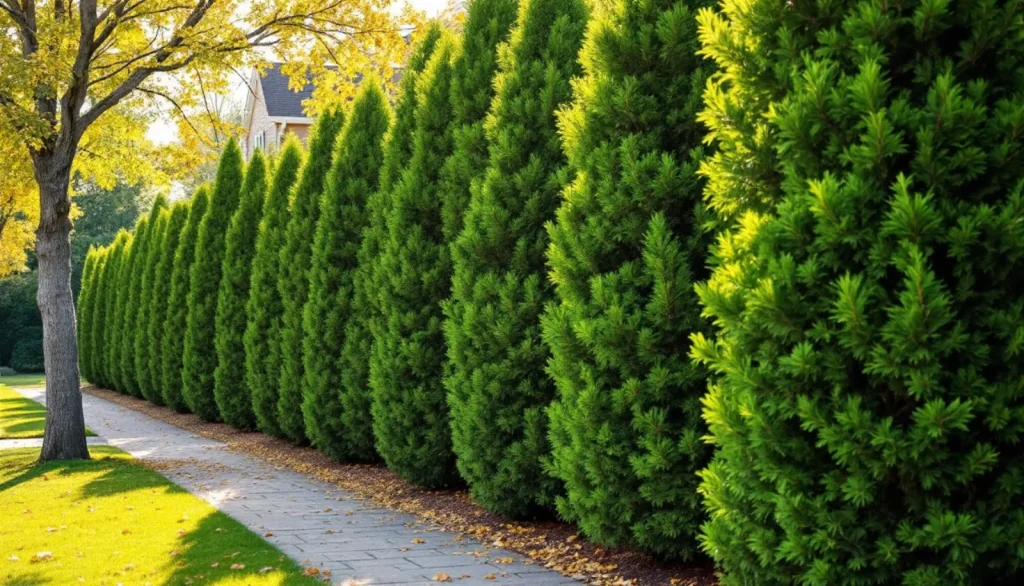
Fast Growing Trees: Best Picks by Zone and Yard Size
Fast growing trees add 3 to 8 feet of height per year and can screen a property line or shade a roof in three to five seasons instead of fifteen. The fastest species (hybrid poplar, weeping willow, Lombardy poplar) put on 5 to 10 feet a year, but they pay for that speed with weak wood, aggressive roots, and short lifespans. The trees worth planting near a house balance growth rate against wood strength, root behavior, and how long they actually live. This guide ranks the common options on all four, then gives the setback distances and spacing that keep a fast tree from becoming an expensive removal.
What counts as a fast growing tree
A fast growing tree adds at least 24 inches of height per year, and the quickest add 5 feet or more, according to the Arbor Day Foundation and the University of Tennessee Extension. Most reach a usable height of 10 to 25 feet within a decade. Growth rate depends heavily on soil moisture, sun, and climate, so the numbers below are ranges measured under good conditions, not guarantees for every yard.
Speed is only one of four things that decide whether a tree is a good buy. The other three are wood strength (how often it drops limbs in storms), root behavior (whether it lifts sidewalks and clogs drains), and lifespan. The fastest trees tend to score worst on the other three, which is the tradeoff most species lists skip.
Fast growing trees compared: speed vs. the regret factor
The table below rates the most common fast growing trees on growth rate, mature height, USDA hardiness zones, wood strength, root aggression, and realistic lifespan. Use it to separate trees that are merely fast from trees that are fast and worth keeping. Sources for the data points are the Arbor Day Foundation, USDA Plant Hardiness map (2023), and university extension fact sheets, listed at the end.
| Tree | Growth/yr | Mature height | USDA zones | Wood strength | Root aggression | Typical lifespan |
|---|---|---|---|---|---|---|
| Hybrid poplar | 5 to 8 ft | 40 to 50 ft | 3 to 9 | Weak | High (sewers, foundations) | 15 to 30 yrs |
| Weeping willow | 3 to 8 ft | 30 to 40 ft | 4 to 9 | Weak | High (water-seeking) | 20 to 30 yrs |
| Thuja Green Giant (arborvitae) | 3 to 5 ft | 30 to 50 ft | 5 to 9 | Moderate | Low | 40+ yrs |
| Leyland cypress | 3 to 4 ft | 40 to 60 ft | 6 to 10 | Moderate | Low to moderate | 20 to 25 yrs |
| Tulip poplar | 3 to 5 ft | 70 to 90 ft | 4 to 9 | Moderate | Moderate | 200+ yrs |
| Dawn redwood | 2 to 4 ft | 70 to 100 ft | 5 to 8 | Strong | Moderate | 100+ yrs |
| River birch | 1.5 to 3 ft | 40 to 70 ft | 4 to 9 | Moderate | Moderate (water-seeking) | 40 to 75 yrs |
| Red maple (October Glory, Autumn Blaze) | 2 to 3 ft | 40 to 50 ft | 3 to 9 | Moderate | Moderate | 80 to 100 yrs |
| Silver maple | 2 to 3 ft | 50 to 80 ft | 3 to 9 | Weak | High (foundations, drains) | 30 to 50 yrs |
| Pin oak / Nuttall oak | 2 to 3 ft | 60 to 70 ft | 4 to 9 | Strong | Moderate | 100+ yrs |
| Quaking aspen | 2 to 5 ft | 40 to 50 ft | 1 to 7 | Moderate | High (suckering colonies) | 40 to 60 yrs |
The pattern is clear: the two fastest trees (hybrid poplar, weeping willow) are also the weakest-wooded, most root-aggressive, and shortest-lived. The trees that combine real speed with strength and a long life are tulip poplar, dawn redwood, and the named red maple cultivars. For evergreen privacy, Thuja Green Giant is the rare fast grower with low root aggression and a 40-year-plus lifespan.
What is the fastest growing tree?
Hybrid poplar is the fastest commonly sold tree, adding 5 to 8 feet per year and reaching 40 to 50 feet within a decade, per the Arbor Day Foundation. Lombardy poplar and some willow hybrids can match or exceed that in consistently moist soil. The catch: all three have brittle wood, aggressive water-seeking roots, and lifespans often under 30 years, so they suit fast firewood rows or temporary screens, not a permanent specimen near the house.
Best fast growing trees for privacy
For year-round privacy, Thuja Green Giant arborvitae is the strongest all-around choice: it grows 3 to 5 feet per year, holds dense evergreen foliage to the ground, tolerates most soils, and keeps roots non-invasive. Leyland cypress grows nearly as fast and forms a columnar wall, but it is prone to bagworm, Seiridium canker, and storm breakage, and it lives only 20 to 25 years on average.
Evergreens screen in winter; deciduous trees do not. If a deciduous screen is acceptable, hybrid poplar planted in a row delivers the fastest wall, but space it well away from drains. For most homeowners on a typical lot, an arborvitae or cypress hedge is the lower-risk privacy answer. Spacing matters more than species here, covered in the next section.
How far apart and how far from the house?
Spacing controls how fast a hedge closes and whether roots reach the house. For a privacy screen, plant Thuja Green Giant or Leyland cypress 5 to 8 feet apart, or stagger them in two rows on the diagonal for a denser wall. Setback from structures should scale with mature height and root aggression, not a single rule.
The UK National House Building Council guidance, widely cited by US arborists, recommends planting trees at least three-quarters of their mature height away from a building on clay soils, and farther for high-water-demand species. Translate that into the practical distances below.
| Use case | Spacing between trees | Minimum distance from house | Distance from septic / drain lines |
|---|---|---|---|
| Evergreen privacy hedge (arborvitae, cypress) | 5 to 8 ft | 15 to 20 ft | 20 ft+ |
| Shade tree, strong-wooded (oak, maple, dawn redwood) | 20 to 40 ft | 20 to 40 ft (about 3/4 mature height) | 30 ft+ |
| Poplar / willow row (temporary screen, firewood) | 6 to 10 ft | 40 to 50 ft | 50 ft+ (very aggressive) |
Poplars and willows clog drain lines, lift sidewalks, and reach foundations through water-seeking roots, so keep them 30 to 50 feet from buildings and underground utilities. Call 811 before digging to mark utility lines on any planting over a few feet deep.
How to plant a fast growing tree the right way
Planting technique decides whether a fast tree survives its first two summers, when growth is most vulnerable. The steps below follow International Society of Arboriculture and university extension guidance. Do them in order, in fall or early spring when soil is workable and heat stress is low.
- Call 811 at least a few business days ahead to mark gas, water, and electric lines.
- Dig a hole two to three times the width of the root ball but no deeper than the root ball itself, so the root flare sits at or slightly above grade.
- Remove the container, or cut away wire baskets and burlap from the top third of balled-and-burlapped stock. Loosen circling roots.
- Set the tree so the root flare is visible at the surface. Planting too deep is the most common cause of decline.
- Backfill with the native soil you removed. Skip rich amendments, which can keep roots from spreading outward.
- Water deeply, then add 2 to 3 inches of mulch in a ring, kept a few inches off the trunk. Never pile mulch against the bark.
- Water 10 to 15 gallons per week through the first two growing seasons, more in heat, and stake only if the tree cannot stand on its own.
Buy a bigger tree or wait?
A larger caliper tree gives instant height but often grows slower for the first two years while it recovers transplant shock, and it costs much more. A smaller, faster-establishing tree frequently catches up. Match the choice to budget and how much height you need on day one.
As a rough guide, a 1- to 2-inch caliper shade tree commonly runs $150 to $400 installed, a 3- to 4-inch caliper $400 to $900, and large specimens $1,000 and up, depending on species and region. A 5- to 6-foot arborvitae for screening typically runs $60 to $150 each. Prices vary widely by market and nursery; confirm locally. For broader yard budgeting, see our breakdown of lawn and landscape costs in 2026.
Fast growing trees to plant with caution
Several popular fast growers carry real downsides that nursery tags rarely mention. The Empress tree (Paulownia) grows up to 15 feet a year but is listed as invasive across much of the eastern US and is hard to control once established. Silver maple and American sycamore drop limbs and send roots into drains and foundations. Bradford and other Callery pears are invasive and structurally weak, and several states now restrict their sale.
Match the tree to your climate and site before chasing speed. In hot, dry regions a thirsty willow or poplar is a poor fit, and a drier-adapted species or a tree alongside reduced turf makes more sense. Our guides to drought-tolerant landscape alternatives and yard design for 2026 cover plant selection by region and water budget.
Where fast growing trees fit in the yard
A fast tree changes the conditions around it: shade reduces lawn growth on the north side, and roots compete with turf for water. Plan the tree and the lawn together rather than fighting them later. If grass struggles under a new canopy, our guide on growing grass in shade covers shade-tolerant species and thinning options.
Pick the slowest tree that still meets your timeline. A tree that adds 3 feet a year with strong wood and a 100-year life is usually a better long-term buy than one that adds 8 feet and needs removal in two decades. Speed solves a short-term problem; the other three traits decide whether you keep the tree.
Last reviewed: June 2026
HMNDP Editorial Team, reviewed by HMNDP turf and horticulture editors.
Frequently asked questions
What is the fastest growing tree?
Hybrid poplar is the fastest commonly sold tree, adding 5 to 8 feet per year and reaching 40 to 50 feet within a decade, per the Arbor Day Foundation. Lombardy poplar and some willow hybrids match it in moist soil. All three have brittle wood, aggressive roots, and short lifespans, so they suit temporary screens or firewood rows, not permanent specimens near a house.
What is the fastest growing tree for privacy?
For year-round privacy, Thuja Green Giant arborvitae is the best all-around choice: it grows 3 to 5 feet per year, holds dense evergreen foliage to the ground, and keeps roots non-invasive over a 40-year-plus life. Leyland cypress grows nearly as fast but is prone to bagworm, canker, and storm breakage, and typically lives only 20 to 25 years.
How fast do fast growing trees grow per year?
Fast growing trees add at least 24 inches of height per year, and the quickest add 5 feet or more, per the Arbor Day Foundation and university extension fact sheets. Most reach a usable 10 to 25 feet within a decade. Actual rate depends on soil moisture, sun, and climate, so published figures are ranges measured under good conditions, not guarantees.
How far from the house should I plant a fast growing tree?
Setback should scale with mature height and root aggression. Evergreen privacy hedges sit 15 to 20 feet from the house, strong-wooded shade trees about three-quarters of mature height (often 20 to 40 feet), and aggressive poplars or willows 40 to 50 feet from buildings and 50 feet from septic and drain lines. Call 811 before digging.
How far apart should fast growing privacy trees be planted?
Plant Thuja Green Giant or Leyland cypress 5 to 8 feet apart for a privacy hedge, or stagger them in two diagonal rows for a denser, faster-closing wall. Poplar or willow screen rows go 6 to 10 feet apart. Tighter spacing closes the screen sooner but raises disease risk and crowding, so match spacing to the species’ mature width.
Which fast growing trees should I avoid near my house?
Avoid weak-wooded, root-aggressive species near structures: hybrid poplar, weeping willow, silver maple, and American sycamore all drop limbs or send roots into drains and foundations. Empress tree (Paulownia) and Callery (Bradford) pear are invasive in much of the US and structurally weak, with several states restricting Callery pear sales.
Is it better to buy a bigger tree or wait for a smaller one to grow?
A larger caliper tree gives instant height but often grows slowly for two years while recovering transplant shock, and it costs much more. A smaller, faster-establishing tree frequently catches up within a few seasons. Choose the larger tree only when day-one height matters; otherwise the smaller tree is usually the better value and establishes faster.