
By the HMNDP Editorial Team, independent reporting on lawn care, landscaping, and the green-industry business.
Last reviewed: June 2026
What red mulch is and what it is made of
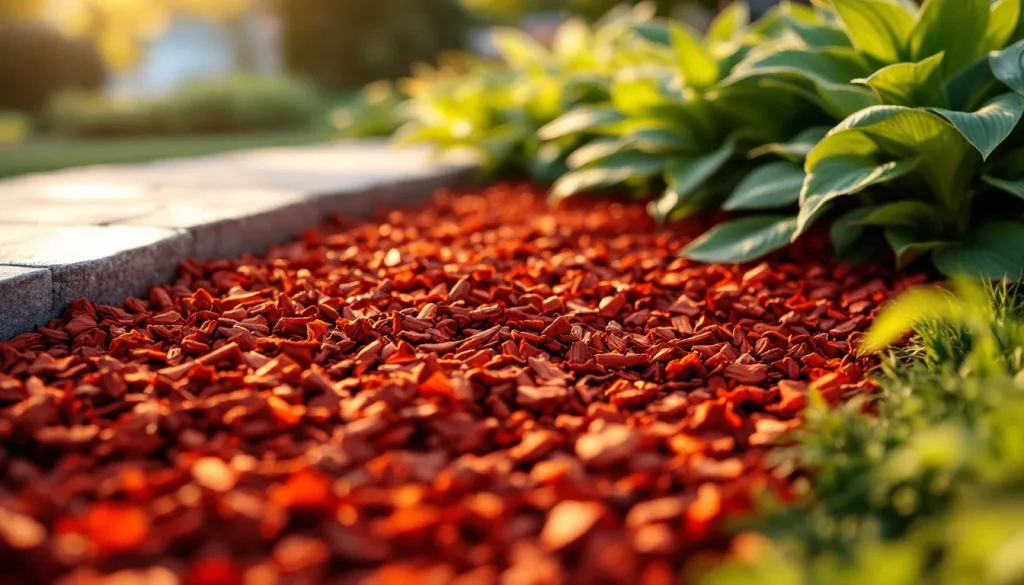
Red mulch is shredded wood mulch that has been colorized with a red dye to hold a bright reddish-brown tone for a full season. The base is usually ground hardwood, softwood “white woods,” or recycled wood waste (including reclaimed pallets and construction scrap). The color comes from a dye sprayed and tumbled onto the chips during processing, not from the wood itself.
Most red mulch sold at retail is dyed with iron oxide, the same rust-based pigment used in concrete and brick coloring. Black mulch typically uses carbon black. Both are considered low-toxicity by the Mulch and Soil Council, the trade group that runs the main third-party mulch certification program in the United States.
The wood underneath matters more than the dye. Premium red mulch starts with clean shredded hardwood. Budget bags can include recycled wood waste, and that is where the real safety question lives, covered below.
Is red mulch safe for plants, pets, and vegetable gardens?
Red mulch is generally safe for ornamental beds, pets, and children when the dye is iron oxide and the wood source is clean. Iron oxide and carbon black pigments are not the hazard. The genuine concern is the wood itself: some recycled-wood mulch has historically contained chips from CCA-treated lumber, which carries arsenic. For vegetable gardens, most horticulturists recommend skipping dyed mulch entirely.
The dye is the part buyers worry about, but it is the least risky part. Iron oxide is a mineral pigment. Independent testing summarized by Oregon State University Extension has repeatedly found the colorant itself poses little risk to soil or plants.
The wood feedstock is the real variable. Before the 2003 EPA phase-out of chromated copper arsenate (CCA) for residential lumber, recycled construction wood occasionally entered the mulch stream. Mulch carrying the Mulch and Soil Council certification logo is tested to be free of CCA-treated wood. Bags without certification give you no such guarantee.
For pets and kids, the bigger issue is not dye but the wood. Dogs that chew or swallow large amounts of any wood mulch can suffer stomach upset or blockages. Cocoa mulch is the genuinely toxic one for dogs; dyed hardwood is not in that category.
For edibles, the practical answer is caution. The pigment will not poison your tomatoes, but dyed mulch is made for looks, not soil building, and most vegetable gardeners choose undyed straw, leaf mold, or natural bark instead. If you want color near edibles, keep dyed mulch on the ornamental side of the path.
The honest pros and cons of red dyed mulch
Red mulch wins on appearance and color longevity and loses on soil contribution and dye behavior. The color holds roughly one full season versus a few weeks for untreated mulch, and it makes green foliage and light-colored stone pop. The trade-offs are that it adds little to no nutrients as it breaks down, can be sourced from waste wood, and the dye can run or stain before it sets.
| Pros | Cons |
|---|---|
| Bright color lasts about a full season (untreated mulch grays in 4 to 8 weeks) | Adds little to no nutrients to soil compared with compost or natural bark |
| Strong curb appeal; contrasts with green plants and pavers | Often made from recycled or waste wood, not premium bark |
| Retains soil moisture and reduces watering frequency | Wet dye can run off and stain concrete, hands, and tools before it cures |
| Suppresses weeds by blocking light at a 2 to 3 inch depth | Can mat and slow water infiltration if piled too thick |
| Helps control erosion on slopes and around downspouts | Recycled-wood feedstock can be drier and pull nitrogen from the soil surface |
| Low maintenance; one application holds its look for the season | Color fades in full sun and needs annual refreshing |
The functional benefits are real and shared with any wood mulch. A 2 to 3 inch layer retains soil moisture, suppresses weeds by blocking sunlight from weed seeds, moderates soil temperature, and holds soil in place on slopes during heavy rain. Red mulch does all of this exactly as well as the brown version. You are paying the dye premium purely for color.
Red mulch vs brown vs black mulch
Choose red mulch for bold contrast and warm-toned brick, brown for a natural look that hides fading, and black for a modern, high-contrast bed that makes greens and flowers stand out. All three are dyed wood (brown is often dyed too), share identical functional benefits at a 2 to 3 inch depth, and cost about the same. The decision is purely aesthetic and depends on your home’s exterior.
| Factor | Red mulch | Brown mulch | Black mulch |
|---|---|---|---|
| Look | Bold, warm, high visibility | Natural, neutral, blends in | Modern, dramatic, high contrast |
| Best with | Red brick, gray stone, green lawns | Most homes, wooded settings | Light siding, bright flowers, succulents |
| Fade visibility | Fading shows most | Fading hides best | Fades to dark gray, moderately visible |
| Heat absorption | Moderate | Moderate | Highest (can warm soil and roots in full sun) |
| Typical price | Comparable | Comparable | Comparable |
One practical note on black: dark mulch absorbs more heat in direct sun, which can stress shallow roots in hot climates. Red sits in the middle. If your beds bake in afternoon sun, that nudge favors red or brown over black.
How much red mulch do I need? Coverage math and a simple formula
One 2 cubic foot bag of red mulch covers about 12 square feet at 2 inches deep, or 8 square feet at 3 inches deep. To find your total, multiply bed length by width for square footage, then divide by the coverage per bag at your chosen depth. Most beds use a 2 to 3 inch layer; pathways can go thicker.
Here is the formula in order:
- Measure your bed: length (ft) times width (ft) = square feet.
- Pick a depth: 2 inches for established beds, 3 inches for weed control or new beds.
- Convert square feet to cubic feet: square feet times (depth in inches divided by 12).
- Divide cubic feet by 2 to get the number of 2 cubic foot bags.
Worked example: a 10 ft by 10 ft bed is 100 square feet. At 3 inches deep, that is 100 times (3 ÷ 12) = 25 cubic feet. Divided by 2 = 13 bags (round up). At 2 inches deep the same bed needs about 17 cubic feet, or 9 bags.
Quick reference: one bag covers roughly 12 sq ft at 2 inches and 8 sq ft at 3 inches. For larger jobs, run your numbers through our mulch calculator and compare bag pricing against bulk delivery using our breakdown of how much mulch costs. Bulk by the cubic yard (one yard = 27 cubic feet, or about 13.5 bags) is usually cheaper above roughly 10 to 12 bags.
Does red mulch fade, and will the dye stain?
Yes, red mulch fades, usually within one growing season in full sun, and the wet dye can stain concrete and skin before it dries. Iron oxide color holds longer than untreated mulch but still lightens with UV exposure and rain. To avoid staining, apply on a dry day, keep mulch a few inches off pavement edges, and let it cure 24 to 48 hours before heavy rain or watering.
Color longevity depends on sun exposure. Beds in deep shade can hold color for two seasons; beds in full southern sun often need a refresh or a light “fluffing” with a rake by late summer to expose darker chips underneath.
Staining is a real but avoidable problem. The dye is water-soluble until it bonds to the wood. Fresh mulch installed right before a downpour can bleed red runoff onto driveways and patios. Concrete sealers and a quick rinse usually handle minor staining. Wear gloves; the dye washes off skin but can tint hands for a day.
Is red mulch good or bad for your garden soil?
Red mulch is neutral to slightly negative for soil compared with compost or natural bark. As a wood product it eventually breaks down and adds some organic matter, but dyed recycled-wood mulch decomposes slowly and contributes few nutrients. Fresh, high-carbon wood chips can also temporarily tie up nitrogen at the soil surface. For pure soil health, undyed compost or leaf mulch outperforms any dyed product.
The nitrogen tie-up is minor and mostly affects the top inch where mulch meets soil, not the root zone of established plants. It matters most around shallow annuals and seedlings.
If your goal is curb appeal with adequate moisture and weed control, red mulch does the job. If your goal is building richer soil, spend the money on compost and use natural mulch on top. For a chemical-free, non-decomposing alternative that never needs dye, compare red mulch against rubber mulch, which holds color far longer but does not improve soil at all.
For more buying guides and material comparisons, see the HMNDP learn hub.
Frequently Asked Questions
Is red mulch safe for plants, pets, and vegetable gardens?
Red mulch is generally safe for ornamental beds and around pets when dyed with iron oxide and made from clean wood. The pigment is low-risk. The real concern is recycled wood that may contain CCA-treated (arsenic) scrap, so buy Mulch and Soil Council certified bags. For vegetable gardens, most gardeners skip dyed mulch and use straw, compost, or natural bark instead.
What is red mulch made of and what dye gives it the red color?
Red mulch is shredded hardwood, softwood, or recycled wood waste colorized with dye. The red color almost always comes from iron oxide, the same rust-based mineral pigment used in concrete and brick. It is considered low-toxicity. Black mulch uses carbon black instead. The wood feedstock, not the pigment, determines how clean and safe a given bag actually is.
What are the pros and cons of red dyed mulch?
Pros: bright color lasting a full season, strong curb appeal, plus moisture retention, weed suppression, and erosion control at a 2 to 3 inch depth. Cons: it adds few nutrients, is often made from waste wood, the wet dye can stain concrete and hands, and the color fades in full sun and needs annual refreshing. Functionally it matches plain wood mulch.
Red mulch vs brown mulch: which should I choose?
Choose red mulch for bold contrast against red brick, gray stone, or green lawns. Choose brown for a natural look that hides fading and suits most homes. Both are usually dyed wood, share identical moisture, weed, and erosion benefits, and cost about the same. The decision is purely aesthetic; match it to your home’s siding, brick, and hardscape colors.
How much red mulch do I need (how many bags per square foot)?
One 2 cubic foot bag covers about 12 square feet at 2 inches deep or 8 square feet at 3 inches. To calculate: multiply bed length by width for square feet, multiply by depth in inches divided by 12 for cubic feet, then divide by 2 for bags. A 10 by 10 foot bed at 3 inches needs about 13 bags. Above 10 to 12 bags, bulk delivery is usually cheaper.
Does red mulch fade, and how long does the color last?
Red mulch fades within one growing season in full sun, though iron oxide color holds far longer than untreated mulch that grays in 4 to 8 weeks. Shaded beds can keep color two seasons. To extend it, rake or fluff the mulch by late summer to expose darker chips underneath, and plan on a light refresh each spring for a consistent look.
Will red mulch dye stain my driveway, patio, or hands?
Yes, fresh red mulch dye is water-soluble until it cures and can bleed onto concrete or skin. To avoid staining, install on a dry day, keep mulch a few inches off pavement, and let it set 24 to 48 hours before heavy rain or watering. Wear gloves; the dye washes off skin within a day. A sealed driveway resists staining and rinses clean.
Is red mulch good or bad for your garden soil?
Red mulch is neutral to slightly negative for soil versus compost or natural bark. It breaks down slowly and adds few nutrients, and fresh wood can briefly tie up surface nitrogen around shallow plants. It still provides moisture retention and weed control. For building richer soil, use compost or leaf mulch; for curb appeal with decent function, red mulch is fine.