
By the HMNDP Editorial Team
Last reviewed: June 2026
What perlite soil is and what perlite is made of
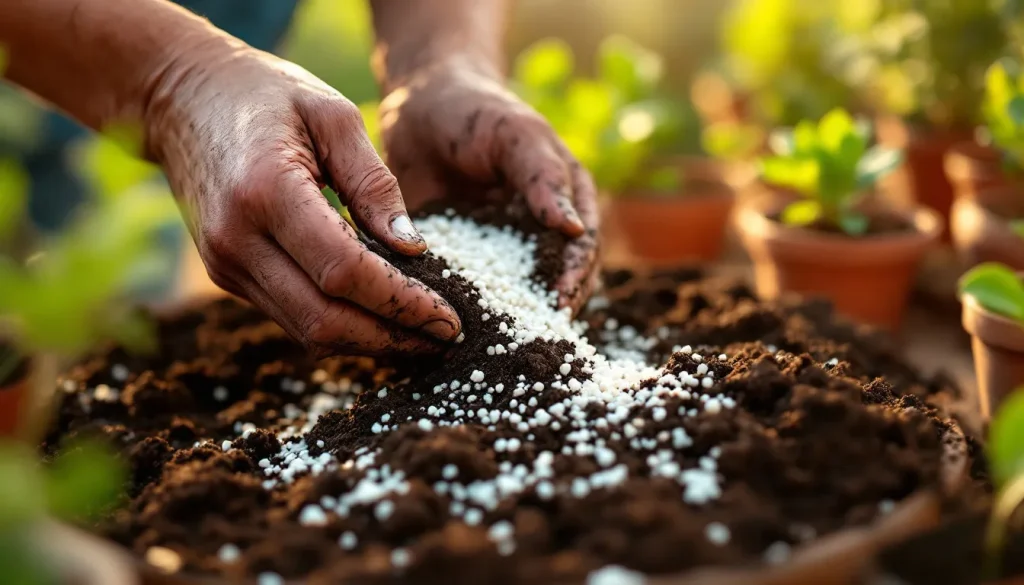
Perlite soil is potting mix or garden soil that has perlite added to it for better aeration and drainage. Perlite itself is expanded volcanic glass: raw obsidian-type rock heated to roughly 1,600 degrees Fahrenheit (about 870 degrees Celsius) until trapped water flashes to steam and pops it, like popcorn, into lightweight white granules. Each granule is full of tiny air pockets.
The result is the chalky, off-white, foam-like material you see flecked through most bagged potting mixes. It is a mined mineral, not a manufactured plastic or foam.
Because it is fired at high heat, perlite comes out sterile, with no weed seeds, fungi, or pests. It is also chemically inert and close to pH-neutral (about 6.6 to 7.5), so it does not change how acidic or alkaline your soil is.
“Horticultural perlite” is simply the grade screened and sold for growing plants, as opposed to the industrial perlite used in construction insulation and filtration. If you want the bigger picture on how amendments fit together, see our guide to soil amendments.
What perlite does for soil: aeration, drainage, and root oxygen
Perlite improves soil by creating air space. Its hard, irregular granules hold pockets open between soil particles so water drains through quickly and oxygen reaches the roots. That matters because roots breathe: they need air in the soil to take up water and nutrients and to avoid rot.
The trade-off is moisture. Perlite is highly porous on its surface but holds little water inside, so it dries fast and does not store moisture for the plant. Add a lot of perlite and your mix drains faster and needs more frequent watering.
This makes perlite a fix for the opposite problem from heavy, waterlogged ground. If you garden in dense, compacted earth, our guide to amending clay soil explains where perlite helps and where it does not.
How much perlite to add to soil (ratios by use case)
A common starting point is one part perlite to two parts soil or mix (about 33 percent), but the right amount depends on the plant. Drought-tolerant plants want more; moisture-lovers want less. Use the ratios below as tested defaults, then adjust based on how fast your pots dry out.
| Use case | Perlite ratio (by volume) | Why |
|---|---|---|
| Seed starting | 1 part perlite : 1 part peat/coir (about 50%) | Light, open mix lets fragile roots push through and prevents damping-off. |
| Cacti and succulents | 1 part perlite : 1 part potting mix : 1 part coarse sand or pumice (about 33%+) | Maximum drainage; these plants rot in wet soil. |
| General potting mix (houseplants) | 1 part perlite : 2 parts potting mix (about 33%) | Balanced aeration without drying out too fast. |
| Raised beds | 10 to 20% of total volume | Loosens dense fill; large beds hold moisture, so less is needed. |
| Aroids (Monstera, Pothos) | 1 part perlite : 1 part bark : 1 part mix (about 33%) | Chunky, airy root zone these epiphytes prefer. |
Coarse and medium grades are best for amending soil because they hold structure longer. Fine perlite packs down and is better reserved for seed trays. For building a full mix from scratch, our walkthrough on how to build a soil covers the other ingredients to pair with perlite.
Perlite vs vermiculite: which one should you use
Choose perlite when you want drainage and air; choose vermiculite when you want the mix to hold water. Both are heat-expanded minerals that lighten soil, but they behave oppositely. Perlite drains, vermiculite sponges. Many growers use both, leaning toward perlite for plants that hate wet feet and vermiculite for thirsty ones.
| Property | Perlite | Vermiculite |
|---|---|---|
| Made from | Volcanic glass | Mica mineral |
| Main job | Drainage and aeration | Water and nutrient retention |
| Water held | Low | High (3 to 4 times its weight) |
| Color | White / off-white | Gold-brown, flaky |
| Best for | Succulents, cacti, drainage-loving plants | Seed starting, moisture-loving plants |
| pH | Near neutral | Near neutral to slightly alkaline |
When to pick pumice, sand, or coco coir instead
Perlite is not always the best choice. Pumice does the same drainage job but is heavier, so it stays put in windy outdoor pots and lasts longer. Coarse sand adds drainage and weight for top-heavy plants but offers no air pockets. Coco coir holds moisture like vermiculite and adds organic bulk. Pick by what your specific plant and pot need most.
Is perlite organic and safe for plants?
Perlite is a natural mineral, but it is not “organic” in the certified, carbon-based sense, and it adds no nutrients. It is mined volcanic rock: inert, sterile, and chemically stable. It is completely safe for plants and is approved for use in many certified-organic growing operations under standards such as the USDA National Organic Program because it is an unmodified mineral.
Because it is non-renewable and mined, perlite is not biodegradable. It does not break down or feed soil life the way compost does. It simply sits in the mix providing structure, which is exactly why it works.
Is perlite dust harmful, and how do you handle it safely?
Perlite dust is a nuisance respiratory irritant, so handle the dry bag with care. The fine particles can irritate the eyes, nose, throat, and lungs if inhaled, much like any mineral dust. Perlite is not classified as containing harmful crystalline silica at levels seen with sand, but the dust is still best avoided.
- Wear a dust mask (an N95 or better) and eye protection when opening and pouring the bag.
- Dampen the perlite with a little water before mixing to keep dust down.
- Mix in a ventilated spot, ideally outdoors, not over a kitchen counter.
- Avoid dumping from a height, which sends fines into the air.
One more practical warning competitors skip: the lightweight fines float to the surface of pots and beds and blow away in wind or wash out during watering. Mixing perlite thoroughly into the soil, rather than topping pots with it, keeps it where the roots are.
Can perlite be reused, and does it break down?
Yes, perlite can be reused, and it does not break down. Because it is inert volcanic glass, it keeps its structure for years and survives repeated planting cycles. This is one of its advantages over organic amendments like bark or coir, which decompose and need replacing.
To reuse it, rinse old perlite to remove fine roots and debris, and sterilize it if the previous plant had disease. A 10-minute soak in a diluted bleach solution (about 1 part bleach to 9 parts water) followed by a thorough rinse, or baking in an oven, kills pathogens. Then screen out the dust and remix.
Which plants benefit most from perlite (and which do not)
Plants that hate soggy roots benefit most from perlite: succulents, cacti, snake plants, orchids, aroids like Monstera and Pothos, and most seedlings. Container plants in general gain from the extra air, since pots compact over time. Add perlite anywhere drainage and root oxygen are the limiting factors.
Plants that prefer constantly moist soil benefit less, and heavy perlite use can work against them. Ferns, calatheas, and many vegetables in hot, dry climates dry out faster in a high-perlite mix. For those, lean on vermiculite or coco coir for moisture and use perlite sparingly. Our broader learn hub has plant-specific soil guides.
Frequently Asked Questions
What is perlite and what is it made of?
Perlite is expanded volcanic glass. Manufacturers heat raw volcanic rock to around 1,600 degrees Fahrenheit until trapped water turns to steam and pops it into lightweight, white, popcorn-like granules full of air pockets. It is a mined mineral, sterile, chemically inert, and close to pH-neutral. In gardening it is sold as “horticultural perlite” and mixed into soil for aeration and drainage.
What does perlite do for soil?
Perlite improves soil aeration and drainage. Its hard, porous granules hold air pockets open between soil particles, letting excess water drain through and oxygen reach the roots. Roots need that oxygen to absorb water and nutrients and to avoid rot. Perlite holds little water itself, so it lightens heavy mixes and prevents compaction, but it makes soil dry out faster.
How much perlite should I add to soil or potting mix?
A common ratio is one part perlite to two parts soil, about 33 percent by volume. Adjust by plant: roughly 50 percent for seed starting, 33 percent or more for cacti and succulents, 33 percent for general houseplants, and only 10 to 20 percent in moisture-holding raised beds. Use coarse or medium grades for amending and fine grade for seed trays.
Perlite vs vermiculite: which one should I use?
Use perlite for drainage and air, vermiculite for moisture retention. Perlite is volcanic glass that drains fast; vermiculite is a mica mineral that holds 3 to 4 times its weight in water. Choose perlite for succulents, cacti, and plants that hate wet roots. Choose vermiculite for seed starting and thirsty, moisture-loving plants. Both are near pH-neutral and can be combined.
Is perlite organic or safe for plants?
Perlite is a natural mined mineral and completely safe for plants, but it is not “organic” in the carbon-based sense and adds no nutrients. It is inert, sterile, and chemically stable. It is allowed in many certified-organic growing systems, including under the USDA National Organic Program, because it is an unmodified mineral that simply provides physical soil structure.
Is perlite dust harmful, and how do I handle it safely?
Perlite dust is a nuisance respiratory irritant that can bother the eyes, nose, throat, and lungs if inhaled. Wear an N95 mask and eye protection, dampen the perlite before mixing, work in a ventilated area or outdoors, and avoid pouring from a height. Mix it fully into soil rather than topping pots, since the light fines blow away.
Can perlite be reused, and does it break down over time?
Yes. Perlite is inert volcanic glass, so it does not break down and keeps its structure for years through repeated planting cycles. To reuse it, rinse out old roots and debris, sterilize with a diluted bleach soak (1 part bleach to 9 parts water) or oven baking if disease was present, screen out dust, and remix into fresh soil.
Which plants benefit most from perlite?
Plants that dislike soggy roots benefit most: succulents, cacti, snake plants, orchids, and aroids like Monstera and Pothos, plus most seedlings and container plants. Plants that want constant moisture, such as ferns, calatheas, and many vegetables in hot climates, benefit less and can dry out too fast in a high-perlite mix, so use vermiculite or coco coir for those.