
By the HMNDP Editorial Team, independent reporting on lawn care, landscaping, and the green industry.
Last reviewed: June 2026
What organic mulch is (and how it differs from regular mulch)
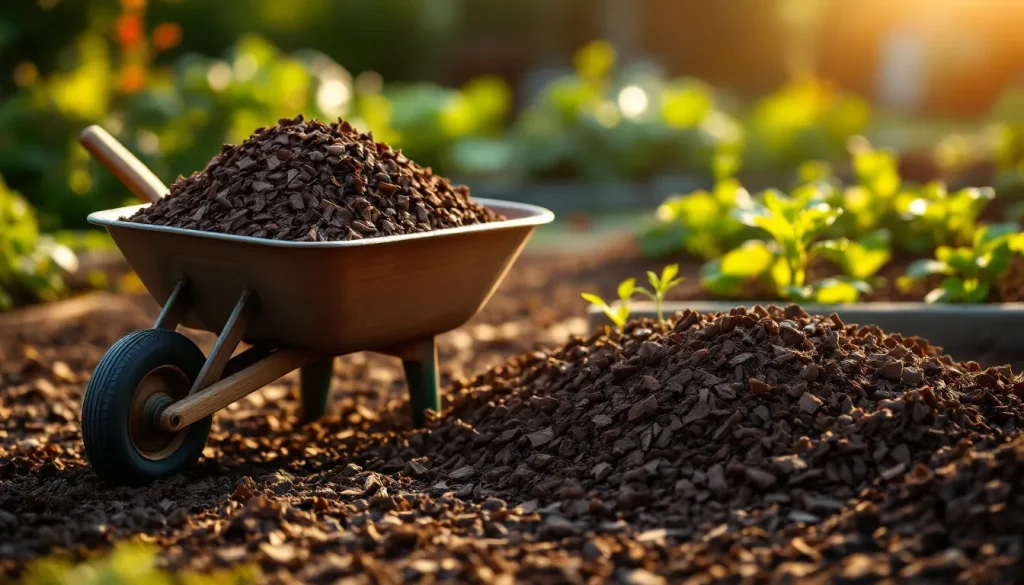
Organic mulch is any biodegradable, plant-derived material spread over soil to hold moisture, block weeds, and feed the ground as it rots. It includes wood chips, bark, compost, leaves, straw, grass clippings, and pine needles. “Organic” here means carbon-based and once-living, not certified-organic produce. The all-natural, dye-free versions add no synthetic colorant.
The word “mulch” covers two families. Organic mulches break down and improve soil. Inorganic mulches (rubber, stone, landscape fabric) do not decompose and add no nutrients. When a bag says “natural” or “dye-free,” it is signaling no carbon black, iron oxide, or vegetable dye was added to darken the wood.
Dye-free does not mean the same as species. Plenty of shoppers ask for “not cedar” because cedar carries a strong scent and a higher price. Undyed hardwood, pine bark, and arborist wood chips are common not-cedar choices that still qualify as fully organic.
8 types of organic mulch, compared
The eight most common organic mulches are compost, shredded leaves or leaf mold, arborist wood chips, bark mulch, straw, grass clippings, mixed yard waste, and pine needles. They differ in how fast they break down, how much they cost, and where they belong. The table below ranks them by typical use and rough price so you can match one to your project.
| Type | Breaks down | Best for | Rough cost (2026, US) | Watch-outs |
|---|---|---|---|---|
| Compost | Fast (weeks) | Vegetable beds, feeding soil | $30 to $50 per cubic yard bulk | Thin layer only; weeds seed on top |
| Shredded leaves / leaf mold | Fast to medium | Veg beds, natural areas | Free if you rake | Whole leaves mat and shed water |
| Arborist wood chips | Slow (1 to 3 yrs) | Trees, shrubs, paths | Often free via chip drop | Keep fresh chips off tender stems |
| Bark mulch (pine, hardwood) | Slow | Ornamental beds, curb appeal | $3 to $5 per 2 cu ft bag; $30 to $45/yd bulk | Floats and washes on slopes |
| Straw | Fast (one season) | Vegetable rows, new lawns | $8 to $15 per bale | Buy straw, not hay (hay carries seed) |
| Grass clippings | Very fast | Veg beds, thin layers | Free from your mower | Dry first; avoid herbicide-treated lawns |
| Mixed yard / plant waste | Medium | Back-of-bed areas | Free | Screen out diseased or seedy material |
| Pine needles (pine straw) | Slow | Slopes, acid-lovers, paths | $6 to $9 per bale | Mildly acidifying over years |
Compost and leaf mold are the soil-builders. They rot quickly and hand nutrients straight to plant roots, which is why they suit edible gardens. Their downside is that a fast-rotting layer disappears and needs topping up more often.
Wood chips and bark are the long-haul mulches. A single application of arborist chips can last one to three years, which is why arborists and municipalities use them around trees. For a deeper look at how chips behave over time, see our guide to wood chip mulch.
Pine needles knit together and stay put on grades where bark would float away in a storm. Straw is the classic vegetable-row cover, cheap and clean, as long as you buy straw and not seed-laden hay.
The three benefits that make organic mulch worth it
Organic mulch earns its place through three measurable effects: it holds soil moisture, it suppresses weeds, and it feeds the soil as it decomposes. A 2-to-4-inch layer can cut surface evaporation sharply, block most weed germination, and add a steady trickle of organic matter every season. Aesthetics are a fourth, softer payoff.
Moisture retention
A mulch layer shades the soil surface and slows evaporation, so beds stay damp longer between waterings. University extension trials commonly report that a 3-inch organic layer reduces surface water loss and buffers soil temperature swings. In practice that means fewer trips with the hose in July and less heat stress on shallow roots.
Improves soil health and adds nutrients
As organic mulch decomposes, soil organisms pull it down and turn it into humus, raising organic-matter content year over year. This is the single biggest advantage over stone or rubber, which add nothing. Compost and leaf mold release nitrogen and micronutrients within a season; wood chips feed the soil slowly over years while improving structure and drainage.
Weed suppression
A dense 3-inch mulch layer blocks the light most annual weed seeds need to sprout, so far fewer come up and the ones that do pull easily. The effect is physical, not chemical. Coarse, long-lasting materials like bark and wood chips suppress weeds longest; thin compost layers suppress least because weed seeds germinate on the fresh surface.
Curb appeal
Fresh mulch gives beds a clean, finished edge that real-estate agents and landscapers use to lift a property’s look before a sale. Dark hardwood and pine bark read as tidy and uniform. Dye-free options fade to a natural gray-brown over a season, which some homeowners prefer and others refresh with a thin top-up.
Organic vs inorganic mulch: which should you use
Use organic mulch when you want to build soil, feed plants, and garden sustainably. Choose inorganic mulch (stone, rubber, gravel) only for permanent, low-plant zones where you never want to amend the soil. Organic decomposes and needs topping up; inorganic lasts for years but adds zero nutrients and can bake roots.
| Factor | Organic (wood, bark, compost, straw) | Inorganic (rubber, stone, gravel) |
|---|---|---|
| Feeds soil | Yes, as it breaks down | No |
| Lifespan | 1 to 3 years, then replenish | Many years |
| Upfront cost | Low to moderate | Higher per square foot |
| Soil temperature | Moderates it | Stone and rubber can overheat roots |
| Best fit | Veg beds, borders, trees | Paths, drainage, permanent decor |
Rubber mulch is marketed as long-lasting, but it does not improve soil and research has raised questions about zinc and other compounds leaching over time, so most extension programs steer edible gardeners away from it. Stone holds heat and is hard to remove once laid. For living beds, organic wins on almost every count.
How thick to apply organic mulch and how much you need
Apply organic mulch 2 to 4 inches deep: 2 inches for fine materials like compost and grass, 3 to 4 inches for coarse bark and wood chips. To find the volume, multiply bed area (square feet) by depth (inches), then divide by 12 to get cubic feet. Divide cubic feet by 27 for cubic yards.
The formula in plain terms: cubic feet = (square feet × inches deep) ÷ 12. A 100-square-foot bed at 3 inches needs (100 × 3) ÷ 12 = 25 cubic feet, which is a hair under one cubic yard (27 cubic feet). One cubic yard covers roughly 100 square feet at 3 inches, or 160 square feet at 2 inches.
| Coverage unit | At 2 in. deep | At 3 in. deep | At 4 in. deep |
|---|---|---|---|
| 1 bag (1.5 cu ft) | ~9 sq ft | ~6 sq ft | ~4.5 sq ft |
| 1 bag (2 cu ft) | ~12 sq ft | ~8 sq ft | ~6 sq ft |
| 1 cubic yard (27 cu ft) | ~160 sq ft | ~108 sq ft | ~80 sq ft |
A quick bag-versus-bulk rule: one cubic yard equals about 13.5 bags of the 2-cubic-foot size. If your project needs more than 10 to 15 bags, bulk delivery is usually cheaper and far less plastic. Keep mulch 2 to 3 inches back from plant stems and tree trunks; the piled “mulch volcano” against a trunk invites rot.
Replenish organic mulch as it thins. Fast breakers (compost, grass, straw) often need a top-up every season; bark and wood chips hold their depth for one to three years. Rather than pile new mulch on old, rake and fluff the existing layer, then add only enough to return to the 2-to-4-inch target.
Match the mulch to the job: a decision framework
The right organic mulch depends on the bed, not on what is on sale. Edible beds want fast-feeding materials; ornamental beds want long-lasting, tidy ones; trees want coarse chips; slopes want interlocking materials that resist washout. The table below maps the common jobs to the mulch that fits, which is the step most listicles leave out.
| Where you’re mulching | Best organic pick | Depth | Why |
|---|---|---|---|
| Vegetable garden | Straw, compost, shredded leaves | 2 to 3 in. | Feeds fast, easy to turn in, clean for edibles |
| Flower / perennial beds | Fine bark, leaf mold | 2 to 3 in. | Neat look, lets small plants breathe |
| Shrub borders | Hardwood or pine bark | 3 in. | Long-lasting, uniform curb appeal |
| Around trees | Arborist wood chips | 3 to 4 in. | Slow-release, mimics forest floor |
| Slopes / grades | Pine needles, shredded (not nugget) bark | 3 in. | Knits together, resists washout |
| Paths / play areas | Coarse wood chips | 4 in. | Firm footing, drains well |
For edible gardens, straw and shredded leaves are the workhorses because you can rake them aside at planting and till the remnants in at season’s end. Our deeper breakdown lives in the guide to the best mulch for a vegetable garden.
For ornamental beds, fine-textured bark and leaf mold sit neatly around crowns without smothering small perennials. If you are planting color, see the picks in our best mulch for flower beds guide. For a general ranking across every bed type, our best mulch overview compares the field head to head.
The downsides and safety issues nobody mentions
Organic mulch has real failure modes: fresh wood chips can briefly tie up nitrogen at the soil surface, bagged mulch stored wet can turn “sour” and burn plants, and shredded hardwood can grow artillery fungus that spots siding. Termite fears are mostly overblown. Knowing these prevents the handful of ways mulch actually damages a garden.
Nitrogen tie-up from fresh wood chips
When high-carbon wood chips decompose, soil microbes borrow nitrogen from the top layer, which can briefly yellow shallow-rooted plants right at the mulch-soil boundary. The effect stays in the top inch and does not reach established tree or shrub roots. Keep fresh chips on the surface (do not till them in) and keep them off seedling rows to avoid it.
Sour mulch
Mulch piled deep and wet can ferment and go anaerobic, giving off a vinegar, ammonia, or sulfur smell. Spread on tender plants, this “sour mulch” can scorch leaves within hours. If a fresh pile or opened bag smells sour, spread it thin and let it air out for a day or two before using it near plants.
Artillery fungus and molds
Artillery fungus (Sphaerobolus) grows in decomposing hardwood mulch and shoots sticky black spores that cling to siding and cars, hard to remove. It favors shredded hardwood in shady, damp spots. Bark, cypress, and pine mulches are less prone. Refreshing the top layer yearly and choosing larger bark near light-colored walls both cut the risk.
The termite and pest myth
Mulch does not draw termites to a house the way folklore claims; termites eat wood but are attracted mainly by moisture, and studies show they rarely thrive in the thin, drying mulch layer itself. The real rule is spacing: keep any mulch 6 to 12 inches away from the foundation and off wood siding so you are not building a damp bridge.
Dyed and contaminated mulch
Cheap dyed mulch is sometimes made from recycled construction and pallet wood, which can carry chromated copper arsenate (CCA) and other treatment chemicals. For edible gardens, choose undyed, all-natural mulch or certified products, and skip colored mulch around vegetables entirely. Herbicide carryover is a second risk: avoid grass clippings or straw from fields treated with persistent broadleaf herbicides.
Where to buy organic mulch in bulk (or get it free)
You can buy organic mulch bagged at Home Depot and Lowe’s, order it by the cubic yard from a local landscape-supply yard, or get it free through arborist chip drops and municipal mulch programs. Bags suit small beds; bulk and free sources win on price and plastic once you need more than 10 to 15 bags.
| Source | Form | Typical cost | Best when |
|---|---|---|---|
| Home Depot / Lowe’s | Bagged, 1.5 to 2 cu ft | $3 to $5 per bag | Small beds, need it today |
| Local landscape yard | Bulk, per cubic yard | $30 to $50 per yard + delivery | Beds over ~150 sq ft |
| Arborist chip drop | Bulk wood chips | Often free | Trees, paths, big areas |
| Municipal mulch site | Bulk yard waste | Free to low, self-haul | Budget projects, load your own |
| Your own yard | Leaf mold, clippings | Free | Ongoing veg-bed supply |
For free wood chips, services like ChipDrop connect tree crews who need to dump loads with homeowners who want them. You get a large, no-cost pile, though you cannot always control the exact species or timing. Many cities and counties also run free or low-cost mulch yards stocked from municipal tree and yard-waste collection.
To make your own, pile fall leaves in a bin or wire ring, keep them damp, and let them rot for 6 to 12 months into leaf mold, one of the best free mulches for vegetable and flower beds. It costs nothing but time and turns a yard chore into a soil amendment.
Frequently Asked Questions
What is organic mulch and how is it different from regular mulch?
Organic mulch is biodegradable, plant-derived material (wood chips, bark, compost, leaves, straw) that breaks down and feeds the soil. “Regular mulch” usually just means whatever is sold locally, which may be organic or inorganic. The real divide is organic (decomposes, adds nutrients) versus inorganic (rubber, stone) that lasts longer but adds nothing to the soil.
What is the best organic mulch for a vegetable garden?
Straw, shredded leaves, compost, and grass clippings are the best organic mulches for vegetable gardens. They break down within a season, so you can rake them aside at planting and till the remnants in at season’s end. Apply 2 to 3 inches, buy straw (not seed-laden hay), and skip dyed mulch around anything you plan to eat.
Organic vs inorganic mulch: which should I use?
Use organic mulch for any bed with living plants, because it feeds the soil as it decomposes and moderates soil temperature. Reserve inorganic mulch (stone, gravel, rubber) for permanent paths, drainage zones, and decorative areas where you never intend to amend the soil. Most extension programs advise against rubber and stone around vegetables and shallow-rooted plants.
How thick should I apply organic mulch and how much do I need?
Apply organic mulch 2 to 4 inches deep, using less for fine materials and more for coarse chips. To size an order, multiply bed square footage by inches of depth, then divide by 12 for cubic feet (divide by 27 for cubic yards). One cubic yard covers about 100 square feet at 3 inches deep.
How often do you have to replace or top up organic mulch?
It depends on the material. Fast-rotting mulches (compost, grass, straw) often need a top-up every season, while bark and wood chips hold their depth for one to three years. Do not pile fresh mulch on old; rake and fluff the existing layer first, then add only enough to return to the 2-to-4-inch target depth.
Does organic mulch attract termites, bugs, or fungus?
Mulch does not draw termites to a house the way folklore suggests; they are drawn by moisture, not the thin mulch layer, and rarely thrive in it. Keep mulch 6 to 12 inches from the foundation as a precaution. Shredded hardwood can grow artillery fungus that spots siding, so use bark near light-colored walls and refresh the top layer yearly.
Where can I get organic mulch in bulk near me (or for free)?
Buy bulk mulch by the cubic yard from a local landscape-supply yard (roughly $30 to $50 per yard plus delivery), or get it free through arborist chip-drop services and municipal mulch sites stocked from city tree and yard-waste collection. You can also make free leaf mold by piling fall leaves and letting them rot for 6 to 12 months.
Is dye-free organic mulch safe for edible gardens, and does fresh wood mulch steal nitrogen?
Undyed, all-natural mulch is the safe choice for edible gardens, because cheap dyed mulch is sometimes made from treated construction wood. Fresh wood chips do briefly tie up nitrogen, but only in the top inch of soil where they meet the surface. Keep chips on top (do not till in) and off seedling rows, and established plants are unaffected.