
By the HMNDP Editorial Team. Last reviewed: June 2026.
What is insecticidal soap?
Insecticide soap (correctly called insecticidal soap) is a contact pesticide made from potassium salts of fatty acids, the same soap chemistry found in true soaps rather than synthetic detergents. It kills soft-bodied insects like aphids and mites on direct contact and leaves almost no residue. The U.S. EPA classifies fatty-acid soap products as minimum-risk or low-toxicity, and most are approved for organic gardening.
The active ingredient is the fatty-acid salt itself, typically in the range of 1 to 2 percent in ready-to-use bottles. Everything else in the spray is water and, in DIY versions, sometimes a small amount of vegetable oil to help coverage.
How insecticidal soap kills bugs
Insecticidal soap kills by physical and chemical contact, not by poisoning the nervous system. The fatty-acid salts dissolve and disrupt the waxy cuticle and cell membranes of soft-bodied insects, causing dehydration and cell collapse. Because the effect depends on the soap physically wetting the pest, the spray only works while it is wet and touching the insect’s body.
This is why coverage matters more than dose. A hard-shelled beetle or an insect the droplets never reach walks away unharmed. Once the spray dries, it stops working entirely.
Which pests insecticide soap controls (and which it does not)
Insecticidal soap controls soft-bodied pests that the spray can physically coat: aphids, spider mites, whiteflies, mealybugs, thrips, psyllids, and the mobile crawler stage of scale. It does not reliably kill eggs, caterpillars, hard-shelled beetles, or armored adult scale, and it has no effect on chewing pests it never touches. Match the tool to a soft-bodied, visible infestation.
| Controlled well | Poor or no control |
|---|---|
| Aphids | Caterpillars and larvae |
| Spider mites | Insect eggs |
| Whiteflies | Hard-shelled beetles (Japanese beetle, etc.) |
| Mealybugs | Adult armored scale |
| Thrips | Slugs and snails |
| Scale crawlers (mobile stage) | Any pest the spray misses |
For soil, structural, or perimeter pest problems rather than plant-surface pests, a targeted product like a dedicated insecticide for spiders or a lawn insecticide is the right category instead.
How to make homemade insecticide soap (and the one soap detail that matters)
To make homemade insecticidal soap, mix 1 tablespoon of pure liquid soap into 1 quart (about 4 cups) of water for a mild roughly 1 to 2 percent solution. Use true soap made from potassium or sodium salts of fatty acids, such as liquid Castile soap (for example, Dr. Bronner’s Pure-Castile), not a degreasing dish detergent. Spray to full coverage.
- Start with soft water. Hard water minerals (calcium and magnesium) react with soap and inactivate it, so use distilled or rainwater if your tap water is hard.
- Add 1 tablespoon (about 15 mL) of pure liquid Castile soap per quart of water. For a stronger 2 percent mix on tough infestations, use up to 2 tablespoons and watch for leaf reaction.
- Optionally add 1 teaspoon of vegetable oil to improve coverage on waxy leaves.
- Mix gently, do not create heavy suds, and use it the same day.
Weak plants and pests both respond to nutrition and stress, so pairing pest control with a sensible plant fertilizer routine keeps foliage tougher between treatments.
Why Dawn and dish detergent are the wrong choice
Dawn and similar dish products are detergents engineered to strip grease, not soaps. On leaves they can dissolve the plant’s own protective waxy cuticle, causing leaf burn, spotting, and defoliation, a reaction called phytotoxicity. They also contain degreasers, fragrances, and dyes never tested for plant safety. True fatty-acid soap acts on the insect’s cuticle without stripping the plant’s the same way.
This single substitution is the most common reason a homemade “soap spray” damages plants. If a bottle lists “surfactants” or markets itself as a grease-cutting detergent, it is not insecticidal soap.
Is insecticide soap safe on edible plants and which plants are too sensitive?
Insecticidal soap is safe on most edible plants, vegetables, and herbs, and it leaves no meaningful residue, so many labels allow harvest the same day after the spray dries (always confirm on the product label). But some plants are soap-sensitive and can burn. Always spot-test one leaf and wait 24 to 48 hours before treating the whole plant.
| Higher phytotoxicity risk | Why |
|---|---|
| Ferns, sweet peas, nasturtiums | Tender foliage burns easily |
| Succulents and jade | Waxy coating and thin cuticle react |
| Hairy-leaved plants (some tomatoes, gardenias) | Trichomes hold soap and increase burn |
| Young transplants and new growth | Immature cuticle is not fully developed |
| Any drought-stressed or heat-stressed plant | Reduced ability to tolerate leaf stress |
Never spray in direct sun, above roughly 90 F, or on wilted plants. Heat and light amplify soap injury.
How to apply insecticide soap: coverage, timing, and repeat schedule
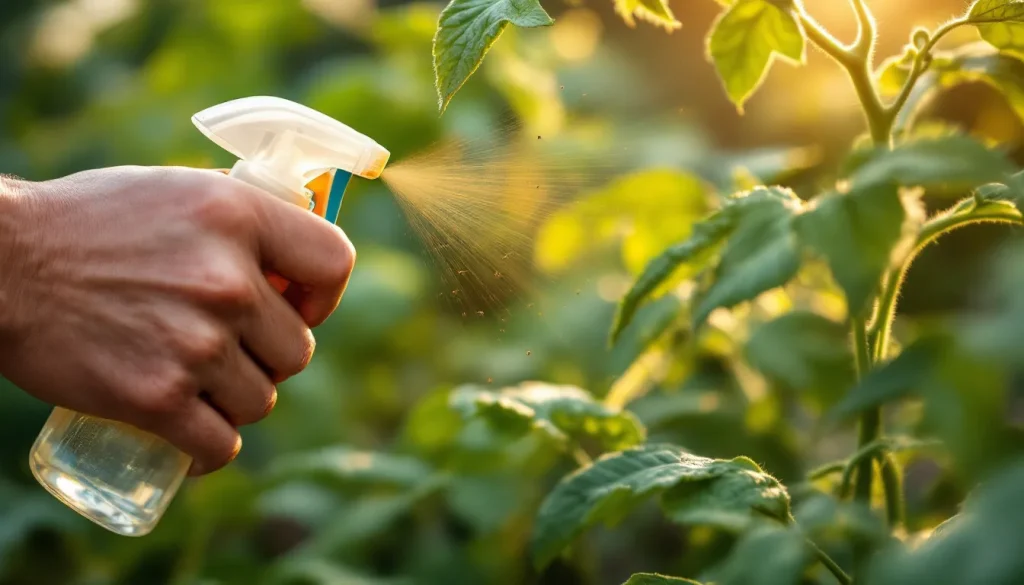
Spray to complete coverage, hitting both leaf surfaces and stem crevices where pests hide, until the plant is wet but not dripping. Because insecticidal soap has zero residual action and little effect on eggs, one spray never ends an infestation. Repeat every 4 to 7 days for two to three applications to catch newly hatched pests and break the life cycle.
- Spray thoroughly, especially leaf undersides where aphids, mites, and whiteflies cluster.
- Apply at dusk or early morning, out of direct sun, so the spray stays wet longer and heat stress is lowest.
- Rinse tender or edible plants with plain water a few hours later if you see any leaf reaction.
- Reapply every 4 to 7 days until pest counts drop, then stop.
Protect beneficials and bees: soap kills soft-bodied beneficial insects (ladybug larvae, lacewings, predatory mites) on contact and can harm bees while wet. Spray at dusk when pollinators are inactive, and target only infested plants rather than blanketing the garden.
Best insecticide soap to buy versus making your own
A commercial ready-to-use insecticidal soap trades a few dollars for a consistent, tested 1 to 2 percent fatty-acid concentration and a clear label, while DIY costs pennies but demands the right soap and soft water. Both work when made correctly. Choose commercial for reliability on valuable plants and DIY for cost on large or routine jobs.
| Factor | Commercial RTU (e.g., Garden Safe 32 oz) | Homemade Castile mix |
|---|---|---|
| Cost | Roughly $6 to $10 per bottle | A few cents per quart |
| Concentration control | Standardized, label-tested | Depends on your measuring |
| Phytotoxicity risk | Lower, formulated for plants | Higher if wrong soap or hard water |
| Organic listing | Often OMRI-listed | Depends on ingredients |
| Best for | Houseplants and prized specimens | Large gardens, frequent use |
Insecticidal soap treats pests, not disease. If your leaves show spots, mildew, or rust rather than insects, reach for a plant fungicide instead, since soap has no antifungal action.
Frequently Asked Questions
What is insecticidal soap and how does it kill bugs?
Insecticidal soap is a contact pesticide made from potassium salts of fatty acids. It kills soft-bodied insects by dissolving and disrupting their waxy cuticle and cell membranes, causing dehydration and collapse. It works only on direct contact while the spray is wet, has no residual action once dry, and the EPA rates fatty-acid soaps as low-toxicity.
How do you make homemade insecticidal soap, and what is the correct ratio?
Mix 1 tablespoon of pure liquid Castile soap into 1 quart (4 cups) of soft or distilled water for a mild 1 to 2 percent solution. Optionally add 1 teaspoon of vegetable oil for coverage. Avoid hard water, which inactivates soap. Use the mix the same day and spray to full coverage on both leaf surfaces.
Can I use Dawn or regular dish soap as insecticidal soap?
No. Dawn and most dish products are degreasing detergents, not true soaps. They can strip the plant’s protective waxy cuticle and cause leaf burn, spotting, and defoliation. They also contain fragrances and additives never tested on plants. Use true soap made from fatty-acid salts, such as pure liquid Castile soap, or a labeled commercial insecticidal soap.
What does insecticidal soap not work on?
Insecticidal soap does not reliably kill insect eggs, caterpillars, hard-shelled beetles, or adult armored scale, and it has zero effect on any pest the spray does not physically touch. It works only on soft-bodied insects like aphids, mites, whiteflies, mealybugs, and thrips, and only while wet. Repeat applications are needed to catch newly hatched pests.
Is insecticidal soap safe for edible plants and vegetables?
Yes. Insecticidal soap is safe on most vegetables, herbs, and fruit and leaves no meaningful residue, so many labels allow same-day harvest after the spray dries (confirm on the label). Rinse produce before eating. Spot-test sensitive edibles like hairy-leaved tomatoes first, and avoid spraying in direct sun or high heat to prevent leaf burn.
Which plants are too sensitive for insecticidal soap?
Soap-sensitive plants include ferns, succulents and jade, sweet peas, nasturtiums, gardenias, and hairy-leaved plants such as some tomatoes, plus any drought-stressed or newly transplanted plant. These can suffer phytotoxic leaf burn. Always spot-test one leaf and wait 24 to 48 hours, spray out of direct sun and below about 90 F, and rinse if you see a reaction.
How often should I apply insecticidal soap?
Apply every 4 to 7 days for two to three treatments. Insecticidal soap has no residual activity and little effect on eggs, so a single spray leaves survivors and newly hatched pests behind. Repeating on this schedule catches each new generation and breaks the life cycle. Stop once pest counts drop to acceptable levels.
What is the best insecticidal soap to buy versus making your own?
Commercial ready-to-use options like Garden Safe Insecticidal Soap (32 oz) offer a tested, consistent 1 to 2 percent concentration and often carry an OMRI organic listing, ideal for houseplants and prized specimens. Homemade Castile-soap mixes cost pennies and suit large or routine jobs, provided you use true soap and soft water. Both are effective when prepared correctly.