
By the HMNDP Editorial Team, independent reporting on lawn care, landscaping, and the green industry.
Last reviewed: June 2026
How to kill weeds in flower beds without killing your flowers
To kill weeds in flower beds safely, pull young weeds by the root when soil is moist, spot-treat stubborn perennials with a shielded application of glyphosate, and smother bare gaps with 2 to 3 inches of mulch. Skip broadcast salt sprays near ornamentals: salt sterilizes soil for months and drift damages nearby plants.
The right method depends on three things: the weed type, its growth stage, and how close it sits to a plant you want to keep. A dandelion 4 inches from a rose calls for a different tool than grass carpeting an open corner.
Below is a full method-by-method guide, the household-remedy warnings the top results leave out, and a prevention plan so you are not repeating this every weekend. For weeds spread across an open yard rather than a bed, see our guide to the best way to remove weeds from a large area.
Match the method to the weed type first
The single biggest mistake in flower-bed weeding is treating every weed the same. Annual weeds die when their top growth is destroyed. Perennial weeds like buttercup, bindweed, and dandelion store energy in roots and regrow after any vinegar burn or shallow pull. Grassy weeds and broadleaf weeds also respond differently to the same spray.
| Weed type | Examples | What actually works | What fails |
|---|---|---|---|
| Annual broadleaf | Chickweed, purslane, groundsel | Hand-pulling, hoeing, vinegar burn, mulch | Nothing much fails if caught early |
| Perennial broadleaf | Creeping buttercup, dandelion, bindweed | Full root removal or glyphosate to the leaves | Vinegar or salt (top dies, root regrows) |
| Grassy weeds | Crabgrass, couch grass, quackgrass | Dig out rhizomes, or a grass-selective herbicide | Snapping off blades (roots spread) |
| Woody seedlings | Bramble, tree saplings | Dig the crown out or paint-on glyphosate | Cutting alone (resprouts stronger) |
Growth stage matters just as much. Weeds under 3 inches tall pull cleanly and die from a single vinegar hit. Once a perennial flowers or sets seed, pulling leaves root fragments behind and a burn only cosmetically resets it.
Hand-pulling by the root: the safest method near flowers
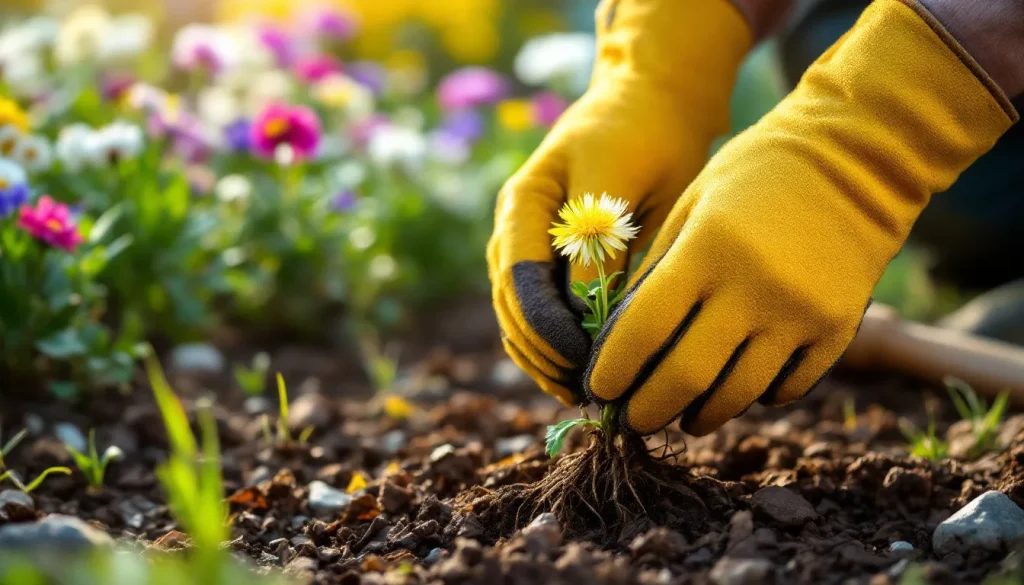
Hand-pulling is the safest, cheapest, most flower-friendly method because it removes zero chemicals from the equation and lets you work within an inch of desirable roots. It works best on moist soil, ideally the day after rain or a deep watering, when roots slide out whole instead of snapping.
- Water the bed the evening before if the soil is dry.
- Grip the weed low, at the crown where stem meets soil.
- Pull slowly and straight up so taproots (dandelion, dock) come out intact.
- For grassy weeds with running roots, loosen a 4-inch radius with a hand fork first.
- Bag perennial roots and seed heads rather than composting them.
A weed knife or Cape Cod weeder reaches taproots that fingers cannot. For established perennials, missing even an inch of buttercup or bindweed root usually means regrowth within two to three weeks, so dig wide and check the hole.
The vinegar, salt, and Dawn dish soap spray: what it really does to your soil
The popular vinegar, salt, and Dawn spray does burn weed leaves within hours, but it is not the harmless natural fix most articles claim. Vinegar (acetic acid) only scorches top growth, so perennials regrow. The salt is the real problem: it stays in soil, raises salinity, and can stop plants growing in that spot for months to years.
Table salt (sodium chloride) does not break down. Repeated use builds sodium that damages soil structure and harms roots of the very flowers you are protecting. In a mixed bed, this is the opposite of what you want. Reserve any salt-based mix for cracks in a driveway or patio, never open soil near ornamentals or tree roots.
Household 3% vinegar vs 20 to 30% horticultural vinegar
Kitchen vinegar is roughly 5% acetic acid and household cleaning vinegar around 3 to 6%, strong enough to burn seedlings but weak on anything mature. Horticultural vinegar at 20 to 30% acetic acid kills top growth far more aggressively, but at that concentration it is corrosive: it can burn skin and eyes and requires gloves and goggles.
Neither strength is selective. Vinegar burns any leaf it touches, flowers included, and drift on a breezy day scorches petals and foliage downwind. If you spray it, do so on a still day, shield nearby plants with a piece of cardboard, and expect to re-treat perennials because the roots survive.
Skip the salt entirely. A spray of vinegar plus a few drops of dish soap (the soap just helps it stick to waxy leaves) burns young annual weeds without loading your soil with sodium. Treat it as a short-term contact burner for annuals, not a cure for perennials.
Natural, chemical-free methods that spare the soil
Chemical-free weeding relies on physical removal and heat rather than sprays, which keeps soil, pollinators, and pets out of harm’s way. The reliable options are hand-pulling, hoeing, boiling water, flame weeding, and smothering with mulch. Each avoids the herbicide-versus-flower risk entirely.
- Hoeing: A sharp draw or stirrup hoe slices annual seedlings at the surface on a dry day. Fast for open gaps between plants.
- Boiling water: Poured directly on a weed in a path or seam, it cooks the crown. Precise but non-selective, so keep it off flower roots.
- Flame weeding: A handheld propane weeder wilts young annuals in seconds. Never use it over dry mulch or near woody stems (fire risk).
- Corn gluten meal: An organic pre-emergent that suppresses seed germination. It does not kill growing weeds and can take two seasons to show results.
These pair well with tackling other bed nuisances. If moss is creeping into shaded, compacted spots, our guide on how to get rid of moss covers the drainage and pH fixes that also make beds less weed-friendly.
Shielded spot-treatment with glyphosate (Roundup) done carefully
Glyphosate, the active ingredient in many Roundup products, is a systemic herbicide that travels to the roots and can kill perennials outright. It is generally safe to use in flower beds only if applied precisely to weed leaves and kept off every desirable plant, because glyphosate kills any green tissue it touches, flowers included.
Three techniques let you use it without collateral damage:
- Cardboard collar: Slide a cut cardboard box or plastic sheet between the weed and your flower, then spray the weed through the opening so overspray hits only the shield.
- Paint-on or wick method: Wearing gloves, brush or wipe diluted glyphosate directly onto the weed’s leaves with a foam brush or sponge applicator. Zero drift, ideal for weeds tangled among perennials.
- Funnel or bottle collar: Push the weed’s foliage into a cut plastic bottle, spray inside, and lift away. The bottle contains every droplet.
Regulatory status varies. Glyphosate remains approved for home garden use in the United States as of 2026, though several countries and municipalities restrict or ban it, and its safety is debated. Check your local rules, follow the label rate exactly, and keep pets and children off treated areas until it dries. For a broader rundown of options, see our overview of how to get rid of weeds.
No-till sheet mulching to smother weeds
Sheet mulching smothers weeds by blocking the light they need, killing existing growth and preventing new seeds from sprouting, all without digging or spray. It works best on open areas of a bed between established plants, and it feeds the soil as the layers break down.
- Cut or knock down tall weeds to ground level (leave the roots to rot in place).
- Water the area so it is damp.
- Lay plain cardboard or 6 to 8 sheets of newspaper, overlapping seams by 6 inches so no light leaks through.
- Wet the cardboard thoroughly.
- Top with 3 to 4 inches of wood-chip or bark mulch, keeping it a few inches clear of plant stems.
Cardboard typically breaks down in two to six months, by which point most annual weeds and many perennials underneath have died from lack of light. Tough perennials like bindweed may still push through gaps, so spot-check seams and patch any thin spots.
How to stop weeds coming back in flower beds
The most durable fix is prevention: stop weed seeds from germinating rather than fighting sprouted weeds each week. The three levers are pre-emergent herbicides, the right ground-cover choice, and adequate mulch depth. Together they cut new weed pressure by the majority once established.
Pre-emergent herbicides (for example products with pendimethalin, or organic corn gluten meal) form a barrier that blocks seeds from sprouting. Apply in early spring and again in late summer, before seeds germinate, and reapply roughly every 8 to 12 weeks per the label. They do not touch weeds that are already growing, so pull those first.
| Ground cover | Pros | Cons |
|---|---|---|
| Organic mulch (bark, wood chip) | Feeds soil, retains moisture, easy to top up | Breaks down, needs refreshing yearly |
| Landscape fabric | Strong initial barrier under gravel | Weeds root in debris on top; clogs; hard to plant through |
| Gravel over fabric | Low maintenance for paths and edges | Poor for planted beds; heats soil |
For planted ornamental beds, most horticulturists favor a thick organic mulch over landscape fabric, because fabric tends to collect a layer of soil and debris on top that weeds happily root into within a year or two. Our guide to the best mulch for flower beds compares materials and refresh schedules.
How deep should mulch be to prevent weeds?
Aim for 2 to 3 inches of mulch to suppress most weed seeds, and up to 4 inches in beds with heavy weed pressure. Less than 2 inches lets light reach the soil and seeds still germinate; more than 4 inches can smother the roots of shallow-rooted flowers and hold too much moisture against stems.
Keep mulch pulled back an inch or two from the crowns and stems of your plants to prevent rot, and top it up each spring as it decomposes and thins.
Best time of day and season to spray weeds
Spray weeds on a warm, dry, still day, ideally mid-morning after dew has dried, when weeds are actively growing and no rain is forecast for 24 hours. Actively growing weeds move systemic herbicides like glyphosate down to their roots faster, and dry conditions stop the spray washing off before it works.
Wind under 5 mph is the target: any breeze carries vinegar or herbicide droplets onto flowers, pollinators, and neighboring plants. Full sun improves the results of contact burners like vinegar, which scorch faster in heat. Avoid spraying when bees are foraging, so early morning or evening lulls in pollinator activity are safest.
Seasonally, treat perennials in late spring to early summer when they are growing hard, and again in early autumn when they pull nutrients (and herbicide) down into the roots for winter. Apply pre-emergent barriers in early spring before the first flush of germination.
Method decision guide at a glance
| Situation | Best method | Avoid |
|---|---|---|
| Young weed right beside a flower | Hand-pull by the root | Any spray (drift) |
| Perennial (buttercup, bindweed) in the open | Dig full root, or paint-on glyphosate | Vinegar or salt (regrows) |
| Grassy weed spreading by runners | Fork out rhizomes, grass-selective herbicide | Snapping off blades |
| Bare gaps between plants | Sheet mulch, 2 to 3 inch mulch layer | Leaving soil exposed |
| Cracks in paths or patio | Boiling water or salt mix | Salt anywhere near planted soil |
Frequently Asked Questions
How do I kill weeds in flower beds without killing my flowers or plants?
Use targeted, non-drifting methods. Hand-pull young weeds by the root when soil is moist, and for stubborn perennials paint diluted glyphosate directly onto the weed’s leaves with a foam brush, or spray behind a cardboard shield. Smother bare gaps with 2 to 3 inches of mulch. Avoid broadcast sprays, which drift onto and scorch nearby flowers.
What kills weeds but not flowers naturally?
No natural spray is truly selective, so physical methods protect flowers best. Hand-pulling, hoeing between plants, boiling water aimed only at the weed, and sheet mulching with cardboard and bark all remove weeds without chemicals touching your ornamentals. Corn gluten meal, an organic pre-emergent, stops new seeds without harming established plants, though it takes a season or two to work.
Does the vinegar, salt and Dawn dish soap weed killer actually work, and is it safe for my soil?
It burns weed leaves within hours, but it is not safe for planted soil. Vinegar only scorches top growth, so perennials regrow from the roots. The salt is the real risk: sodium chloride does not break down and can sterilize soil for months to years, harming nearby flowers. Keep any salt mix on paths and patio cracks, never open beds.
Is it safe to use Roundup (glyphosate) in flower beds?
Glyphosate can be used in flower beds only with precise, shielded application, because it kills any green tissue it touches. Paint it onto weed leaves or spray behind a cardboard collar to protect flowers. It remains approved for home use in the United States as of 2026, though some regions restrict it and its safety is debated. Follow the label and keep pets off until dry.
How do I get rid of weeds in flower beds naturally without chemicals?
Combine removal and smothering. Pull weeds by the root on moist soil, hoe seedlings on dry days, and pour boiling water on weeds in seams and paths. For larger areas, lay wet cardboard topped with 3 to 4 inches of mulch to block light. Maintain a 2 to 3 inch mulch layer year-round so few new seeds germinate.
What is the best way to stop weeds from coming back in flower beds?
Prevent germination rather than fighting sprouts. Apply a pre-emergent herbicide (chemical or corn gluten meal) in early spring and late summer, maintain 2 to 3 inches of organic mulch, and refresh it yearly as it thins. For most planted beds, mulch outperforms landscape fabric, which collects debris that weeds root into within a year or two.
How deep should mulch be to prevent weeds in a flower bed?
Apply 2 to 3 inches of mulch to block light and suppress most weed seeds, and up to 4 inches where weed pressure is heavy. Thinner than 2 inches lets seeds germinate; thicker than 4 inches can smother shallow flower roots and trap moisture against stems. Keep mulch pulled back an inch or two from plant crowns and top it up each spring.
When is the best time of day and season to spray weeds in flower beds?
Spray on a warm, dry, still day in mid-morning after dew dries, with no rain forecast for 24 hours and wind under 5 mph to prevent drift. Actively growing weeds absorb systemic herbicides best. Treat perennials in late spring and again in early autumn when they move nutrients to the roots, and apply pre-emergents in early spring.