
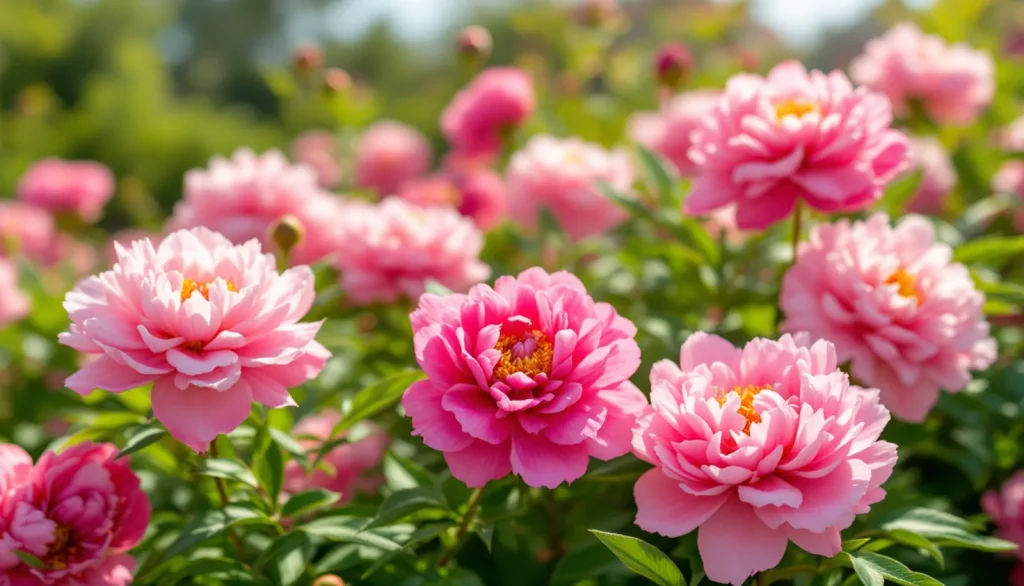
Peonies: Flower Types, Planting, and Bloom Care
Growing flowers like peonies comes down to three decisions most guides skip: which of the three peony types fits your climate, how deep to set the eyes for your USDA zone, and when to cut buds so they actually open in a vase. Peonies (genus Paeonia) are long-lived perennials, with documented plants flowering past 100 years, but they punish two common mistakes: planting the crown too deep, and choosing a cold-loving variety for a warm zone. This guide gives you the zone-by-zone depth numbers, a heat-tolerance matrix by type, and the cut-flower timing that florists use, all verified against university extension and grower sources.
What are the three types of peonies?
Peonies split into three groups: herbaceous, tree, and intersectional (Itoh). Herbaceous peonies die back to the ground each fall and are the classic cut flower. Tree peonies are woody shrubs that keep their stems through winter and reach up to 5 feet. Itoh peonies, first bred in the 1950s by Japanese horticulturist Toichi Itoh, cross the two: they die back like herbaceous types but carry larger tree-peony style blooms on sturdy stems that rarely need staking.
The practical differences drive every other decision: planting depth, heat tolerance, price, and whether you need to stake. Herbaceous bare roots commonly run $10 to $20, while Itoh divisions often cost $30 to $80 or more because they are slow to propagate. The table below summarizes the trade-offs.
| Type | Habit | Mature height | Bloom window | Best USDA zones | Typical bare-root price |
|---|---|---|---|---|---|
| Herbaceous (Paeonia lactiflora and hybrids) | Dies back to ground in fall | 2 to 3 feet | Late April to June | 3 to 7 (some to 8) | $10 to $20 |
| Tree (woody shrub) | Keeps woody stems all winter | Up to 5 feet | Late April to early May | 4 to 9 | $40 to $100+ |
| Intersectional / Itoh | Dies back to ground, sturdy stems | 2 to 3 feet | May to June | 4 to 9 | $30 to $80+ |
How deep do you plant peony eyes? (the zone rule)
Plant herbaceous and Itoh peony eyes shallow, and shallower the warmer your zone. The pink “eyes” (growth buds on the crown) need winter cold to set flower buds, so burying them too deep starves the bloom. In cooler zones 3 to 5, set the eyes 1.5 to 2 inches below the surface. In warmer zones 6 to 8, plant them 0.5 to 1 inch deep, barely below grade. This single number is the most common reason peonies grow lush foliage but never flower.
Tree peonies are the exception. Because they are grafted, set the graft union 4 to 6 inches below ground so the cultivar develops its own roots above the rootstock. Fall is the planting window for all three types, ideally September through October before the first hard frost, which gives roots time to establish for a stronger first season.
| USDA zone | Herbaceous and Itoh eye depth | Tree peony graft depth | Why |
|---|---|---|---|
| 3 to 5 (cold) | 1.5 to 2 inches | 4 to 6 inches | Deeper protects eyes from heaving; ample chill is guaranteed |
| 6 to 7 (moderate) | 1 to 1.5 inches | 4 to 6 inches | Balance of frost protection and chill exposure |
| 8 to 9 (warm) | 0.5 to 1 inch | 4 to 6 inches | Shallow eyes catch the limited winter chill needed to bloom |
Can you grow peonies in the South or warm zones?
Yes, but the type matters more than anything. Herbaceous peonies need a long winter dormancy, roughly six weeks below 40 to 45 degrees Fahrenheit, which subtropical areas like south Florida rarely deliver. In zones 8 and 9, tree and Itoh peonies are the reliable choice because they tolerate heat and humidity better, and they still flower without freezing temperatures. Choose early-blooming varieties so flowers open before peak summer heat.
Named cultivars with documented heat tolerance include Coral Charm, Festiva Maxima, Kansas, Red Charm, Scarlet O’Hara, and Shirley Temple among herbaceous hybrids, plus Bartzella (Itoh) and the tree peonies Snow Lotus, Pink Lotus, and Cup of Shining Night. If you garden in a hot, dry climate, our coverage of drought-tolerant landscape choices pairs well with heat-adapted ornamentals, and a region-specific contractor on our Phoenix landscaper directory can advise on microclimate placement.
How much sun, water, and space do peonies need?
Peonies want full sun, 6 to 8 hours a day, deep well-draining soil, and room to breathe. Insufficient sun is a top cause of weak, non-flowering plants, per Iowa State University Extension. Space plants 3 to 4 feet apart so air moves between them, which also suppresses fungal disease. Do not crowd them against trees or shrubs, where they lose the competition for light, water, and nutrients.
Water deeply but infrequently. Once established, peonies are not thirsty: aim for about 1 inch per week during dry spells, ideally at the soil line rather than overhead. Skip heavy fertilizer. Work compost into the planting hole, then feed only every few years if growth is weak. Over-fertilizing pushes foliage at the expense of flowers. For matching nutrients to ornamentals, see our NPK fertilizer guide.
How long until peonies bloom, and how long do they last?
Expect patience. A newly planted peony usually takes 2 to 3 years to bloom well, and almost never flowers its first year. Once mature, a single plant can carry as many as 50 flowers in a season and live for decades, with some plants documented past 100 years. Each individual plant blooms for only 7 to 10 days, which is why bloom-time strategy matters.
To stretch the show, plant a mix of early, midseason, and late cultivars. Combining bloom periods extends the overall display to 4 to 6 weeks instead of a single week. The sequence below is a proven starting trio.
- Early: Coral Charm, opening in late April to early May in mid-zones.
- Midseason: Sarah Bernhardt, the widely grown soft-pink double.
- Late: Felix Crousse, carrying color into early to mid-June.
Why won’t my peonies bloom?
The four usual culprits are: eyes planted too deep, too little sun, plants too young, and fungal bud blast. Planting depth and shade are the most common and both are fixable. Iowa State University Extension lists insufficient sun, botrytis blight, and late-freeze damage as the leading reasons buds fail. Note that ants on the buds are harmless and are not required for flowers to open, a persistent myth.
If buds form but turn brown and never open, suspect botrytis blight (peony wilt), caused by the fungi Botrytis paeoniae and B. cinerea. It spreads in cool, wet spring weather. Control it culturally: water at the base instead of overhead, space plants 18 to 24 inches or more for airflow, remove blighted buds promptly, and in fall cut all stems to the ground and destroy the debris. If your plant is simply too young, give it another season or two. For deeper soil and shade fixes, our guide on growing in shade and difficult spots covers the same light principles.
When should you cut peonies for a vase?
Cut at the “marshmallow stage”: the bud is fully colored, the outer green sepals are just separating, and it gives slightly when squeezed, like a fresh marshmallow. Buds cut rock-hard and green will never open in water. Buds already showing petals are too far along and fade fast. Cut in early morning or late evening and put stems straight into clean, lukewarm water, stripping any leaves below the waterline.
The grower trick that extends peony season for weeks is cold dry storage. At the marshmallow stage, wrap stems loosely in a slightly damp paper towel, slide them into a plastic sleeve, and refrigerate at 34 to 38 degrees Fahrenheit. Held dry this way, buds keep 2 to 3 weeks without opening. To bloom them on demand, re-cut the stems at an angle and set them in fresh room-temperature water; full bloom usually follows within 24 to 48 hours.
| Bud stage | Feel | What it does in the vase | Action |
|---|---|---|---|
| Hard and green | Rock hard | Never opens | Leave on the plant |
| Marshmallow | Soft, sepals parting | Opens over 24 to 48 hours, lasts up to 10 days | Cut now, or store cold up to 2 to 3 weeks |
| Showing color and petals | Loose, open | Short vase life | Enjoy in the garden |
How do you care for peonies through the year?
Peony care follows a simple seasonal rhythm. Support heavy-flowered herbaceous and tree types early with a peony ring before the buds swell, so stems do not flop in rain. Deadhead spent flowers to redirect energy to the roots. Itoh peonies usually hold themselves up without staking. The yearly checklist below keeps plants vigorous and disease-free.
- Early spring: place peony support rings before stems reach 8 to 10 inches.
- Spring: water at the base during dry spells; remove any blighted buds at once.
- After bloom: deadhead, keep foliage to feed the roots, do not cut leaves back early.
- Fall: cut herbaceous and Itoh stems to the ground, remove and destroy debris to break the botrytis cycle. Leave tree peony wood standing.
- Every few years only: top-dress with compost if growth weakens.
For broader bed planning and how peonies fit a wider planting scheme, our seasonal maintenance schedule shows how to align ornamental and turf tasks across the year.
Last reviewed: June 2026
HMNDP Editorial Team, reviewed by HMNDP turf and horticulture editors.
Frequently asked questions
How deep do you plant peonies?
Plant peony eyes shallow, and shallower in warm zones. In cooler USDA zones 3 to 5, set the eyes 1.5 to 2 inches below the surface. In warmer zones 6 to 8, plant them just 0.5 to 1 inch deep. Tree peonies are grafted, so bury the graft union 4 to 6 inches deep. Planting too deep is the top reason peonies grow leaves but never flower.
When do peonies bloom?
Peonies bloom from late April through June depending on variety and region, with each plant flowering for only 7 to 10 days. Early types like Coral Charm open first, midseason types like Sarah Bernhardt follow, and late types like Felix Crousse finish in early to mid-June. Planting a mix of bloom times extends the display to 4 to 6 weeks.
Do peonies come back every year?
Yes. Peonies are long-lived perennials that return every year, with some documented plants flowering past 100 years. They do not rebloom in the same season. A newly planted peony usually takes 2 to 3 years to bloom well and rarely flowers in its first year, so patience during establishment is normal and expected.
Why won’t my peonies bloom?
The four usual causes are eyes planted too deep, too little sun, plants that are still too young, and fungal bud blast. Iowa State University Extension lists insufficient sun, botrytis blight, and late-freeze damage as leading reasons. Replant shallower if needed, give 6 to 8 hours of sun, and wait two seasons for young plants. Ants on buds are harmless.
Can you grow peonies in the South or warm climates?
Yes, if you pick the right type. Herbaceous peonies need about six weeks below 40 to 45 degrees Fahrenheit, which subtropical areas rarely supply. In zones 8 and 9, tree and Itoh peonies tolerate heat and humidity better and flower without freezing. Choose early-blooming, heat-tolerant cultivars like Coral Charm, Bartzella, or the tree peony Snow Lotus.
When should you cut peonies for a vase?
Cut at the marshmallow stage: the bud is fully colored, outer green sepals are just parting, and it gives slightly when squeezed. Buds cut rock-hard and green never open. Cut at marshmallow stage, peonies open over 24 to 48 hours and last up to 10 days. At this stage you can also refrigerate them dry at 34 to 38 degrees Fahrenheit for 2 to 3 weeks.
What is the difference between herbaceous, tree, and Itoh peonies?
Herbaceous peonies die back to the ground each fall, grow 2 to 3 feet, and suit zones 3 to 7. Tree peonies keep woody stems through winter, reach up to 5 feet, and grow in zones 4 to 9. Itoh (intersectional) peonies, bred by Toichi Itoh in the 1950s, die back like herbaceous types but carry larger tree-style blooms on sturdy stems in zones 4 to 9.
How much sun and space do peonies need?
Peonies want full sun, 6 to 8 hours a day, in deep, well-draining soil. Space plants 3 to 4 feet apart so air moves between them and fungal disease stays down. Do not plant them under trees or shrubs, where they lose the competition for light, water, and nutrients and grow weak with few or no flowers.