
By the HMNDP Editorial Team, independent reporting on lawn care, landscaping, and the green-industry business.
Last reviewed: June 2026
Does mulch attract termites? The short answer
Mulch does not attract termites the way sugar attracts ants. Termites do not smell wood chips from across the yard and march toward them. What mulch can do is create the cool, moist, shaded conditions that subterranean termites already favor. The risk is about moisture and cover near your foundation, not the mulch itself. Managed well, mulched beds beside a house are generally safe.
Myth vs. fact: mulch as a lure
The belief that mulch lures termites toward a home is mostly a myth. Termites are attracted to moisture, warmth, and hidden pathways to cellulose, not to a specific product in a bag. University of Maryland entomology work published in the early 2000s found that subterranean termite (Reticulitermes) survival and foraging were similar across common mulch types.
The practical takeaway: mulch is not bait. A termite colony already living in the soil may exploit a damp mulch layer as shelter, but the mulch did not summon it there. Correcting this one belief changes how you should respond, from panic to placement and depth.
Moisture is the real risk factor near the foundation
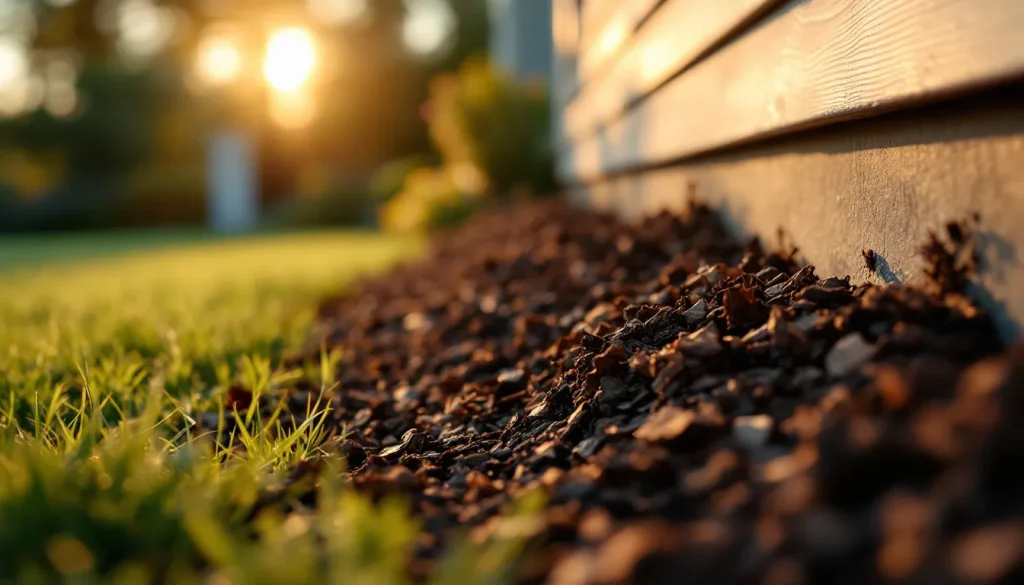
The genuine hazard of mulch against a house is water, not wood. A thick mulch bed traps soil moisture, and subterranean termites need constant humidity to survive above ground. Piled against siding, mulch also hides the mud tubes inspectors look for and can bridge over a treated soil barrier or a home’s weep holes.
This is why depth and distance matter more than mulch brand. Two to three inches of mulch retains moisture without staying waterlogged. Anything deeper, or piled up the wall like a volcano, is where problems start. See our guide on how much mulch a yard covers to hit that depth without overbuying.
Do termites actually eat mulch, and can it cause an infestation?
Termites will feed on wood and bark mulch because it contains cellulose, but mulch alone rarely sustains a colony. Wood chips are low-nutrition, dry out at the surface, and lack the mass a colony needs. USDA Forest Service and University of Maryland studies found termites could not maintain healthy colonies on mulch by itself. Mulch shelters existing termites; it does not manufacture an infestation.
In plain terms, a fresh bag of mulch will not create termites. The insects come from established soil colonies. Mulch can make your foundation a more comfortable place for foragers, which is a placement problem you control, not a product you must avoid.
Wood mulch vs. non-wood mulch: risk compared
Cellulose content drives the difference. Wood and bark mulches contain the cellulose termites eat, so they carry marginally higher shelter risk. Non-cellulose options (rubber, gravel, stone) give termites nothing to feed on. The gap between types is smaller than most people assume, because moisture and placement dominate the equation.
| Mulch type | Cellulose (food)? | Termite risk | Mechanism |
|---|---|---|---|
| Standard hardwood / bark | Yes | Moderate | Edible cellulose plus moisture retention |
| Dyed / black wood mulch | Yes | Moderate | Dye does not deter termites; same cellulose |
| Cedar | Yes | Lower | Thujone and natural oils repel and resist |
| Cypress heartwood | Yes | Lower | Extractives make heartwood less palatable |
| Melaleuca | Yes | Low | University of Florida tests: least favored |
| Rubber | No | Very low | Inorganic, no food value |
| Gravel / stone | No | Very low | Inorganic, dries fast, no cover |
Note that dyed products carry no extra risk from color. Our overview of black and dyed mulch explains that the pigment is cosmetic; the wood underneath behaves like any hardwood mulch.
Termite-resistant mulch types and why they work
Some woods resist termites because of their chemistry, not their color. Cedar and cypress heartwood contain natural oils and extractives (including thujone in cedar) that repel insects and slow decay. University of Florida research led by Duryea tested Florida mulches and ranked melaleuca and eucalyptus among the least favored by subterranean termites, with cypress heartwood also performing well.
Cedar mulch is the option most often called a repellent, and the reputation is earned. Its aromatic oils deter many insects and make the wood less appetizing. Cedar is not a pesticide and it loses potency as it ages, so treat it as a modest edge rather than a shield.
Rubber mulch and other non-cellulose alternatives
Rubber mulch removes the food source entirely. Made from recycled tires, it contains no cellulose, so termites cannot eat it and gain no nutrition from a bed of it. For homeowners fixated on termites specifically, rubber, gravel, or river rock beside the foundation eliminates the feeding question, though they still trap heat and can hold moisture underneath.
Rubber is not maintenance-free and does not benefit soil the way organic mulch does. Weigh those trade-offs in our breakdown of black rubber mulch before swapping an entire bed. A common compromise is inorganic material in the first foot beside the house and organic mulch farther out in the beds.
The hard rules: how far to keep mulch from the house
This is where most articles go silent. Two numbers do the heavy lifting. Keep mulch no deeper than 2 to 3 inches, and leave a 6 to 12 inch bare gap of soil or gravel between the mulch and the foundation, siding, or wood trim. That inspection strip is the single most effective, free termite defense a homeowner has.
- Cap mulch depth at 2 to 3 inches; rake and refresh rather than pile new mulch on old.
- Hold mulch 6 to 12 inches back from the foundation and any siding.
- Keep mulch below the siding line, weep holes, and any exposed wood.
- Slope beds so water drains away from the house, not toward it.
- Walk the perimeter each spring and look for mud tubes in the bare gap.
Follow those five steps and mulch type becomes a minor variable. The bare gap keeps foragers visible and denies them a hidden, humid bridge to your structure.
Regional and species nuance most guides skip
Where you live changes the stakes more than which bag you buy. Subterranean termites (Reticulitermes) live across most of the continental United States and account for the majority of structural damage, but they require soil contact and moisture, which is exactly why the bare-gap rule works everywhere.
Gulf and Southeastern homeowners face a sharper edge. The Formosan subterranean termite, established in Louisiana, Florida, Texas, and nearby states, builds huge colonies and forages aggressively, so damp mulch against a slab there is a real invitation. Drywood termites in coastal Florida, the Gulf, and parts of southern California do not need soil, but they also do not rely on ground mulch, so mulch is largely a non-issue for that group.
The pattern: the mulch is rarely the villain anywhere. In the North it is close to irrelevant to termites; in the Gulf South, placement and moisture discipline matter because the local species are simply more aggressive. Mulch is one variable among pests and moisture homeowners weigh, much like knowing which yard insects actually damage what before reaching for a treatment.
Frequently Asked Questions
Does mulch attract termites, or just create conditions they like?
Mulch does not attract termites as bait. It creates moist, shaded, hidden conditions that subterranean termites already favor. University of Maryland research found termite survival was similar across mulch types, meaning the product is not a lure. The real driver is moisture and cover against the foundation, which you control through 2 to 3 inch depth and a bare inspection gap.
Does wood mulch attract termites more than other types?
Wood and bark mulch contain cellulose, the material termites eat, so they carry slightly higher shelter risk than inorganic options. The difference is smaller than most homeowners expect, because moisture and placement matter more than the presence of cellulose. Termites will feed on wood mulch but cannot sustain a colony on it alone, per USDA Forest Service and University of Maryland studies.
Does rubber mulch attract termites?
No. Rubber mulch is made from recycled tires and contains no cellulose, so termites cannot eat it or draw nutrition from it. It is one of the lowest-risk options for the food question specifically. It does still trap heat and can hold moisture underneath, and it does not feed soil, so it is a trade-off rather than a pure upgrade over organic mulch.
Does black or dyed mulch attract termites?
Dyed or black mulch carries no extra termite risk from its color. The pigment is cosmetic and does not repel or attract insects. Underneath the dye it is usually standard hardwood or bark, so it behaves like any wood mulch: edible cellulose plus moisture retention. Manage it with the same 2 to 3 inch depth and 6 to 12 inch foundation gap.
What kind of mulch is termite resistant?
Cedar, cypress heartwood, and melaleuca are the most termite-resistant organic mulches. Their natural oils and extractives (thujone in cedar) repel insects and slow feeding. University of Florida testing ranked melaleuca and eucalyptus among the least favored by subterranean termites. Inorganic choices like rubber, gravel, and stone contain no cellulose at all, so termites gain nothing from them.
Does cedar mulch repel termites?
Cedar mulch does have repellent properties. Its aromatic oils, including thujone, deter many insects and make the wood less palatable to termites. Cedar is not a pesticide and loses potency as it weathers, so treat it as a modest advantage rather than a barrier. Depth control and a bare foundation gap still do far more to protect a structure than mulch choice.
How far should mulch be kept from the house foundation?
Keep a 6 to 12 inch bare gap of soil or gravel between mulch and the foundation, siding, and any wood trim. Also cap mulch depth at 2 to 3 inches and keep it below the siding line and weep holes. This inspection strip keeps termite mud tubes visible and denies foragers a hidden, humid bridge to the structure. It is the most effective free defense available.
Do termites actually eat mulch, and can mulch cause an infestation?
Termites do eat wood and bark mulch because it contains cellulose, but mulch alone rarely sustains a colony. It is low-nutrition and dries at the surface. USDA Forest Service and University of Maryland studies found colonies could not thrive on mulch by itself. A fresh bag will not create termites; the insects come from existing soil colonies that mulch can shelter but does not summon.