
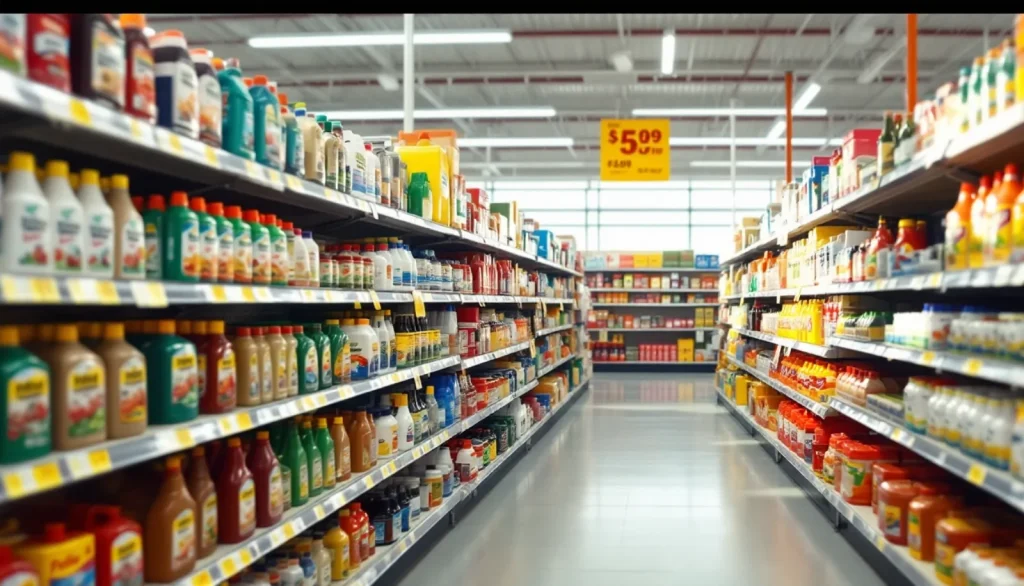
The Bayer Roundup residential exit, announced in July 2021 and completed by the end of 2023, removed glyphosate from every consumer-shelf Roundup bottle sold in the United States. The Roundup brand stayed on Home Depot, Lowe’s, Walmart, and Ace Hardware shelves. The active ingredient changed. Three years into the reformulation, big-box lawn-care aisles look different, professional applicators stayed largely on glyphosate, and the litigation that drove the decision continues to grind through state and federal courts. Here is what actually happened and what it means in 2026.
The short version
- Bayer announced the residential glyphosate exit July 29, 2021, completed phase-out by year-end 2023
- Roundup brand remained, reformulated with triclopyr, fluazifop-P-butyl, diquat, and other actives
- Professional and ag markets kept glyphosate, accounting for roughly 90% of US glyphosate volume
- Bayer set aside $16B for Roundup litigation, paid out an estimated $11.6B by mid-2026
- Big-box weed-killer SKUs grew from ~40 distinct products in 2021 to over 75 by 2026
- EPA reaffirmed glyphosate’s registration in October 2024 after court-ordered reconsideration
What happened
On July 29, 2021, Bayer announced it would remove glyphosate from US residential lawn and garden products beginning in 2023. The company kept the Roundup brand. It also kept glyphosate in professional, agricultural, and industrial formulations. The trigger was litigation risk, not regulatory action. Bayer’s then-CEO Werner Baumann told investors the move would “manage future litigation risk” while preserving the brand equity Roundup had built over five decades. Bayer’s English-language release is here: bayer.com release, July 29, 2021.
The actual product transition happened across 2022 and 2023. Old SKUs sold through. New formulations rolled out under names like Roundup Concentrate Weed & Grass Killer (active: triclopyr), Roundup Ready-To-Use Weed & Grass Killer (active: triclopyr + diquat), and Roundup For Lawns (active: MCPA, sulfentrazone, quinclorac, dicamba in regional variants). By Q4 2023, no consumer-shelf Roundup product sold in the US contained glyphosate.
What replaced glyphosate on the shelf
Three active-ingredient categories did most of the replacement work. Triclopyr (a synthetic auxin) handles broadleaf weeds and woody brush. Fluazifop-P-butyl (a graminicide) kills grasses without harming broadleaves. Diquat (a bipyridylium contact herbicide) provides the burndown speed homeowners expected from glyphosate. Selective lawn herbicides for in-turf use rely on MCPA, 2,4-D, dicamba, quinclorac, and sulfentrazone in various combinations. For homeowner-facing detail on these chemistries see our herbicide and weed killer guide and how weed killer works.
The shelf set expanded. Where 2021 big-box weed-killer aisles carried about 40 distinct SKUs across Roundup, Spectracide, Ortho, Compare-N-Save, and store brands, by 2026 that count exceeds 75. Spectracide Weed & Grass Killer (active: diquat) gained share in the post-Roundup year. Ortho GroundClear (active: glyphosate + other) initially kept glyphosate, then split into a glyphosate-free GroundClear Vegetation Killer and a separate professional line. Compare-N-Save (Ragan & Massey) stayed on glyphosate and picked up homeowners who specifically wanted the original active.
Why it matters
For homeowners, the practical effect is that “Roundup” no longer means glyphosate. Anyone Googling “is Roundup glyphosate” in 2026 needs to read the label. The reformulated products work, but they work differently. Triclopyr is slower than glyphosate. Diquat is faster but less translocated, so it tends to burn the top of perennial weeds without killing the root system. Homeowners who were used to one application killing dandelions for the season now need repeat applications.
For professional applicators, almost nothing changed. The professional Roundup PRO, Roundup PROMAX, Roundup ProConcentrate, and ag-market Roundup PowerMAX lines all kept glyphosate. According to USGS Pesticide National Synthesis Project data, professional and agricultural use accounted for roughly 90% of US glyphosate volume even before the residential exit. Lawn-care companies, landscape contractors, golf-course superintendents, and farmers continued buying glyphosate as before. Our professional weed killer guide covers the still-available pro SKUs.
The litigation backdrop
The Roundup litigation began with the 2018 Johnson v. Monsanto verdict in California state court. Bayer had completed the Monsanto acquisition in June 2018 and inherited the cases. By mid-2026, Bayer had paid out roughly $11.6 billion of a $16 billion reserve set aside for Roundup non-Hodgkin lymphoma cases. About 165,000 cases have been resolved. An estimated 50,000 to 60,000 remain pending. Trial outcomes have swung both ways. Bayer won 12 of the last 22 jury verdicts but lost several large ones, including a $2.25 billion Pennsylvania verdict (later reduced) and a $1.56 billion Missouri verdict in 2023.
The US Supreme Court is currently weighing whether federal pesticide-label preemption under FIFRA bars state-law failure-to-warn claims. The case, Monsanto v. Durnell, was argued earlier in 2026 and a ruling is expected by end of June. For coverage see our SCOTUS Monsanto v. Durnell tracker.
The EPA piece
In October 2024, EPA reaffirmed glyphosate’s registration after the Ninth Circuit (Natural Resources Defense Council v. EPA, No. 20-70787, 2022) vacated parts of the agency’s prior interim decision and ordered reconsideration. EPA’s revised human health and ecological risk assessments concluded glyphosate is not likely to be carcinogenic to humans at expected exposure levels, broadly consistent with the agency’s 2017 finding. EPA is now in the 15-year registration review cycle for glyphosate with a final decision expected by 2027. See our coverage of EPA glyphosate registration review.
By the numbers
| Metric | 2021 | 2023 | 2026 |
|---|---|---|---|
| Glyphosate in consumer Roundup | Yes | Phased out | None |
| Glyphosate in pro/ag Roundup | Yes | Yes | Yes |
| Big-box weed-killer SKU count | ~40 | ~60 | 75+ |
| Bayer Roundup litigation reserve | $11.6B | $16B | $16B |
| Cases resolved (cumulative) | ~125,000 | ~150,000 | ~165,000 |
| Cases pending | ~30,000 | ~45,000 | 50,000 to 60,000 |
Sources: Bayer annual reports, court records, Reuters, Wall Street Journal litigation coverage, USGS Pesticide National Synthesis Project.
What homeowners should do
Read the label. The Roundup name no longer tells you the active ingredient. If you want glyphosate for home use, you can still buy it under other brand names (Compare-N-Save, generic store brands). If you are fine with triclopyr or diquat-based products, the new Roundup formulations work, with the caveats above about repeat applications. For an in-turf weed killer, look for MCPA, 2,4-D, dicamba, and quinclorac on the label. Our T-Zone herbicide review covers one of the most popular pro-grade in-turf options now sold to homeowners.
What operators should know
Lawn-care operators saw no supply disruption. Professional glyphosate remained available throughout the 2021 to 2023 transition. Pricing wobbled in 2022 when Chinese glycine and PMIDA supply tightened, but stabilized by 2024. Most pro applicators now run a glyphosate burndown at site prep and rely on selective in-turf chemistry for established lawn maintenance, the same pattern they have followed for thirty years. Operators servicing customers who specifically requested “no Roundup” sometimes substituted ammonium nonanoate or pelargonic acid (OMRI-listed contact herbicides) for spot work. See our commercial weed killer guide for what is in active commercial use.
FAQ
Is glyphosate banned in the US?
No. Glyphosate is fully registered with EPA for agricultural, professional, and industrial use. The residential consumer-shelf exit was a Bayer business decision, not a regulatory ban.
Does Roundup still work?
The reformulated consumer Roundup products work, but they work differently than glyphosate. Triclopyr and diquat formulations tend to require repeat applications on perennial weeds.
Can I still buy glyphosate for home use?
Yes, under brand names other than Roundup. Compare-N-Save, generic ag-store brands, and some pro-shelf SKUs at independent garden centers still contain glyphosate.
Why did Bayer reformulate if EPA says glyphosate is safe?
Litigation risk. By 2021, Bayer had paid out about $11 billion in settlements and faced thousands of new cases each year. Removing the active from the residential shelf, where exposure cases primarily originated, was framed as risk management.
Has the Supreme Court ruled on the FIFRA preemption issue?
Not as of mid-2026. Monsanto v. Durnell was argued in early 2026 with a decision expected by end of June. The ruling could materially change the trajectory of remaining Roundup cases.
What it means for big-box retail
Home Depot, Lowe’s, Walmart, and Ace Hardware all rebuilt their weed-killer planograms in 2023 and 2024. Roundup retained dominant shelf position because of brand equity, but the SKU set tripled in many stores as competitors added selective and non-selective formulations to fill demand. Spectracide, Ortho, Compare-N-Save, BioAdvanced, and store-brand SKUs all gained linear feet. Pricing per gallon-equivalent for diquat-based formulations ran roughly 15% to 20% above glyphosate-equivalent products through 2024 and 2025 because the raw-material supply chain is smaller. Triclopyr pricing was relatively stable. Independent garden centers, which never carried as much consumer Roundup volume as big-box, picked up some glyphosate sales as homeowners specifically sought the original active under other brand names.
Bottom line
The Bayer Roundup residential exit removed glyphosate from consumer-shelf Roundup bottles in 2023 while keeping the brand and keeping glyphosate in professional formulations. Three years on, the big-box weed-killer aisle is more crowded, homeowners need to read labels more carefully, and professional applicators are working with the same chemistry they always have. The litigation that triggered the move continues, and the Supreme Court could change the math by mid-2026.