
By the HMNDP Editorial Team. Last reviewed: June 2026.
Soil testing kit types compared at a glance
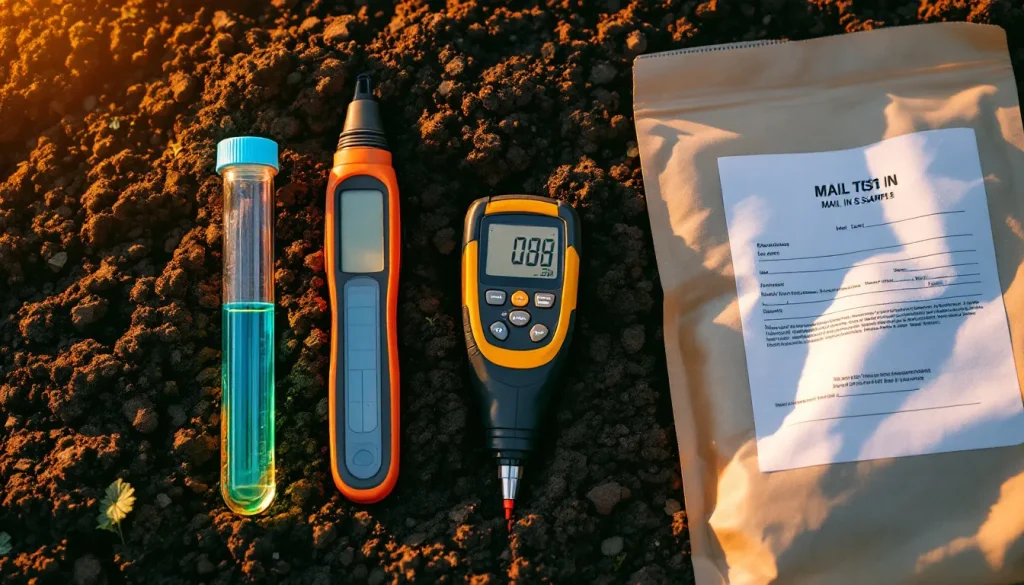
A soil testing kit falls into three types: cheap DIY chemical color-comparator kits ($8-20), digital or electronic meters ($20-35), and mail-in lab kits ($25-60). Chemical and digital kits give instant but rough readings of pH and basic nutrients. Mail-in labs take about 7 days but return precise numbers plus fertilizer and lime recommendations. Match the kit to the stakes of your decision.
| Kit type | Price band | What it measures | Accuracy | Turnaround | Best for |
|---|---|---|---|---|---|
| DIY chemical (color-comparator) | $8-20 | N, P, K, pH via color match | Low (rough) | Instant | Quick, low-stakes spot checks |
| Digital / electronic meter | $20-35 | pH, moisture, light (most); some add N-P-K | Low to moderate | Instant | Casual ongoing monitoring |
| Mail-in lab kit | $25-60 | Up to 13 nutrients + pH + written recommendations | High | ~7 days | Decisions that cost real money |
What a soil test kit measures
Most soil test kits report four core metrics: nitrogen (N), phosphorus (P), potassium (K), and pH. N-P-K are the primary macronutrients that drive grass and plant growth, and pH controls how easily roots absorb them. Premium mail-in kits extend the panel to roughly 13 nutrients, adding calcium, magnesium, sulfur, and micronutrients like iron and zinc.
pH is the single most decision-changing number. It runs from 0 to 14, and most turfgrass and vegetables perform best between 6.0 and 7.0. Below about 5.5, nutrients stay locked in the soil even when they are present, which is why a low pH often explains a lawn that stays pale despite regular feeding.
Nutrient results usually arrive as parts per million (ppm) or as a low/medium/high rating. Extended lab panels also report organic matter percentage and cation exchange capacity (CEC), which tell you how well the soil holds nutrients and water. Cheap kits skip these entirely.
DIY chemical color-comparator kits
A DIY chemical kit uses reagent capsules or powders that change color when mixed with a soil-and-water solution. You compare the resulting color against a printed chart to estimate pH, N, P, and K. The Luster Leaf Rapitest kit is the common example, priced around $15-20 for roughly 40 tests, with single-use versions near $8.
The box typically contains color-coded comparators, reagent capsules, a pipette, and a chart. The appeal is speed and price: you get a reading in minutes at your kitchen table. The catch is precision. Color matching is subjective, expired reagents drift, and results are best read as a broad direction (acidic vs alkaline, low vs high) rather than an exact value.
Digital and electronic soil meters
A digital soil meter is a probe you push into damp soil to read pH, moisture, and sometimes light on a dial or screen. Most sell for $20-35 and require no batteries for the basic probe versions. They are convenient for repeat checks across a lawn or garden bed without mixing chemicals.
Accuracy is the weak point. Inexpensive two-prong pH meters are notoriously unreliable and can read differently in the same hole twice, especially in dry or sandy soil. Treat a meter as a monitoring tool for trends over time, not as a source of the exact pH you would use to calculate a lime application. Calibrated laboratory pH probes remain the reference standard.
Mail-in lab soil test kits
A mail-in lab kit is the accurate option. You collect a soil sample, mail it in the supplied bag with a form, and a laboratory returns measured results in about 7 days. Providers like MySoil, SoilKit, and university extension labs (often $15-30 through a state land-grant program) run the same instrumentation professionals use.
The value is in the report, not just the numbers. A good lab kit returns an extended panel of up to 13 nutrients plus pH, then generates a custom amendment plan: how much fertilizer to apply, whether to choose organic or synthetic sources, and how much lime to add to correct pH. That turns raw data into a shopping list.
Lime and pH-correction guidance is a lab strength. If your soil reads pH 5.5, a lab might recommend a specific pounds-per-1,000-square-feet lime rate to reach 6.5, adjusted for your soil texture. A color chart cannot do that math for you.
How to collect and submit a soil sample
Sampling technique decides whether lab results mean anything. A single scoop from one spot can misread an entire lawn. Follow an ordered process to build a representative composite sample.
- Use a clean trowel or soil probe and a plastic (not metal) bucket to avoid contaminating readings.
- Take 8-10 small cores or slices from across the area, each 4-6 inches deep for lawns or 6-8 inches for garden beds.
- Mix the cores together in the bucket and remove grass, roots, and stones.
- Let the composite air-dry, then fill the supplied sample bag to the fill line.
- Complete the sample form (note whether it is lawn, vegetable, or ornamental) and mail it to the lab.
Sample separately for distinct zones. Test the front lawn, the vegetable plot, and a problem patch as three submissions, because their fertilizer and lime needs rarely match.
How accurate is each soil testing kit, and when do you actually need a lab?
Here is the honest tradeoff sellers rarely print: $8-20 chemical kits and $20-35 digital meters are imprecise, while mail-in lab kits are reliable. Cheap kits are fine for a rough acidity check or a curiosity read. They are not good enough when a wrong reading will cost you money or a full growing season. The rule is to match kit accuracy to the price of being wrong.
A home kit is good enough for routine maintenance: a healthy established lawn, confirming that soil is roughly acidic or alkaline, or tracking whether last year’s amendments moved the needle. If the decision is cheap to reverse, a rough number does the job.
Pay for a lab when the stakes are real: establishing a new lawn or garden, diagnosing a persistent problem that fertilizer has not fixed, or when you suspect contamination such as lead near an old house or road. In those cases a $30 lab test is cheaper than a wasted pallet of sod or a season of failed vegetables.
To turn readings into action, anchor on thresholds. Turf below pH 6.0 usually calls for lime; above 7.5, elemental sulfur lowers it. On nutrient ppm, phosphorus under roughly 25 ppm or potassium under about 100 ppm signals a deficiency worth correcting, while high readings mean you can skip that nutrient and avoid runoff. Once you know what to add, our guide to choosing the best fall lawn fertilizer helps you match the product to the numbers.
Lawn versus garden and vegetable use cases
Kit choice shifts with the plants. Lawns are forgiving and uniform, so a chemical kit or meter often gives a workable read on turf pH and whether to feed. Vegetables and fruit are pickier and higher-value, which tips the decision toward a lab panel that catches micronutrient gaps.
Target ranges differ too. Most turfgrass and vegetables like pH 6.0 to 7.0, but blueberries demand acidic soil around 4.5 to 5.5, and lawns can drift alkaline near new concrete. A lab report tuned to your stated crop removes the guesswork. For the surrounding maintenance system, from mowing to feeding, see our soil test kit resource hub and broader lawn care learning guides, and keep sharp equipment like a battery-powered lawn mower matched to the grass a healthy soil grows.
Frequently Asked Questions
How much does a soil testing kit cost?
Soil testing kits fall into three price bands. DIY chemical color-comparator kits run $8-20, digital and electronic meters cost $20-35, and mail-in lab kits range from $25-60. University extension labs often undercut private labs at $15-30. You pay more for accuracy and written recommendations, not just for measuring the same four basic nutrients.
What is the best soil testing kit for a lawn?
For an established, healthy lawn, a mid-range digital pH meter or a chemical kit like Luster Leaf Rapitest ($15-20) handles routine checks. For a new lawn, a stubborn problem, or a first-ever test, a mail-in lab kit ($25-60) is the best choice because it returns precise pH, an extended nutrient panel, and specific fertilizer and lime recommendations.
Are DIY soil test kits accurate?
Not very. DIY chemical color-comparator kits and cheap digital meters give rough, sometimes inconsistent readings because color matching is subjective and low-cost probes drift in dry or sandy soil. They are useful for directional checks (acidic vs alkaline, low vs high) but should not be used to calculate exact lime rates. Mail-in laboratory kits are the reliable option.
What does a soil test kit measure?
Most soil test kits measure four core metrics: nitrogen (N), phosphorus (P), potassium (K), and pH. N-P-K drive plant growth and pH controls nutrient availability. Premium mail-in kits extend the panel to about 13 nutrients, adding calcium, magnesium, sulfur, and micronutrients like iron and zinc, plus organic matter percentage and cation exchange capacity.
How do you use a soil testing kit at home?
Collect 8-10 small cores from across the area, each 4-6 inches deep, and mix them in a plastic bucket. For a chemical kit, blend soil with the reagent and water, then match the color to the chart. For a digital meter, insert the probe into damp soil. For a lab kit, bag the dried sample and mail it with the form.
Digital soil meter vs mail-in lab test: which should I buy?
Buy a digital meter ($20-35) if you want instant, repeatable monitoring of pH and moisture and can accept rough accuracy. Buy a mail-in lab test ($25-60) if you need reliable numbers plus fertilizer and lime recommendations, such as when starting a new lawn or diagnosing a persistent problem. The meter tracks trends; the lab makes decisions.
How long do soil test results take?
DIY chemical kits and digital meters give results instantly, within minutes. Mail-in lab kits take about 7 days from the time the sample reaches the laboratory, plus shipping time each way. University extension labs can run longer during spring and fall peak seasons, so allow up to two weeks if you are working to a planting deadline.
How often should you test your soil?
Test established lawns and gardens every 2-3 years to track pH drift and nutrient levels. Test annually if you are correcting a known problem, applying lime or sulfur, or managing high-value vegetables. Always test before establishing a new lawn or bed. Sampling in the same season each time keeps results comparable year over year.