
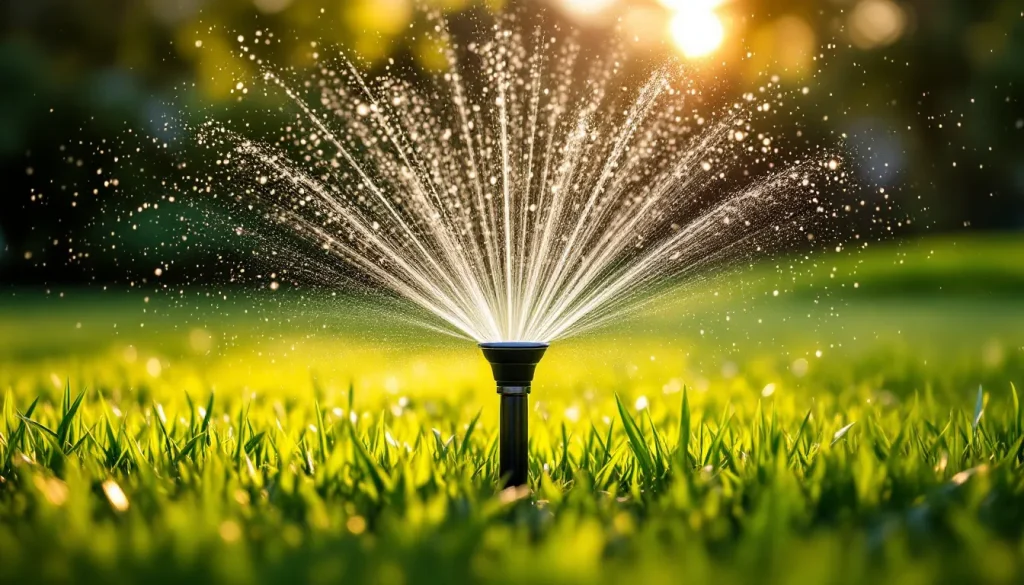
Sprinkler systems: what you actually pay and choose in 2026
Sprinkler systems for a typical residential lawn run about $2,500 to $5,000 installed by a professional, or roughly $1,000 to $2,000 as a DIY project, depending on yard size, water pressure, and zone count. This guide breaks down head types, in-ground vs above-ground setups, components, brands, and the maintenance costs most retailer pages leave out.
By the HMNDP Editorial Team. Last reviewed: June 2026.
Types of sprinkler heads: pop-up, rotor, and impact
The three main sprinkler head types are pop-up spray heads (best for small, defined areas under 15 feet), gear-drive rotors (best for large open lawns), and impact rotors (durable, higher-pressure, common in older or dirty-water systems). Head choice sets your spacing, water use, and how many heads each zone can run.
| Head type | Typical throw | Best for | Approx. price each |
|---|---|---|---|
| Pop-up spray | 5 to 15 ft | Small lawns, borders, tight geometry | $2 to $12 |
| Gear-drive rotor | 18 to 45 ft | Large open turf, quiet operation | $8 to $30 |
| Impact rotor | 20 to 100+ ft | Big properties, gritty water, high pressure | $6 to $25 |
Rotors apply water slowly and evenly, which reduces runoff on slopes. Spray heads deliver water fast, so run times are shorter but pooling is more likely on clay soils.
In-ground vs above-ground sprinkler systems
In-ground (underground, automatic) sprinkler systems bury pipe and pop-up heads for hands-off, even coverage and higher home resale appeal. Above-ground hose-end sprinklers cost far less and need no digging, but you move them manually and coverage is uneven. In-ground wins for lawns over about 1,000 square feet or anyone watering on a schedule.
| Factor | In-ground automatic | Above-ground / hose-end |
|---|---|---|
| Upfront cost | $1,000 to $5,000+ | $15 to $80 |
| Labor to run | Automated by timer | Manual placement |
| Coverage evenness | High | Low to moderate |
| Best yard size | Any, scales well | Under ~1,000 sq ft |
For a middle path, an automatic plant watering system can put timers and even coverage on beds and containers without a full underground trenching job.
Sprinkler system components you pay for
Every in-ground sprinkler system uses four core parts: heads (spray or rotor), valves (which open and close each zone), a controller or timer (the brain), and tubing or PVC pipe plus fittings. A backflow preventer is legally required in most states to keep irrigation water out of drinking lines.
- Heads: deliver water; matched by throw distance and flow.
- Valves: one solenoid valve per zone, wired to the controller.
- Controller/timer: schedules zones; smart models adjust to weather.
- Pipe/tubing: PVC or poly pipe for mains and laterals.
- Backflow preventer: code-mandated in most jurisdictions.
Sprinkler system kits and DIY drip alternatives
Pre-assembled sprinkler system kits from Orbit, Rain Bird, and Home Depot bundle heads, valves, tubing, and a timer for one small zone, typically $60 to $200. They suit DIY installers with a single small lawn area. Drip irrigation is the water-sipping alternative for beds, hedges, and vegetable gardens.
Drip irrigation delivers water directly to roots and can cut water use by 30 to 50 percent versus spray heads, per EPA WaterSense estimates. Many homeowners run sprinkler zones for turf and a separate drip irrigation system for planted beds off the same controller. See our garden sprinkler system guide for mixed layouts.
Underground sprinkler system cost: DIY vs professional
An underground sprinkler system costs roughly $0.50 to $1.00 per square foot for DIY parts, or $1.50 to $4.00 per square foot professionally installed, in 2026. Priced by zone, expect about $150 to $350 per zone DIY and $500 to $1,000 per zone installed. Trenching, permits, and backflow devices drive most of the professional premium.
| Lawn size | Est. zones | DIY parts cost | Professional installed |
|---|---|---|---|
| 1/4 acre (~10,000 sq ft) | 4 to 6 | $600 to $1,800 | $2,500 to $4,500 |
| 1/2 acre (~21,000 sq ft) | 6 to 9 | $1,200 to $3,000 | $4,000 to $7,000 |
| 1 acre (~43,000 sq ft) | 10 to 16 | $2,500 to $5,500 | $7,000 to $12,000 |
DIY saves 50 to 65 percent but takes a weekend or two and demands accurate zoning. Botched pressure math wastes the savings on dry spots. Our full irrigation system cost breakdown covers permits and regional labor swings in more detail.
How many zones and heads your yard needs
Zone count depends on water pressure and flow, not lawn size alone. Measure your available gallons per minute (GPM), then divide the total flow of all heads by that GPM to find how many zones you need. Most homes deliver 8 to 12 GPM, which supports about 4 to 6 rotors or 8 to 12 spray heads per zone.
- Measure GPM: fill a 5-gallon bucket from an outdoor spigot and time it. 30 seconds means 10 GPM.
- Check static pressure with a $10 gauge on the spigot. Aim for 40 to 65 psi.
- Total each head’s flow rate (printed on the box or maker’s chart).
- Group heads so each zone’s total flow stays under your measured GPM.
Rotors on slopes or clay want lower flow per zone to prevent runoff. Undersizing zones is the top DIY mistake that leaves brown patches.
Rain Bird vs Orbit vs Hunter: brand comparison
Rain Bird, Hunter, and Orbit dominate residential irrigation in 2026. Rain Bird and Hunter are the contractor-grade choices with longer warranties and finer adjustment; Orbit is the budget, big-box DIY favorite sold widely at Home Depot and Lowe’s. Your pick depends on whether you value durability or upfront price.
| Brand | Positioning | Head warranty | Smart controller | Best for |
|---|---|---|---|---|
| Rain Bird | Contractor + DIY | 3 to 5 yr | ST8 / ESP-TM2 | Balance of quality and availability |
| Hunter | Contractor-grade | 2 to 5 yr | Hydrawise | Durability, precise rotors |
| Orbit | Budget DIY | 2 yr | B-hyve | Low upfront cost, kits |
All three sell WaterSense-certified smart controllers. Parts across brands are largely interchangeable at the fitting level, so mixing a Hunter rotor into a Rain Bird system is common and workable.
Maintenance: winterization, startup, and smart-controller ROI
Sprinkler system maintenance centers on fall winterization and spring startup. In freezing climates, a compressed-air blow-out clears water from lines to prevent cracked pipe, costing $75 to $150 professionally or a rented compressor for DIY. Skipping it risks repairs of several hundred dollars per burst line.
- Winterize (fall): shut the main, blow out each zone with 40 to 80 psi air, drain the backflow.
- Spring startup: slowly recharge lines, check each head, adjust arcs and spray.
- Repairs: replace a clogged nozzle ($3 to $12) or a cracked head ($5 to $30) as needed.
A WaterSense smart controller adjusts watering to local weather and can cut outdoor water use by up to 15 percent, per EPA data. On a $600 annual irrigation bill, that is roughly $90 saved a year, paying back a $150 to $300 controller in two to three seasons.
Why a sprinkler system pays off
A well-designed sprinkler system saves time, water, and money at once. Automation removes daily hose dragging, even coverage keeps turf healthy, and weather-based scheduling trims waste. The combination of a smart controller and correct zoning is where most homeowners recover their install cost over five to seven years.
Frequently Asked Questions
How much does an underground sprinkler system cost to install?
In 2026, an underground sprinkler system costs about $2,500 to $5,000 professionally installed for a typical quarter-acre lawn, or roughly $600 to $1,800 in DIY parts. By zone, budget $500 to $1,000 installed or $150 to $350 DIY. Trenching, backflow preventers, and permits account for most of the professional premium over doing it yourself.
What are the different types of sprinkler heads and which should I use?
The main types are pop-up spray heads (5 to 15 ft, small areas), gear-drive rotors (18 to 45 ft, large lawns), and impact rotors (durable, high-pressure). Use spray heads for tight, defined spaces and rotors for big open turf. Rotors apply water more slowly, which reduces runoff on slopes and clay soils.
Can I install a sprinkler system myself or do I need a professional?
You can DIY a sprinkler system and save 50 to 65 percent if you can measure water pressure and GPM, trench, and glue PVC. It takes a weekend or two per zone. Hire a professional for large properties, tricky zoning, or where permits and backflow inspections are required, which is most jurisdictions.
In-ground vs above-ground sprinklers: which is better for my lawn?
In-ground systems win for lawns over about 1,000 square feet because they deliver automated, even coverage and add resale value, at $1,000 to $5,000 or more. Above-ground hose-end sprinklers cost $15 to $80 and need no digging but require manual moving and water unevenly. Choose in-ground for hands-off scheduling, above-ground for small or rented yards.
How many zones and sprinkler heads do I need for my yard?
Zone count depends on water flow, not just size. Measure your GPM (fill a 5-gallon bucket and time it), then keep each zone’s combined head flow under that number. Most homes at 8 to 12 GPM support 4 to 6 rotors or 8 to 12 spray heads per zone. A quarter-acre lawn usually needs 4 to 6 zones.
What is the difference between drip irrigation and a sprinkler system?
Sprinkler systems spray water over turf through pop-up or rotor heads. Drip irrigation releases water slowly at the root zone through emitters, cutting water use 30 to 50 percent and reducing evaporation. Use sprinklers for lawns and drip for beds, hedges, and vegetable gardens. Many homeowners run both off a single controller.
Which sprinkler brand is best: Rain Bird, Orbit, or Hunter?
Rain Bird and Hunter are contractor-grade with longer warranties and finer adjustment, best for durability. Orbit is the budget DIY choice, widely sold at Home Depot with affordable kits. Parts are largely interchangeable across all three. Pick Hunter or Rain Bird for longevity, Orbit for lowest upfront cost. All offer WaterSense smart controllers.
How do I winterize and maintain a sprinkler system?
In freezing climates, winterize each fall with a compressed-air blow-out at 40 to 80 psi to clear water from lines, costing $75 to $150 professionally. In spring, slowly recharge lines and check every head. Skipping winterization risks cracked pipe repairs of several hundred dollars. Replace clogged nozzles ($3 to $12) as they appear.