
By the HMNDP Editorial Team | Last reviewed: June 2026
What mulch bags are and the standard 2 cubic foot size
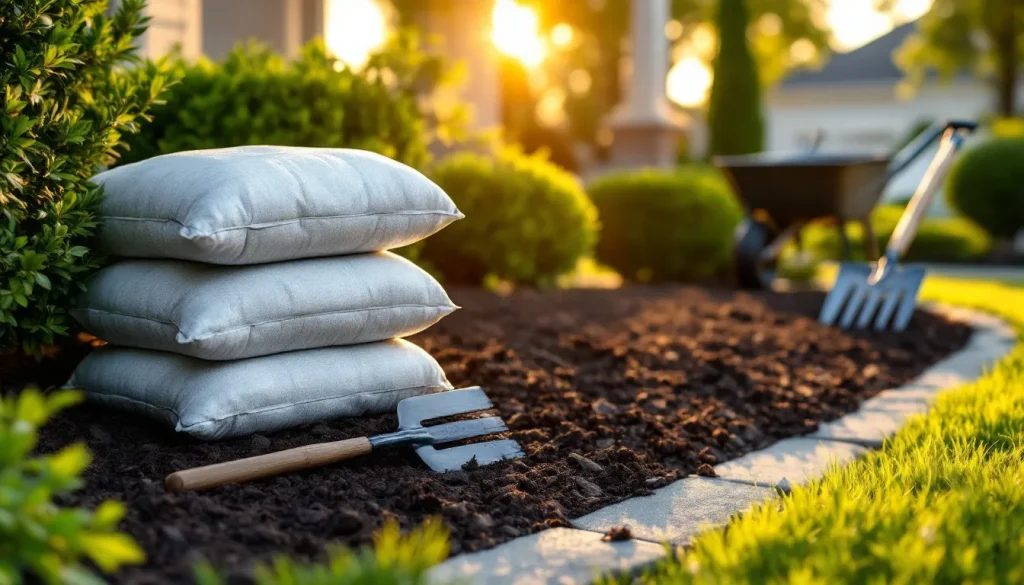
Mulch bags are pre-packaged, plastic-wrapped bags of ground wood or bark used to cover garden beds and walkways. The US retail standard is a 2 cubic foot bag, which is what Home Depot, Lowe’s, and most garden centers sell by default. Each 2 cu ft bag weighs roughly 20 to 40 pounds depending on moisture and material.
Some brands and pine-bark products come in 1 cubic foot or 3 cubic foot bags, so always read the volume printed on the front. Volume, not weight, is what your coverage math depends on. A wet bag weighs more but covers the same area as a dry one.
Bagged mulch trades a higher price per cubic foot for convenience: it fits in a car trunk, stores clean in the garage, and lets you buy the exact count you need. That is why it dominates small and mid-size DIY projects.
Benefits of mulch: weed control, moisture, and curb appeal
Mulch does three jobs at once. A 2 to 3 inch layer blocks sunlight from reaching weed seeds, slows soil-moisture evaporation so you water less in summer, and gives beds a finished, uniform look that lifts curb appeal. It also insulates roots against temperature swings and reduces soil erosion during heavy rain.
For weed suppression, depth matters more than brand. Thin, patchy mulch lets light through and weeds punch straight up. A consistent 3 inch blanket is the single biggest factor in keeping beds clean.
Organic wood and bark mulches add a second benefit: as they break down they feed the soil. That decomposition is also why they need topping up, unlike inorganic options like rubber or stone.
How many bags of mulch do you need? The coverage math
A single 2 cubic foot bag covers about 8 square feet at a 3 inch depth, or about 12 square feet at 2 inches. To find your count, measure the bed area in square feet (length times width), then divide by the coverage per bag at your chosen depth. This is the calculation no retail product page shows you.
The formulas below make it fast:
- Bags per 100 sq ft at 3 inches: 12.5 bags
- Bags per 100 sq ft at 2 inches: about 8.3 bags
- One cubic yard of coverage: 13.5 bags (27 cu ft divided by 2)
Use this reference table to skip the arithmetic:
| Bed area | Bags at 2 in depth | Bags at 3 in depth |
|---|---|---|
| 50 sq ft | 4 to 5 | 7 |
| 100 sq ft | 8 to 9 | 13 |
| 200 sq ft | 17 | 25 |
| 500 sq ft | 42 | 63 |
Round up. Beds are rarely perfect rectangles, and a spare bag beats a second trip to the store mid-project.
Bagged vs bulk mulch: where the cost breakeven sits
Bagged mulch is cheaper for small jobs; bulk mulch (loose, sold by the cubic yard) wins on large ones. The crossover usually lands around 2.5 to 3 cubic yards. Because one cubic yard equals 13.5 bags, roughly 35 to 40 bags is the point where a bulk load delivered by the yard typically costs less per cubic foot than buying bags.
Here is the tradeoff retailers rarely spell out:
| Factor | Bagged (2 cu ft) | Bulk (per cubic yard) |
|---|---|---|
| Best for | Under ~2.5 cu yd | Over ~3 cu yd |
| Price per cu ft | Higher | Lower at volume |
| Transport | Car trunk, clean | Open-top truck or trailer |
| Handling | Lift and carry bags | Shovel and haul by wheelbarrow |
| Waste | Buy exact count | Order in half or full yards |
Bulk carries a catch on pickup. Yards load loose mulch with a front loader into open-top trucks and trailers only. They will not fill a car trunk, van, or SUV, so factor in delivery fees or trailer rental. Some suppliers also sell bulk bags (super sacks) of about 1 cubic yard, which crane-load onto a pickup and split the difference between loose bulk and retail bags.
Mulch types and colors compared
The two most common bagged colors are black and brown dyed wood mulch, but material matters more than color for lifespan and cost. Dyed mulches use colorant on ground wood; natural mulches like cypress, cedar, and pine bark keep their own tone and fade to gray over one to two seasons. Here is how the main options compare.
| Type | Typical lifespan | Fading | Relative cost | Notes |
|---|---|---|---|---|
| Shredded hardwood | 1 to 2 years | Fades to gray | Low | Knits together, good on slopes |
| Dyed wood (black/brown) | 1 to 3 years | Holds color 1 season | Low to medium | Reprocessed wood; color is cosmetic |
| Cypress | 1 to 2 years | Fades to gray | Medium | Light, can float in heavy rain |
| Pine bark (nuggets) | 2 to 3 years | Slow fade | Medium | Nuggets wash away on slopes |
| Cedar | 2 to 3 years | Slow fade | Medium to high | Aromatic, resists insects |
| Rubber | 10+ years | Minimal | High upfront | Does not feed soil; common in play areas |
On dye safety, the colorants in most commercial black and brown mulch are iron oxide (brown/red) and carbon black, both considered non-toxic to plants and pets once dry. The real caution with cheap dyed mulch is the wood source, which can include recycled construction debris. For a deeper look at the darkest option, see our guide to black mulch and how the dye behaves over a season. For playgrounds and no-maintenance areas, our breakdown of black rubber mulch covers the long-life tradeoff.
Where to buy mulch bags and pallet economics
Home Depot and Lowe’s are the primary sources for bagged mulch in the US, stocking house brands and national labels in 2 cu ft bags. Independent garden centers and landscape-supply yards carry the same sizes, often with more natural-material and premium options. To find a nearby stocking yard, our lawn-care store and pro-distributor locator is a useful starting point.
Buying by the pallet unlocks the lowest per-bag price. Standard pallet counts run in halves and fulls:
- Half pallet: 35 bags (70 cu ft, about 2.6 cubic yards)
- Full pallet: 70 bags (140 cu ft, about 5.2 cubic yards)
On price, the recurring spring headline is Home Depot’s “5 for $10” mulch sale on select house-brand bags, which drops the per-bag price to about $2. Lowe’s typically runs matching promotions in the same window. These sales cluster around spring holiday weekends: expect them near Memorial Day, with earlier runs sometimes appearing around Easter and April. Confirm dates and participating brands with your local store, since promotions vary by region and stock.
At sale pricing, bags can beat bulk even at higher volumes, which flips the usual breakeven. If a “5 for $10” event is live, running the math on bags before ordering a bulk load is worth the five minutes.
How deep to apply mulch and how often to refresh it
Apply mulch 2 to 3 inches deep and keep it 2 to 3 inches away from plant stems and tree trunks. Deeper than 3 inches can suffocate roots and repel water; shallower than 2 inches lets weeds through. Refresh organic mulch once a year, usually in spring, and only top up to the target depth rather than piling new mulch on old.
The most common mistake is the “mulch volcano,” a cone of mulch mounded against a tree trunk. Piled mulch traps moisture against bark, invites rot and pests, and can girdle the tree over time. Instead, spread mulch flat in a wide ring with a clear gap around the trunk, sometimes called a donut, not a volcano.
Follow this order when mulching a bed:
- Pull existing weeds and edge the bed cleanly.
- Rake old mulch to break up any matted crust.
- Water the soil if it is dry before covering it.
- Spread new mulch to a total depth of 2 to 3 inches.
- Pull mulch back from stems, trunks, and the house foundation.
Best timing is mid to late spring, after the soil has warmed but before summer heat peaks, so the mulch locks in moisture through the dry months. A second light refresh in fall is optional in cold climates for root insulation. For low-traffic or no-grow zones where you want zero seasonal upkeep, some homeowners skip mulch entirely in favor of artificial turf ground cover.
Frequently Asked Questions
How many bags of mulch do I need for my yard?
Measure each bed in square feet (length times width), then divide by 8 for a 3 inch depth or by 12 for a 2 inch depth, since a 2 cubic foot bag covers about 8 or 12 square feet at those depths. For 100 square feet, plan on about 13 bags at 3 inches or 8 to 9 bags at 2 inches. Round up to avoid a second store trip.
How much area does a 2 cubic foot bag of mulch cover?
A 2 cubic foot bag covers about 8 square feet at a 3 inch depth and about 12 square feet at a 2 inch depth. The math is the bag volume divided by depth in feet: 2 cu ft divided by 0.25 ft equals 8 sq ft. Thirteen and a half bags equal one cubic yard of coverage.
Is it cheaper to buy mulch in bags or in bulk?
Bags are cheaper for small jobs and bulk is cheaper for large ones. The breakeven usually falls around 2.5 to 3 cubic yards, roughly 35 to 40 bags, where a bulk load delivered by the cubic yard costs less per cubic foot. During a “5 for $10” bag sale, bags can win even at higher volumes, so check current pricing first.
How many bags of mulch are on a pallet?
A full pallet of 2 cubic foot mulch bags typically holds 70 bags, equal to 140 cubic feet or about 5.2 cubic yards. A half pallet holds 35 bags, equal to 70 cubic feet or about 2.6 cubic yards. Pallet quantities carry the lowest per-bag price, and many retailers deliver full pallets for a flat fee.
Where can I buy mulch bags near me?
Home Depot and Lowe’s are the primary US sources for 2 cubic foot mulch bags, stocking black, brown, and natural options in spring. Independent garden centers and landscape-supply yards carry the same sizes plus premium materials like cedar and pine bark. Landscape-supply yards are usually the best route for bulk pickup and pallet orders.
When does Home Depot have the 5 for $10 mulch sale?
Home Depot’s “5 for $10” sale on select house-brand mulch typically runs in spring, clustering around holiday weekends. Expect it near Memorial Day, with earlier promotions sometimes appearing around Easter and April. Lowe’s often matches with its own bag deals in the same window. Dates and participating brands vary by region, so confirm with your local store.
What is the difference between black and brown mulch?
Black and brown mulch are usually the same ground wood treated with different colorants: carbon black for black, iron oxide for brown. The difference is cosmetic. Black gives high contrast against green plants and light siding, while brown reads more natural next to soil and stone. Both fade over one season and need refreshing, and both are considered non-toxic once dry.
How deep should mulch be and how often should I replace it?
Apply mulch 2 to 3 inches deep and refresh organic wood or bark mulch once a year, usually in spring, topping up only to the target depth. Keep mulch 2 to 3 inches clear of stems and trunks to avoid rot and the “mulch volcano.” Rubber and stone mulch last far longer and rarely need replacing.