
By the HMNDP Editorial Team, independent reporting on lawn care, landscaping, water, and the green-industry business.
Last reviewed: June 2026
Why mushrooms suddenly appear in your lawn
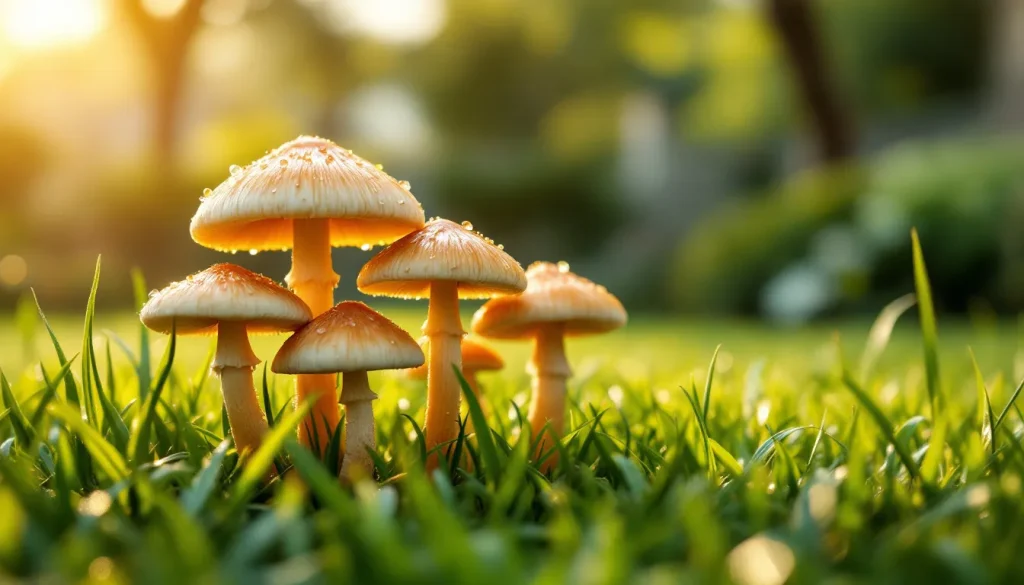
Mushrooms in a lawn are the fruiting bodies of fungi that live in the soil, and they pop up when that fungi has plenty of food and moisture. The food is decaying organic matter: buried wood, old tree roots, dead grass, thatch, or leaf litter. Warm, damp conditions trigger the underground network (mycelium) to push mushrooms to the surface to release spores.
The fungus was already there for months or years. You only see mushrooms after rain or heavy watering because moisture is the switch that turns fruiting on.
Common triggers include a buried stump or old landscape timber breaking down, a lawn built over cleared forest, thick thatch, or a new sod install over rich topsoil. The mushrooms are eating the dead material, not your live grass.
Moisture and overwatering: the biggest trigger you control
Overwatering is the single most fixable cause of mushrooms in a lawn. Fungi need consistent surface moisture to fruit, so lawns that stay damp grow the most mushrooms. The fix is watering habit, not water amount. Water deeply and infrequently (about 1 inch per week in 1 to 2 sessions) instead of a little every day, and let the top inch of soil dry between waterings.
Frequent light watering keeps the thatch layer wet, which is exactly the humid zone fungi want. A morning-only watering schedule also lets grass blades dry by midday and starves surface fungi of the dampness they need.
Shade and poor drainage make it worse
Shade and poor drainage are contributing conditions that keep the ground damp long enough for mushrooms to form. Areas under trees, along north-facing fences, or in low spots dry slowly and stay cool, which favors fungi over grass. Compacted or clay-heavy soil holds water near the surface and worsens the problem.
Improving airflow by pruning low branches, and improving drainage by aerating compacted zones, both shorten the wet window that lets mushrooms fruit.
Are mushrooms a sign of a healthy or unhealthy lawn?
Mushrooms in a lawn are usually a sign of biologically active, healthy soil. Fungi are decomposers: they break buried wood, roots, and thatch into nutrients your grass can use, much like a compost pile does. Their presence means organic matter is being recycled underground. Mushrooms only signal a problem when they point to chronic overwatering, heavy thatch, or a large buried object rotting below.
Gardeners often pay for mycorrhizal fungi to boost soil. A lawn that fruits mushrooms on its own already has that fungal activity working for free.
The nutrient release helps explain why grass around mushrooms sometimes looks greener. If you want to channel that activity into stronger turf, pair good soil biology with a feeding plan from our guide to the best fertilizer for grass.
Are lawn mushrooms poisonous to kids and pets?
Assume any wild lawn mushroom is potentially toxic to children and pets, because you cannot reliably tell a safe one from a dangerous one by sight. Most lawn mushrooms cause only mild stomach upset, but a few species can cause serious liver or nerve damage. Dogs are the most common victims because they eat mushrooms off the ground. The safe rule: remove mushrooms before kids or pets are in the yard.
Do not rely on color or shape to judge safety. Some of the deadliest species look plain and white. Identification is a job for a mycologist or a poison-control expert, not a phone app.
Emergency protocol if a pet or child eats a lawn mushroom
If a child or pet swallows a lawn mushroom, act immediately and do not wait for symptoms, because the most dangerous species delay symptoms for 6 to 24 hours. Do not induce vomiting unless a professional tells you to. Bag a sample of the exact mushroom for identification, then call the right hotline below.
- Collect a sample. Pick a whole mushroom (cap, stem, and base) from the same patch, wrap it in a damp paper towel, and put it in a paper bag. Note the time it was eaten.
- For a child or adult, call the U.S. Poison Control Center at 1-800-222-1222, free and open 24/7, or use the online tool at poison.org.
- For a dog or cat, call the ASPCA Animal Poison Control Center at 1-888-426-4435 (a consultation fee may apply) or your veterinarian.
- Watch for red flags: vomiting, diarrhea, drooling, weakness, tremors, or lethargy. Go to an ER or emergency vet right away if any appear.
Bringing the physical mushroom sample matters more than a photo, because treatment depends on the species and photos rarely allow a confident ID.
Common types of lawn mushrooms to expect
Most lawn mushrooms fall into a handful of common groups, ranging from harmless decomposers to a few genuinely dangerous species. The table below covers what North American homeowners see most often. Treat every entry as unsafe to eat: this list is for awareness, not foraging.
| Type | Look | Where it grows | Risk note |
|---|---|---|---|
| Fairy ring mushrooms (Marasmius) | Tan caps in a circle or arc | Rings in open turf | Some cause stomach upset; the ring itself stresses grass |
| Puffballs (Lycoperdon) | Round white balls, no stem | Rich, decaying soil | Often benign but easily confused with young toxic species |
| Inky caps (Coprinus) | Bell caps that melt to black goo | Buried wood, mulch | Some cause severe reactions if eaten with alcohol |
| Lawn mower’s mushroom (Panaeolus) | Small brown caps on thin stems | Fertilized, damp turf | Some are psychoactive or toxic; keep away from kids and pets |
| Green-spored parasol (Chlorophyllum molybdites) | Large white cap, greenish gills when mature | Warm-season lawns after rain | The most common cause of mushroom poisoning in the U.S. |
Because a young toxic mushroom can mimic a harmless one, treat identification as informational only and remove all of them from play areas.
How to get rid of mushrooms in the lawn
The fastest way to get rid of mushrooms in a lawn is to remove the visible ones by hand and then fix the damp conditions that let them fruit. Pulling the mushrooms handles the immediate safety issue in minutes. The cultural fixes stop them from returning. There is no product that kills the underground fungus, so hand removal plus habit change is the real solution.
- Pick or knock them down early. Pull mushrooms as soon as you see them, before caps open and release spores. Wear gloves and wash your hands after.
- Bag them, do not compost. Put pulled mushrooms in the trash so spores do not spread to other beds.
- Mow and bag. Mowing knocks down mushrooms fast across a whole lawn; use a bagging mower so you collect the debris. Raking works for small patches.
- Cut watering. Shift to deep, infrequent morning watering so the surface dries out.
- Dethatch and aerate. Break up thatch thicker than half an inch and aerate compacted soil to speed drying and drainage.
- Remove the food source. Dig out buried wood, old roots, or a rotting stump if mushrooms keep returning to the same spot.
Expect the mushrooms you pull to be gone that day, but new ones can appear for a week or two until the soil dries or the buried wood finishes rotting, which can take months to years.
Does fungicide kill mushrooms in the lawn? The honest verdict
No. Lawn fungicides do not reliably kill mushrooms and are mostly a waste of money for this problem. Fungicides are built to fight leaf-disease fungi like brown patch, not the deep mycelium that produces mushrooms. The mycelium lives inches below the surface where sprays cannot reach, so the mushrooms return after the next rain. Cultural fixes work; fungicide does not.
There is high search demand for “fungicide for mushrooms in lawn,” and most guides quietly avoid the answer. Here it is plainly.
| Method | Kills the mushroom you see? | Kills the underground mycelium? | Verdict |
|---|---|---|---|
| Hand pulling / mowing | Yes, immediately | No | Best first step, cheap and safe |
| Reduce watering, dethatch, aerate | Over days | Starves it back | The real long-term fix |
| Remove buried wood/roots | Over time | Removes the food source | Permanent fix for repeat spots |
| Store fungicide spray | No | No | Mostly wasted money |
| Nitrogen fertilizer | Speeds decay, fewer mushrooms | No | Helpful supporting step, not a cure |
A light nitrogen feed can speed the breakdown of the organic matter feeding the fungi, which shortens the fruiting period. See our picks for the best fertilizer for green grass to feed turf without overdoing it.
How to identify and treat a fairy ring
A fairy ring is a circle or arc of mushrooms, or a ring of dark green or dead grass, caused by fungi spreading outward from a central point underground. The ring grows a few inches to a couple of feet per year. Some rings just discolor grass; others create a water-repellent layer that browns the turf. Treatment focuses on breaking up that layer so water can reach the roots.
- Confirm the ring. Look for a circular band of mushrooms, lush green grass, or dead brown grass, often all three in bands.
- Aerate the ring and 2 feet around it. Core-aerate deeply to break the water-repellent (hydrophobic) soil layer the fungus creates.
- Soak it slowly. Water the ring deeply over several days, using a wetting agent (soil surfactant) to force water past the repellent zone.
- Mask green rings with feeding. Even out color by fertilizing the whole lawn so the ring blends in.
- For stubborn rings, replace the soil. As a last resort, dig out the ring soil 12 inches deep and a foot past each edge, then reseed or resod.
Matching new grass to the rest of the lawn matters after a dig-out. Use our guide on how to identify your grass type so the repair blends in.
Do mushrooms damage or kill grass?
Mushrooms themselves do not damage or kill grass. They feed on dead organic matter in the soil, not on living grass roots or blades, and they often improve turf by releasing nutrients as they decompose debris. The exception is fairy ring fungi, which can create a water-repellent soil layer that browns grass by blocking moisture, not by attacking the plant directly.
So a scattering of random mushrooms is cosmetic. A ring with dead brown grass is the only case where the fungus is indirectly harming turf, and even then the fix is water and aeration, not killing the fungus.
Should you even bother removing them? A quick decision framework
Often the smartest move is to do nothing, because most lawn mushrooms die on their own within 1 to 3 days as they dry out. Removal is worth the effort only when safety or a repeat problem is involved. Use the framework below to decide whether to act or ignore.
| Situation | Do this |
|---|---|
| A few mushrooms, no kids or pets nearby | Ignore them; they die in a day or two |
| Kids, dogs, or cats use the yard | Remove promptly for safety, every time |
| Mushrooms after one rainstorm | Ignore; they will vanish as the lawn dries |
| Same spot fruits repeatedly | Dig for buried wood or roots and remove the food source |
| A growing ring with dead grass | Aerate and soak the ring; treat it as a fairy ring |
| Constant mushrooms lawn-wide | Fix watering, dethatch, and aerate |
The honest takeaway: mushrooms are usually a temporary, harmless side effect of healthy soil. Act for safety and for repeat problems, and let the rest disappear on their own.
How to stop mushrooms from coming back
Prevent mushrooms from returning by keeping the lawn drier and removing the decaying material fungi feed on. Since fungi need moisture and buried organic matter, cutting both starves future fruiting. These steps take a season to show full results but sharply reduce how often mushrooms appear.
- Water deep and infrequent, mornings only so the surface dries by midday.
- Dethatch yearly if thatch is thicker than half an inch, since thatch is a fungal food source and moisture trap.
- Aerate compacted soil once or twice a year to speed drainage.
- Rake up leaves, clippings, and debris that feed surface fungi.
- Dig out buried wood, roots, and old stumps that keep fruiting mushrooms in one spot.
- Improve airflow and light by pruning dense low branches over shaded turf.
- Overseed thin, shady areas so dense grass outcompetes fungi; time it using our guide to the best time to plant grass seed.
Frequently Asked Questions
Why do mushrooms grow in my lawn?
Mushrooms grow in your lawn when soil fungi have food and moisture. The food is decaying organic matter: buried wood, old roots, thatch, or leaf litter. The trigger is dampness from rain or overwatering, which prompts the underground fungus to push up mushrooms to spread spores. The fungus was already present; you only notice it once conditions turn warm and wet.
Are mushrooms in my lawn poisonous to dogs, cats, or children?
Treat every wild lawn mushroom as potentially poisonous, because you cannot tell safe from toxic by sight. Most cause only stomach upset, but a few damage the liver or nerves, and dogs eat them most often. Remove mushrooms before kids or pets use the yard. If one is eaten, call U.S. Poison Control at 1-800-222-1222 or the ASPCA at 1-888-426-4435.
How do I get rid of mushrooms in my lawn?
Pull or mow the mushrooms as soon as you see them and bag them in the trash, then fix the damp conditions that caused them. Water deeply but less often in the morning, dethatch, aerate compacted soil, and dig out any buried wood or roots feeding them. Visible mushrooms disappear the day you remove them, though new ones may appear until the soil dries.
Does fungicide kill mushrooms in the lawn?
No. Lawn fungicides do not reliably kill mushrooms and are mostly wasted money for this problem. They target leaf-disease fungi, not the deep mycelium that produces mushrooms, which lives below where sprays reach. The mushrooms return after the next rain. Cultural fixes (less watering, dethatching, aerating, removing buried wood) are what actually reduce mushrooms long term.
Are lawn mushrooms a sign of a healthy or unhealthy lawn?
Lawn mushrooms usually signal healthy, biologically active soil. Fungi are decomposers that break buried wood, roots, and thatch into nutrients your grass can use, similar to a compost pile. Their presence means organic matter is being recycled. Mushrooms only indicate a problem when they reveal chronic overwatering, heavy thatch, or a large buried object rotting under the turf.
Do mushrooms damage or kill my grass?
No, mushrooms do not damage or kill grass. They feed on dead organic matter in the soil, not on living grass, and often improve turf by releasing nutrients as they decompose debris. The one exception is fairy ring fungi, which can form a water-repellent soil layer that browns grass by blocking moisture. Aerating and soaking that ring fixes it.
How do I identify and treat a fairy ring?
A fairy ring is a circle or arc of mushrooms, dark green grass, or dead brown grass caused by fungi spreading outward underground. To treat it, core-aerate the ring and 2 feet around it, then soak it deeply over several days with a soil wetting agent to break the water-repellent layer. For stubborn rings, dig out and replace the ring soil.
How do I stop mushrooms from coming back in my yard?
Keep the lawn drier and remove the decaying material fungi feed on. Water deep and infrequently in the morning, dethatch when thatch exceeds half an inch, aerate compacted soil, rake up leaves and clippings, and dig out buried wood, roots, and old stumps. Improving airflow and light in shady spots and overseeding thin turf also help crowd out fungi over a season.