
By the HMNDP Editorial Team, independent reporting on lawn care and the green-industry business.
Last reviewed: June 2026
What a lawn tractor is (and how it differs from other riding mowers)
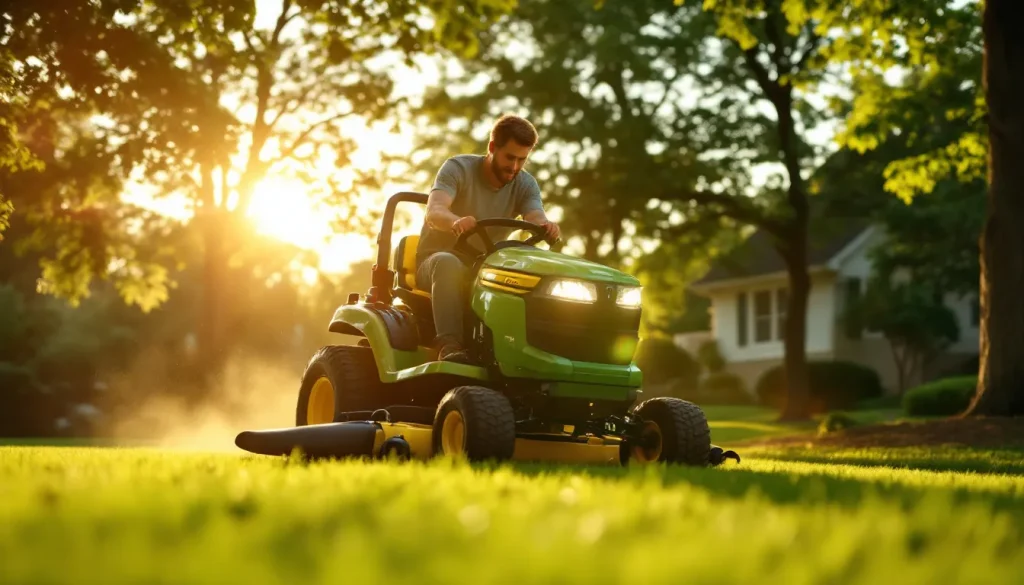
A lawn tractor is a riding mower with a front-mounted engine and a mid-mounted cutting deck, steered by a front wheel setup like a car. It sits between a small rear-engine rider and a heavy-duty garden tractor. In 2026 most residential models cost roughly $1,800 to $5,500, carry a 42-inch to 54-inch deck, and suit yards of about 0.5 to 3 acres.
The front-engine layout matters. It gives a lawn tractor the weight balance and steering to handle mild slopes and to pull light attachments, which a rear-engine rider cannot do as well.
People use “riding mower” as an umbrella term. Every lawn tractor is a riding mower, but not every riding mower is a lawn tractor. Zero-turn mowers and small rear-engine riders are separate categories with different strengths, covered below. For general shopping, our overview of riding lawn mowers for sale maps the full field.
Lawn tractor vs zero-turn vs garden tractor: which do I actually need?
Pick by yard size, obstacles, and workload. A lawn tractor fits open-to-moderate yards of 0.5 to 3 acres with some trees or beds. A zero-turn fits larger, open yards or many obstacles where trim speed matters. A garden tractor fits owners who tow, till, plow, or run ground-engaging attachments year-round. This is the neutral decision every catalog page skips.
| Type | Best yard | Strengths | Trade-offs | Typical 2026 price |
|---|---|---|---|---|
| Lawn tractor | 0.5 to 3 acres, some obstacles | Steady on mild slopes, tows light carts, easy to learn, lower cost | Slower around tight obstacles than a zero-turn | $1,800 to $5,500 |
| Zero-turn | 1 to 5+ acres, open or many obstacles | Fast, tight trimming, cuts mowing time 20 to 40 percent on obstacle-heavy lawns | Weaker on steep slopes, steeper learning curve, pricier | $3,000 to $8,000+ |
| Garden tractor | Large properties with year-round chores | Heavier frame, stronger transmission, runs tillers, plows, loaders | Overkill and overpriced if you only mow | $4,000 to $11,000+ |
Slope is the deciding factor many buyers miss. Most residential lawn tractors and zero-turns are rated for slopes up to about 15 degrees. On steeper ground, a front-engine lawn tractor with proper technique is generally safer than a zero-turn.
What size lawn tractor (deck width) do I need for my acreage?
Match deck width to acreage and gate width. A 42-inch deck suits about 0.5 to 1 acre, a 46-inch deck suits 1 to 2 acres, and a 48 to 54-inch deck suits 2 to 3+ acres. Wider decks cut faster but need wider gates and more storage room, and they scalp uneven ground more easily.
| Lawn size | Suggested deck | Rough mow time | Notes |
|---|---|---|---|
| Under 0.5 acre | 42-inch | 20 to 35 min | Also check gate clearance; 42-in fits most 36-in gates |
| 0.5 to 1 acre | 42 to 46-inch | 30 to 45 min | Sweet spot for first-time buyers |
| 1 to 2 acres | 46 to 48-inch | 40 to 60 min | Step up engine to a V-Twin for consistent cut |
| 2 to 3+ acres | 48 to 54-inch | 50 to 80 min | Consider a zero-turn if the yard is open |
A common mistake is buying the widest deck available. On bumpy or hilly ground, a 54-inch deck scalps high spots more than a 46-inch deck, and it will not fit a standard 4-foot gate. Measure your narrowest access point first.
Engine and transmission specs that matter
Engine and transmission drive both cut quality and long-term reliability. Residential lawn tractors run single-cylinder engines around 18 to 22 horsepower for smaller decks, and V-Twin engines around 22 to 25 horsepower (roughly 16 to 19 kW) for 46-inch and wider decks. Transmission choice, hydrostatic versus gear, shapes how the machine feels every time you use it.
V-Twin engines from Kohler, Briggs and Stratton, or Kawasaki run smoother and hold deck speed in thick grass better than single-cylinder engines. John Deere often uses its own branded engines built to spec. For a 46-inch or larger deck, a V-Twin is worth the small premium.
| Transmission | How it works | Best for | Trade-off |
|---|---|---|---|
| Hydrostatic | Fluid drive, speed by pedal, no shifting | Most buyers, varied terrain, frequent turns | Costs more, fluid may need service over time |
| Gear / manual | Fixed gears, shift to change speed | Flat, open yards, tightest budgets | Clunky on slopes and turns, harder to tow smoothly |
For most homeowners, hydrostatic is the better buy. It removes shifting on slopes and near obstacles, where gear drives feel awkward and can stall momentum.
Brand lineups and honest trade-offs
The six brands most U.S. homeowners compare are John Deere, Cub Cadet, Husqvarna, Simplicity, Toro, and Craftsman. Each has a residential lawn tractor line and real trade-offs on price, dealer support, and parts. No catalog page compares them side by side, so here is a neutral read.
| Brand | Example model | Reputation | Buyer note |
|---|---|---|---|
| John Deere | Residential 100 Series (e.g. E120, S130) | Strong resale, dealer network, consistent build | Premium price; parts often via dealer |
| Cub Cadet | XT1 LT46 | Good value, comfortable, wide big-box availability | Mid-tier durability; fine for typical residential loads |
| Husqvarna | YTH and TS series | Solid engines, available at Lowe’s and dealers | Some models share platforms; check the spec sheet |
| Simplicity | Broadmoor, Regent | Best-in-class cut quality, suspension options | Dealer-focused, higher price |
| Toro | TimeCutter (zero-turn) and select riders | Reliable, strong for open yards | Deeper in zero-turns than classic lawn tractors |
| Craftsman | T Series | Lowest entry price, Lowe’s availability | Budget build; suits smaller, lighter-duty yards |
Reliability tracks maintenance more than badge. A well-serviced Cub Cadet often outlasts a neglected John Deere. Dealer proximity matters as much as brand: a nearby dealer means faster warranty and belt work.
Total cost of ownership: what the sticker price hides
The purchase price is only part of the cost. Over a typical 8 to 12-year life, a lawn tractor also costs money in fuel, oil, blades, belts, and battery replacement. Budgeting for these upfront prevents surprises and is the honest math no product page shows.
- Fuel: a gas tractor burns roughly 0.5 to 1 gallon per hour. At 40 mowing hours a year, expect about $60 to $120 annually.
- Oil and filters: plan for one oil change per season, around $25 to $50 in parts if done yourself.
- Blades: a set runs about $25 to $60 and should be sharpened a few times per season, replaced every 1 to 3 years.
- Deck belt: $20 to $50 and typically replaced every 2 to 4 seasons.
- Battery: a starting battery lasts about 3 to 5 years and costs $40 to $90.
Add it up and a gas lawn tractor costs roughly $150 to $300 a year to keep running, before major repairs. That figure is central to the electric question below and worth weighing against options in our gas lawn mower guidance.
Are electric or battery lawn tractors worth it in 2026?
Battery riding mowers have become a real option, and product pages for gas units ignore them. Ryobi, EGO, Greenworks, and John Deere now sell electric riders and lawn tractors. They cost more upfront but cut fuel, oil, and tune-up costs to near zero, run quietly, and start instantly. The main limits are runtime per charge and cold-weather range.
| Factor | Gas lawn tractor | Battery lawn tractor |
|---|---|---|
| Upfront price | $1,800 to $5,500 | $2,500 to $6,500+ |
| Runtime | Refuel and keep going | Roughly 1 to 3 acres per charge, model dependent |
| Annual running cost | $150 to $300 | Electricity plus eventual pack replacement |
| Maintenance | Oil, filters, belts, tune-ups | Blades and belts only, no engine service |
| Best fit | 2+ acres, long sessions, remote sheds | Under 1.5 acres, noise-sensitive suburbs |
Rule of thumb for 2026: if your lawn is under about 1.5 acres and you value quiet, low upkeep, and instant starts, a battery model likely pays back over its life. For 2+ acres or all-day sessions, gas still wins on runtime and refuel speed.
Attachments, seating, and where to buy
Attachments extend a lawn tractor into a year-round tool, and seat comfort decides whether long mows are bearable. Common add-ons include baggers, mulching kits, snow blades, dethatchers, and tow-behind carts and spreaders. Look for a cut-and-sewn seat, adjustable rails, and armrests if you mow more than 30 minutes at a time.
Buy from Home Depot, Lowe’s, brand websites, or an independent dealer. Big-box stores win on price and financing promotions (watch for offers like $200 off or 0 percent financing). Dealers win on setup, service, and warranty support. If a model is dealer-only, that usually signals a step up in build quality and post-sale help.
New versus used: a used lawn tractor makes sense if it has under about 500 hours, a documented service history, and no deck rust. Below roughly $1,500, a solid used unit from a reputable brand often beats a bottom-tier new one. Above that, new gets you warranty and current parts availability. Compare current listings in our roundup of riding lawn mowers for sale before deciding.
Maintenance and lifespan: making it last 10+ years
A well-kept lawn tractor lasts 10 to 15 years or 1,000+ engine hours. Longevity comes from a short, consistent routine, not luck. The biggest killers are stale fuel left over winter, dull blades that tear grass and strain the engine, and skipped oil changes.
- Change engine oil and filter once per season or every 50 hours.
- Sharpen or replace blades 2 to 3 times a season for a clean cut.
- Check tire pressure and deck level monthly for an even cut.
- Clean grass from the deck and cooling fins after mowing.
- Winterize: add fuel stabilizer or drain the tank, disconnect or trickle-charge the battery, and store under cover.
Skipping winterizing is the most expensive mistake. Ethanol gas left in the carburetor over winter is a leading cause of spring no-start calls. Ten minutes in fall prevents a repair bill. For yards where a full riding mower is more than you need, low-water alternatives like artificial turf can cut mowing entirely.
Frequently Asked Questions
What is a lawn tractor and how is it different from a riding mower?
A lawn tractor is a specific type of riding mower with a front-mounted engine, a mid-mounted deck, and car-style steering. “Riding mower” is the broad category that also includes rear-engine riders and zero-turns. So every lawn tractor is a riding mower, but the front-engine layout gives lawn tractors better balance for mild slopes and light towing than small rear-engine riders.
Lawn tractor vs garden tractor vs zero-turn: which do I need?
Choose by workload and yard. A lawn tractor fits 0.5 to 3 acres with some obstacles and light towing. A zero-turn fits larger open yards or obstacle-heavy lawns where trim speed matters. A garden tractor fits owners who till, plow, or run ground-engaging attachments year-round. For pure mowing on suburban and small rural lots, a lawn tractor is usually the right and cheaper choice.
What size lawn tractor deck do I need for my acreage?
Match deck to lawn size: a 42-inch deck for up to 1 acre, 46-inch for 1 to 2 acres, and 48 to 54-inch for 2 to 3+ acres. Always check your narrowest gate first, since a 54-inch deck will not fit a standard 4-foot gate and scalps uneven ground more than a narrower deck does.
How much does a lawn tractor cost in 2026?
Residential lawn tractors run about $1,800 to $5,500 in 2026, with popular mid-tier models near $2,500 to $3,500 and premium units around $5,199. Watch for retailer promotions such as $200 off or 0 percent financing at Home Depot and Lowe’s. Battery models start higher, roughly $2,500 to $6,500+, but cut running costs over their life.
Which lawn tractor brand is most reliable?
John Deere and Simplicity lead on build quality and resale, while Cub Cadet and Husqvarna offer strong value for typical residential use, and Craftsman anchors the budget tier. Reliability depends more on maintenance and dealer proximity than badge. A well-serviced mid-tier machine near a good dealer often outlasts a neglected premium one, so weigh local support alongside brand.
Hydrostatic vs gear transmission: which is better?
Hydrostatic is better for most homeowners. It sets speed with a pedal and needs no shifting, which makes slopes, turns, and obstacle work far smoother than a gear drive. Gear or manual transmissions cost less and suit flat, open yards on tight budgets, but they feel clunky on hills and near flower beds and stall momentum during frequent turns.
Are electric or battery lawn tractors worth it?
For lawns under about 1.5 acres, battery lawn tractors from Ryobi, EGO, Greenworks, and John Deere are often worth it in 2026. They cost more upfront but eliminate fuel, oil, and tune-ups, run quietly, and start instantly. For 2+ acres or long sessions, gas still wins because you can refuel in seconds instead of waiting to recharge a depleted pack.
Should I buy new or used, and where?
Buy new from Home Depot, Lowe’s, or a dealer for warranty and current parts; buy used if the unit has under about 500 hours, service records, and no deck rust. Big-box stores win on price and financing, while dealers win on setup and service. Below roughly $1,500, a solid used brand-name tractor often beats a bottom-tier new one.
How long does a lawn tractor last and what maintenance does it need?
A maintained lawn tractor lasts 10 to 15 years or 1,000+ engine hours. Core upkeep is a seasonal oil and filter change, blade sharpening 2 to 3 times a year, monthly tire and deck-level checks, and deck cleaning after mowing. The single most important step is winterizing with fuel stabilizer, since stale ethanol gas is a leading cause of spring no-starts.