
By the HMNDP Editorial Team, independent reporting on lawn care, landscaping, water, and the green-industry business.
Last reviewed: June 2026
What an irrigation controller does and the three ways to buy one
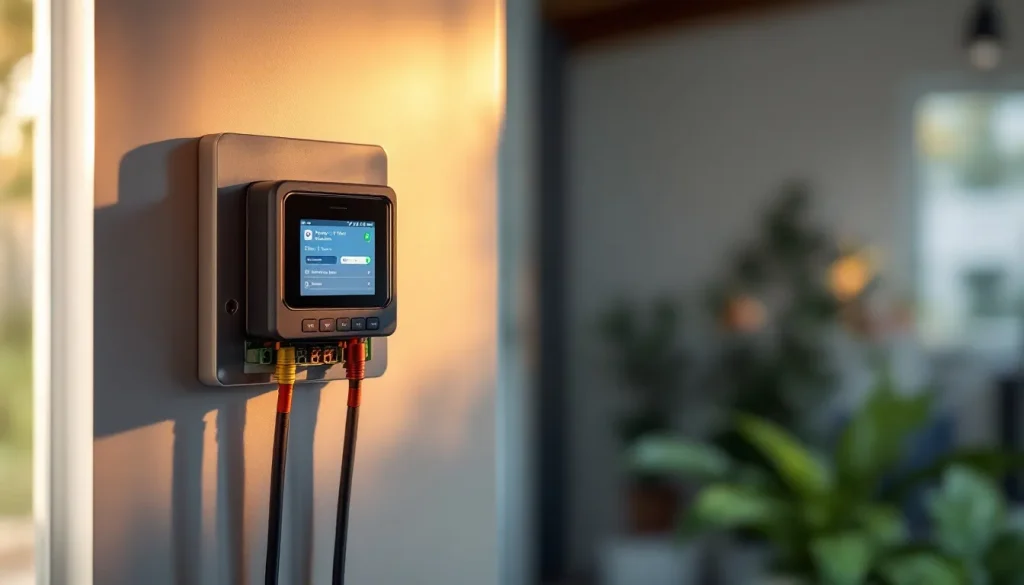
An irrigation controller is the timer that tells your in-ground sprinkler system which zones to water, for how long, and on which days. It sends 24-volt signals to solenoid valves in the ground. In 2026, you choose among three types: a traditional dial timer ($30 to $80), a WiFi smart controller with app control ($120 to $300), or a weather-based smart controller that auto-adjusts using local evapotranspiration (ET) data.
The rest of this guide picks the right one for your yard, your zone count, and your water bill. We synthesize product specs, EPA WaterSense data, and real wiring steps rather than a single-brand pitch. For system-level context, see our complete irrigation system guide.
The 7 best irrigation controllers by use case (2026)
The best irrigation controller depends on zone count, whether you want weather-based savings, and your budget. Below are seven strong choices across price tiers, from WaterSense-certified smart units to budget dial timers. All prices are typical 2026 retail at Amazon, Home Depot, or brand sites and shift with promotions.
| Controller | Type | Zones | Typical price | Best for |
|---|---|---|---|---|
| Rachio 3 | Smart / weather-based | 8 or 16 | $180 to $280 | Homeowners wanting max water savings and clean app |
| Orbit B-hyve XR | Smart / weather-based | 8 or 16 | $90 to $150 | Best value smart controller with rebate eligibility |
| Hunter Hydrawise Pro-HC | Smart / weather-based | 6, 12, 24 | $180 to $350 | Larger or pro-installed systems |
| Rain Bird ST8 | Smart / WiFi | 8 | $120 to $160 | Rain Bird system owners wanting native compatibility |
| Hunter X-Core | Traditional wired | 2, 4, 6, 8 | $60 to $110 | No-WiFi reliability, simple schedules |
| Rain Bird ESP-TM2 | Traditional wired | 4, 6, 8, 12 | $70 to $130 | Rebuilding an older wired system |
| Orbit 57894 dial timer | Traditional dial | 4 or 6 | $35 to $60 | Renters and tight budgets |
Rachio and Orbit B-hyve are the two most-cited WiFi controllers for DIY homeowners because both carry EPA WaterSense certification, which drives rebate eligibility (covered below). Hunter and Rain Bird are the brands most professional installers default to.
1. Rachio 3, best smart controller for water savings
The Rachio 3 is a WaterSense-certified, weather-based smart controller sold in 8-zone and 16-zone versions for roughly $180 to $280. It pulls local weather and skips watering before rain or in high humidity. Setup is app-driven in about 15 minutes. Its Weather Intelligence Plus tier adds a small annual fee, but core scheduling works free.
2. Orbit B-hyve XR, best value smart controller
The Orbit B-hyve XR is a WaterSense-certified WiFi controller at $90 to $150, undercutting Rachio while offering the same ET-based auto-adjustment. It sells in 8-zone and 16-zone models at Home Depot and Amazon. The app is less polished than Rachio’s, but rebate eligibility and savings are comparable. It is the strongest budget pick for lowering a water bill.
3. Hunter Hydrawise (Pro-HC), best for larger systems
The Hunter Pro-HC with Hydrawise software handles 6, 12, or 24 zones and costs $180 to $350. It is the controller many landscapers install because Hunter valves and rotors are common in professionally built systems. Hydrawise offers predictive weather adjustment and remote fleet management, making it the practical choice for properties above 12 zones.
4. Rain Bird ST8, best for existing Rain Bird systems
The Rain Bird ST8 is an 8-zone WiFi smart controller at $120 to $160 that pairs natively with Rain Bird valves and the Rain Bird app. It supports weather-based Seasonal Adjust and is a low-friction upgrade if your existing box and valves are already Rain Bird. It is WaterSense-listed on eligible models.
5. Hunter X-Core, best traditional wired controller
The Hunter X-Core is a non-WiFi wired controller in 2, 4, 6, and 8-zone versions for $60 to $110. It runs entirely offline with a physical interface and battery-backed clock. Choose it when WiFi is unreliable, when you want zero cloud dependency, or when a tenant should not need an app to run the sprinklers.
6. Rain Bird ESP-TM2, best for rebuilding older wired systems
The Rain Bird ESP-TM2 is a traditional wired controller (4 to 12 zones, $70 to $130) with a removable faceplate that simplifies wiring. It is a reliable direct swap for aging Rain Bird or Toro boxes and accepts an add-on WiFi module later if you decide to go smart.
7. Orbit 57894 dial timer, best budget pick for renters
The Orbit 57894 is a simple 4-zone or 6-zone dial timer for $35 to $60. No app, no WiFi, no subscription. It is the right call for renters, small lots, or anyone who wants set-and-forget watering without smart features. It will not earn a rebate or auto-skip for rain, so expect higher water use than a smart unit.
How many zones do you need? A real selection table
Zone count is the single most important spec, and most guides just say “sort by zones.” Here is a concrete rule: match zone count to property size and plant variety, because each plant type (turf, beds, drip) needs its own watering schedule. Buy one to two zones of headroom so you can expand without replacing the controller.
| Property / layout | Typical zones needed | Buy a controller rated for |
|---|---|---|
| Small lot under 1/8 acre, lawn only | 2 to 4 | 4 zones |
| 1/4 acre, lawn plus a few beds | 4 to 6 | 6 to 8 zones |
| 1/3 to 1/2 acre, lawn, beds, and drip | 6 to 10 | 8 to 12 zones |
| Over 1/2 acre or mixed sun/shade and slopes | 10 to 16 | 16 zones |
Why plant type drives zones: turf in full sun, shaded lawn, flower beds, and drip-fed shrubs each want different run times and frequencies. Putting them on one zone overwaters some and starves others. A practical rule is one zone per hydrozone (a group of plants with matching water needs and sun exposure). See our drip irrigation guide for why drip beds need their own low-flow zone.
Do smart irrigation controllers actually save water and money?
Yes, and the number is documented. EPA WaterSense reports that a WaterSense-certified weather-based controller can save an average home about 7,600 gallons of water per year versus a standard clock timer. At a typical U.S. water and sewer rate near $0.01 per gallon, that is roughly $50 to $130 in annual savings, before any rebate.
The mechanism is ET-based scheduling: the controller estimates how much water plants lost to evapotranspiration using local temperature, humidity, wind, and solar data, then waters only the deficit. It also skips cycles before forecast rain. A dial timer waters the same amount whether it rained or not.
Rebates make the payback faster. Many U.S. water utilities offer $50 to $100 or more back for installing a WaterSense-certified controller, and some California and Southwest agencies have paid up to $150 to $200 per unit. Eligibility and amounts vary by utility and state, so confirm with your provider before buying. Our 2026 smart irrigation adoption report tracks how rebates are shifting buying behavior.
WiFi smart vs traditional controllers: the honest comparison
A WiFi smart controller auto-adjusts watering with weather data and gives phone control; a traditional controller runs a fixed schedule with no internet. Smart units save more water and qualify for rebates, but depend on WiFi and sometimes a cloud service. Traditional units are cheaper, fully offline, and simpler. Here is the neutral breakdown.
| Factor | Smart / WiFi controller | Traditional / dial controller |
|---|---|---|
| Price | $90 to $350 | $35 to $130 |
| Water savings | Auto-adjusts, ~7,600 gal/yr (WaterSense) | Fixed schedule, no auto-skip |
| Rebate eligible | Often, if WaterSense-certified | Rarely |
| Control | Phone app from anywhere | Buttons or dial at the box |
| WiFi needed | Yes for smart features | No |
| Cloud/subscription | Sometimes optional tier | None |
| Offline behavior | Runs last saved schedule | Always runs locally |
Weather-only vs soil-moisture: a caveat most guides skip
Most consumer smart controllers (Rachio, Orbit B-hyve, Rain Bird) are weather-only: they estimate need from forecasts, not from your actual soil. That works well but can misjudge microclimates, clay soil, or heavy shade. Adding a soil-moisture sensor (some Hunter and Rain Bird systems support one) measures real ground conditions and is more accurate on tricky lots.
What happens when the WiFi or internet goes down
A smart irrigation controller keeps watering when WiFi drops because the current schedule is stored on the device itself. You lose remote app control and live weather skips until it reconnects, but your lawn still gets watered on the last saved program. The controller does not stop. Only the cloud-dependent extras pause, which is why a fully offline traditional controller remains a valid choice where connectivity is poor.
Indoor vs outdoor placement and enclosure
Choose an indoor controller for a garage or basement mount and an outdoor-rated model with a weatherproof enclosure (NEMA 3R or similar) for exterior walls exposed to rain and sun. Indoor units are cheaper and easier to program at eye level. Outdoor units cost more but suit homes with no interior wiring path to the valves.
Most smart controllers (Rachio 3, Orbit B-hyve XR) are indoor-rated and use a plug-in transformer. Outdoor smart options exist (B-hyve outdoor, Hunter Pro-HC in a cabinet). If your old box is bolted to an outside wall, buy an outdoor-rated replacement or a weatherproof housing.
How to program and set up an irrigation controller
Programming an irrigation controller means setting three things per zone: start time, run duration, and watering days. Smart controllers do most of this in the app; traditional controllers use buttons or a dial. Follow these steps for a working schedule.
- Set the current date and time (smart controllers pull this automatically).
- Name each zone by what it waters (front lawn, shrub bed, drip).
- Set run time per zone: roughly 10 to 15 minutes for spray heads, 30 to 40 for rotors, longer for drip.
- Pick watering days: deep, infrequent watering (2 to 3 days a week) beats daily shallow watering for most lawns.
- Set an early-morning start (4 to 6 a.m.) to cut evaporation and wind loss.
- On smart units, enable weather skip and seasonal/ET adjustment.
- Run a manual test of every zone to confirm valves fire and heads pop up.
New to system design overall? Start with the fundamentals in our learn hub before finalizing a schedule.
Can you install or replace an irrigation controller yourself?
Most homeowners can swap an irrigation controller in about 30 to 60 minutes because you reuse the existing zone wiring. The job is matching labeled wires to labeled terminals, not running new cable. You need a smartphone (for smart units), a small screwdriver, and a photo of the old wiring. Call a pro only for new valve installs or damaged field wiring.
Do the swap in this order:
- Turn off power to the old controller before touching anything.
- Photograph the existing terminal block so you can copy the wiring exactly.
- Move each zone wire to the matching numbered terminal (1, 2, 3 and so on).
- Connect the common wire to the C terminal (the shared return for every valve).
- If present, connect the master valve or pump start wire to the MV/P terminal.
- Confirm the power type: most controllers use a 24VAC plug-in transformer, while a few valves or add-ons use battery backup for the clock.
- Restore power, run a manual zone test, and adjust.
Three wiring terms trip people up. The common wire (usually white) is the shared return that must land on C. The master valve or pump start terminal only matters if your system has a whole-system shutoff valve or a pump. Standard 24VAC power comes from the included transformer; the battery in many units only keeps the clock during outages, it does not run the valves.
Where to buy and what to spend
Buy irrigation controllers at Amazon, Home Depot, Lowe’s, or direct from Rachio, Hunter, Orbit, and Rain Bird. Home Depot and Amazon carry the widest DIY selection; brand sites sometimes bundle rain sensors or extend warranties. Budget by tier below, then check your water utility’s rebate page before checkout to offset the cost.
| Tier | Price range | What you get |
|---|---|---|
| Budget | $35 to $80 | Traditional dial/wired timer, no WiFi |
| Mid (value smart) | $90 to $160 | WaterSense WiFi, rebate eligible (B-hyve, Rain Bird ST8) |
| Premium smart | $180 to $350 | Advanced ET, more zones, pro features (Rachio 3, Hunter Pro-HC) |
Frequently Asked Questions
What is an irrigation controller and how does it work?
An irrigation controller is the timer that runs an in-ground sprinkler system. It sends 24-volt signals through buried wires to solenoid valves, opening each zone in sequence for a set run time and on set days. Smart models also pull local weather to adjust watering automatically. The controller is the brain that decides when and how long each part of your yard is watered.
What is the difference between a WiFi/smart controller and a standard sprinkler timer?
A WiFi smart controller connects to the internet, auto-adjusts watering using local weather (ET) data, and is controlled from a phone app. A standard sprinkler timer runs a fixed schedule you set by hand with no internet. Smart units save more water, often qualify for utility rebates, and skip watering before rain. Standard timers are cheaper, fully offline, and simpler to run.
How many zones do I need for my irrigation controller?
Match zone count to property size and plant variety, then add one or two for growth. A small lawn-only lot needs 2 to 4 zones (buy 4). A quarter acre with beds needs 4 to 6 (buy 8). Half an acre with drip needs 6 to 10 (buy 12). Over half an acre or mixed sun and slopes needs 10 to 16 zones.
Do smart irrigation controllers actually save water and money?
Yes. EPA WaterSense reports a certified weather-based controller saves an average home about 7,600 gallons a year versus a clock timer, roughly $50 to $130 depending on local water rates. Many utilities also rebate $50 to $100 or more for WaterSense-certified units, and some Southwest agencies pay up to $200. Actual savings vary by climate, lot size, and water price.
What is the best smart sprinkler controller: Rachio vs Hunter vs Orbit B-hyve vs Rain Bird?
For most DIY homeowners, Rachio 3 offers the best app and water savings, while Orbit B-hyve XR is the best value at $90 to $150. Hunter Hydrawise suits larger or pro-installed systems above 12 zones. Rain Bird ST8 is best if your valves are already Rain Bird. All four offer WaterSense-certified, rebate-eligible models. Choose by zone count, budget, and existing brand.
How do I program an irrigation controller?
Set the time, name each zone, then set run time (10 to 15 minutes for spray heads, 30 to 40 for rotors), watering days (2 to 3 deep sessions weekly), and an early-morning start around 4 to 6 a.m. On smart units, enable weather skip and seasonal ET adjustment in the app. Finish by running a manual test of every zone to confirm valves fire.
Can I install or replace an irrigation controller myself?
Most homeowners can swap a controller in 30 to 60 minutes because the existing zone wiring is reused. Photograph the old terminal block, move each zone wire to the matching numbered terminal, land the common wire on C, and connect any master valve wire to MV. Most units run on a 24VAC transformer. Call a pro only for new valves or damaged field wiring.
What happens to a WiFi irrigation controller if the internet or WiFi goes down?
The controller keeps watering because the schedule is stored on the device, not the cloud. You temporarily lose app control and live weather skips, but your lawn still runs on the last saved program until WiFi returns. Only the connected extras pause. This is why buyers in areas with weak connectivity sometimes still choose a fully offline traditional controller.