
By the HMNDP Editorial Team, independent reporting on lawn care, landscaping, and the green industry.
Last reviewed: June 2026
What brown mulch is and what it looks like
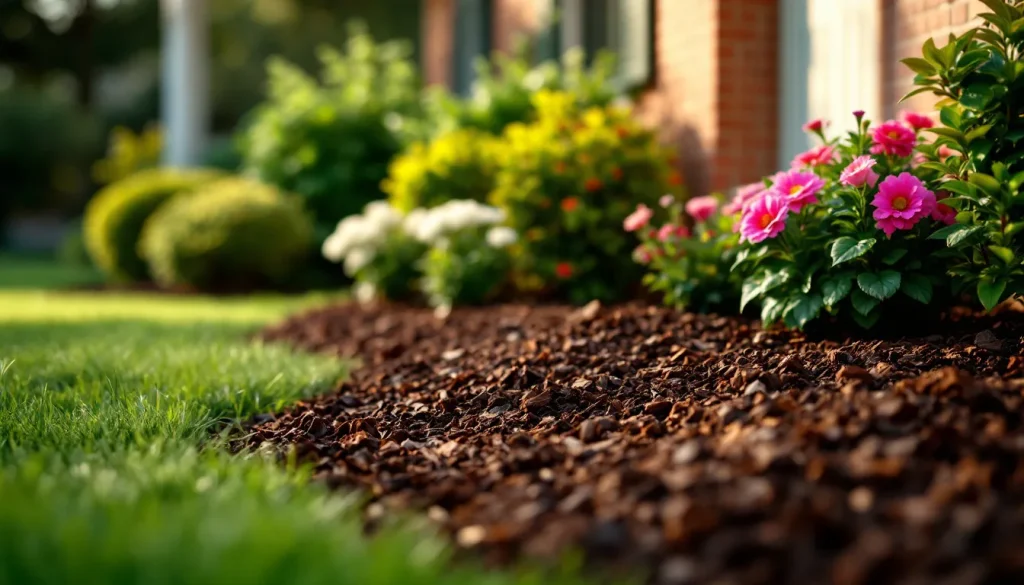
Brown mulch is shredded wood ground material, usually double-ground hardwood, finished in a dark brown, chocolate, or earth-tone color. The brown comes either from the natural wood (cypress, hardwood) or from an added colorant. The look is uniform and fibrous, and it sits on top of garden beds to suppress weeds and hold moisture. Most bagged brown mulch you see at Home Depot, Lowe’s, or Menards is dyed.
The point of brown over natural tan is consistency. Untreated wood mulch fades to gray within months. Colored brown mulch keeps a deep, even tone that reads as intentional landscaping, which is why it dominates front-yard beds in subdivisions.
The base material matters more than the color. Quality brown mulch is made from double-ground wood, meaning it passes through a grinder twice for a finer, more even texture that knits together and resists blowing away. Cheaper products use single-ground chips or recycled pallet and construction wood.
Is brown mulch dyed, and is the dye safe?
Most bagged brown mulch is dyed. The honest answer top retailers skip: brown and black mulch colorants are usually iron oxide (the same rust-based pigment in cosmetics and concrete) for brown, and carbon black for darker shades. These are mineral pigments, not “chemicals” in the scary sense. Reputable colorants are non-toxic to plants, pets, and soil once dry. Not all brown mulch is dyed, though: natural cypress and aged hardwood are genuinely brown without pigment.
Iron oxide is the same compound that gives clay soil and red rock their color. It binds to the wood and is considered inert in soil. The Mulch and Soil Council, an industry standards body, certifies products that meet contaminant limits, so a certification logo on the bag is a real signal.
The legitimate concern is not the pigment but the wood underneath. Some colored mulch is made from recycled wood that can include treated lumber (CCA, which contains arsenic). To avoid that, buy from brands that disclose virgin wood sourcing or carry the Mulch and Soil Council certification.
For vegetable gardens and edible beds, the cautious choice is natural undyed mulch (straw, shredded leaves, or natural hardwood), since you may eat what grows there. Dyed mulch is generally fine for ornamental beds, around shrubs, and along walkways. Keep fresh dyed mulch off seedlings and let it dry before pets walk on it.
Brown mulch vs black mulch: which to choose
Choose brown mulch for a warm, natural look that suits brick, tan, beige, and earth-tone homes and brings out green foliage and bright flowers. Choose black mulch for high contrast against gray, white, or modern homes and to make light-colored plants pop. The biggest practical difference is heat: black absorbs more sun and runs hotter at the soil surface, which can stress shallow roots in hot climates.
This is the comparison the #1 related search asks for and no retailer page answers. Here is the framework.
| Factor | Brown mulch | Black mulch |
|---|---|---|
| Best with | Brick, tan, beige, log, earth-tone homes | Gray, white, modern, dark-trim homes |
| Plant look | Blends naturally, flatters greens and warm flowers | High contrast, makes light plants stand out |
| Surface heat | Cooler, gentler on shallow roots | Absorbs more heat, can stress roots in hot zones |
| Fade pattern | Fades toward natural tan, ages gracefully | Fades to gray/charcoal, can look patchy |
| Climate fit | Hot, sunny southern beds | Cooler or shaded northern beds |
Rule of thumb: brown is the safer default for most homes and hides fading better. Pick black only when you want deliberate contrast and your beds are not baking in full afternoon sun.
How much brown mulch do I need (the math)
Use this rule: one cubic yard of brown mulch covers about 100 square feet at 3 inches deep, or about 160 square feet at 2 inches. One standard 2-cubic-foot bag covers roughly 8 square feet at 3 inches or 12 square feet at 2 inches. There are 13.5 bags (2 cu ft each) in one cubic yard. Measure your bed area in square feet, pick your depth, then divide.
This concrete math is the high-intent query competitors leave unanswered. Here are the numbers at a glance.
| Bed area | 2 in depth | 3 in depth |
|---|---|---|
| 100 sq ft | 8 bags (0.6 cu yd) | 13 bags (0.93 cu yd) |
| 200 sq ft | 17 bags (1.2 cu yd) | 25 bags (1.85 cu yd) |
| 500 sq ft | 42 bags (3.1 cu yd) | 63 bags (4.6 cu yd) |
| 1,000 sq ft | 83 bags (6.2 cu yd) | 125 bags (9.3 cu yd) |
Bulk beats bags on price once you pass roughly 100 square feet. To run your own numbers, use the HMNDP mulch calculator, and for current bag and bulk pricing see our breakdown of how much mulch costs.
How thick to spread it and how to apply
Spread brown mulch 2 to 3 inches deep in garden beds. Less than 2 inches lets weeds and light through; more than 3 to 4 inches can suffocate roots and hold too much water. Always pull mulch back a few inches from plant stems and tree trunks to prevent rot. Refresh annually to top up depth and color.
- Clear existing weeds and rake the bed level.
- Edge the bed so mulch has a clean border and stays put.
- Lay landscape fabric only on permanent non-planted areas (skip it in active beds).
- Spread mulch evenly to 2 to 3 inches, raking to a uniform surface.
- Keep a 2 to 3 inch gap around stems and trunks (no “mulch volcanoes”).
- Water lightly to settle dyed mulch and lock in color.
On slopes or windy sites, a binding product can keep mulch in place. See our guide to mulch glue for when it helps and when it does not.
How long the brown color lasts before fading
Dyed brown mulch typically holds strong color for about 12 months, then fades toward natural tan over the second year as sun and rain break down the pigment. Most homeowners refresh or re-top brown mulch once a year, usually in spring. Quality colorants and a dry application day extend color life; cheap dye on wet wood fades fastest.
Fading is not damage. The wood still suppresses weeds and holds moisture after the color goes. You are paying for appearance, so an annual top-dress of 1 inch restores both depth and tone without a full removal.
Benefits beyond looks: weeds, moisture, soil
Brown mulch does three jobs: it blocks sunlight so weed seeds cannot germinate, it slows evaporation so soil stays moist longer between waterings, and it moderates soil temperature. A 2 to 3 inch layer can cut weed growth sharply and reduce watering frequency, especially in hot, sunny beds. As wood mulch slowly breaks down, it adds organic matter to soil.
Moisture retention is the underrated benefit. A proper mulch layer reduces surface evaporation meaningfully, which matters most in summer and in drought-restricted areas. That alone can offset the cost over a season.
Best brown mulch brands and where to buy
The most widely stocked brown mulch brands are Vigoro and Scotts (sold at Home Depot and Lowe’s), Timberline, Miracle-Gro Garden Soil mulch lines, and Viagrow for bulk and bagged options. For loads larger than about 100 square feet, a local supplier or a yard like The Mulch Center is usually cheaper per cubic yard than bagged big-box product.
| Source | Format | Best for |
|---|---|---|
| Home Depot (Vigoro, Scotts, Timberline) | 2 cu ft bags | Small to mid beds, convenience |
| Lowe’s (Scotts, store brand) | 2 cu ft bags | Bagged dyed brown, pickup |
| Menards | 2 cu ft bags, some bulk | Midwest value buyers |
| Local yard / Mulch Center | Bulk cubic yards | Large beds, lowest unit cost |
| Viagrow | Bagged and bulk online | Online ordering, organic options |
What to check on any bag: virgin wood (not recycled construction debris), double-ground texture, and a Mulch and Soil Council certification mark if you want a contaminant-tested product. For more buying guides, browse the HMNDP learn hub.
Frequently Asked Questions
Is brown mulch dyed, and is the dye safe for plants, pets, and vegetable gardens?
Most bagged brown mulch is dyed, usually with iron oxide, the same rust-based mineral pigment used in cosmetics and concrete. It is non-toxic to plants, pets, and soil once dry. The real risk is the wood, not the dye: avoid products made from recycled treated lumber. For vegetable and edible beds, choose natural undyed mulch like straw or shredded leaves.
Brown mulch vs black mulch: which should I choose for my yard?
Choose brown for warm, natural looks that suit brick, tan, and earth-tone homes, and for cooler soil surface temperatures in hot climates. Choose black for high contrast against gray, white, or modern homes. Black absorbs more heat and can stress shallow roots in full sun. Brown also hides fading better, making it the safer default for most yards.
How much brown mulch do I need (how many bags or cubic yards)?
One cubic yard covers about 100 square feet at 3 inches deep, or 160 square feet at 2 inches. One 2-cubic-foot bag covers roughly 8 square feet at 3 inches. There are 13.5 bags per cubic yard. For a 200 square foot bed at 3 inches you need about 25 bags or 1.85 cubic yards. Bulk is cheaper past 100 square feet.
What is chocolate brown mulch and how is it different from regular brown mulch?
Chocolate brown mulch is simply a darker, richer shade of dyed brown, named for marketing. It uses more iron oxide pigment for a deep, espresso tone versus a lighter natural-brown finish. Function is identical: weed suppression, moisture retention, and curb appeal. The difference is purely color depth, so pick the shade that matches your home and plants.
How long does brown mulch keep its color before it fades?
Dyed brown mulch typically holds strong color for about 12 months, then fades toward natural tan during the second year as sun and rain break down the pigment. Most homeowners refresh once a year, usually in spring, with a 1 inch top-dress. Applying on a dry day and using quality colorant extends color life noticeably.
What is the best brown mulch and which brands are top-rated?
Widely stocked, well-reviewed brown mulch brands include Vigoro, Scotts, and Timberline (Home Depot and Lowe’s), Miracle-Gro lines, and Viagrow for bagged and bulk. The “best” is the one made from double-ground virgin wood with a Mulch and Soil Council certification. For large beds, a local bulk supplier usually beats any bagged brand on price per cubic yard.
How thick should I spread brown mulch in garden beds?
Spread brown mulch 2 to 3 inches deep. Under 2 inches lets weeds and light through; over 3 to 4 inches can suffocate roots and trap excess water. Keep a 2 to 3 inch gap around plant stems and tree trunks to prevent rot, and avoid piling it into “mulch volcanoes.” Top up about 1 inch each year.
Is dyed brown mulch better than natural wood mulch?
Neither is universally better. Dyed brown mulch holds a uniform, long-lasting color for curb appeal and lasts about a year before fading. Natural wood mulch (cypress, hardwood) skips pigment, fades to gray faster, and is the safer pick for vegetable and edible beds. For ornamental beds, dyed brown looks better longer; for edibles, choose natural.