
By HMNDP Editorial Team, independent reporting on lawn care, landscaping, soil, and water.
Last reviewed: June 2026
The best raised garden bed soil mix (start here)
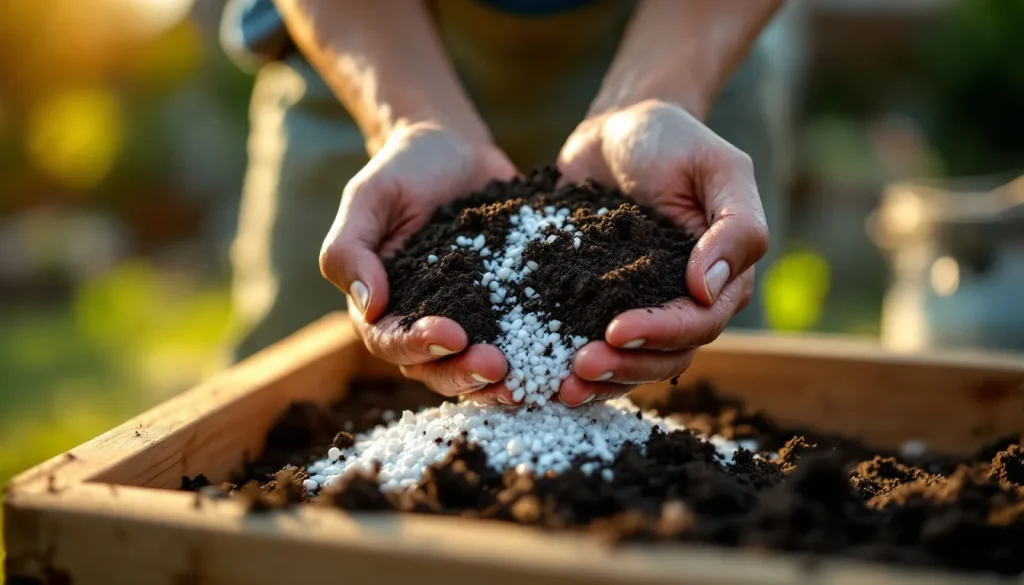
The best raised garden bed soil is a volume blend of 50% compost, 30% topsoil or coarse sand, and 20% aeration material (perlite, vermiculite, or coco coir). This hits the three goals of any good mix: nutrient retention from compost, structure from topsoil, and drainage plus air pockets from the aeration layer. For most vegetable, herb, and flower beds, this 50/30/20 ratio outperforms straight bagged garden soil and costs less than premium bagged raised bed soil.
You do not need a soil science degree to get this right. You need a ratio, a calculator, and a cost check before you buy. This guide gives all three, then covers the cheap-fill tricks for deep beds and how to refresh the bed in year two.
If you are still sizing the bed itself or comparing build styles, our companion piece on how much soil you need for any garden project walks through the volume math in more detail.
The three goals every raised bed soil must hit
A good raised bed soil does three jobs at once: it drains, it holds nutrients, and it lets air reach the roots. Drainage stops roots from sitting in water and rotting. Nutrient retention feeds the plant between waterings. Aeration keeps the soil from compacting into a brick. Every component you add should serve at least one of these three jobs, and the best mixes serve all three.
- Drainage: water moves through within minutes, not hours. Perlite, coarse sand, and topsoil structure handle this.
- Nutrient retention: compost is the engine. It holds water and feeds plants as it breaks down.
- Aeration: air pockets let roots breathe and microbes work. Perlite, vermiculite, and coco coir create them.
When a mix fails, it usually fails on one of these three. Too much compost and it stays soggy. Too much sand and it dries out and starves. Balance is the whole game.
The base blend: compost plus topsoil (the 50/50 starting point)
The simplest workable raised bed soil is a 50/50 blend of compost and topsoil by volume. Compost supplies nutrients and water-holding capacity; topsoil supplies mineral structure and weight so the bed does not float or wash out. This two-part mix is cheap, forgiving, and fine for flowers and leafy greens. For heavy feeders and root crops, you improve it by adding an aeration component, which is why the 50/30/20 ratio above edges out a flat 50/50.
Use real screened topsoil, not “fill dirt,” which is subsoil with little organic matter. Use finished, dark, crumbly compost with no ammonia smell. Bagged compost from brands like Black Kow or Coast of Maine works; so does municipal or homemade compost if it is fully cured.
Adding peat moss or coco coir for moisture retention
Peat moss and coco coir are the sponge in the mix. Both hold many times their weight in water and release it slowly, which keeps a raised bed from drying out on hot days. Coco coir is the more sustainable choice (a coconut byproduct, renewable, pH-neutral) while peat moss is acidic and harvested from bogs that are slow to regrow. Either one belongs at roughly 10 to 20% of the blend, folded into the aeration portion.
Raised beds dry faster than in-ground gardens because they drain on all sides. A coir or peat fraction is what stops daily watering in July. One compressed coir block (about 1.4 lb) expands to roughly 2 gallons of fluffed material when soaked, so budget blocks accordingly.
Adding perlite or vermiculite for aeration and drainage
Perlite and vermiculite are the air in the mix. Perlite is puffed volcanic glass that creates drainage channels and air pockets; vermiculite is a mineral that holds both water and nutrients while still loosening the soil. Add either at 10 to 20% by volume. Use perlite when your compost is heavy and wet, and vermiculite when you want extra moisture-holding alongside aeration.
Mel Bartholomew’s Square Foot Gardening method leans on vermiculite specifically because it does double duty. If you can only buy one, perlite is cheaper per cubic foot and harder to overdo, which makes it the safer pick for beginners.
The exact ratio: 50/30/20 vs. Mel’s Mix vs. 60/30/10
Here is the precise, repeatable mix most competitors avoid committing to. Measure by volume (buckets or bags), not by weight. The 50/30/20 blend is the all-purpose recommendation. Mel’s Mix (one-third each) is excellent but compost-heavy and pricier. A 60/30/10 blend stretches compost further for budget beds. Pick one and stick to the ratio.
| Mix | Ratio (by volume) | Best for | Tradeoff |
|---|---|---|---|
| 50/30/20 (recommended) | 50% compost / 30% topsoil / 20% perlite or vermiculite | All-purpose vegetables, herbs, flowers | Balanced; needs three ingredients |
| Mel’s Mix | 1/3 compost / 1/3 peat or coir / 1/3 coarse vermiculite | Square Foot Gardening, fast-draining beds | No topsoil means lighter and pricier; vermiculite cost adds up |
| 60/30/10 | 60% compost / 30% topsoil / 10% perlite | Budget beds, heavy feeders | High compost can stay soggy and settle more |
| Flat 50/50 | 50% compost / 50% topsoil | Cheapest workable base, flowers | Less aeration; can compact over a season |
Why 50/30/20 wins for most readers: it keeps compost as the nutrient engine without going so heavy that the bed turns to muck, and the topsoil gives weight and structure that pure soilless mixes (like Mel’s Mix) lack. The 20% aeration fraction is the difference between a bed that breathes for years and one that compacts by August.
Garden soil vs. topsoil vs. potting mix vs. raised bed soil
These four products are not interchangeable, and buying the wrong one is the most common beginner mistake. Garden soil is meant to be mixed into native ground, not used alone in a container. Topsoil is a structural base, not a complete growing medium. Potting mix is soilless and built for pots, too light and expensive for a whole bed. Raised bed soil is a pre-balanced blend made to fill beds straight from the bag.
| Product | What it is | Use it for | Do not use it for |
|---|---|---|---|
| Garden soil | Amended soil meant to blend into existing ground | Mixing into native beds; part of a DIY blend | Filling a raised bed by itself (compacts) |
| Topsoil | Screened mineral soil, low organic matter | Structural base in a DIY mix (the 30%) | A complete growing medium alone |
| Potting mix | Soilless peat or coir plus perlite | Containers and pots | Filling whole beds (too costly and light) |
| Raised bed soil | Pre-blended compost, soil, and aeration | Filling beds straight from the bag | (none; just check the price per cubic foot) |
Layering vs. fully mixing the components
For the soil itself, fully mix the components rather than layering them. Mixing gives roots a uniform medium so water and nutrients spread evenly; distinct layers can create perched water tables where moisture stalls at a texture change. The one place layering belongs is the cheap fill at the bottom of a deep bed (covered next), which sits below the root zone. The top 10 to 12 inches, where roots actually live, should be a single blended mix.
Practical method: tip your compost, topsoil, and aeration material onto a tarp in the right ratio, fold the tarp end over end three or four times, then shovel into the bed. A 4-by-8 bed mixes in under 30 minutes this way.
Cheap fill for deep beds: hugelkultur and lasagna methods
Do not fill an entire deep bed with premium soil. The bottom third of a bed taller than 12 inches sits below the root zone, so filling it with logs, branches, leaves, and cardboard saves money and improves the bed over time. This is the hugelkultur (wood-based) and lasagna (layered organic matter) approach. As the wood and leaves break down, they hold water and slowly feed the soil above, while you spend your soil budget only where roots reach.
- Bottom layer: logs, thick branches, and untreated wood chunks. They rot slowly and act as a water reservoir.
- Middle layer: twigs, fall leaves, straw, grass clippings, and plain cardboard or newspaper.
- Top 10 to 12 inches: your finished 50/30/20 raised bed soil mix. This is the only zone that needs real money.
Expect the organic fill to settle 4 to 8 inches in the first year as it decomposes, so plan to top up. Avoid pressure-treated wood, walnut (alleopathic), and anything diseased. This method pairs well with good drainage planning; if your yard pools water, our guide to a backyard rain garden build covers where excess runoff should go.
How much soil do I need? The calculator and worked math
To find soil volume, multiply length times width times depth, all in feet, to get cubic feet. A 4 ft by 8 ft bed filled 12 inches deep needs 4 x 8 x 1 = 32 cubic feet. Most bagged soil sells in 1.5 or 2 cubic foot bags, so divide your cubic feet by the bag size to get bag count. For bulk delivery, divide cubic feet by 27 to convert to cubic yards.
The formula: length (ft) x width (ft) x depth (ft) = cubic feet. For depth in inches, divide inches by 12 first (12 in = 1 ft, 6 in = 0.5 ft).
| Bed size | Depth | Cubic feet | 1.5 cu ft bags | Cubic yards |
|---|---|---|---|---|
| 4 x 4 | 12 in | 16 | 11 bags | 0.59 |
| 4 x 8 | 12 in | 32 | 22 bags | 1.19 |
| 4 x 8 | 6 in (top-up) | 16 | 11 bags | 0.59 |
| 2 x 8 | 10 in | 13.3 | 9 bags | 0.49 |
Round up. Soil settles and you will always need a little more than the raw math. If you use the hugelkultur fill method, calculate only the top 10 to 12 inches of actual soil, not the full bed height. That single adjustment can cut the soil you buy by a third or more on a tall bed.
Cost comparison: DIY mix vs. bagged raised bed soil vs. bulk delivery
The cheapest way to fill a raised bed depends on volume. For one or two small beds, bagged raised bed soil is convenient and competitively priced per cubic foot. For three or more beds, mixing your own from bulk compost and topsoil cuts cost sharply. For very large projects, bulk delivery by the cubic yard is the lowest unit price but adds a delivery fee. The table below uses typical 2026 US retail ranges; check local pricing before buying.
| Option | Typical cost per cubic foot | Cost to fill a 4×8 bed (32 cu ft) | Best when |
|---|---|---|---|
| Bagged raised bed soil (e.g. Lowe’s, Home Depot) | $5 to $9 | $160 to $290 | 1 to 2 beds, no truck, want convenience |
| DIY 50/30/20 from bagged components | $3.50 to $6 | $112 to $190 | 2 to 4 beds, want control over the mix |
| DIY from bulk compost + topsoil | $1.50 to $3 | $48 to $96 (plus delivery) | 3+ beds or large volume |
| Bulk raised bed/garden blend, delivered | $1.50 to $3.50 | $48 to $112 (plus $50 to $100 delivery) | Filling multiple or deep beds at once |
Read the breakpoint this way: bulk delivery only wins once the volume is large enough to dilute the flat delivery fee. A single 4×8 bed often costs about the same whether you buy bags or pay for a partial yard plus delivery. By three beds, bulk is clearly cheaper. Pairing bulk fill with hugelkultur at the bottom is the lowest total cost for tall beds.
Is bagged raised bed soil worth it?
Bagged raised bed soil from retailers like Lowe’s and Home Depot is worth it for small projects where convenience beats unit price. A pre-blended bag (compost plus soil plus aeration already balanced) saves mixing time and guesswork, which matters for one or two beds. It stops being worth it at scale: by three or more beds the price per cubic foot is roughly double a DIY bulk mix, so you pay a premium mainly for the bags and the blending.
If you buy bagged, check the cubic feet per bag (1.5 vs. 2 changes the math) and read whether it is true “raised bed soil,” not “garden soil” relabeled. The blend matters more than the brand name on the front.
How to refresh and top up raised bed soil each year
Raised bed soil settles and depletes, so refresh it every season rather than rebuilding it. Soil typically drops 2 to 4 inches per year as organic matter decomposes and compost mineralizes. Year-one is full filling; year two and beyond is topping up and amending, which costs a fraction of the original fill. Each spring, add 1 to 3 inches of fresh compost across the top, mix it into the upper few inches, and replace lost volume.
- Top up volume: add fresh compost plus a little topsoil to bring the level back up by the 2 to 4 inches it settled.
- Re-aerate: fork the top 6 inches gently to break compaction; add a scoop of perlite if it feels dense.
- Feed: work in a balanced organic fertilizer or worm castings, especially if last season’s plants were heavy feeders.
- Mulch: finish with 1 to 2 inches of straw or leaf mulch to slow moisture loss and protect soil life.
A 4×8 bed usually needs only 6 to 11 bags (about 16 cubic feet) to top up versus 22 to fill, so year-two cost is roughly half. If you garden in a dry region, match your spring feeding to water-wise products; our roundup of the best garden fertilizer for drought conditions covers options that stretch limited watering.
For more soil, water, and landscaping guides, see the HMNDP Learn library.
Frequently Asked Questions
What is the best soil mix for a raised garden bed?
The best raised bed soil mix is 50% compost, 30% topsoil, and 20% aeration material (perlite or vermiculite) by volume. Compost feeds plants and holds water, topsoil adds structure and weight, and the aeration fraction keeps the bed from compacting. This 50/30/20 blend works for vegetables, herbs, and flowers and costs less than premium bagged raised bed soil.
What is the correct ratio for raised bed soil?
Use a 50/30/20 ratio by volume: 50% compost, 30% topsoil or coarse sand, 20% perlite or vermiculite. Mel’s Mix is an alternative at one-third compost, one-third peat or coir, and one-third vermiculite. For budget beds, a 60/30/10 blend stretches compost further. Measure by volume using buckets or bags, not by weight, and mix thoroughly.
How much soil do I need to fill a raised garden bed?
Multiply length times width times depth in feet to get cubic feet. A 4×8 bed at 12 inches deep needs 32 cubic feet, about 22 bags of 1.5 cubic foot soil or 1.2 cubic yards. For depth in inches, divide by 12 first. Round up because soil settles, and only count the top 10 to 12 inches if you use cheap fill below.
Can I use regular garden soil or topsoil in a raised bed?
Not by itself. Garden soil is made to be mixed into existing ground and compacts when used alone in a bed. Topsoil is a structural base with little organic matter, so plants starve in pure topsoil. Use either as part of a blend (topsoil as the 30% structure component) combined with compost and an aeration material for a complete growing medium.
What is the difference between raised bed soil, garden soil, and potting mix?
Raised bed soil is a pre-balanced blend of compost, soil, and aeration meant to fill beds straight from the bag. Garden soil is meant to be mixed into native ground, not used alone. Potting mix is soilless, light, and built for containers, too expensive to fill a whole bed. For a raised bed, use raised bed soil or a DIY compost-topsoil-aeration mix.
How do I fill a raised bed cheaply without using all expensive soil?
Fill the bottom of any bed deeper than 12 inches with logs, branches, leaves, straw, and plain cardboard (the hugelkultur or lasagna method). That zone sits below the root area, so it does not need premium soil. Reserve your good 50/30/20 mix for the top 10 to 12 inches. Expect the organic fill to settle 4 to 8 inches the first year, then top up.
Is bagged raised bed soil worth it, or should I mix my own?
Bagged raised bed soil is worth it for one or two beds where convenience matters; it is pre-blended and saves time. For three or more beds, mixing your own from bulk compost and topsoil costs roughly half as much per cubic foot. Bulk delivery is cheapest at large volume once the delivery fee is spread across enough material.
How do I refresh or top up raised bed soil each year?
Each spring, add 1 to 3 inches of fresh compost to replace the 2 to 4 inches the soil settled, then fork the top 6 inches to re-aerate. Work in an organic fertilizer or worm castings, and finish with straw or leaf mulch. Year-two top-ups use about half the volume of the original fill, so the cost is much lower.