
By the HMNDP Editorial Team | Last reviewed: June 2026
What black mulch is and why people buy it
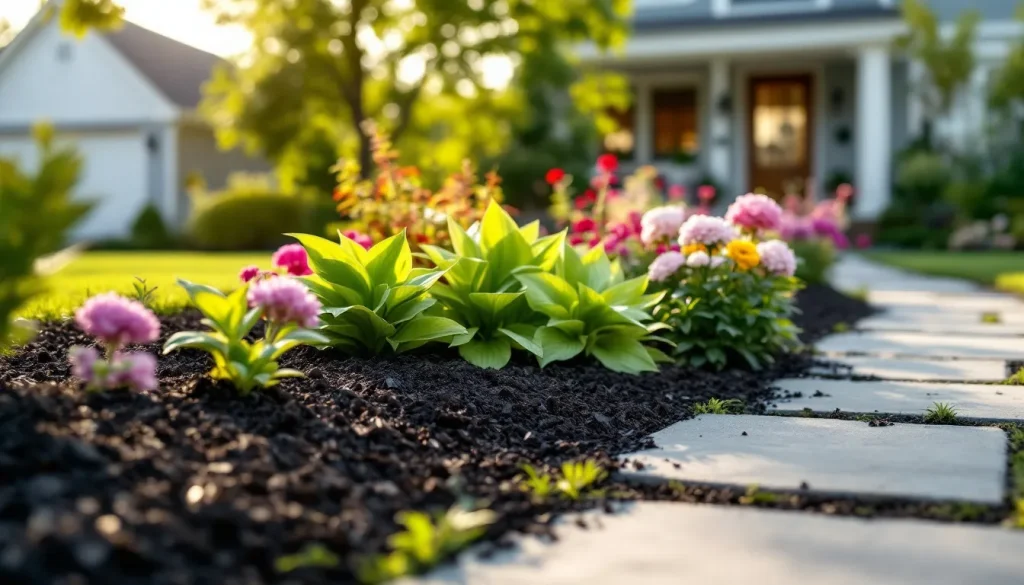
Black mulch is shredded or ground wood, usually recycled or virgin hardwood and softwood, dyed dark with a colorant so beds, borders, and walkways read as a clean, uniform dark surface. Buyers choose it for curb appeal (the dark color makes green plants and flowers pop) and for moisture retention, because a 2 to 3 inch layer shades soil and slows evaporation.
The material itself is wood, not rubber and not bark nuggets in most bagged products. Common formulations are shredded wood fiber sold under brands like Scotts Earthgro, Vigoro, Forever Black, and Greenrise. The dye sits on the surface of the wood and is what separates black mulch from natural undyed mulch.
Black mulch does the same core jobs as any organic mulch. It holds soil moisture, suppresses weeds, and moderates root-zone temperature swings. The difference is cosmetic and, as covered below, comes with two trade-offs most product pages skip: a dye question and a heat question.
Is black mulch safe for pets, kids, and vegetable gardens?
Black mulch made from clean wood and dyed with carbon black or iron oxide is generally considered safe around pets, kids, and ornamental beds. The dyes themselves are low-toxicity. The real risk is the wood source: cheap dyed mulch can contain recycled construction debris, including CCA-treated lumber that carries arsenic. For edible gardens, many gardeners choose undyed mulch to remove that question entirely.
Two safety issues are worth separating. The colorant and the feedstock.
The colorant on most black mulch is carbon black (a fine carbon pigment, the same family used in many inks) or iron oxide (the pigment in rust). Both are widely regarded as non-toxic at the levels used on mulch. The Mulch and Soil Council notes that approved colorants used on certified products are not considered a health hazard.
The feedstock is the larger concern. Some low-cost dyed mulch is made from recycled wood waste, and that stream can include CCA-treated (chromated copper arsenate) lumber from old decks and pallets. CCA wood contains arsenic. The dye hides the gray, weathered look of reclaimed wood, which is why this risk shows up more in dyed products than in natural ones.
Practical guidance: for flower beds, borders, and around established trees, certified black mulch is a reasonable choice. For vegetable beds and anything edible, undyed wood mulch, straw, or leaf mulch removes the contamination question. Keep fresh dyed mulch off direct contact with pet bedding areas until it has dried, since wet dye can transfer to paws and fur for a day or two.
What black mulch is dyed with, and is the dye toxic?
Black mulch is dyed with either carbon black or iron oxide colorant mixed in water and sprayed onto the wood. Neither pigment is considered toxic to humans, pets, or plants at the concentrations used. The dye is not what makes some mulch risky. The wood underneath is. Look for a Mulch and Soil Council certification logo to confirm the product is tested against treated-wood contamination.
Carbon black gives the deepest, most neutral black. Iron oxide produces black-to-charcoal tones and tends to be the colorant in products marketed as longer-lasting. Both bind to the wood surface and are designed to resist rinsing off in normal rain.
The dye does not leach harmful chemicals into soil under normal use. What can wash off is loose surface pigment in the first heavy rain after application, which is why fresh black mulch can darken a sidewalk or stain light hardscape briefly. Hose off any overspray on concrete the same day.
Black mulch vs brown mulch vs red mulch
Black mulch suits modern, high-contrast landscapes and makes greenery stand out, but it absorbs the most heat and shows fade fastest in full sun. Brown mulch reads more natural, hides fade better, and runs cooler, making it the safer default for most yards and hot climates. Red mulch is a niche accent color. The table below compares the three on the factors that matter at purchase.
| Factor | Black mulch | Brown mulch | Red mulch |
|---|---|---|---|
| Best look with | Green foliage, modern/stone hardscape, light-colored homes | Most homes, natural and wooded settings | Brick, accent beds |
| Heat absorption | Highest (darkest surface) | Moderate | Moderate to high |
| Fade visibility | Fades to gray, most noticeable | Fades least noticeably | Fades to pink/dull |
| Climate fit | Cooler, partly shaded beds | Hot and full-sun beds | Accents, not full coverage |
| Resale/neutral appeal | Polarizing, trendy | Most universally accepted | Least neutral |
For a full-sun bed in a hot region, brown is usually the lower-risk pick. For a shaded foundation bed where you want strong contrast and a tidy look, black earns its place.
Pros and cons of black dyed mulch
Black mulch wins on aesthetics, weed suppression, and moisture retention, the same as any wood mulch, plus the strongest visual contrast for plants. The honest downsides are higher heat absorption that can stress shallow roots, a visible fade to gray within a season, a dye question on cheap recycled stock, and a slightly higher price than undyed mulch. Here is the balanced picture.
- Pro: Clean, uniform dark look that boosts curb appeal and makes flowers and foliage stand out.
- Pro: Holds soil moisture and cuts watering frequency at a 2 to 3 inch depth.
- Pro: Suppresses weeds by blocking light to the soil surface.
- Con: Dark color absorbs more solar heat, raising surface and shallow soil temperature in full sun.
- Con: Color fades toward gray, often within one growing season, faster than brown.
- Con: Cheap dyed mulch may use recycled wood that can include CCA-treated lumber.
- Con: Costs a little more than undyed mulch and may need a color refresh sooner.
Does black mulch get too hot and damage plants?
Black mulch can get noticeably hotter than lighter mulch because dark surfaces absorb more sunlight. In full sun, the mulch surface can heat well above air temperature and warm the top inch of soil, which can stress shallow-rooted annuals and new transplants. The fix is depth and placement: keep 2 to 3 inches, water deeply, and avoid piling it against tender stems.
The heat is a surface effect. A correct 2 to 3 inch layer actually insulates the deeper root zone, so established shrubs and trees rarely suffer. The plants at risk are seedlings, shallow-rooted annuals, and anything in a hot, reflective spot next to pavement or a south-facing wall.
Two habits reduce heat stress. Pull mulch back 2 to 3 inches from plant stems and tree trunks so heat and moisture do not collect against the bark. Water in the early morning so soil moisture buffers the midday surface heat. In the hottest full-sun beds, brown mulch is the cooler-running choice.
How much black mulch do I need?
To find how much black mulch you need, multiply bed square footage by depth in feet to get cubic feet. For a 2 inch depth, square feet times 0.167 equals cubic feet. For 3 inches, multiply by 0.25. Divide by the bag size (1.5 or 2.0 cu. ft.) to get bag count. One 2 cu. ft. bag covers about 12 sq. ft. at 2 inches.
The formula in plain terms: cubic feet needed = bed area (sq. ft.) x depth (in.) / 12. Then divide by your bag size. Round up.
| Bed size | At 2 in. depth | At 3 in. depth | 2.0 cu. ft. bags (2 in.) |
|---|---|---|---|
| 50 sq. ft. | 8.4 cu. ft. | 12.5 cu. ft. | 5 bags |
| 100 sq. ft. | 16.7 cu. ft. | 25 cu. ft. | 9 bags |
| 200 sq. ft. | 33.4 cu. ft. | 50 cu. ft. | 17 bags |
| 1 cubic yard (27 cu. ft.) | covers ~162 sq. ft. | covers ~108 sq. ft. | 14 bags = ~1 yd |
For larger projects, run your numbers through our mulch calculator and check current rates in our breakdown of how much mulch costs before deciding between bags and bulk.
Bag sizes, bulk vs bagged, and where to buy
Black mulch comes in 1.5 cu. ft. and 2.0 cu. ft. bags at Home Depot, Lowe’s, and Menards, often discounted in spring multi-bag sales (for example 5 bags for a fixed price). Bulk black mulch is sold by the cubic yard (27 cu. ft.) at landscape suppliers and some big-box garden centers, delivered loose or by pallet. Bulk is cheaper per cubic foot once you need roughly 10 or more bags.
Bagged is easier to handle, store, and spread for small beds, and it goes on sale frequently. Bulk wins on price and waste for larger jobs but needs a truck or delivery and a place to dump it. The crossover point is usually around 1 cubic yard, which equals roughly 13 to 14 of the 2.0 cu. ft. bags.
Common black mulch brands by retailer include Scotts Earthgro and Vigoro (Home Depot), Vigoro and store brands (Lowe’s), and regional labels plus Greenrise and Forever Black products marketed on color retention. For a related cost comparison of buying retail versus pro-grade supply, see our look at Home Depot vs pro fertilizer pricing, which applies the same logic to garden inputs.
Color retention: how long before black mulch fades?
Most black mulch holds strong color for one growing season, then fades toward gray over 6 to 12 months as sun and rain break down the surface dye. Products marketed as “forever black,” like Forever Black and similar iron-oxide-dyed lines, claim longer hold, often a full year or more. Full-sun beds fade fastest. A light annual top-dress or a mulch colorant spray restores the look.
“Forever” claims are marketing shorthand for slower fade, not permanent color. Iron-oxide colorants tend to outlast carbon black in direct sun, which is why longer-life products lean on them. Expect any black mulch in full sun to need attention within a year.
If you want to extend color without buying all-new mulch, a spray-on mulch dye refreshes the top layer for a fraction of the cost. To keep applied mulch and dye in place on slopes or in windy spots, some homeowners use a binding product; see our guide to mulch glue for how that works.
How often to replace or refresh black mulch
Refresh black mulch once a year, usually in spring, to restore color and top up depth to 2 to 3 inches. You rarely need to remove the old layer first. As organic mulch breaks down it feeds the soil, so simply rake the existing mulch to loosen it, then add 1 inch of fresh black mulch on top. Remove old mulch only if it is matted, moldy, or piled too deep.
Mulch depth matters more than age. If the existing layer is already 3 inches deep, do not bury it under another full layer, since mulch piled past 3 to 4 inches can suffocate roots and hold too much moisture against stems. Rake and top-dress lightly instead.
- Rake the old mulch to break up any matted crust and even out depth.
- Pull mulch 2 to 3 inches back from stems and trunks.
- Add fresh black mulch only up to a total of 2 to 3 inches.
- Water lightly to settle the new layer and reduce loose dye transfer.
For more buying and application guidance across mulch types, the HMNDP learn hub collects related guides on cost, coverage, and materials.
Frequently Asked Questions
Is black mulch safe for pets, kids, and vegetable gardens?
Black mulch made from clean wood and dyed with carbon black or iron oxide is generally safe around pets, kids, and ornamental beds, since those pigments are low-toxicity. The real risk is recycled wood feedstock that can include arsenic-bearing CCA-treated lumber. For vegetable and edible gardens, many gardeners pick undyed wood, straw, or leaf mulch to remove the contamination question entirely.
What is black mulch dyed with, and is the dye toxic?
Black mulch is dyed with carbon black or iron oxide colorant suspended in water and sprayed onto the wood. Neither pigment is considered toxic at the concentrations used, and certified products are not regarded as a health hazard. The dye is not the risk; the wood underneath is. A Mulch and Soil Council certification confirms the product was tested against treated-wood contamination.
Black mulch vs brown mulch: which is better for my yard?
Black mulch gives the strongest contrast with green plants and suits modern, shaded, or light-colored homes, but it absorbs the most heat and fades to gray fastest. Brown mulch reads more natural, runs cooler, and hides fade better, making it the safer default for hot, full-sun beds. Choose black for contrast in cooler spots, brown for most everyday yards.
What are the pros and cons of black dyed mulch?
Pros: a clean dark look that boosts curb appeal, good moisture retention, and weed suppression at a 2 to 3 inch depth. Cons: dark color absorbs more heat and can stress shallow roots in full sun, color fades toward gray within a season, cheap recycled stock may contain CCA-treated wood, and it costs a little more than undyed mulch.
Does black mulch get too hot and damage plants?
Black mulch absorbs more solar heat than lighter mulch, so in full sun the surface and top inch of soil can run noticeably hotter, which can stress seedlings, shallow-rooted annuals, and new transplants. Established shrubs and trees are rarely harmed. Keep a 2 to 3 inch layer, pull mulch back from stems, and water in the morning to limit heat stress.
How much black mulch do I need per square foot?
Multiply bed area in square feet by 0.167 for a 2 inch depth, or by 0.25 for 3 inches, to get cubic feet, then divide by your bag size (1.5 or 2.0 cu. ft.). One 2.0 cu. ft. bag covers about 12 square feet at 2 inches. One cubic yard (27 cu. ft.) covers roughly 162 square feet at 2 inches.
How long does black mulch keep its color before it fades?
Most black mulch holds strong color for about one growing season, then fades toward gray over roughly 6 to 12 months as sun and rain degrade the surface dye. Iron-oxide-dyed products marketed as “forever black” tend to last longer, often a year or more. Full-sun beds fade fastest. A light annual top-dress or a mulch colorant spray restores the look.
How often should I replace or refresh black mulch?
Refresh black mulch once a year, typically in spring, to restore color and top depth back to 2 to 3 inches. You usually do not remove the old layer; rake it to loosen, then add about 1 inch of fresh mulch. Remove old mulch only if it is matted, moldy, or already piled past 3 to 4 inches, which can suffocate roots.