
By the HMNDP Editorial Team. Last reviewed: June 2026.
What garden soil is (and what it is made of)
Garden soil is a bagged or bulk planting blend made of real mineral soil (loam or sandy loam) mixed with organic amendments like compost, aged bark, coco coir, and pumice. It is built to go into the ground or into raised beds, not into pots. The mineral fraction gives it weight and nutrient-holding clay; the organic fraction feeds plants and improves structure.
This is the key distinction most listings skip. Garden soil contains actual soil. Potting mix usually contains none. That single difference decides where each one belongs and explains nearly every buying mistake gardeners make.
A typical bag of all-purpose garden soil contains a blend roughly like this:
- Native loam or sandy loam: the mineral base, holds nutrients and moisture.
- Compost (often 20% to 50% by volume): aged plant or manure material that supplies nutrients.
- Aged or composted bark: adds structure and slows breakdown.
- Coco coir or peat: holds water and lightens the mix.
- Pumice, perlite, or coarse sand: small amounts to keep it from compacting.
Brands vary widely. Miracle-Gro Garden Soil, Kellogg Garden Organics, and store brands at Home Depot and Lowe’s all use this template but differ in compost percentage and whether nutrients come from synthetic fertilizer or organic sources. Read the bag, covered below.
Where to use garden soil: in-ground beds vs. raised beds
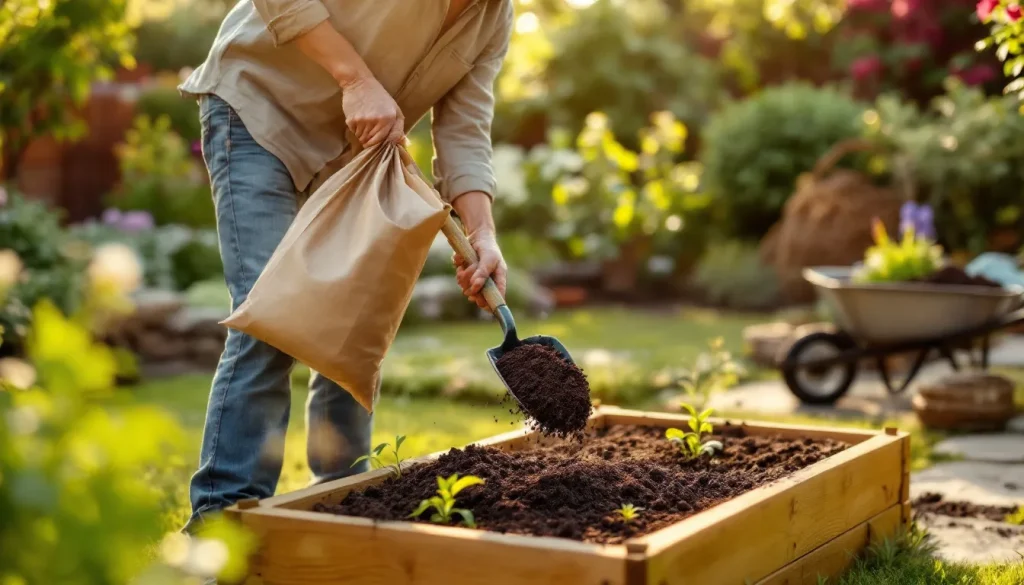
Use garden soil in two places: worked into existing in-ground beds as an amendment, or as a fill component in raised beds. Use it straight or as a top dressing in the ground. In raised beds, blend it with compost and a lighter material rather than filling 100% with heavy garden soil, which can pack down and drain slowly in a tall box.
In-ground beds are the original purpose. You spread garden soil over native dirt and mix it in to raise the organic content and improve a tired bed. For an existing border or vegetable patch, this is the correct product.
Raised beds are more nuanced. A 12-inch or taller box filled only with dense garden soil tends to compact and hold water at the bottom. A common, reliable raised-bed recipe is roughly one-third garden soil, one-third compost, and one-third aerating material (pumice, coarse perlite, or a quality bagged raised-bed blend). Several brands now sell a dedicated “Raised Bed” soil tuned for exactly this. If your beds sit in a wet yard, pair this with drainage planning like a backyard rain garden build so runoff is not constantly soaking the boxes.
Garden soil vs. potting soil, topsoil, and compost (one decision table)
Garden soil, potting soil, topsoil, and compost are four different products that gardeners constantly confuse. Garden soil goes in the ground. Potting soil (potting mix) goes in containers. Topsoil is cheap bulk fill. Compost is a nutrient amendment, not a standalone growing medium. The table below shows the real differences side by side.
| Product | Contains real soil? | Best use | Drainage | Typical cost (bagged) | Use straight? |
|---|---|---|---|---|---|
| Garden soil | Yes | In-ground beds, raised-bed fill (blended) | Moderate | $6 to $12 / 1.5 cu ft | In ground: yes. Pots: no. |
| Potting soil / mix | Usually no (soilless) | Containers and pots | Fast | $9 to $20 / 1.5 to 2 cu ft | Yes, in containers |
| Topsoil | Yes (low organic) | Leveling, filling, lawn grading | Varies, often poor | $2 to $5 / 0.75 to 1 cu ft | As fill, not as a plant bed alone |
| Compost | No (pure organic) | Amendment mixed into soil | Holds water | $5 to $10 / 1 to 1.5 cu ft | No, mix it in |
The short rule: garden soil for beds, potting mix for pots, topsoil for grading and filling, compost as a booster you blend into any of them.
Why you should not fill containers with straight garden soil
Do not fill pots or containers with straight garden soil. It is too heavy and holds too much water in an enclosed container, which suffocates roots and invites rot. Garden soil also carries weed seeds, fungi, and pests that the in-ground environment normally keeps in check. Containers need a fast-draining, soilless potting mix instead.
In the ground, gravity, earthworms, and a deep soil column move water away from roots. A pot has none of that. Water sits at the bottom in a saturated zone, and dense garden soil makes that zone larger. The result is yellow leaves, stunted plants, and root rot within weeks.
If you only have garden soil on hand and must use a container, cut it heavily with perlite and compost (no more than half garden soil) and only in a large pot. The cleaner answer is to buy a bag labeled “Potting Mix” or “Container Mix” for anything in a pot.
How to mix garden soil into existing beds
To amend an existing bed, spread 2 to 4 inches of garden soil over the native dirt and work it into the top 6 to 8 inches with a fork or tiller. Aim to add roughly 25% to 30% new material by volume. This raises organic content, improves structure, and feeds the next planting without burying the existing soil biology.
- Clear weeds and loosen the bed surface with a digging fork.
- Spread a 2 to 4 inch layer of garden soil evenly across the bed.
- Optionally add a 1 inch layer of compost on top for extra nutrients.
- Mix everything into the top 6 to 8 inches so the new and native soil blend, not layer.
- Rake level, water lightly to settle, then plant.
Avoid creating a sharp boundary between rich garden soil on top and hard native clay below. Roots stall at that line and water perches there. Blending the two prevents it. Garden soil supplies a starter charge of nutrients, but it is not a season-long feed, so plan a separate feeding program. See our guidance on the best garden fertilizer for drought conditions and the best fertilizer for grass if your project touches lawn edges.
How much garden soil do I need? (the formula competitors skip)
To find how much garden soil you need, multiply bed length by width by depth in feet to get cubic feet, then divide by 27 to get cubic yards. Convert your depth from inches to feet by dividing by 12. One standard 1.5 cubic foot bag covers about 6 square feet at 3 inches deep. This is the calculation no product listing gives you.
The core formulas:
- Cubic feet = length (ft) x width (ft) x depth (ft)
- Depth in feet = depth in inches ÷ 12
- Cubic yards = cubic feet ÷ 27
- Number of bags = cubic feet ÷ bag size (0.75, 1.5, or 2 cu ft)
Worked example. A raised bed 8 ft long, 4 ft wide, filled 10 inches deep:
- Depth: 10 ÷ 12 = 0.83 ft
- Volume: 8 x 4 x 0.83 = 26.6 cubic feet
- In 1.5 cu ft bags: 26.6 ÷ 1.5 = about 18 bags
- In 2 cu ft bags: 26.6 ÷ 2 = about 14 bags
- In cubic yards: 26.6 ÷ 27 = about 1 cubic yard
This worked example also reveals the breakeven point: at roughly 18 bags for one bed, you are already at the threshold where bulk delivery usually wins on price. The next section proves it.
Quick coverage reference for bagged garden soil:
| Bag size | Coverage at 2 in deep | Coverage at 3 in deep | Bags per cubic yard |
|---|---|---|---|
| 0.75 cu ft | ~4.5 sq ft | ~3 sq ft | 36 bags |
| 1.5 cu ft | ~9 sq ft | ~6 sq ft | 18 bags |
| 2 cu ft | ~12 sq ft | ~8 sq ft | 13.5 bags |
Bagged vs. bulk garden soil: cost per cubic foot
Bagged garden soil costs more per cubic foot but suits small jobs; bulk (sold by the cubic yard) is cheaper per cubic foot but only pays off above about 1 cubic yard once delivery is included. A 1.5 cu ft bag at $8 works out to roughly $5.33 per cubic foot. Bulk soil at $35 to $50 per cubic yard is about $1.30 to $1.85 per cubic foot before delivery.
| Option | Typical price | Cost per cubic foot | Best for |
|---|---|---|---|
| Bagged, 1.5 cu ft | $6 to $12 / bag | $4.00 to $8.00 | 1 to 4 beds, no truck needed |
| Bagged, 2 cu ft | $9 to $14 / bag | $4.50 to $7.00 | Mid-size projects |
| Bulk, per cubic yard | $35 to $50 / yard | $1.30 to $1.85 (plus delivery) | Large beds, filling several raised beds |
The math: one cubic yard equals 18 of the 1.5 cu ft bags. At $8 a bag that is $144 in bags versus roughly $40 to $50 in bulk plus a delivery fee that often runs $50 to $100. Once you need a full cubic yard or more, bulk almost always wins even after delivery. Below half a yard, bags win on convenience. This bagged-vs-bulk gap is the same buy-versus-pro logic we cover for products in Home Depot vs. pro-grade fertilizer.
Where to buy garden soil near you (and how to read the bag)
Buy bagged garden soil at Home Depot, Lowe’s, Walmart, and most garden centers; buy bulk by the cubic yard from local landscape supply yards that deliver. For “garden soil near me,” search local landscape and mulch suppliers for bulk, and use big-box store locators for bagged Miracle-Gro, Kellogg, or store-brand product. Always read the bag before you decide on price alone.
What to check on the bag, in order:
- The word “soil,” not “mix”: confirm it is garden soil for beds, not potting mix for pots.
- Compost percentage: higher compost (30%+) usually means richer soil and fewer cheap fillers.
- Fillers and “forest products”: vague terms like “forest products” can mean ground wood that ties up nitrogen as it breaks down.
- Organic vs. synthetic feed: Kellogg Garden Organics and OMRI-listed bags use organic sources; some Miracle-Gro blends include synthetic fertilizer that feeds for a set number of months.
- Specialty label: match the blend to the job (Raised Bed, Vegetable & Herb, Flower, In-Ground).
All-purpose garden soil handles most flower and shrub beds. Vegetable and herb blends carry more compost and balanced nutrients for heavy feeders. Raised-bed blends are lightened so they drain well in a tall box. Buying the specialty bag that matches your bed beats buying the cheapest all-purpose bag and fixing it later.
If your project reaches beyond open ground, it helps to compare the numbers for other areas of the yard: work out the exact fill mix and cost for a raised bed, or check how much soil a lawn actually needs before you order.
Frequently Asked Questions
What is garden soil and what is it made of?
Garden soil is a bagged or bulk planting blend made of real mineral soil (loam or sandy loam) mixed with organic amendments. Typical ingredients include compost (often 20% to 50%), aged bark, coco coir or peat, and small amounts of pumice or perlite. It is built to go in the ground or into raised beds, supplying nutrients and structure for roots.
What is the difference between garden soil and potting soil?
Garden soil contains real mineral soil and is made for in-ground beds and raised beds. Potting soil (potting mix) is usually soilless, lighter, and drains fast, made specifically for containers. Using garden soil in pots causes waterlogging and root rot; using potting mix in the ground is wasteful and dries out too fast. Match each to its intended place.
Can I use garden soil in pots and containers?
No, do not fill pots with straight garden soil. It is too heavy, holds too much water in an enclosed container, and can suffocate roots or cause rot. It may also carry weed seeds and pests. Use a fast-draining potting mix for containers instead. If forced to use garden soil, cut it with at least 50% perlite and compost in a large pot only.
How much garden soil do I need (how do I calculate cubic feet or yards)?
Multiply bed length x width x depth, all in feet, to get cubic feet (convert depth in inches by dividing by 12). Divide cubic feet by 27 for cubic yards. For an 8 ft x 4 ft bed filled 10 inches deep: 8 x 4 x 0.83 = about 26.6 cubic feet, which is roughly 18 bags of 1.5 cu ft or about 1 cubic yard.
Is garden soil the same as topsoil or compost?
No. Topsoil is cheap mineral fill with low organic content, used for grading and leveling, not as a standalone plant bed. Compost is pure organic amendment you mix into soil, not a growing medium by itself. Garden soil sits between them: real soil already blended with compost and amendments so it is ready to plant in beds.
Is bagged or bulk garden soil cheaper, and where can I buy it near me?
Bulk garden soil is cheaper per cubic foot (about $1.30 to $1.85 per cubic foot versus $4 to $8 bagged) but only pays off above roughly one cubic yard once delivery is added. Buy bagged Miracle-Gro, Kellogg, or store brands at Home Depot, Lowe’s, and Walmart. Buy bulk by the cubic yard from local landscape supply yards that deliver.
Can you use garden soil in raised beds?
Yes, but do not fill a tall raised bed with 100% dense garden soil, which compacts and drains slowly. Blend roughly one-third garden soil, one-third compost, and one-third aerating material like pumice or perlite. Several brands sell a dedicated raised-bed blend tuned for this. The goal is a rich mix that still drains in an enclosed box.
How do I mix garden soil into my existing garden beds?
Spread 2 to 4 inches of garden soil over the native dirt and work it into the top 6 to 8 inches with a fork or tiller, adding about 25% to 30% new material by volume. Blend it in fully rather than leaving a layer, so roots and water move freely between new and native soil. Water lightly to settle, then plant.