
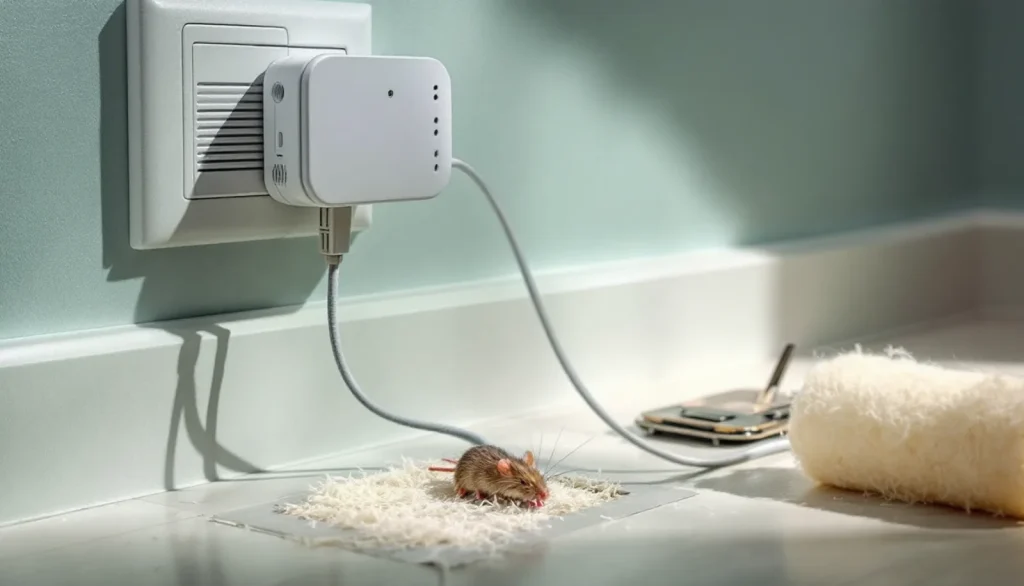
Ultrasonic Pest Repeller: Do They Actually Work?
An ultrasonic pest repeller is a plug-in device that emits high-frequency sound (roughly 20,000 to 65,000 Hz, above human hearing) to drive away rodents and insects. The short, evidence-based answer: most independent research and federal regulators have found these devices do not reliably repel pests. The Federal Trade Commission warned more than 60 manufacturers in 2001 and took enforcement action in 2003, and university studies since then keep landing on the same result. This guide lays out what the studies actually found, pest by pest, and where your pest-control money does more good.
The short version
- The FTC sent warning letters to more than 60 makers and sellers of ultrasonic pest-control devices in May 2001, demanding scientific proof for efficacy claims.
- In July 2003, the FTC settled charges against Global Instruments and its president, Charles Patterson, over unsubstantiated claims for Pest-A-Cator and PestVacator devices.
- A 2021 study in the journal Insects tested nine ultrasonic devices against the Australian paralysis tick and found a maximum of 19.5 percent repellency, too low to recommend.
- Kansas State University testing (2002) found some effect on crickets but little to none on cockroaches, ants, and spiders.
- Rodents habituate: mice and rats show mild aversion at first, then return once they learn the sound is harmless.
- Sealing entry points, traps, baits, and sanitation have decades of evidence behind them. Spend there first.
Do ultrasonic pest repellers work?
For most household pests, the weight of independent evidence says no. Laboratory and field studies repeatedly show little to no lasting repellent effect on rodents, cockroaches, ants, spiders, mosquitoes, and ticks. The Federal Trade Commission has flagged the category for over two decades because manufacturers could not produce competent scientific evidence for their claims.
The devices are not fraudulent in the sense of doing nothing measurable. Some insects react briefly, and some controlled lab setups using specialized high-output generators have stressed certain species. The problem is that consumer plug-in units do not reproduce those conditions, and any short-term reaction fades as the animal habituates. A reaction in a sealed lab box is not the same as clearing a pest from a furnished house.
Two practical limits explain the gap between the box claims and reality. Ultrasound is highly directional and does not pass through walls, cabinets, or furniture, so a single plug-in covers far less than the square footage advertised. And animals adapt: the startle response that looks promising in week one is usually gone by week three.
What the research and FTC actions actually found
Here is the evidence stack most product pages skip. The pattern across regulators and universities is consistent: weak, species-dependent, and short-lived effects that do not add up to pest control. The table below pulls the named findings into one place so you can judge for yourself.
| Source and year | What was tested | Finding |
|---|---|---|
| FTC warning letters, May 2001 | More than 60 manufacturers and retailers | Efficacy claims must be backed by competent, reliable scientific evidence; many were not |
| Kansas State University, 2002 | Commercial devices vs. crickets, cockroaches, ants, spiders | Some repellency of crickets; little to no effect on cockroaches; ants and spiders unaffected |
| FTC settlement (Global Instruments), July 2003 | Pest-A-Cator and PestVacator electromagnetic and ultrasonic units | Charges of unsubstantiated claims settled; respondents barred from claims without proof |
| Lab study on mosquitoes and German cockroaches, 2007 | Random ultrasonic device, two mosquito species, German cockroach | No successful repellency of the cockroaches or mosquitoes tested |
| Insects journal study, 2021 | Nine ultrasonic devices vs. Australian paralysis tick (Ixodes holocyclus) | Maximum 19.5 percent repellency; not recommended for tick-bite prevention |
The FTC complaint history is worth reading plainly. The agency alleged that any rodent reaction to ultrasound would be temporary at best, because rodents become accustomed to the sound and return to nesting and feeding areas even with a device running. The complaints also alleged that ultrasound devices do not control insects. That is the federal regulator, not a competing brand.
Which pests do they (not) repel?
Effectiveness depends heavily on the species, and for the pests homeowners care about most, the results are poor. Rodents habituate. The common indoor insects show little reaction. The one mild bright spot in testing was crickets, which is not why most people buy these units.
- Mice and rats: Mild initial aversion that fades. Rodents learn the sound is not a threat and resume normal movement, per FTC complaint findings and rodent studies.
- Cockroaches: Little to no effect in Kansas State (2002) testing and in a 2007 lab study on German cockroaches.
- Ants and spiders: Unaffected by the devices in Kansas State (2002) testing.
- Mosquitoes: No successful repellency in the 2007 lab study; multiple reviews reject anti-mosquito ultrasound claims.
- Ticks: Maximum 19.5 percent repellency in the 2021 Insects study, judged too low to recommend.
- Crickets: Some repellency observed, the rare positive signal in the data.
Why don’t they work in a real house?
Three physical and behavioral reasons explain the failures. Ultrasound is blocked by solid objects, animals habituate, and consumer units are too weak to match lab conditions. Together these turn a plausible-sounding idea into a device that rarely changes pest behavior where it matters.
- Sound does not travel through walls or furniture. Ultrasonic waves are short and directional, so a unit in one room does almost nothing in the next room or behind a couch where pests actually hide.
- Habituation. Mice, rats, and many insects stop reacting once the sound proves harmless, often within days to a few weeks.
- Weak, narrow output. Consumer plug-ins cannot reproduce the high-output, complex sound patterns used in the few lab setups that stressed insects, so real-world results do not match the lab.
Are ultrasonic repellers safe for pets?
For dogs and cats, ultrasonic plug-ins are generally considered low risk because the frequencies sit above typical human hearing and most large pets ignore them. The clearer caution is for small caged animals. Hamsters, guinea pigs, mice, rabbits, and pet rats can hear into the ultrasonic range and may be stressed by a running unit, so keep devices out of rooms with those animals.
There is no strong long-term safety research on household pets, so this is a precaution, not a documented hazard. If a pet acts agitated near a new device, unplug it. The bigger downside for most buyers is not safety but spending money on something that does not solve the pest problem.
What works instead?
Proven pest control is unglamorous: keep them out, take away food and water, and use targeted traps or baits. This is the integrated pest management (IPM) approach used by professionals, and it has decades of field evidence behind it. The table contrasts the spend.
| Approach | Typical cost | Evidence for it | Best for |
|---|---|---|---|
| Ultrasonic repeller | $15 to $40 per unit | Weak; rejected by FTC and most studies | Little reliable use |
| Exclusion (seal gaps, door sweeps, steel wool, hardware cloth) | $10 to $60 in materials | Strong; standard rodent-proofing | Mice, rats, many insects |
| Snap traps and bait stations | $5 to $30 | Strong; long track record | Active rodent infestations |
| Sanitation (food storage, moisture fixes) | Low; mostly habit change | Strong; removes what draws pests | Roaches, ants, rodents |
| Licensed pest professional | $100 to $300 per visit | Strong for heavy or recurring problems | Persistent or large infestations |
Start by finding where pests get in and seal it. A mouse fits through a gap the width of a pencil, so a few dollars of steel wool and a door sweep outperform any plug-in. Outdoors, the same logic applies to your yard. If pests are riding in from overgrown beds, mulch piled against the foundation, or standing water, fixing the landscape removes the invitation. Our guide to diagnosing lawn and yard problems and the seasonal maintenance schedule cover the habitat side.
If the problem is past the DIY stage, hire help and vet it. Use our verification steps for hiring a reputable pro to confirm licensing and insurance before anyone treats your property, and check regional 2026 service cost benchmarks so a quote is easy to sanity-check.
Should you buy one at all?
For active rodent or insect problems, no. The evidence does not support paying $15 to $40 for a device that regulators and researchers have repeatedly found ineffective. If you already own one, it is unlikely to harm dogs or cats, but it should not replace traps, baits, exclusion, or a professional when you have real activity. Treat any “guaranteed” pest-elimination claim on the box with the same skepticism the FTC has applied since 2001.
Last reviewed: June 2026
HMNDP Editorial Team, reviewed by HMNDP turf and horticulture editors.
Frequently asked questions
Do ultrasonic pest repellers really work?
For most household pests, no. The FTC warned more than 60 makers in 2001 to back claims with science, and university studies keep finding weak, short-lived effects. Devices showed little to no impact on cockroaches, ants, spiders, mosquitoes, and rats. The reactions seen in lab boxes do not translate to a furnished home.
Do ultrasonic repellers work on mice and rats?
Not reliably. Rodents may show mild aversion at first, then habituate once they learn the sound is harmless and return to nesting and feeding areas. The FTC complaint history makes this point directly. Sealing entry points with steel wool and door sweeps plus snap traps controls rodents far more dependably than any plug-in device.
Are ultrasonic pest repellers safe for pets?
For dogs and cats they are generally considered low risk, since the frequencies sit above typical human hearing and most large pets ignore them. The clearer caution is small caged animals like hamsters, guinea pigs, rabbits, and pet rats, which can hear ultrasound and may be stressed. There is no strong long-term safety research, so treat it as a precaution.
Why don’t ultrasonic pest repellers work in a real house?
Three reasons. Ultrasound is directional and does not pass through walls or furniture, so one unit covers little real area. Pests habituate within days to weeks once the sound proves harmless. And consumer plug-ins are too weak to match the high-output lab setups that stressed some insects, so field results fall short of the claims.
What did the FTC say about ultrasonic pest devices?
In May 2001 the FTC sent warning letters to more than 60 manufacturers and retailers, demanding competent scientific evidence for efficacy claims. In July 2003 it settled charges against Global Instruments and Charles Patterson over unsubstantiated claims for Pest-A-Cator and PestVacator units. FTC complaints alleged rodents habituate and that the devices do not control insects.
Do ultrasonic repellers work on cockroaches and spiders?
No. Kansas State University testing in 2002 found little to no effect on cockroaches, and ants and spiders were unaffected by any device tested. A 2007 lab study on German cockroaches and mosquitoes also found no successful repellency. Sanitation, baits, and exclusion are the methods with real evidence behind them for these pests.
What works instead of an ultrasonic repeller?
Integrated pest management: keep pests out, remove food and water, and use targeted traps or baits. Seal gaps with steel wool and door sweeps, store food, fix moisture, and set snap traps or bait stations. For heavy or recurring problems, hire a licensed professional, typically $100 to $300 per visit, after verifying licensing and insurance.