
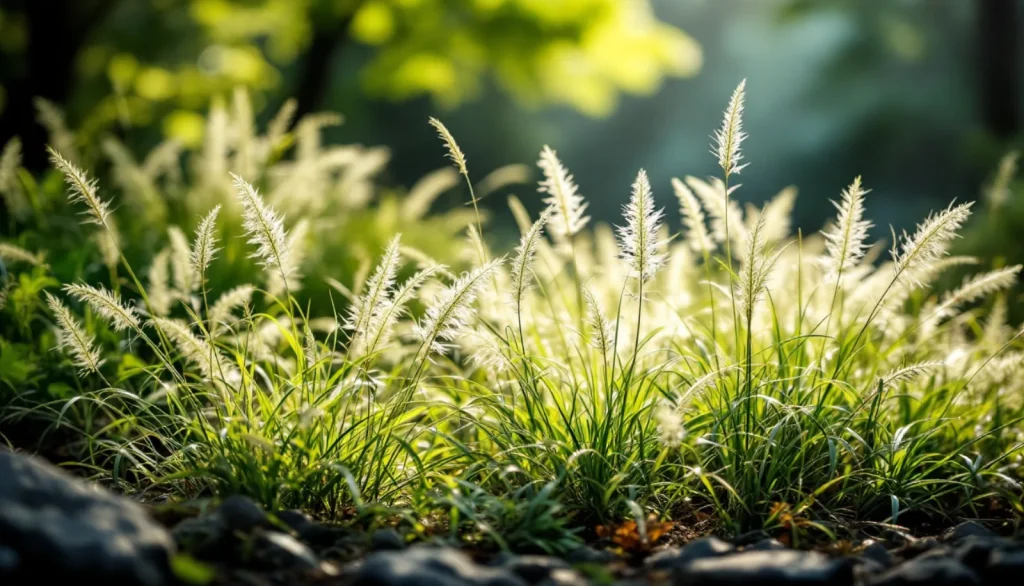
Japanese Forest Grass: Care, Cultivars, and Shade Growing
Japanese forest grass (Hakonechloa macra) is a slow-spreading, shade-loving ornamental grass hardy in USDA zones 5 to 9, growing 12 to 18 inches tall and slightly wider, with cascading blades that look like a miniature bamboo waterfall. It is one of the few true grasses that prefers part shade over sun, which is why it solves the problem most ornamental grasses cannot: a graceful, low, moving texture for the shady side of the yard. This guide covers how to grow it, the real differences between the gold cultivars, and what to check before you buy.
What is Japanese forest grass and where does it grow?
Japanese forest grass is a deciduous, clump-forming perennial grass native to the moist mountain woodlands around Mt. Hakone in central Japan, which is why it is also sold as Hakone grass. It grows 12 to 18 inches tall and 18 to 24 inches wide, hardy in USDA zones 5 to 9. The species spreads slowly by rhizomes but is not invasive, so it stays a tidy mound rather than running through a bed.
The plant earned the Perennial Plant Association’s 2009 Perennial Plant of the Year for the gold cultivar ‘Aureola’, and ‘Aureola’ holds the Royal Horticultural Society Award of Garden Merit it received in 1993. Those awards track its main selling point: shade tolerance with color, a rare combination among grasses.
How much sun and shade does Japanese forest grass need?
Japanese forest grass grows best in part shade to dappled shade and will scorch in full afternoon sun, especially in zones 7 through 9. The variegated gold types color brightest in partial or filtered light, fade toward lime green in deep shade, and bleach or burn in full sun. In cooler-summer regions (zones 5 and 6) it tolerates more sun if the soil stays moist.
Light controls the leaf color, not just the plant’s health. According to the University of Wisconsin Horticulture Extension and the Missouri Botanical Garden, variegated cultivars like ‘Aureola’ show the brightest yellow-gold in partial or dappled shade, shift to lime green in full shade, and bleach creamy white (or scorch at the edges) in full sun. Pick the light level for the color you want, then keep the moisture steady to prevent leaf-edge browning.
What soil and water does it need?
Japanese forest grass needs consistently moist, humus-rich, well-drained soil that is acidic to neutral (pH below 8.0). It will not grow in heavy clay, soggy ground, or very dry soil. In its native habitat it grows on damp, rocky cliffs, so the closer you can get to evenly moist woodland soil, the better it performs.
Water is the single most common reason this grass underperforms. NC State Extension and Wisconsin Extension both stress consistent moisture, especially during spring growth and summer heat. Work compost or leaf mold into the planting hole, then mulch 2 inches deep to hold moisture and keep the crown cool. In zones 8 and 9, treat extra moisture as the trade-off that lets the plant take a little morning sun without scorching.
Which Japanese forest grass cultivar should you choose?
For most shade gardens, ‘Aureola’ is the standard gold-and-green variegated form, ‘All Gold’ is the brighter, more upright solid-gold form, and ‘Albostriata’ is the most sun-tolerant and fastest-growing white-striped form. The table below compares the cultivars by color, habit, brightness, and how much sun each will take. Match the cultivar to your light and your color preference.
| Cultivar | Color | Habit and height | Sun tolerance | Notes |
|---|---|---|---|---|
| ‘Aureola’ | Gold with narrow green stripes; pink and red flush in fall | Cascading, 12 to 18 in | Part to dappled shade; burns in full sun | 2009 Perennial Plant of the Year; 1993 RHS Award of Garden Merit |
| ‘All Gold’ | Solid bright gold, no green stripe | More upright and spiky, 12 to 18 in | Part shade; scorches in hot full sun | Brighter and more vigorous than ‘Aureola’ |
| ‘Albostriata’ | Green with creamy white stripes | Taller, up to 36 in | Most sun and drought tolerant of the group | Faster growing; possibly more cold hardy |
| ‘Beni-Kaze’ | Green in summer, red tones as nights cool | Cascading, 12 to 18 in | Part shade | Grown for strong fall and cool-season color |
| ‘Nicolas’ | Green turning red, orange, and yellow in fall | Compact, around 12 in | Part shade | Best fall color of the green forms |
Hardiness note: the straight species is hardy to about zone 4, but the named cultivars are generally listed as zone 5. In a cold zone-5 garden, mulch the crown for winter to prevent frost heaving.
How do you plant and care for it through the year?
Plant Japanese forest grass in spring or early fall in part shade, space it 18 to 24 inches apart, keep it watered through the first two summers, and cut the dead foliage to the ground in late winter. It is low maintenance once established and has almost no pests or diseases. Follow this order for the first season and beyond.
- Plant in spring or early fall in moist, humus-rich soil, spacing plants 18 to 24 inches apart for a mass or 24 inches as a specimen.
- Water deeply at planting and keep the soil evenly moist through the first one to two growing seasons while roots establish.
- Mulch 2 inches deep with compost, shredded leaves, or bark to hold moisture and keep the crown cool.
- Leave the dead winter foliage standing as crown protection, then cut it to the ground in late winter or early spring just before new growth emerges.
- Divide established clumps in spring as new shoots appear, every 2 to 3 years, to propagate or to refresh an old clump.
Fall color is part of the appeal: foliage takes on copper, gold, orange, and pink-to-red tones before collapsing for winter. Unlike taller ornamental grasses, it does not hold structure through winter, so it provides no winter interest and dies back fully to the ground.
Why is my Japanese forest grass not spreading or growing?
Japanese forest grass is slow by nature, spreading roughly 12 inches or less per year by rhizomes, so a clump that is not racing outward is usually behaving normally rather than failing. The two fixable causes of true stalling are dry soil and too much heat or sun. It will not bulk up in dry ground or in a hot, exposed spot, no matter how long you wait.
If a plant looks stuck after a year or two, check moisture first: the soil should stay evenly damp, not dry out between waterings. Then check light: in zones 7 to 9, a spot with hot afternoon sun stresses the plant and browns the leaf tips. Move it to dappled or morning-only light, add mulch, and water more consistently. New divisions also sulk for a season before they accelerate, so give a recently divided clump a full year. For broader help with stubborn shade spots, see how to get grass and groundcover to grow in shade.
What should you look for when buying Japanese forest grass?
When buying Japanese forest grass, look for a full clump with firm, brightly colored blades and visible new shoots, in a 1-gallon pot for faster impact or a smaller quart pot to save money. Retail prices commonly run from about $10 for a quart or 1-gallon plant up to $25 to $30 for larger specimen pots. The variety and pot size, not the brand, drive most of the price difference.
HMNDP does not sell plants. As a buying guide: a 1-gallon container gives you a usable clump in the first season, while a quart pot is cheaper but takes an extra year to fill in given the slow growth rate. Confirm the cultivar name on the tag, since ‘Aureola’, ‘All Gold’, and ‘Albostriata’ look different and tolerate sun differently. Avoid plants with brown, crispy leaf edges, which signal the nursery let them dry out or sit in too much sun. If you are planning a wider bed, our yard design guide covers layout and plant selection, and the 2026 lawn care cost guide helps budget the broader project.
What grows well with Japanese forest grass?
Japanese forest grass pairs well with other moisture-loving shade plants: hostas, ferns, astilbe, heuchera, hellebores, and shade-tolerant hydrangeas. Its low, arching form softens the edge of a bed, fills the front of a shady border, and works as a slow-spreading groundcover or in containers. The gold cultivars brighten dark corners where most plants read as a flat green mass.
Because it shares the same moist, part-shade, humus-rich conditions as those companions, you can build a self-consistent planting where everything wants the same watering. Use it to edge a path, to ring the base of a shade tree, or to spill over the rim of a large container. For shady spots where turf keeps failing, a planting of forest grass and ferns is often a better answer than fighting to grow lawn; our guide to lawn alternatives covers when to stop replanting grass and switch to groundcover.
Last reviewed: June 2026
HMNDP Editorial Team, reviewed by HMNDP turf and horticulture editors.
Frequently asked questions
How fast does Japanese forest grass grow?
Japanese forest grass is a slow grower, spreading roughly 12 inches or less per year by rhizomes, and it can take two to three seasons to fill in. It is not invasive, so it stays a tidy mound. If a clump seems stuck, the usual fixes are more consistent moisture and more shade rather than fertilizer or patience alone.
Why is my Japanese forest grass not spreading?
Slow spread is normal for this grass, but true stalling usually traces to dry soil or too much heat and sun. Keep the soil evenly moist, mulch the crown, and move plants out of hot afternoon sun in zones 7 to 9. Recently divided clumps also sulk for a full season before they accelerate.
Does Japanese forest grass need sun or shade?
It grows best in part shade to dappled shade and scorches in full afternoon sun, especially in zones 7 through 9. Gold variegated cultivars color brightest in filtered light, fade to lime green in deep shade, and bleach or burn in full sun. In cooler zones 5 and 6 it tolerates more sun if the soil stays moist.
What is the difference between All Gold and Aureola Japanese forest grass?
‘Aureola’ is gold with narrow green stripes and a cascading habit; it is the 2009 Perennial Plant of the Year. ‘All Gold’ is solid bright gold with no green stripe, more upright and spiky, brighter, and a bit more vigorous. Both burn in hot full sun, so site either one in part to dappled shade.
Is Japanese forest grass deer resistant?
Yes. NC State Extension, Wisconsin Extension, and the Missouri Botanical Garden all list Japanese forest grass as deer resistant, noting that deer tend to avoid it. It also has almost no insect or disease problems, which makes it a low-maintenance choice for shaded beds where deer browse other perennials.
When should you cut back Japanese forest grass?
Cut Japanese forest grass to the ground in late winter or early spring, just before new growth emerges. Leave the dead foliage standing through winter because it protects the crown from cold. The plant is deciduous and dies back fully, so it offers no winter structure the way taller ornamental grasses do.
How hardy is Japanese forest grass?
The straight species (Hakonechloa macra) is hardy to about USDA zone 4, while the named cultivars are generally rated zone 5 through 9. In cold zone-5 gardens, mulch the crown over winter to prevent frost heaving. It prefers cooler summers and may struggle in the hottest parts of zones 8 and 9 without steady moisture and shade.
What grows well with Japanese forest grass?
It pairs with other moisture-loving shade plants: hostas, ferns, astilbe, heuchera, hellebores, and shade hydrangeas. All share the same evenly moist, part-shade, humus-rich conditions, so one watering schedule serves the whole bed. The gold cultivars brighten dark corners and soften bed edges as a slow groundcover or in containers.