
Poisonous Lawn Mushroom Types: ID and Pet Safety
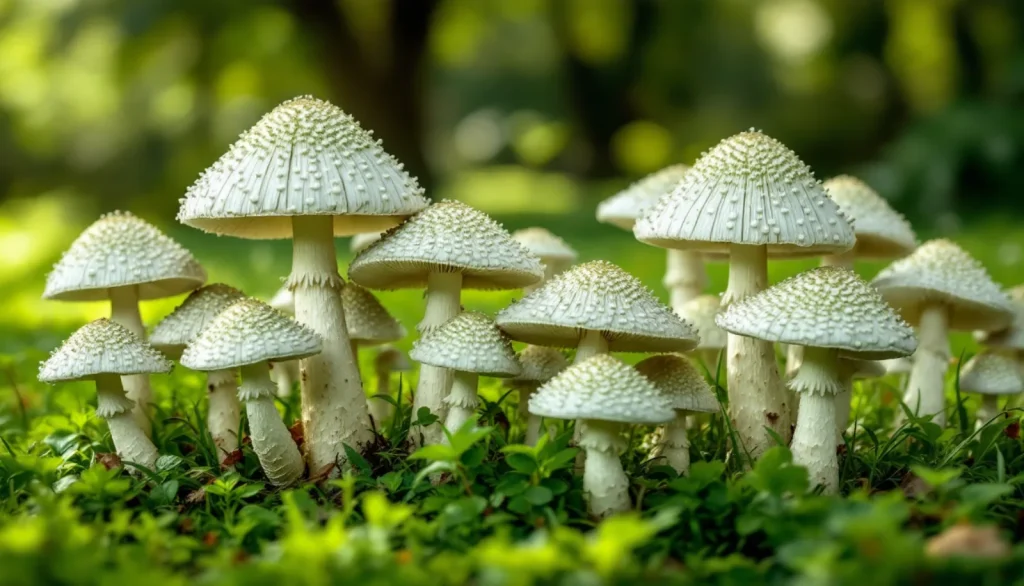
The poisonous lawn mushroom types most likely to show up in a US yard are not the rare, lethal woodland species you read about first. The single most common cause of mushroom poisoning in the United States is the green-spored parasol (Chlorophyllum molybdites), a large, white, scaly cap that grows right in turf and fairy rings, according to the University of Florida IFAS Extension. The truly deadly ones (Amanita and Galerina species that carry amatoxins) are less common in mowed lawns but far more dangerous. This guide tells you which lawn mushrooms to treat as toxic on sight, what symptoms appear and how fast, and exactly what to do if a child or pet eats one. It does not tell you any lawn mushroom is safe to eat. Treat every wild mushroom in your yard as toxic unless a trained mycologist says otherwise.
The short version
- The green-spored parasol (Chlorophyllum molybdites) is the most reported cause of mushroom poisoning in the US, per UF/IFAS publication PP324. It grows in lawns and fairy rings and has a rare green spore print.
- The deadliest yard mushrooms are amatoxin carriers: death cap (Amanita phalloides), destroying angel (Amanita bisporigera, A. ocreata), and deadly galerina (Galerina marginata). Symptoms can take 6 to 12 hours, by which point liver damage has started, per the North American Mycological Association (NAMA).
- Reliable home ID is not possible. Cap shape, color, and “looks safe” mean nothing. Even experts use spore prints and microscopy.
- If a child eats a wild mushroom, call US Poison Control at 1-800-222-1222. For pets, call ASPCA Animal Poison Control at 888-426-4435 or Pet Poison Helpline at 855-764-7661.
- Remove mushrooms with gloves, bag and trash them (do not compost, do not mow them), and walk the yard daily during wet spells before kids or dogs go out.
Which poisonous lawn mushroom types actually grow in yards
The poisonous lawn mushroom types you are most likely to find fall into three groups: the very common gastrointestinal irritants, the rare but lethal amatoxin mushrooms, and the muscarine and muscimol neurotoxic group. Most US yard poisonings come from the first group, but the deadly second group is the reason no wild lawn mushroom should ever be eaten. The table below maps the named species, the toxin, how fast symptoms start, and the danger level.
| Common name (species) | Toxin group | Where it grows | Symptom onset | Danger level |
|---|---|---|---|---|
| Green-spored parasol / false parasol (Chlorophyllum molybdites) | Unknown GI toxin | Lawns, grassy areas, fairy rings | 1 to 3 hours (UF/IFAS PP324) | Severe vomiting and diarrhea; rarely fatal but the top US poisoning cause |
| Death cap (Amanita phalloides) | Amatoxin | Near oaks and other hardwoods, lawn edges | 6 to 12+ hours (NAMA) | Often fatal; causes liver and kidney failure |
| Destroying angel (Amanita bisporigera, A. ocreata) | Amatoxin | Lawns near trees, all white | 6 to 12+ hours (NAMA) | Often fatal; looks plain white and harmless |
| Deadly galerina (Galerina marginata) | Amatoxin | On wood, mulch, decaying stumps | 6 to 12+ hours (NAMA) | Often fatal; small and brown, easy to overlook |
| Fly agaric / panther cap (Amanita muscaria, A. pantherina) | Ibotenic acid, muscimol | Near trees, lawns, mulch | A few hours (NAMA) | Neurologic: staggering, tremors, seizures, sedation |
| Fiber caps and funnel caps (Inocybe and Clitocybe species) | Muscarine | Lawns, grassy areas, beds | Within hours (NAMA) | Drooling, tearing, slow heart rate; can be lethal to dogs |
| Earthball / pigskin puffball (Scleroderma species) | Unknown toxin | Sandy soil, lawns, paths | A few hours | Lethal to dogs and pigs per NAMA; severe GI in people |
Two patterns matter here. First, the mushroom that poisons the most people and pets (the green-spored parasol) is not the deadliest. Second, the deadliest ones (amatoxin Amanitas and Galerina) hide their danger behind a delay: vomiting may not start for 6 to 12 hours, and by then the amatoxin has already begun damaging the liver, per NAMA. A dog or child who seems fine at hour four is not in the clear.
What does the most common toxic lawn mushroom look like
The green-spored parasol (Chlorophyllum molybdites) has a white to tan cap with brown scales, ranging from 1.8 to 11.8 inches across, on a stalk with a ring, and it often grows in fairy rings or arcs on open turf, according to UF/IFAS publication PP324. Its defining feature is a green spore print, which is rare among mushrooms. Young gills are white, then grey, then turn green to greenish brown as spores mature.
That green spore tell is the one identification cue worth knowing, and it is also a warning, not a green light to eat anything. People poison themselves by mistaking this mushroom for the edible parasol (Macrolepiota procera) or shaggy parasol, which is exactly why it tops US poisoning reports. Do not rely on cap shape or scales. Two species can look nearly identical to the eye, which is the whole problem with lawn mushroom identification.
The deadly Amanitas are even harder. The destroying angel (Amanita bisporigera) is plain white and looks like an ordinary button mushroom. It carries the same amatoxins as the death cap. There is no color, smell, or texture that reliably separates a lethal Amanita from a harmless lawn mushroom by sight, which is why poison centers and NAMA both say identification belongs to trained mycologists using spore prints and microscopy.
How fast do symptoms appear and what do they look like
Mushroom poisoning produces four broad symptom categories: gastrointestinal upset, liver damage, kidney damage, and neurologic signs. Onset ranges from 15 minutes to 12 hours for most toxins, but nephrotoxic (kidney) mushrooms can delay symptoms 3 to 8 days, per veterinary toxicology guidance. Speed of onset is a clue, but a short delay does not mean a mushroom is harmless.
- Gastrointestinal (most common): vomiting and diarrhea starting 15 minutes to 3 hours after ingestion. This is the green-spored parasol pattern (1 to 3 hours per UF/IFAS).
- Neurologic (muscarine, muscimol): drooling, tearing, disorientation, staggering, tremors, and seizures within a few hours, per NAMA.
- Amatoxin (death cap, destroying angel, galerina): a deceptive 6 to 12+ hour delay, then severe GI distress, then liver and kidney failure, per NAMA.
The dangerous trap is the amatoxin delay. A pet or child can vomit, appear to recover, then crash into liver failure a day later. This is why poison centers treat any wild mushroom ingestion as an emergency until the species is ruled out, not after symptoms pass.
What to do if a child eats a lawn mushroom
Call US Poison Control at 1-800-222-1222 immediately, even if your child seems fine. The line is free, staffed 24/7, and confidential. Do not wait for symptoms, because amatoxin poisoning hides for hours. Johns Hopkins Medicine notes toddlers go through a grazing phase where anything within reach goes in the mouth, which makes lawn mushrooms a real pediatric hazard.
- Remove any mushroom pieces from the child’s mouth and do not induce vomiting unless poison control tells you to.
- Call 1-800-222-1222 (US Poison Control) right away, or go to the nearest emergency room.
- Dig up a few intact mushrooms, including the base and any roots, for identification.
- Refrigerate the sample in a paper bag marked “poison.” Do not seal it in plastic, which speeds decay, per NAMA.
- Note the time of ingestion and when any symptoms (cramps, vomiting, watery or bloody diarrhea) begin.
What to do if a dog or cat eats a lawn mushroom
Treat any wild mushroom your pet eats as a medical emergency unless you can positively rule it out. Call ASPCA Animal Poison Control at 888-426-4435 or the Pet Poison Helpline at 855-764-7661, both 24/7. Time matters: if less than two hours have passed, your veterinarian may induce vomiting or give activated charcoal to bind the toxin before it absorbs.
- Stop your pet from eating more and check the mouth for fragments.
- Call your vet, an emergency animal hospital, or a pet poison line (888-426-4435 ASPCA, or 855-764-7661 Pet Poison Helpline). Consultation fees apply, often $65 to $95.
- Collect one or two whole mushrooms in a paper bag, or take clear photos of the cap top, gills, and stem base.
- Refrigerate the sample in paper, not plastic, so a mycologist can identify it if needed (NAMA guidance).
- Watch for vomiting, diarrhea, drooling, weakness, staggering, tremors, or yellowing gums, and report onset times to the vet.
One species note for dog owners: NAMA reports that earthballs (Scleroderma species) are lethal to dogs and pigs even though they are far less dangerous to humans. A toxin that is mild for a person can still kill a dog, so a calm human reaction is not a reason to wait.
Why mushrooms grow in your lawn and how to remove them safely
Lawn mushrooms appear when three conditions line up: moisture, organic matter (thatch, buried wood, old roots, mulch), and shade or cloudy weather. They are the fruiting body of fungi already living in the soil and breaking down organic material, so they show up after rain or overwatering and tend to cluster in poorly draining, shaded spots. The mushroom is a symptom of soil conditions, not a disease attacking your grass.
Removal is about hazard control, not eradication. Pulling caps does not kill the underground fungus, but it does keep toxic mushrooms away from kids and pets. During wet stretches, walk the yard each morning before letting anyone out, the same daily check the ASPCA recommends.
- Wear gloves. Pick mushrooms by hand as soon as you see them, including small buttons.
- Bag them in a sealed bag and put them in the trash. Do not compost them and do not mow over them, which scatters spores.
- Reduce the conditions: water early in the morning, apply no more than 1 inch of water per week, and let the lawn dry before dark.
- Improve drainage by aerating compacted soil, and remove buried wood, old stumps, and decaying roots where practical.
- Reduce shade by thinning overgrown shrubs where it fits your landscape plan.
Skip the home “cures.” Baking soda, vinegar, and dish soap may knock back visible caps briefly but do not remove the underlying fungus and can disrupt soil balance. Fungicides labeled for turf rarely target the soil fungi that produce mushrooms. If mushrooms keep returning in the same band, that fairy ring is feeding on buried organic matter and will fade only as that material decays. For broader turf-health context, see our guide on diagnosing brown patches and lawn fungus problems, and our year-round grass maintenance schedule for watering and aeration timing that discourages fungal flushes.
How to keep kids and pets safe around lawn mushrooms
The safest rule is the simplest: treat every wild lawn mushroom as poisonous and keep children and pets away from all of them. Identification by sight is unreliable even for the common species, and the deadly ones look ordinary. Build a routine around daily checks during wet weather rather than trying to tell safe from unsafe.
- Teach children to never touch or eat any mushroom they find outside, in any yard or park.
- Walk and clear the yard each morning during rainy or humid stretches, before pets or kids go out.
- Supervise dogs that graze or chew, and leash-walk past mushrooms on trails.
- Keep both numbers saved: Poison Control 1-800-222-1222 and ASPCA 888-426-4435.
- If you hire a crew, ask whether they remove mushrooms as part of service. Our checklist on how to vet a reputable landscaper covers what to confirm before you sign.
For homeowners reducing turf to cut both water use and the moist conditions fungi love, our guide to drought-tolerant lawn alternatives covers low-water designs that give mushrooms less to work with.
Last reviewed: June 2026
HMNDP Editorial Team, reviewed by HMNDP turf and horticulture editors.
Frequently asked questions
Are lawn mushrooms poisonous to dogs?
Some are, and a few can kill dogs fast. Treat any wild lawn mushroom your dog eats as a medical emergency unless you can rule it out. Earthballs (Scleroderma) are lethal to dogs even though they are milder for people, per NAMA. Call ASPCA Animal Poison Control at 888-426-4435 or the Pet Poison Helpline at 855-764-7661 right away.
What is the most common poisonous mushroom in lawns?
The green-spored parasol, Chlorophyllum molybdites, is the most reported cause of mushroom poisoning in the United States, according to UF/IFAS publication PP324. It grows in lawns and fairy rings, has a white scaly cap, and produces a rare green spore print. It causes severe vomiting and diarrhea 1 to 3 hours after ingestion.
How do you identify a poisonous lawn mushroom?
You cannot reliably identify one by sight, which is why poison centers say leave it to trained mycologists. Deadly Amanitas look like plain white button mushrooms. The one useful clue is the green spore print of the green-spored parasol. Cap shape, color, and a harmless look mean nothing. Treat every wild lawn mushroom as toxic.
What should I do if my child eats a wild mushroom?
Call US Poison Control at 1-800-222-1222 immediately, even if your child seems fine, because amatoxin poisoning can hide for 6 to 12 hours. Remove any pieces from the mouth, do not induce vomiting unless told to, and dig up a few intact mushrooms. Refrigerate the sample in a paper bag marked poison, per NAMA guidance.
How fast do mushroom poisoning symptoms appear?
It varies by toxin. Most gastrointestinal mushrooms cause vomiting and diarrhea within 15 minutes to 3 hours. Neurologic mushrooms act within a few hours. The deadly amatoxin mushrooms (death cap, destroying angel, galerina) hide symptoms for 6 to 12 or more hours, per NAMA, and kidney-toxic species can delay signs 3 to 8 days. A short delay does not mean safety.
Are mushrooms in my yard dangerous for kids?
Yes, assume so. Toddlers go through a grazing phase and put things in their mouths, which makes lawn mushrooms a real hazard, per Johns Hopkins Medicine. Teach kids to never touch or eat any mushroom outside, clear the yard daily during wet weather, and keep Poison Control (1-800-222-1222) saved. Never let a child eat a wild mushroom.
How do I get rid of mushrooms in my lawn safely?
Wear gloves, pick mushrooms as soon as they appear, bag them sealed, and put them in the trash. Do not compost them and do not mow over them, which scatters spores. Reduce the conditions by watering in the morning, applying under 1 inch per week, improving drainage, and removing buried wood. Removal controls the hazard but will not kill the soil fungus.
Can you tell if a lawn mushroom is safe to eat?
No. This guide never recommends eating any wild lawn mushroom. Edible and deadly species can look nearly identical, which is exactly how the green-spored parasol becomes the top US poisoning cause. Even experts use spore prints and microscopy. If you want a positive identification, contact a trained mycologist or your regional mycological society, not a phone app.