
Honeysuckle Flowers: Native vs Invasive and Care
Honeysuckle flowers are the tubular, sweetly scented blooms of Lonicera, a genus of about 158 species in the family Caprifoliaceae native to northern latitudes across North America, Eurasia, and North Africa (source: Wikipedia, Lonicera). They open in shades of cream, yellow, orange, pink, and scarlet, mostly from late spring through summer, and the nectar at the base of each flower is edible. The catch that most plant-tag copy skips: several of the showiest, most fragrant honeysuckles are invasive across much of the United States, while the best garden choice for most US yards is a native trumpet honeysuckle that looks nearly identical at a glance. This guide tells you how to tell them apart and what to plant instead.
What honeysuckle flowers look like and when they bloom
Honeysuckle flowers are narrow, trumpet-shaped tubes borne in clusters, usually in pairs, in cream, yellow, orange, pink, or red. Most varieties bloom from May through mid-summer, and several rebloom into fall. The flowers are bilaterally symmetrical and produce sweet nectar, which is where the plant gets its name (source: Wikipedia, Lonicera).
Color often shifts as the flower ages. Common honeysuckle (Lonicera periclymenum) opens cream and deepens to yellow-orange with a red or pink flush. Japanese honeysuckle (Lonicera japonica) opens white and fades to pale yellow, which is why an older Chinese name for it translates to “gold and silver flower.”
Fragrance is not uniform. The Asian climbing and shrub species are heavily perfumed, while several North American natives carry little or no scent. That difference is one of the first clues to what you actually have growing.
Vine honeysuckle vs shrub honeysuckle
Honeysuckle splits into two growth forms: twining vines and woody shrubs. Vines climb 6 to 30 feet on a support and carry the familiar trumpet flowers that draw hummingbirds. Shrubs grow as multi-stem bushes 6 to 15 feet tall, bloom earlier, and include both useful garden plants and the worst invasives. Knowing the form narrows identification fast.
Vining types are what most people picture: trumpet or coral honeysuckle (Lonicera sempervirens), Japanese honeysuckle (Lonicera japonica), and hybrids like Goldflame (Lonicera x heckrottii). Shrub types include winter honeysuckle (Lonicera fragrantissima), prized for fragrant late-winter bloom, and the invasive bush honeysuckles covered below.
How to tell native honeysuckle from invasive honeysuckle
The fastest reliable test is to snap a woody stem and look at the pith inside. Native honeysuckles have a solid white pith. All the invasive shrub honeysuckles have a hollow, brown pith (source: Penn State Extension, Adams County Master Gardeners). Pair that with growth form, leaf-out timing, and berry color and you can identify a plant in under a minute.
Three other field clues confirm it. Invasive shrub honeysuckles leaf out one to two weeks before native trees and shrubs and hold their leaves later into fall, so an early-green or late-green understory plant in the woods is a red flag (source: University of New Hampshire Extension). Invasive shrub leaves have smooth edges, while native bush honeysuckle (Diervilla lonicera) has toothed leaf margins. And the strong sweet perfume people associate with honeysuckle usually points to an Asian species, since most North American natives have little scent.
| Trait | Native (plant these) | Invasive (remove these) |
|---|---|---|
| Common species | Trumpet/coral honeysuckle (L. sempervirens), orange honeysuckle (L. ciliosa), American fly (L. canadensis) | Japanese (L. japonica), Amur (L. maackii), Morrow’s (L. morrowii), Tatarian (L. tatarica), Bell’s (L. x bella) |
| Stem pith | Solid, white | Hollow, brown |
| Growth form | Twining vine or low shrub, restrained | Aggressive vine to 80 to 120 ft, or dense thicket-forming shrub |
| Flower scent | Little to none | Strong, sweet |
| Berry color | Red (often paired/fused) | Red, orange, or black, abundant |
| Leaf-out timing | With native trees | 1 to 2 weeks earlier, drops later |
Japanese honeysuckle is listed as a noxious weed in 46 states and is prohibited from sale in Connecticut, Illinois, Massachusetts, and Vermont, and banned in Indiana and New Hampshire (source: Wikipedia, Lonicera japonica). It can climb 80 to 120 feet and smothers native plants, which is why it is regulated where it is. Check your own state’s invasive species list before buying any Lonicera, because what is sold at a garden center is not always legal or wise to plant. Our guide to lawn and landscape alternatives takes the same plant-native-first approach for turf.
Best non-invasive honeysuckle to plant
For most US gardens, native trumpet honeysuckle (Lonicera sempervirens) is the safe, hummingbird-friendly choice. It twines 6 to 20 feet, blooms from early summer into fall, is hardy in USDA zones 4 to 9, and is not considered invasive (source: Garden Design; Monrovia). Named cultivars give you predictable size and color without the ecological risk of the Asian species.
| Cultivar | Flower color | Mature size | Bloom window | USDA zones |
|---|---|---|---|---|
| ‘Major Wheeler’ (L. sempervirens) | Ruby red | 6 to 8 ft tall and wide | Summer into fall | 4 to 8 |
| ‘Dropmore Scarlet’ (L. x brownii) | Scarlet red | 10 to 20 ft tall, 5 to 6 ft wide | June to first frost | 4 to 9 |
| ‘John Clayton’ (L. sempervirens) | Golden yellow | 6 to 12 ft tall, 3 to 5 ft wide | June through November | 4 to 9 |
| ‘Goldflame’ (L. x heckrottii) | Hot pink with yellow throat | 10 to 15 ft | Late spring to mid-summer | 4 to 9 |
If you want fragrance specifically, ‘Scentsation’ (Lonicera periclymenum) and the shrub winter honeysuckle (Lonicera fragrantissima) are scented options, though periclymenum is European and fragrantissima can self-seed, so site them where you can manage spread. For a strictly native pick that still smells sweet, there is no perfect match, which is the honest trade-off most guides will not state.
How to grow and care for honeysuckle
Honeysuckle grows best in full sun to partial shade, in moist, well-drained soil, and is not fussy about soil pH (source: Garden Design). The old rule is “head in the sun, feet in the shade”: give the vine sunlight to bloom heavily while keeping its roots cool and shaded. More sun means more flowers. Water about one inch per week until established.
- Plant in spring or fall in a spot with at least a half day of sun, against a trellis, fence, or arbor for vining types.
- Set the root ball level with the soil and mulch the root zone to keep roots cool and conserve moisture.
- Water roughly one inch per week the first season; mature plants tolerate short dry spells but bloom best in evenly moist soil (source: Monrovia).
- Feed once in early spring with a balanced slow-release fertilizer or topdress with compost; avoid heavy nitrogen, which pushes leaves over flowers.
- Prune after the main flush of bloom. Cut spent shoots back to short spurs of 2 to 3 buds to drive next year’s flowering. Overgrown plants can be cut back hard in late winter.
For light feeding, match the rate to the plant, not the lawn. Our NPK fertilizer guide explains how to read the numbers so you do not over-apply nitrogen, and the fertilizer selection guide covers slow-release options that suit flowering vines.
Common honeysuckle pests and problems
The two most common problems are aphids and powdery mildew. Aphids cluster on new growth and curl the leaves; treat with insecticidal soap. Powdery mildew shows as a white film in humid, crowded conditions and is best prevented with good air circulation and full sun (source: Garden Design; Monrovia). Both are manageable and rarely kill an established plant.
Spider mites can appear in hot, dry spells and also respond to insecticidal soap. Beyond pests, the biggest “problem” with honeysuckle is planting the wrong species: an unchecked Japanese or Amur honeysuckle becomes a maintenance burden that crowds out everything else, which loops back to choosing a native cultivar from the start.
Are honeysuckle flowers edible, and do they attract hummingbirds?
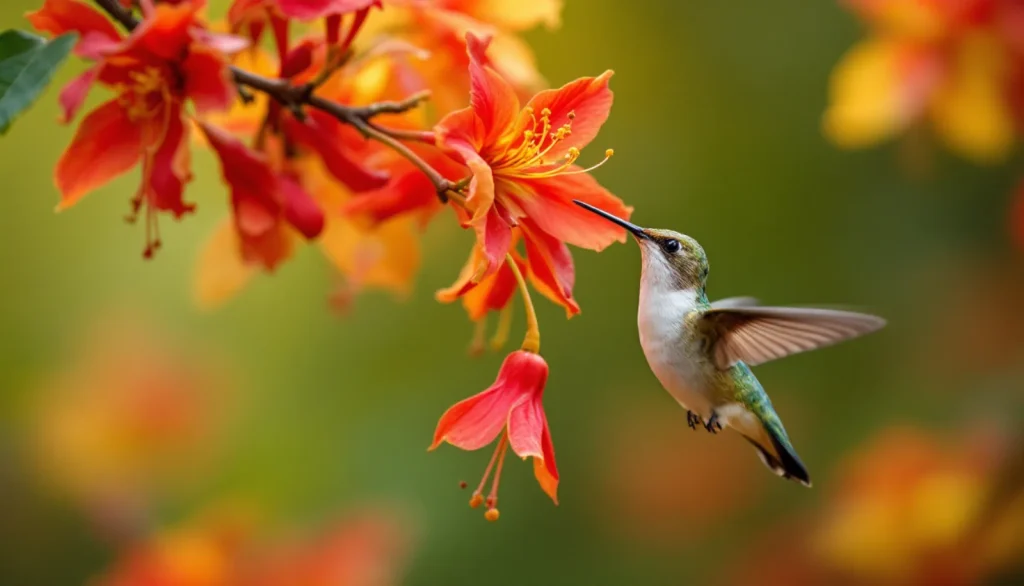
The nectar in honeysuckle flowers is edible and sweet, and the flowers are sometimes used as a garnish or steeped, but the berries of most species are mildly poisonous and should not be eaten (source: Wikipedia, Lonicera). Hummingbirds are strongly drawn to the trumpet flowers, especially native Lonicera sempervirens and Lonicera ciliosa, along with bees and butterflies.
A safety note: edible nectar does not mean edible berries. In most Lonicera species the fruit is mildly toxic, with only a few (notably Lonicera caerulea, the honeyberry) grown for edible fruit. Keep children from eating wild honeysuckle berries. If you want a pollinator and hummingbird magnet, native trumpet honeysuckle delivers the wildlife value without the invasive risk of the Asian climbers.
For more on building a low-input, wildlife-friendly yard, see our lawn and landscape learning hub and the broader HMNDP guides library.
Last reviewed: June 2026
HMNDP Editorial Team, reviewed by HMNDP turf and horticulture editors.
Frequently asked questions
Is honeysuckle invasive?
Some honeysuckles are invasive, not all. Japanese honeysuckle (Lonicera japonica) is a noxious weed in 46 states and is banned or prohibited from sale in Connecticut, Illinois, Massachusetts, Vermont, Indiana, and New Hampshire. Amur, Morrow’s, Tatarian, and Bell’s are invasive shrub types. Native trumpet honeysuckle (Lonicera sempervirens) is not considered invasive and is the safer garden pick.
How can I tell native honeysuckle from invasive honeysuckle?
Snap a woody stem and look at the pith. Native honeysuckles have a solid white pith; all invasive shrub honeysuckles have a hollow brown pith. Confirm with three clues: invasives leaf out one to two weeks earlier than native trees, invasive shrub leaves have smooth edges, and a strong sweet perfume usually means an Asian, often invasive, species.
Are honeysuckle flowers edible?
The nectar in honeysuckle flowers is edible and sweet, and the flowers are sometimes used as a garnish or steeped in tea. The berries are a different story: in most Lonicera species the fruit is mildly poisonous and should not be eaten. Only a few species, notably Lonicera caerulea (honeyberry), are grown for edible fruit. Keep children away from wild berries.
When does honeysuckle bloom?
Most honeysuckle varieties bloom from May through mid-summer, and several reblooming cultivars flower into fall. Trumpet honeysuckle ‘Dropmore Scarlet’ blooms June until first frost, and ‘John Clayton’ flowers June through November. Winter honeysuckle is the exception, opening fragrant flowers in late winter to early spring. More sun in the planting spot produces more flowers across the season.
Do honeysuckle flowers attract hummingbirds?
Yes. Hummingbirds are strongly drawn to honeysuckle’s tubular flowers, especially the native species Lonicera sempervirens (trumpet honeysuckle) and Lonicera ciliosa (orange honeysuckle). Bees and butterflies visit them too. Planting a native trumpet honeysuckle cultivar like ‘Major Wheeler’ gives you the hummingbird and pollinator value without the spread risk of invasive Asian honeysuckles.
What is the best non-invasive honeysuckle to plant?
Native trumpet honeysuckle (Lonicera sempervirens) is the best choice for most US gardens. It twines 6 to 20 feet, blooms from early summer into fall, and is hardy in USDA zones 4 to 9. Reliable cultivars include ‘Major Wheeler’ (ruby red), ‘John Clayton’ (golden yellow), and ‘Dropmore Scarlet’. All attract hummingbirds and avoid the invasive problems of Japanese honeysuckle.
How do you grow and care for honeysuckle?
Grow honeysuckle in full sun to partial shade in moist, well-drained soil; it is not fussy about pH. Follow the rule head in the sun, feet in the shade for vining types. Water about one inch per week until established, feed once in early spring with slow-release fertilizer, mulch the roots, and prune after the main bloom to short spurs of 2 to 3 buds.
What are common honeysuckle pests?
Aphids and powdery mildew are the two most common problems. Aphids cluster on new growth and curl leaves; treat them with insecticidal soap. Powdery mildew appears as a white film in humid, crowded conditions and is prevented with good air circulation and full sun. Spider mites can appear in hot dry spells and also respond to insecticidal soap. None usually kills an established plant.