
Hydrangea Flowers: Types, Color Control, and Bloom Care
Hydrangea flowers come from a genus of woody shrubs and climbers with 98 accepted species (per Wikipedia’s botanical summary), but US gardeners deal with about five: bigleaf (Hydrangea macrophylla), panicle (H. paniculata), smooth (H. arborescens), oakleaf (H. quercifolia), and climbing (H. anomala subsp. petiolaris). The single decision that controls whether yours bloom is whether the type flowers on old wood or new wood, because that one fact sets your pruning window and your odds after a cold winter. This guide gives you a type-by-type comparison table, the real soil chemistry behind blue versus pink, and why Western alkaline soils fight you on blue no matter how much aluminum sulfate you add.
What are hydrangea flowers, exactly?
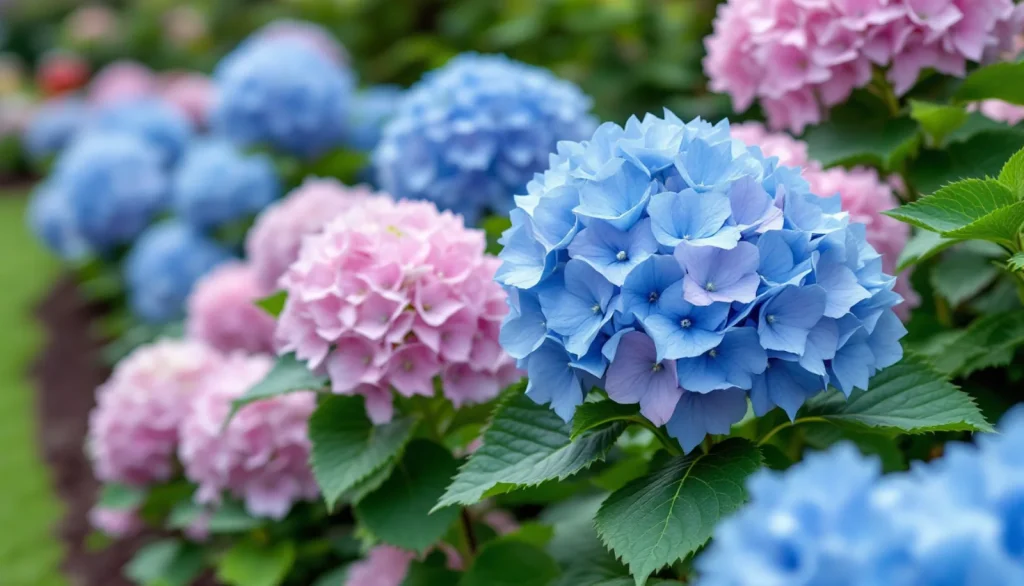
A hydrangea “flower” is a cluster called a corymb, not a single bloom. It shows up in three forms: mophead (large round pom-pom heads), lacecap (a flat center of tiny fertile flowers ringed by showy sterile ones), and panicle (cone-shaped clusters). The showy parts are sepals, not petals, which is why hydrangea color holds for weeks and dries well.
Most garden hydrangeas trace to four species plus one climber. Bigleaf and mountain types give you mopheads and lacecaps. Panicle and oakleaf give you cones. Smooth hydrangeas like ‘Annabelle’ give you big white mopheads on the current year’s growth. Native ranges run across Asia and the Americas, with the most species diversity in China, Korea, and Japan per Wikipedia.
The hydrangea types compared (zone, bloom wood, color)
Five types cover almost every US yard, and they split cleanly on three traits: cold hardiness, whether they bloom on old or new wood, and whether the flower color responds to soil pH. Panicle is the most cold-hardy (USDA zone 3) and blooms on new wood, so it is the most forgiving. Bigleaf is the showiest and the only common type whose color shifts blue to pink, but it blooms on old wood and is the one most likely to skip a year after a hard freeze.
| Type (species) | USDA zone | Blooms on | Flower form | Color changes with pH? |
|---|---|---|---|---|
| Bigleaf (H. macrophylla) | 6 to 9 | Old wood (rebloomers on both) | Mophead, lacecap | Yes (blue to pink) |
| Panicle (H. paniculata) | 3 to 8 | New wood | Cone (panicle) | No (white aging to pink) |
| Smooth (H. arborescens) | 3 to 9 | New wood | Mophead | No (white) |
| Oakleaf (H. quercifolia) | 5 to 9 | Old wood | Cone, oak-shaped leaves | No (white, red fall foliage) |
| Climbing (H. anomala petiolaris) | 4 to 8 | Old wood | Lacecap | No (white) |
Source for zones and bloom-wood splits: Proven Winners hydrangea guide and University of Connecticut Home Garden Extension. Reblooming bigleaf cultivars like ‘Endless Summer’ and the ‘Let’s Dance’ series flower on both old and new wood, which is why they often bloom even after a winter that kills the old-wood buds.
When do hydrangea flowers bloom?
Bigleaf hydrangeas bloom late spring into early fall, oakleaf runs early to late summer, and panicle types open mid to late summer and hold cones into fall as they age from white to pink. Bloom timing depends on type and region, so a zone 5 garden often runs two to three weeks behind a zone 8 one for the same plant.
The reason a hydrangea fails to bloom is almost always pruning at the wrong time, not weather alone. Old-wood types (bigleaf, oakleaf, climbing) set next year’s buds in late summer, so cutting them back in fall or spring removes the flowers for that year. New-wood types (panicle, smooth) form buds on current-season growth, so they bloom even after a hard cutback.
Why are my hydrangea flowers blue or pink? The soil pH and aluminum rule
Only bigleaf (and closely related mountain) hydrangeas change color, and the driver is not pH directly but how much aluminum the plant can pull from the soil. Acidic soil frees aluminum and gives blue. Alkaline soil locks aluminum up and gives pink. White, panicle, smooth, and oakleaf hydrangeas do not respond to pH at all, so no amount of soil work turns an ‘Annabelle’ blue.
The pH targets are specific. For blue, drive soil pH to roughly 4.0 to 5.5 using aluminum sulfate or elemental sulfur, which both lowers pH and supplies aluminum. For pink, raise pH to about 6.0 to 7.0 with garden lime so aluminum stays bound. Soil with a pH of 5.5 or lower trends blue, 6.5 or higher trends pink, and the 5.5 to 6.5 band gives muddy purples (Wikipedia, Proven Winners, University of Connecticut Extension).
Two practical limits matter. Amendments act on developing buds, not on flowers already open, and full color shifts can take one to two seasons. If your soil and water are naturally alkaline, common across much of the arid West where soil pH routinely runs 7.8 to 8.5, holding a true blue is a constant fight because irrigation water keeps re-raising pH and re-binding aluminum. HMNDP sees the same alkaline-soil chemistry drive iron chlorosis in Western turf, and the fix logic is identical: acidify deliberately and re-test, or grow blue hydrangeas in containers with controlled acidic mix instead. Our NPK and soil fertilizer guide covers reading a soil test before you amend.
How to grow hydrangea flowers
Hydrangeas want morning sun with afternoon shade in hot regions, consistently moist well-drained soil, and 1 inch of water per week (2 inches in hot, dry spells) per Proven Winners. Most bloom best with 4 to 6 hours of sun; deep shade cuts flowering hard. Plant in fall before first frost or spring after last frost, set shallow because roots are shallow, and mulch 1 to 2 inches.
- Dig a hole 2 to 3 times wider than the root ball but no deeper; hydrangeas have shallow roots and rot if planted too deep.
- Set the crown level with the soil surface, backfill, and water in to settle air pockets.
- Mulch 1 to 2 inches with compost or pine straw, kept off the stems, to hold moisture.
- Water to 1 inch per week, 2 inches in heat; wilting at midday that recovers by evening is normal, not a watering trigger.
- Prune only at the right time for your type (see the table): new-wood types in late winter, old-wood types right after they finish blooming.
For uneven watering across a bed, a low-pressure drip line beats overhead spray because hydrangea blooms flop when wet. See our walkthrough on how to install drip irrigation for foundation beds. If leaves yellow between green veins, that is iron chlorosis from high pH, the same problem covered in our lawn diagnosis guide, and it is corrected with chelated iron plus soil acidification, not more nitrogen.
Do deer eat hydrangea flowers?
Yes. Deer browse hydrangea buds, flowers, and tender new growth, and bigleaf types are among the more palatable shrubs in a yard. No hydrangea is reliably deer-proof. Protection comes from physical barriers, repellents rotated so deer do not habituate, and less-palatable companion plants nearby.
Oakleaf and panicle types tend to be browsed less than bigleaf, partly because of tougher foliage, but “less” is not “never” in high-pressure areas. If deer pressure is heavy, fencing the bed or caging young plants through their first two seasons is the only consistent answer.
When to call a landscaper vs DIY
Planting and routine care are firmly DIY. Bring in a pro when you are placing a hedge of 5 or more shrubs, correcting a chronic non-bloom problem tied to soil chemistry, or matching hydrangeas to a wet or alkaline site that needs grading or amendment. A good landscaper reads a soil test and picks the type to the site instead of fighting the site.
Expect a professional to identify your existing type by leaf and bloom form before pruning anything, because cutting an old-wood type at the wrong time is the most common way hired help kills a season of flowers. If you are vetting help, use our checklist for finding a reputable landscaper and confirm they can name your hydrangea type and its bloom wood on the first visit.
Last reviewed: June 2026
HMNDP Editorial Team, reviewed by HMNDP turf and horticulture editors.
Frequently asked questions
Why are my hydrangea flowers blue or pink?
Only bigleaf (and mountain) hydrangeas change color, and the driver is aluminum, not pH alone. Acidic soil near pH 4.0 to 5.5 frees aluminum and gives blue; alkaline soil at pH 6.0 to 7.0 binds aluminum and gives pink. The 5.5 to 6.5 band gives purple. White, panicle, and smooth types never change color.
Why is my hydrangea not blooming?
The most common cause is pruning at the wrong time. Old-wood types like bigleaf, oakleaf, and climbing set buds in late summer, so fall or spring cutbacks remove the flowers. New-wood types like panicle and smooth bloom on current-season growth and tolerate hard pruning. A hard winter freeze can also kill old-wood buds and skip a year.
When do hydrangea flowers bloom?
Bigleaf hydrangeas bloom late spring into early fall, oakleaf runs early to late summer, and panicle types open mid to late summer and hold cones into fall as they fade from white to pink. Exact timing shifts by type and region, so a zone 5 garden often runs two to three weeks behind a zone 8 one.
How do you grow hydrangea flowers?
Give hydrangeas morning sun with afternoon shade in hot regions, moist well-drained soil, and 1 inch of water weekly (2 inches in heat). Plant shallow in fall before frost or spring after frost, in a hole 2 to 3 times wider than the root ball, then mulch 1 to 2 inches. Most need 4 to 6 hours of sun to bloom well.
Do deer eat hydrangeas?
Yes. Deer browse hydrangea buds, flowers, and new growth, and bigleaf types are among the more palatable yard shrubs. No hydrangea is deer-proof. Oakleaf and panicle types are browsed somewhat less due to tougher foliage. In high-pressure areas, fencing the bed or caging young plants is the only reliable protection.
How do I turn my hydrangeas blue?
Lower soil pH to roughly 4.0 to 5.5 with aluminum sulfate or elemental sulfur, which acidifies the soil and supplies aluminum. Amendments act on developing buds, not open flowers, and full color shifts take one to two seasons. In alkaline Western soils where pH runs 7.8 to 8.5, growing blue hydrangeas in containers with acidic mix is more reliable.
What is the difference between hydrangeas that bloom on old wood and new wood?
Old-wood types (bigleaf, oakleaf, climbing) form flower buds the prior summer, so prune them only right after flowering. New-wood types (panicle, smooth) form buds on current-season growth and can be cut hard in late winter without losing blooms. Rebloomers like ‘Endless Summer’ flower on both, so they bloom even after a cold winter.
How many types of hydrangeas are there?
The genus has 98 accepted species, but US gardeners mainly grow five: bigleaf (Hydrangea macrophylla), panicle (H. paniculata), smooth (H. arborescens), oakleaf (H. quercifolia), and climbing (H. anomala subsp. petiolaris). They differ in cold hardiness (zones 3 to 9), bloom wood, flower form, and whether color responds to soil pH.