
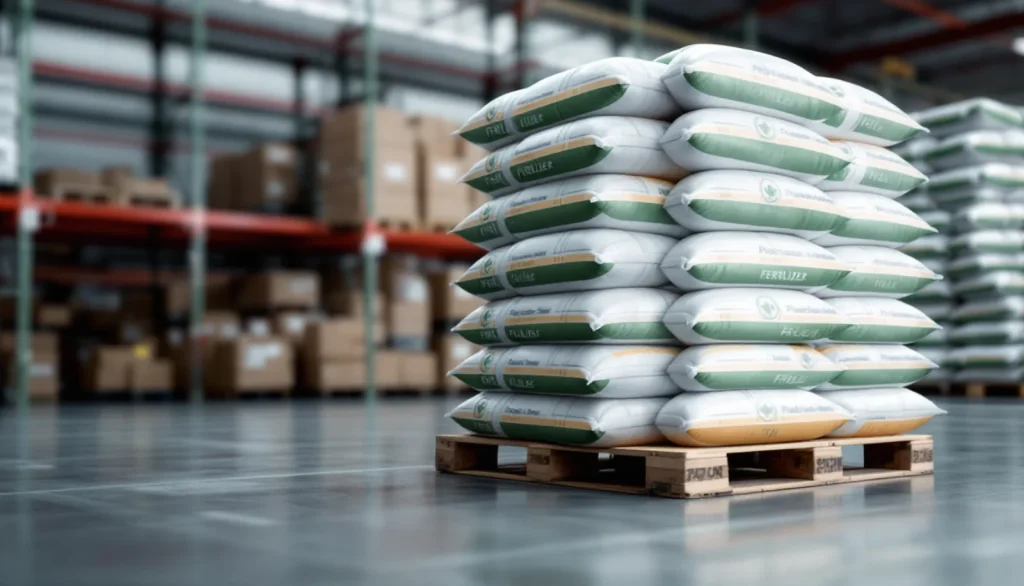
The gap between consumer-tier and professional lawn fertilizer in 2026 is wider than most homeowners realize. Pro-grade bags from SiteOne, Lesco, Yard Mastery, and Andersons carry 40 to 75 percent slow-release nitrogen, tighter granule sizing, custom blends matched to local soil chemistry, and pallet pricing that runs 30 to 50 percent below big-box on a per-pound-of-nitrogen basis. This is the guide the contractors in your neighborhood actually use, with the brands, the NPKs, the prices, and the supplier accounts.
The short version
- Pro-tier bags average 40 to 75 percent slow-release nitrogen; big-box bags average 10 to 25 percent.
- SiteOne (1,600+ branches), Lesco (Home Depot pro counters), Ewing Outdoor Supply, John Deere Landscapes are the four major distribution channels.
- 2026 contractor pricing: Lesco 24-0-11 with 65 percent PCSC runs $42 to $58 per 50 lb bag. Equivalent big-box runs $85 to $100 on a 50 lb-equivalent basis.
- Pro bags are typically 45 to 50 lbs; big-box bags are 13 to 15 lbs. Pallet purchasing is 50 to 80 bags.
- Application equipment matters: Lesco Spreader, Spyker, Earthway broadcast spreaders with calibrated rate settings.
- Most states require a Category 3A applicator license to apply fertilizer commercially over a certain area threshold; private applicators are exempt on owned property.
What makes a fertilizer “professional”
The label “professional lawn fertilizer” is not a regulatory term, but in the trade it means three concrete things. First, slow-release nitrogen percentage: pro bags run 40 to 75 percent polymer-coated sulfur-coated (PCSC) or methylene urea (MU), while big-box bags rarely exceed 25 percent slow-release. Second, granule uniformity: pro bags use a tighter SGN (size guide number) of 215 to 240 for consistent spreader throw, while consumer bags vary wildly from 150 to 280. Third, custom regional blends: a Lesco branch in Florida sells a different NPK and a different micronutrient package than a Lesco branch in Minnesota, because the soil chemistry and grass type call for it.
The fourth real difference is the bag size and price math. A pro-tier 50 lb bag of 24-0-11 with 65 percent PCSC at SiteOne or Lesco runs $42 to $58 in 2026. The Scotts Turf Builder 32-0-4 equivalent at Home Depot is a 14 lb bag at $24, which works out to roughly $85 per 50 lbs delivered. The pro bag has more slow-release, more potassium, and costs half as much per pound of actual usable nitrogen. The catch is you have to buy a pallet to get pallet pricing, and most homeowners do not need 50 bags.
The four big professional fertilizer brands compared
| Brand | Where sold | Flagship NPK | Slow-release % | 2026 price per 50 lb |
|---|---|---|---|---|
| Lesco (SiteOne private label) | SiteOne, Home Depot Pro | 24-0-11 + 2% Fe | 50 to 65% PCSC | $42 to $58 |
| Andersons (The Andersons Inc) | SiteOne, independent | 21-0-21, 25-0-5 | 50 to 75% MU/PCSC | $50 to $68 |
| Yard Mastery (DoMyOwn) | DoMyOwn online + ships direct | 24-0-6, 18-0-1 (Mic) | 30 to 50% AMS/PCSC | $45 to $62 |
| SiteOne LESCO StaGreen | SiteOne only | 26-0-12 + minors | 65% polymer coated | $48 to $60 |
How contractors actually buy
The four pro-grade distribution channels in 2026 are SiteOne Landscape Supply, Ewing Outdoor Supply, Lesco (now SiteOne private label), and Site One’s Home Depot Pro counters. SiteOne is the largest, with over 1,600 branches and the broadest fertilizer SKU count. Ewing is strong on irrigation and ornamentals, lighter on lawn fertilizer. Lesco branding still exists inside SiteOne (acquired in 2017 from Home Depot’s PHC division) and runs the contractor-counter program at Home Depot Pro locations.
Opening an account at SiteOne takes a business license, an EIN, and a credit application. There is no minimum purchase requirement, but the pricing tiers kick in at full-pallet (50 to 80 bag) purchases. A typical 5-acre residential contractor running an 8-application program goes through 3 to 5 pallets of granular per year. A medium-scale commercial contractor running HOAs and athletic fields runs 10 to 30 pallets per year. Homeowners with very large lots (1 to 5 acres) sometimes open accounts at SiteOne or buy through a sympathetic contractor at a markup, and the math still works versus big-box.
What pro contractors apply and when
The professional program for cool-season lawns (Kentucky bluegrass, tall fescue, ryegrass) runs 4 to 6 applications per year, totaling 3 to 4 lbs of nitrogen per 1,000 sq ft per year. A typical Lesco-based contractor schedule: April pre-emergent + 19-0-6 with prodiamine (round 1), late May 24-0-11 with 65% PCSC at 1 lb N (round 2), late June 18-0-1 micronutrient + iron at 0.5 lb N (round 3), early September 24-0-11 + crabgrass post-emergent at 1 lb N (round 4), late October or early November 25-0-12 winterizer at 1 lb N (round 5). Total: 4 lbs N, 3 lbs K, plus iron and micros.
For warm-season lawns (Bermuda, Zoysia, St. Augustine, Centipede), the schedule shifts to summer-heavy. April pre-emergent only (no nitrogen), May 21-0-21 at 1 lb N (round 1), late June 26-0-12 at 1 lb N (round 2), August 21-0-21 at 1 lb N (round 3), September 18-0-1 + iron at 0.5 lb N (round 4). Total: 3.5 lbs N. No fall nitrogen on warm-season because it delays dormancy and invites winterkill. For more on warm-season versus cool-season schedules and the chemistry behind them, see our best fertilizer for grass guide and lawn fertilizer types guide.
Slow-release chemistry, plain English
The two slow-release technologies in professional lawn fertilizer are methylene urea (MU) and polymer-coated sulfur-coated urea (PCSC). MU is a chemical bond that releases nitrogen as soil microbes break it down, so release rate is temperature-dependent and ranges 4 to 8 weeks. PCSC is a physical coating: a sulfur layer over a urea prill, with a polymer top-coat that controls water diffusion. Release rate is more predictable, runs 8 to 16 weeks, and is much less temperature-sensitive.
A typical pro-grade 24-0-11 bag with “65% slow-release” means roughly 15.6 of the 24 percent nitrogen is in PCSC or MU form, and the remaining 8.4 percent is fast-release urea or ammonium sulfate. The fast portion greens the lawn within 7 to 10 days; the slow portion sustains the green and feeds the soil for 10 to 14 weeks. This is why pro lawns look uniform from spring through fall, while big-box-only lawns yo-yo between flush green and yellow stress every 4 to 6 weeks.
Application equipment that matters
The professional spreader is not the same machine as the consumer spreader. Contractors run Lesco Walk-Behind Rotary spreaders (50 lb hopper, $375 to $450 in 2026), Spyker P-Series ($550 to $725), or Earthway 2150 ($175 to $225) for residential work, and PermaGreen ride-on units (~$8,500 to $12,000 used) for large commercial. Each has a calibrated rate dial that matches the SGN granule size to a known throw width and overlap pattern.
The big-box Scotts and Agri-Fab spreaders work fine for small properties (under 5,000 sq ft), but the rate dials are not calibrated to the pro-grade granule sizes, so you have to test and adjust. For accurate calibration, mark off a known area (1,000 sq ft works), fill the hopper with a weighed amount, run the spread pattern, and re-weigh. Adjust dial setting until you hit the target. This is also why the how to measure lawn square footage step is non-negotiable before any pro-grade application.
Licensing and applicator law
Most states classify commercial lawn fertilizer application under the same regulatory umbrella as pesticide application. The relevant license category in most state pesticide acts is “Category 3A: Ornamental and Turf,” and it requires an exam, a fee ($75 to $250 annually), continuing education credits (4 to 8 CEUs per year), and proof of liability insurance ($500,000 to $1 million minimum). Some states (Florida, Minnesota, Maryland, New Jersey) regulate phosphorus-containing fertilizers separately and require specific training on water-quality protection.
Homeowners applying fertilizer on their own property are exempt under “private applicator” status in every state, but the moment money changes hands or the work happens on property the applicator does not own, the licensing rules apply. Pro contractors who skip the license and get caught face fines from $500 to $5,000 per violation plus loss of any state contracts. For the full regulatory map, see our regulatory hub. Sardonic aside: the lawn-care company that “doesn’t believe in licenses” is also usually the one that applies 32-0-4 in July and burns half the block.
When pro-grade actually saves homeowners money
The break-even point where opening a contractor account makes economic sense for a homeowner is roughly 15,000 sq ft of treated lawn. At a 4-application program with 1 lb N per 1,000 sq ft per round, that lawn needs 60 lbs of actual nitrogen per year. At big-box Scotts pricing ($24 for 14 lbs of 32-0-4, which delivers 4.5 lbs N), that costs $320 per year. At Lesco 24-0-11 contractor pricing ($50 for a 50 lb bag, which delivers 12 lbs N), the same 60 lbs of N costs $250. Savings: $70 per year, plus better slow-release uniformity, plus access to specialty products (iron, micronutrient blends, biostimulants).
For lawns under 10,000 sq ft, the economics tilt toward big-box. The Scotts Turf Builder line is functional, widely available, and the convenience premium is small in absolute dollars. For lawns over 20,000 sq ft and for any commercial application, the math is overwhelming: pro-grade is cheaper, more effective, and easier to dial in. For the homeowner version of the same selection logic, see our best fertilizer for grass guide.
FAQ
Can homeowners buy from SiteOne or Lesco?
Yes, in most cases. SiteOne and Ewing accept walk-in customers, though they prioritize accounts. Pricing is the same per-bag whether you have an account or not, but pallet discounts and net-30 terms require an open account. Bring a business EIN if you want account pricing; otherwise expect retail-pro pricing (still cheaper than big-box per pound of N).
What is the difference between Lesco and SiteOne fertilizer?
Lesco is the private-label brand owned by SiteOne, sold exclusively through SiteOne branches and through Home Depot Pro counters. Lesco 24-0-11 is the workhorse blend for cool-season lawns. Other SiteOne private labels include SiteOne LESCO StaGreen and Pro-Trade. The Andersons is a separate brand sold through SiteOne and through independent distributors.
Do I need a license to apply professional fertilizer?
If you are applying on your own property, no. If you are applying for money (residential or commercial customers), yes, in every state. The license category is typically “3A: Ornamental and Turf” and requires an exam, fee, continuing education, and insurance. State requirements vary; check your state’s department of agriculture or pesticide regulatory office.
What percentage of slow-release is enough?
For a uniform spring through fall lawn, target 50 to 65 percent slow-release in your main feeding rounds. The fast-release portion provides initial green-up; the slow-release sustains color and protects against flush growth. Anything under 25 percent slow-release will require very tight application timing (every 4 to 6 weeks) to avoid yo-yo color.
Is professional fertilizer worth it for a small lawn?
For lawns under 10,000 sq ft, big-box products like Scotts Turf Builder are functional and the absolute-dollar premium is small. For lawns over 15,000 sq ft, the math shifts toward pro-tier: lower per-pound-of-nitrogen cost, better slow-release, and access to micronutrient blends that big-box does not carry.
Bottom line
Professional lawn fertilizer in 2026 is not a marketing label. It is real chemistry, real granule engineering, and real distribution economics. Lesco 24-0-11 at SiteOne with 65 percent slow-release delivers more nitrogen per dollar, longer release, and tighter spreader uniformity than the Scotts 32-0-4 bag at Home Depot. The catch is the pallet purchase, the account paperwork, and the larger 50 lb bag size, which most homeowners do not need.
If your lawn is over 15,000 sq ft, open a SiteOne or Ewing account, buy a calibrated Lesco or Spyker spreader, and run a 4 to 6 round program with 50-plus percent slow-release on every main feed. If you also apply herbicides or fungicides commercially, get your Category 3A applicator license and put your insurance certificate on the truck. For the contractor pricing and supplier maps, see our landscapers hub.