
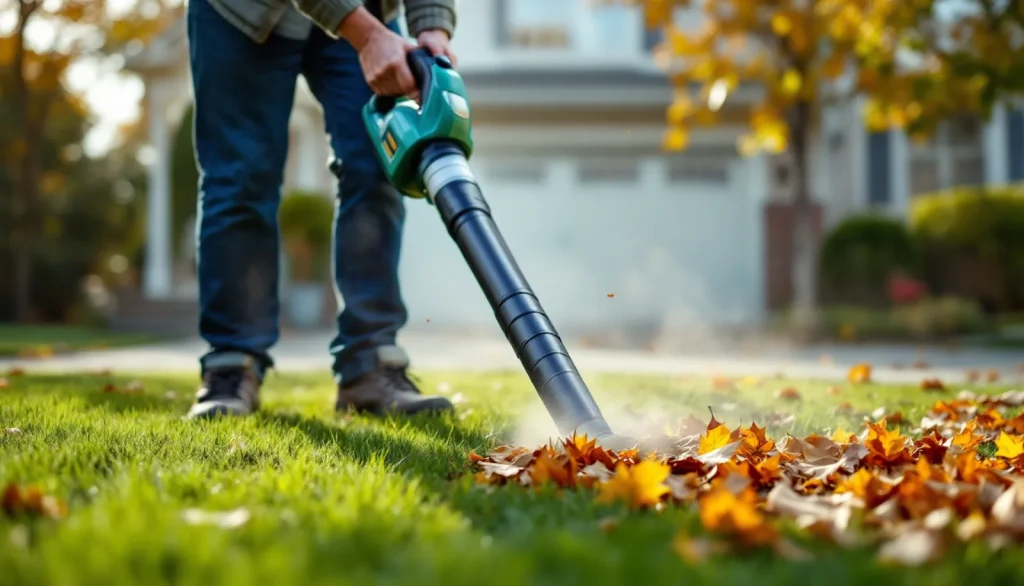
Lawn Blower Buying Guide: Specs, Types, and Power
A lawn blower (most buyers say leaf blower) clears leaves, grass clippings, and yard debris by pushing a stream of air, and the right one depends on three numbers and one law. The three numbers are CFM (air volume), MPH (air speed), and Newton force (the combined blowing thrust, measured under ANSI/OPEI standard B175.2). The law is whether your city or state restricts gas models. Match those four things to your yard and you stop overpaying for power you cannot legally or comfortably use.
What are the types of lawn blowers?
Lawn blowers come in three body styles and three power sources. The body styles are handheld (the most common), backpack (for larger or wooded lots), and wheeled walk-behind (gas only, for acreage and pro crews). The power sources are gas, battery (cordless), and corded electric. Most homeowners buy a handheld in either battery or gas. The combination you pick sets your runtime, weight, noise, and legal status.
Handheld units weigh roughly 5 to 11 pounds and suit yards under half an acre. Backpack models carry a bigger battery or engine on your shoulders, run 30 to 60 minutes on a charge, and make sense once you have many mature trees. Wheeled blowers move the most air but only run on gas, so they sit outside the cordless category most homeowners now shop.
| Body style | Typical weight | Best for | Power options |
|---|---|---|---|
| Handheld | 5 to 11 lb | Yards under 1/2 acre, patios, decks | Battery, gas, corded |
| Backpack | 17 to 25 lb | Wooded lots, 1/2 acre and up, wet leaves | Battery, gas |
| Wheeled walk-behind | 90 lb and up | Acreage, commercial cleanup | Gas only |
Gas vs battery vs corded: which lawn blower should you buy?
For most homeowners with a yard under half an acre, a battery lawn blower is the right buy: quieter, no fuel or fumes, push-button start, and legal everywhere. Choose gas only if you clear acreage, wet leaves, or pine needles for long stretches and your area still allows it. Choose corded electric if you want the lowest price and never work far from an outlet.
Battery models have closed most of the power gap. Consumer Reports testing in 2026 found top cordless units match or beat many gas blowers for typical residential cleanup, though handheld batteries usually run only 12 to 15 minutes before a recharge. Gas still wins on uninterrupted runtime and raw thrust for heavy, wet, or large jobs.
Corded electric is the budget path. It never runs out of charge and weighs the least, but a cord tethers you to roughly 100 feet of reach, and using an undersized extension cord causes voltage drop that can overheat the motor. Use a 12 or 14 gauge outdoor-rated cord matched to the blower’s amp draw.
| Factor | Gas | Battery (cordless) | Corded electric |
|---|---|---|---|
| Runtime | Unlimited (refuel) | 12 to 15 min handheld, 30 to 60 min backpack | Unlimited (tethered) |
| Maintenance | Oil, spark plug, fuel mix | None beyond charging | None |
| Noise at operator | 85 to 95 dB | 72 to 86 dB | 70 to 80 dB |
| Reach | Unlimited | Unlimited | ~100 ft from outlet |
| Legal status | Restricted in many areas | Allowed everywhere | Allowed everywhere |
| Best yard size | 1/2 acre and up | Up to 1/2 acre (backpack: more) | Under 1/4 acre |
What do CFM, MPH, and Newton force mean?
CFM (cubic feet per minute) is the volume of air the blower moves, MPH is the speed that air exits the nozzle, and Newton force (N) is the combined blowing thrust. For most yard work CFM matters more than MPH, because the bulk of moving air is what pushes piles of leaves, while high MPH mainly helps dislodge wet or stuck debris. Newton force is the single number that captures both.
Manufacturers often advertise a high MPH or a high CFM in isolation, which tells you little on its own. A blower with high MPH but low CFM moves heavy debris a short distance; high CFM with low MPH struggles on stuck leaves. Newton force solves this by reporting actual thrust under one standardized test.
Here is the gap most buying guides skip: Newton force is the only one of the three measured under an industry standard. ANSI/OPEI B175.2 specifies how blowing force is tested, accounting for nozzle diameter, air pressure, and temperature, so an N rating is comparable across brands in a way that marketing CFM and MPH claims are not. Lightweight handheld units typically rate around 10 to 17 N, while professional backpack blowers reach roughly 28 to 41 N. When two blowers list different CFM and MPH, compare the Newton rating to see which actually does more work.
How much CFM (and Newton force) do you need for your yard?
Match the spec to the job. For yards under half an acre with dry leaves on grass or pavement, 350 to 500 CFM, 90 to 190 MPH, and about 10 to 17 N handle routine cleanup. For larger or wooded lots, or frequent wet leaves and pine needles, step up to 600 to 1,000-plus CFM, 200-plus MPH, and 28 N or more, which usually means a backpack or gas unit.
| Yard and debris | Target CFM | Target MPH | Target Newton | Likely type |
|---|---|---|---|---|
| Patio, deck, under 1/4 acre, dry | 350 to 450 | 90 to 150 | 10 to 13 N | Handheld battery or corded |
| Up to 1/2 acre, dry leaves | 450 to 600 | 150 to 190 | 13 to 20 N | Handheld battery or gas |
| 1/2 acre and up, wet or wooded | 600 to 1,000+ | 200 to 240+ | 28 to 41 N | Backpack battery or gas |
Buying more CFM than your yard needs wastes money and adds weight and noise. A 900 CFM backpack on a small patio is overkill that you will resent carrying. Size to the largest debris job you actually face a few times a year, not to the spec sheet.
Are gas lawn blowers being banned?
In some places, yes, and this should shape what you buy. California banned the sale of new gas-powered small off-road engine equipment, including leaf blowers, under Assembly Bill 1346, effective January 1, 2024, though you may keep running equipment you already own. Beyond the statewide rule, more than 100 US cities had passed gas or noise-based leaf blower restrictions as of 2024. Before buying gas, confirm your local ordinance.
The reason is emissions and noise. The California Air Resources Board reports that running a commercial gas leaf blower for one hour produces about the same smog-forming pollution as driving a 2017 Toyota Camry roughly 1,100 miles, because most of these two-stroke engines fail to burn about 30 percent of their fuel. Gas models also run 85 to 95 dB at the operator’s ear, above the 85 dB threshold where hearing protection is advised.
If you live where bans are spreading or simply want to avoid a future stranded purchase, a battery blower removes the regulatory risk entirely. The PIRG Education Fund maintains an interactive map of city and state lawn equipment policies you can check before you buy. Rules vary by jurisdiction and change often, so verify current status with your municipality.
When should you rent instead of buy a lawn blower?
Rent a lawn blower when you face a one-time heavy job, not a recurring chore. A fall cleanup of a large wooded lot, a post-storm debris clear, or a single move-out can justify a daily rental of a high-CFM backpack or wheeled unit instead of owning equipment you use twice a year. Buy when you clear leaves or clippings on a regular schedule.
- Estimate how many times per year you will actually use it. Fewer than three heavy uses leans toward renting.
- Measure or estimate your turf and bed area so you can size CFM and Newton force correctly. Our guide to measuring lawn square footage shows the method.
- Check your local gas-equipment ordinance before committing to a gas model you may not be allowed to run.
- Compare the daily rental rate against the purchase price plus fuel and storage. A $600 backpack used once a year rarely beats a rental.
- For recurring needs on a small lot, buy a battery handheld; for occasional heavy clears, rent the big unit.
What features and safety specs matter most?
Beyond power, weigh noise, weight, variable speed, and battery platform. Variable-speed and cruise-control triggers let you dial down power near flower beds and save runtime. Noise matters for both your ears and your neighbors: anything 85 dB or higher warrants hearing protection. On battery models, buy into a tool platform whose batteries you already own or plan to expand.
For battery shoppers, voltage (commonly 40V, 56V, 80V on homeowner units) signals power class, but runtime depends on the battery’s amp-hour rating, so check both. A higher amp-hour battery costs more but cuts how often you stop to recharge. Keep a second battery charging if you have more than 15 minutes of work.
Gas buyers should note two-stroke models need a gas-oil mix while four-stroke run straight gas with separate oil. Two-stroke units are lighter and more common in handhelds. Either way, gas adds spark plug, air filter, and fuel-system upkeep that battery and corded units do not.
How does a lawn blower fit your overall yard care?
A lawn blower is one tool in a seasonal routine, not a standalone fix. Use it after mowing to clear clippings off hardscape, in fall to move leaves off turf before they smother grass, and in spring to clear winter debris before fertilizing. Pairing blowing with the right feeding and watering schedule keeps the lawn healthy enough that cleanup stays light.
Blowing leaves off the lawn promptly matters because a thick wet leaf layer blocks light and traps moisture, which invites disease and bare patches. For the recovery side of that problem, see our guides to diagnosing brown patches in a lawn and the year-round cadence in our grass maintenance schedule. If you would rather hand the work off, our directory helps you find vetted lawn care contractors, and our 2026 lawn care cost benchmarks show what crews charge.
Last reviewed: June 2026
HMNDP Editorial Team, reviewed by HMNDP turf and horticulture editors.
Frequently asked questions
How many CFM do I need for a leaf blower?
Match CFM to your yard. For lots under half an acre with dry leaves on grass or pavement, 350 to 500 CFM handles routine cleanup. For larger or wooded properties, or frequent wet leaves and pine needles, step up to 600 to 1,000 plus CFM, which usually means a backpack or gas unit. Buying more CFM than you need adds weight, noise, and cost.
Is CFM or MPH more important on a lawn blower?
For most yard work CFM matters more, because the volume of moving air is what pushes piles of leaves, while high MPH mainly helps dislodge wet or stuck debris. The cleanest way to compare two blowers is Newton force, the combined thrust rating measured under ANSI/OPEI standard B175.2, which captures both volume and speed in one comparable number.
Are gas leaf blowers being banned?
In some places, yes. California banned the sale of new gas small off-road engine equipment, including leaf blowers, under Assembly Bill 1346 effective January 1, 2024, though you may keep running gear you already own. More than 100 US cities had passed gas or noise-based restrictions as of 2024. Check your local ordinance before buying gas. Battery models are allowed everywhere.
What is a good Newton force rating for a leaf blower?
Newton force (N) is the standardized thrust rating, the best single spec for comparing blowers. Lightweight handheld units typically rate 10 to 17 N, suitable for yards under half an acre. Professional backpack blowers reach roughly 28 to 41 N for wet leaves, wooded lots, and acreage. When CFM and MPH claims differ between models, compare the N rating to see which does more work.
Should I buy a battery or gas lawn blower?
For most homeowners with a yard under half an acre, a battery blower is the better buy: quieter, no fuel or fumes, push-button start, and legal everywhere. Choose gas only if you clear acreage, wet leaves, or pine needles for long stretches and your area still allows it. Top 2026 cordless units now match many gas models for typical residential cleanup.
How long do cordless leaf blower batteries last?
Handheld cordless blowers usually run 12 to 15 minutes per charge, so they suit small lots or steady cleanup as leaves fall. Backpack models carry bigger batteries that run 30 to 60 minutes, and some high-end units reach up to 120 minutes on low power. Runtime depends on the battery amp-hour rating, not just voltage, so keep a spare battery charging for longer jobs.
How loud are leaf blowers?
Gas leaf blowers run about 85 to 95 dB at the operator’s ear, battery models 72 to 86 dB, and corded electric units 70 to 80 dB. Any level at or above 85 dB warrants hearing protection. Many city ordinances cap leaf blower noise or restrict gas models specifically, which is one reason quieter battery units have grown in residential use.
When should I rent a lawn blower instead of buying one?
Rent when you face a one-time heavy job rather than a recurring chore. A fall cleanup of a large wooded lot, a post-storm clear, or a single move-out can justify a daily rental of a high-CFM backpack or wheeled unit. For regular cleanup on a small lot, buy a battery handheld. Compare the daily rate against purchase price plus fuel and storage before deciding.