
Grass Sweeper Buying Guide: Push vs Tow vs Vacuum
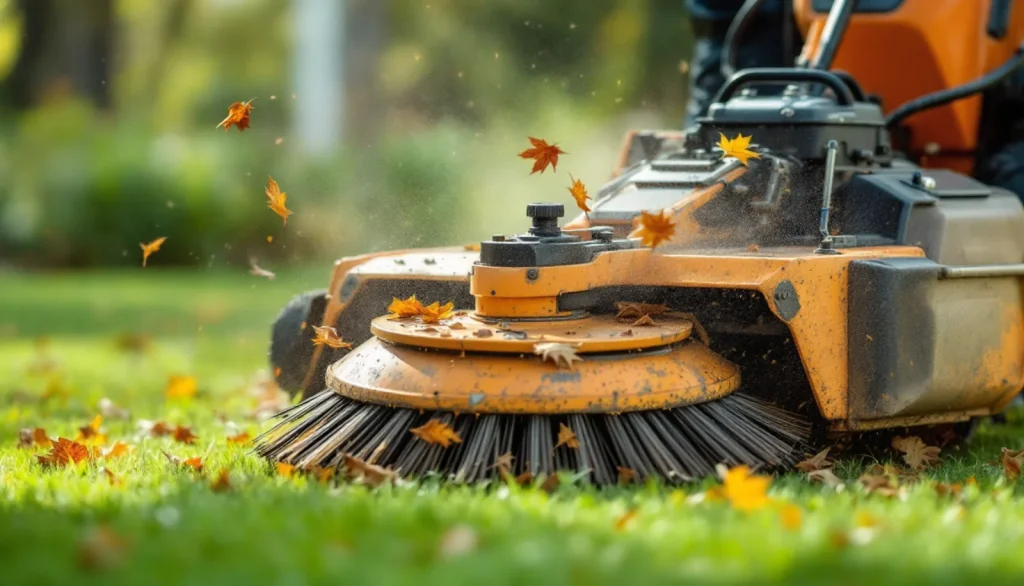
A grass sweeper is a wheeled tool with a rotating brush that flicks grass clippings, leaves, pine needles, acorns, and small twigs up into a fabric hopper as you push it or tow it behind a mower. It uses no motor, no suction, and no impeller, which is the line that separates it from a lawn vacuum. This guide covers the two formats (push and tow-behind), the four specs that decide whether a sweeper works on your yard (sweeping width, hopper capacity, brush height adjustment, and brush-to-wheel ratio), the price bands you should expect, and the one decision most buyers get wrong: sweeper versus vacuum.
What is a grass sweeper and how does it work?
A grass sweeper is a mechanical, no-power tool: as the wheels turn, they spin a brush reel that sweeps debris off the turf and throws it up a chute into a hopper bag behind the unit. There is no fan, no engine, and no chopping blade. Push models are driven by your walking pace; tow-behind models are pulled by a riding mower or garden tractor and use the same gear-driven brush principle, just wider.
That brush-and-hopper design is the whole point. It collects material in bulk and dumps it whole, so a sweeper is faster than raking and quieter than any powered alternative. It does not mulch or shred. If you want chopped leaf mulch for compost, that is a job for a lawn vacuum with an impeller, covered in the comparison below.
Push grass sweeper vs tow-behind: which do you need?
Choose by lawn size and whether you own a riding mower. Push sweepers suit small to medium lawns (roughly up to 2,000 square feet) and need no tractor. Tow-behind sweepers suit large open lawns, farms, and acreage, cover far more ground per pass, and only make sense if you already have a riding mower or garden tractor to pull them. The two formats split cleanly on width, capacity, and price.
| Spec | Push grass sweeper | Tow-behind grass sweeper |
|---|---|---|
| Best lawn size | Up to about 2,000 sq ft | Large lawns, acreage, farms |
| Sweeping width | 21 to 26 inches | 42 to 52 inches |
| Hopper capacity | 3.5 to 7 cubic feet | 12 to 26 cubic feet |
| Power source | Your push force, no fuel or electricity | Pulled by riding mower or tractor |
| Typical price | $150 to $200 | $278 to $600+ |
| Requires | Nothing extra | A riding mower or garden tractor |
The width-to-capacity jump is the real story. An Agri-Fab 26-inch push model carries a 7 cubic foot hopper, while the Agri-Fab 52-inch tow model (45-0546) carries 26 cubic feet, so the tow unit clears a large lawn in a fraction of the passes and empties far less often. If you do not own a tractor, a push model is your only practical option, and that is fine for most suburban lots.
The four specs that decide if a grass sweeper works
Four specs separate a sweeper that clears your yard in one pass from one that drags debris around. Match each to your turf, your debris type, and your lawn size before you buy. Sweeping width sets speed, hopper capacity sets how often you stop, brush height adjustment sets whether it actually picks up, and brush-to-wheel ratio sets how thoroughly it sweeps.
- Sweeping width. Push units run 21 to 26 inches; tow units run 42 to 52 inches. Wider clears faster but is harder to steer around beds and trees.
- Hopper capacity. Push hoppers hold 3.5 to 7 cubic feet; tow hoppers hold 12 to 26. More capacity means fewer trips to the compost pile, but a full hopper of wet clippings gets heavy to push.
- Brush height adjustment. The single most important feature. The brush must sit low enough to dig debris off the turf but not so low it scuffs soil. Look for positive-lock or “no-slip” height settings (a Brinly feature) so the setting does not vibrate loose mid-job.
- Brush-to-wheel ratio. A higher ratio spins the brush faster per wheel turn, which lifts more material in one pass. Tow-behind units generally run a higher ratio than push units, part of why they sweep more thoroughly on big lots.
Grass sweeper vs lawn vacuum: the decision most buyers get wrong
A grass sweeper uses a rotating brush and a large hopper; a lawn vacuum uses a motor and an impeller that sucks debris up and chops it into mulch. The sweeper wins on bulk capacity, quiet operation, no fuel, and wet-tolerance limits aside, raw collection volume. The vacuum wins on leaf mulching and getting debris out of tight corners. Pick by what you collect and whether you want mulch.
| Factor | Grass sweeper (brush + hopper) | Lawn vacuum (motor + impeller) |
|---|---|---|
| Mechanism | Rotating brush flicks debris into hopper | Suction pulls debris through chopping impeller |
| Capacity | Large (3.5 to 26 cu ft) | Small |
| Mulches debris | No, collects whole | Yes, shreds into fine mulch |
| Best for | Bulk clippings, light leaves, pine needles, acorns on flat lawns | Heavy or matted leaves, corners, beds, mulch for compost |
| Wet performance | Brushes clog when wet | Drops sharply when leaves are wet |
| Noise and fuel | Quiet, push needs no power | Louder, needs gas or electric power |
The short rule: if your main job is bulk grass clippings and light leaf litter across a flat, open lawn, a grass sweeper clears more per pass and costs less to run. If you want chopped leaf mulch for the compost pile or you are pulling matted leaves out of beds and corners, read our lawn vacuum guide instead. Many homeowners with both heavy leaf fall and a large lawn end up owning one of each.
What debris does a grass sweeper actually pick up?
Grass sweepers handle dry grass clippings, light to moderate leaf litter, pine needles, small twigs, and freshly fallen acorns well. They struggle with wet material, deep matted leaf piles, and anything heavier than a small stick. The brush physically flicks debris upward, so loose, dry, and lightweight items move best, and saturated or compacted debris defeats the brush.
- Grass clippings: excellent when dry; a sweeper is often faster than bagging at the mower.
- Pine needles: good on a dry day. Wet needles stick to the turf and clog the brush, so wait for sun or let the lawn dry first.
- Acorns: most models clear freshly fallen acorns; heavier or buried acorns may need a second pass.
- Leaves: good for light, dry layers. Deep wet leaf piles are a vacuum or blower job.
- Twigs and small debris: small sticks yes, larger branches no.
How to use a grass sweeper for best results
Sweep on a dry day, set the brush height correctly, work in overlapping passes, and empty before the hopper is heavy. Dry debris and the right brush height fix the two most common complaints (poor pickup and clogging). The process is short.
- Wait until the lawn and debris are dry. Wet clippings and needles clog the brush and overload the hopper.
- Set the brush height so the bristles just contact the turf tips, not the soil. Test on one pass and adjust before you commit.
- Mow first if you are collecting clippings, so the sweeper picks up an even layer rather than clumps.
- Work in straight, overlapping rows the way you mow, overlapping each pass by a few inches.
- Empty the hopper before it is full of heavy material; a half-full hopper of wet grass is hard to push uphill.
- Brush off and dry the hopper bag after use to extend its life and prevent mildew.
How much does a grass sweeper cost in 2026?
Expect $150 to $200 for a quality push grass sweeper and $278 to $600 or more for tow-behind models, with width and hopper capacity driving the spread. Push units are the budget entry point because they have no engine and no tractor dependency. Tow units cost more for the wider brush, larger hopper, and heavier frame.
Common brands at these price points include Agri-Fab, Brinly, Ohio Steel, Earthwise, Scotts, Craftsman, and John Deere. When you compare a sweeper against a season of equivalent labor, the math favors buying for most homeowners. For broader yard-tool budgeting, our 2026 lawn care cost guide sets the benchmark for what a full maintenance program runs by region.
When to skip a grass sweeper
Skip a sweeper if your lawn is small enough to rake in minutes, heavily sloped, full of beds and obstacles, or buried under deep wet leaves every fall. Brushes need flat, dry, open turf to work. On a tight or cluttered yard the sweeper spends more time being steered than sweeping, and a rake, blower, or vacuum does the job faster.
Sweepers also do little for thatch or matted debris worked into the canopy; that is a dethatching and seasonal maintenance task, not a surface-sweeping one. If your real problem is bare or thinning turf showing through the debris, fix the lawn first with our guide to growing grass in bare spots before investing in collection gear.
Last reviewed: June 2026
HMNDP Editorial Team, reviewed by HMNDP turf and horticulture editors.
Frequently asked questions
Is a grass sweeper better than a lawn vacuum?
It depends on the job. A grass sweeper uses a rotating brush and a large hopper (3.5 to 26 cubic feet), so it collects more bulk clippings and light leaves per pass, runs quieter, and needs no fuel on push models. A lawn vacuum uses an impeller to suck and chop debris into mulch, which a sweeper cannot do, and works better in beds and corners.
What does a grass sweeper pick up?
Dry grass clippings, light to moderate leaf litter, pine needles, small twigs, and freshly fallen acorns. It handles loose, dry, lightweight material best because the brush flicks debris upward into the hopper. It struggles with wet debris, deep matted leaf piles, thatch, and anything heavier than a small stick.
Do grass sweepers work on wet grass?
Not well. Wet clippings and pine needles stick to the turf and clog the brush, and a hopper full of wet grass gets heavy and hard to push uphill. Sweep on a dry day or let the lawn dry first. Brush height also matters: set the bristles to just touch the turf tips, not the soil, for clean pickup.
How wide should my grass sweeper be?
Match width to lawn size and obstacles. Push sweepers run 21 to 26 inches, which suits small to medium lawns up to about 2,000 square feet and steers easily around beds and trees. Tow-behind sweepers run 42 to 52 inches for large open lawns and acreage, clearing far more ground per pass but harder to maneuver in tight yards.
How much does a grass sweeper cost in 2026?
A quality push grass sweeper runs $150 to $200, and tow-behind models run $278 to $600 or more. Width and hopper capacity drive the price spread. Push units are cheaper because they have no engine and need no tractor. Common brands at these price points include Agri-Fab, Brinly, Ohio Steel, Earthwise, Scotts, Craftsman, and John Deere.
Do I need a riding mower for a grass sweeper?
Only for a tow-behind model. Tow sweepers attach to and are pulled by a riding mower or garden tractor, so they are not an option without one. Push grass sweepers need nothing extra: you drive them by walking, with no fuel or electricity. For most suburban lots under 2,000 square feet, a push model is the practical choice.
Does a grass sweeper pick up acorns and pine needles?
Yes, on a dry day. Most models clear freshly fallen acorns, though heavier or buried ones may need a second pass. Pine needles sweep well when dry, but wet needles stick to the ground and clog the brush, so wait for sun. Adjustable brush height is key so the bristles reach debris without digging into the soil.