
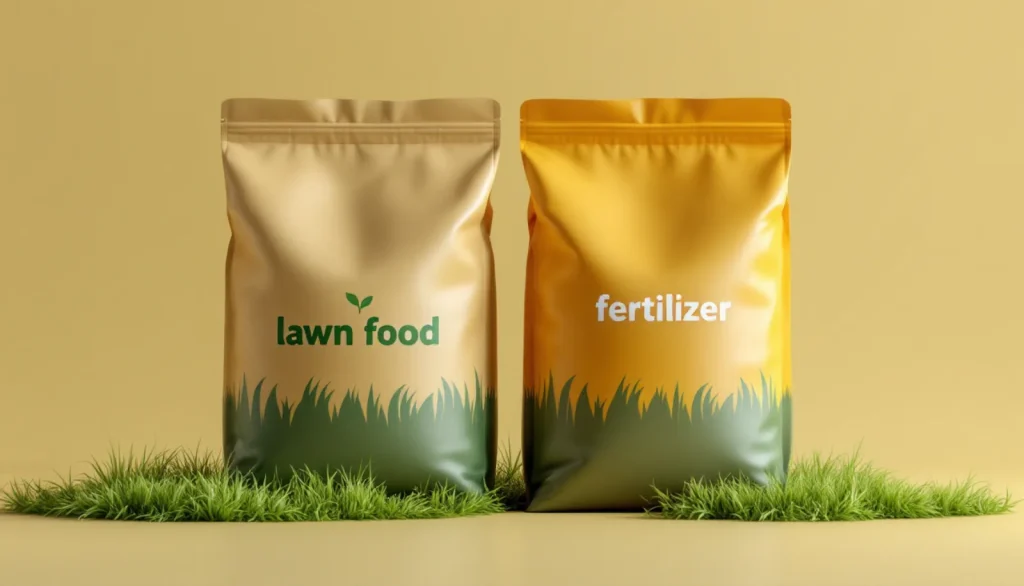
If you have ever stood in a big-box garden aisle trying to figure out the difference between lawn food fertilizer and just plain fertilizer, here is the truth: there is no chemical difference. “Lawn food” is a marketing term Scotts pioneered in the mid-20th century to make synthetic NPK fertilizer sound benign, natural, and almost edible. The product label legally must disclose the same nitrogen, phosphorus, and potassium percentages regardless of what the front of the bag calls it. This article unpacks the marketing distortion, shows you how to read the label correctly, and tells you what actually matters when picking a product.
The short version
- “Lawn food” and “lawn fertilizer” are the same product category. Same NPK chemistry. The marketing language softens the perception, not the formulation.
- Scotts popularized the “lawn food” framing starting in the 1950s. The legal product registration is still “fertilizer” under EPA and state agriculture department rules.
- What actually matters on the label: NPK ratio, slow-release percentage, source ingredients (urea vs ammonium sulfate vs organic), and salt index.
- Scotts Turf Builder 32-0-4 and Pennington Ultragreen 30-0-4 are nearly identical formulations. Price difference is brand premium, not chemistry.
- True organic alternatives (Milorganite 6-4-0, Sustane 8-2-4) have genuinely different chemistry, slow-release behavior, and salt index. The label says “organic” because it is.
- If the bag says “natural” or “with iron” or “winterizer,” check the NPK. Same product family, different seasonal label.
Where the “lawn food” term came from
O.M. Scott and Sons Company (later Scotts Miracle-Gro) introduced Turf Builder in 1928 as the first granular fertilizer marketed specifically for residential lawns. By the 1950s, the company’s advertising strategy had shifted from agricultural-language (“fertilize your lawn”) to consumer-language (“feed your lawn”). Print ads in House Beautiful and Better Homes and Gardens used the word “food” to associate the product with nourishment rather than chemistry. The strategy worked, the language stuck, and by the 1980s “lawn food” had become the dominant shelf-talk in retail.
The actual product changed very little. Turf Builder in 1955 was a urea-based synthetic fertilizer with added potassium chloride and small amounts of iron. Turf Builder in 2026 is a urea-based synthetic fertilizer with added potassium chloride and small amounts of iron. The label format has been updated to comply with state fertilizer registration laws (every state has an agriculture department that regulates fertilizer labeling, usually following the Association of American Plant Food Control Officials AAPFCO model), but the underlying NPK formulation has been a moving target only at the margins.
What the label legally has to say
Federal law (FIFRA does not regulate fertilizers, but state agriculture departments do under their own statutes) requires every fertilizer product to display three numbers on the bag, called the guaranteed analysis. Those numbers are the percentage by weight of nitrogen (N), available phosphate (P2O5), and soluble potash (K2O). A 50-lb bag of 24-0-4 contains 12 lbs of nitrogen, 0 lbs of phosphate, and 2 lbs of potash, with the remaining 36 lbs being filler, carriers, and sometimes secondary nutrients (iron, sulfur, magnesium). See our what causes drought guide for more.
Below the guaranteed analysis, the label must list the derived-from ingredients (sources): urea, sulfur-coated urea, methylene urea, ammonium sulfate, ammonium phosphate, potassium chloride (muriate of potash), potassium sulfate (sulfate of potash), and so on. This source list tells you the actual chemistry. A product that says “derived from urea, potassium chloride” is a synthetic NPK blend. A product that says “derived from poultry litter, feather meal, sulfate of potash” is an organic blend. A product that says “derived from urea, methylene urea, potassium chloride” is a synthetic blend with partial slow-release nitrogen. Our NPK fertilizer guide walks through the math on how to translate these labels into application rates and seasonal programs.
Side-by-side: “lawn food” vs “fertilizer” labels
| Product | Label term | NPK | Source ingredients | 2026 price (per 1,000 sq ft cost) |
|---|---|---|---|---|
| Scotts Turf Builder | “Lawn Food” | 32-0-4 | Urea, ammonium sulfate, potassium chloride | $0.40 to $0.65 |
| Pennington Ultragreen | “Lawn Fertilizer” | 30-0-4 | Urea, methylene urea, potassium chloride | $0.35 to $0.55 |
| Vigoro All Season | “Lawn Food” | 29-0-3 | Urea, sulfur-coated urea, potassium chloride | $0.30 to $0.50 |
| Lesco 24-0-11 Polyon | “Professional Turf Fertilizer” | 24-0-11 | Urea, polymer-coated urea, sulfate of potash | $0.70 to $1.00 |
| Milorganite | “Organic Nitrogen Fertilizer” | 6-4-0 | Heat-dried microbes (biosolids) | $0.30 to $0.55 |
| Sunday Lawn Care pouches | “Lawn Nutrient” | varies (12-0-3 typical) | Urea, iron sulfate, kelp extract | $1.50 to $2.50 |
The first three products are functionally interchangeable synthetic NPK fertilizers. The brand premium between Scotts and Vigoro is roughly 30 to 40 percent for nearly identical chemistry, with the practical difference being slow-release percentage (Scotts is roughly 25 percent slow-release, Pennington is roughly 35 percent, Vigoro is roughly 20 percent). Lesco Polyon is a contractor-grade product with 65 percent polymer-coated slow-release and sulfate of potash instead of muriate, so the chemistry is genuinely better and the price reflects it. Milorganite and Sunday are different categories: Milorganite is truly organic, Sunday is a hybrid liquid synthetic plus biostimulant. The lesson is that the word on the front of the bag tells you very little. The derived-from list and the slow-release percentage tell you almost everything.
“With iron,” “winterizer,” “starter,” “weed and feed”
The product line extensions are mostly the same base fertilizer with one additive or one seasonal NPK tweak. “Lawn food with iron” is a standard NPK fertilizer with 1 to 4 percent iron sulfate added. The iron temporarily darkens the grass color (within 7 to 10 days), which gives the lawn a healthier look without actually adding fertility. It is a cosmetic move.
“Winterizer” fertilizer has a higher potassium ratio relative to nitrogen (typical 24-0-12 or 18-0-25) on the theory that potassium aids cold tolerance and root storage going into dormancy. The theory has modest research backing for cool-season grasses (Kentucky bluegrass, tall fescue, perennial ryegrass) but essentially none for warm-season grasses (Bermuda, Zoysia, St. Augustine), so a “winterizer” applied to Bermuda in October is marketing without function. “Starter” fertilizer has a higher phosphorus ratio (typical 18-24-12) for new seeding because phosphorus aids root development. Phosphorus runoff is increasingly regulated in environmentally sensitive watersheds (Chesapeake Bay states, Florida, Wisconsin), so starter fertilizer is restricted to actual seeding or sodding situations in many jurisdictions.
“Weed and feed” combines a fertilizer with an herbicide (typically prodiamine for pre-emergent or 2,4-D plus dicamba plus MCPP for post-emergent). The convenience is real, the application timing rarely matches both the fertilizer need and the herbicide window correctly, and the herbicide load on the whole lawn (when you might only have weeds in 10 percent of the area) is poor practice. Contractors almost universally skip weed-and-feed in favor of separate applications.
Organic versus synthetic, honestly
This is where the marketing language matters most. “Organic” on a fertilizer label has a specific meaning under most state agriculture department rules: the nitrogen must come from natural sources (composted manure, feather meal, blood meal, fish meal, alfalfa meal, soybean meal, heat-dried microbial biomass like Milorganite) rather than synthetic chemical synthesis (urea, ammonium nitrate, ammonium sulfate). The USDA National Organic Program is even stricter and requires OMRI listing.
The functional differences between organic and synthetic are real but often overstated by marketing. Organic sources release nitrogen more slowly (good for steady greening, bad for fast recovery), have near-zero salt index (good for drought stress, irrelevant in spring), and provide secondary soil benefits (organic matter, microbial food, slight soil structure improvement). Synthetic sources release nitrogen faster (good for quick response, risky in heat), have higher salt indexes (manageable with proper irrigation), and produce identical color and growth response per unit of N delivered. Neither category is morally superior. They are different tools.
The bait-and-switch to watch for is “natural” without “organic.” Several major brands sell products labeled “natural” or “naturally-derived” or “with natural ingredients” that are 85 to 95 percent synthetic NPK with a small organic additive (corn gluten meal, kelp, alfalfa). The product is still mostly urea and KCl. Read the derived-from list, not the marketing copy. For more on the drought-specific implications of these source differences, see our guide on best garden fertilizer for drought stress.
What contractors actually buy
Walk into any SiteOne or Ewing Irrigation supply branch and the shelf does not say “lawn food.” It says “fertilizer.” Lesco 24-0-11 Polyon, Andersons Pro Turf, Yard Mastery Bio-Stim, Anuvia Sympro, Holganix. Contractor product lines do not use the soft-marketing terminology because the buyer is a licensed applicator who reads the derived-from list, the slow-release percentage, and the salt index before deciding. The retail homeowner aisle uses softer terminology because the buyer is making a decision based on the bag color and the brand recognition.
This is not a moral failing of either side. It is a sales channel difference. The contractor margin on a 50-lb bag of Lesco 24-0-11 Polyon is 18 to 30 percent. The retail margin on a 5,000 sq ft bag of Scotts Turf Builder is roughly the same, but the manufacturer’s margin is much higher because Scotts spent decades building the brand premium that justifies a 30 to 50 percent price premium over private-label equivalents like Vigoro (which Home Depot owns and sources from the same blenders). For the cost side of how these products price into a contractor’s seasonal program, see our lawn care cost guide.
How to actually pick a fertilizer
Ignore the front of the bag. Read the guaranteed analysis (NPK), the derived-from list (sources), and the slow-release percentage (if disclosed). Match the product to four variables: your grass type (cool-season vs warm-season), the season (spring early growth, summer maintenance, fall recovery, winter prep), your soil test results (if you have done one), and your application equipment (broadcast spreader, drop spreader, liquid sprayer).
The rough hierarchy for a cool-season lawn over a full year: spring (early): light starter or balanced 16-4-8 with slow-release nitrogen. Late spring: a 24-0-11 or similar with 50 percent slow-release. Summer: skip if drought-stressed, otherwise Milorganite or another low-salt source at half rate. Early fall: full-strength 24-0-11 polymer-coated. Late fall: winterizer 18-0-25 or 24-0-11 if cool-season. For warm-season lawns the schedule shifts later (May to September) and skips the late-fall winterizer entirely. For more on how this maps to common diagnostic problems like color loss and patchy growth, see our brown patches diagnostic guide.
Regulatory and labeling oversight
Fertilizer labeling is regulated state-by-state through state agriculture departments under guidance from AAPFCO. Every fertilizer sold for retail must be registered annually with the state department of agriculture, which requires the manufacturer to submit a guaranteed analysis and pay a registration fee (typically $100 to $300 per product per state). State inspectors pull random samples from retail shelves and test for label accuracy. Products that come in below the guaranteed analysis are flagged and the manufacturer is fined.
The system is not perfect. Slow-release percentage is not uniformly enforced because there is no single standard test (water solubility, hot water solubility, and CRF release-rate curves are all used). Organic claims are similarly variable. The USDA National Organic Program is the strictest, OMRI listing is the most commonly used third-party verification. Our regulatory hub tracks state-by-state fertilizer labeling updates as they release.
FAQ
Is lawn food the same as fertilizer?
Yes. “Lawn food” is a marketing term for fertilizer products targeted at residential homeowners. The NPK chemistry, the derived-from ingredients, and the state agriculture department registration are all identical to “lawn fertilizer.”
Why does Scotts call it food?
Marketing decision dating to the 1950s designed to soften the perception of chemical fertilizer for consumer audiences. The framing has been so successful that competitors (Pennington, Vigoro) have alternated between “food” and “fertilizer” depending on the season and the campaign.
Is “lawn food” safer than “fertilizer”?
No, they are the same product category. Both can burn turf if over-applied. Both can volatilize and run off if applied incorrectly. The actual safety differences come from slow-release percentage, salt index, and source ingredients, not from what the front of the bag calls the product.
Does “natural” or “organic” labeling guarantee a better product?
“Organic” with USDA NOP or OMRI verification means genuinely organic sources. “Natural” without certification means the manufacturer’s marketing department decided to use the word. Always read the derived-from list. If it says urea or ammonium nitrate, it is not organic regardless of front-of-bag language.
Do I really need a “winterizer” product?
For cool-season lawns (Kentucky bluegrass, tall fescue, perennial ryegrass) in USDA zones 3 through 6, a late-fall potassium-heavy application has modest research backing. For warm-season lawns (Bermuda, Zoysia, St. Augustine) in zones 7 through 10, winterizer fertilizer is marketing without function. The grass is dormant. It is not absorbing nutrients.
Bottom line
“Lawn food” is fertilizer with friendlier packaging. The chemistry, the regulation, and the application math are identical to any product labeled “fertilizer.” Read the guaranteed analysis (NPK), the derived-from list (sources), and the slow-release percentage. Ignore the words on the front of the bag. Once you know what you are actually buying, the cost-per-pound-of-N math tells you which product is the better value, and the source chemistry tells you whether it is right for your grass type and season.
The honest read on the category: synthetic NPK products from Scotts, Pennington, and Vigoro are largely interchangeable at slightly different price points. Contractor-grade products from Lesco, Andersons, and Yard Mastery are meaningfully better on slow-release percentage and salt-index management. Truly organic products from Milorganite, Sustane, and Espoma are a different tool entirely, with real soil-building benefits and genuinely lower drought-stress risk. Pick the tool that matches the job. For drought-specific picks, see best garden fertilizer for drought-stressed plants. For vegetable garden specifics, see organic fertilizer for vegetable gardens.