
By the HMNDP Editorial Team | Last reviewed: June 2026
What a lawn sweeper is and how it works
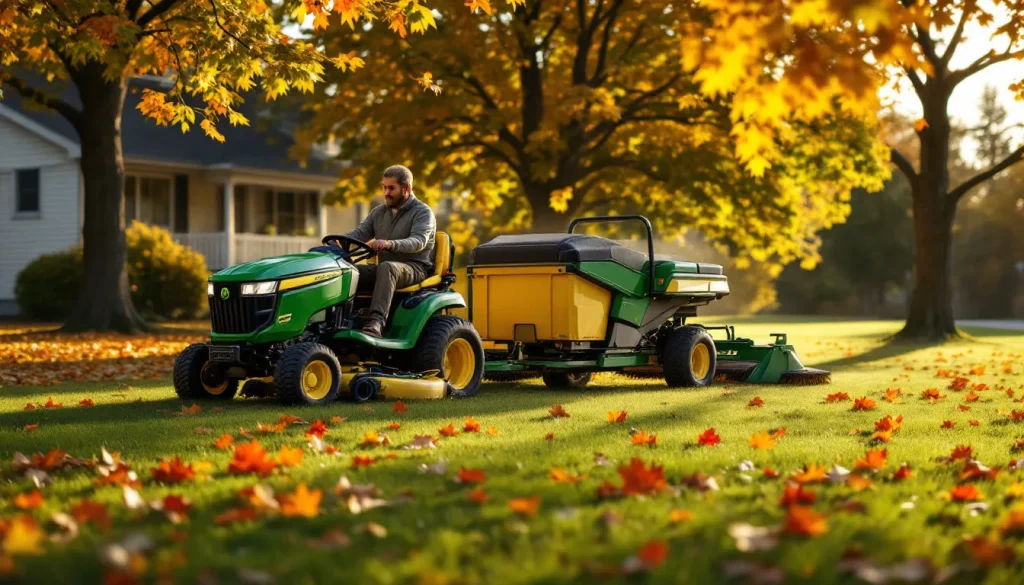
A lawn sweeper is a wheeled cleanup tool that uses spinning bristle brushes to flick fallen leaves, grass clippings, small twigs, acorns, and pine needles up into an attached hopper bag. Most have no engine. The wheels turn the brushes mechanically as you push the unit or tow it behind a riding mower, so the only power source is your forward motion.
The mechanism is simple. As the wheels rotate, a belt or gear spins a horizontal brush at the front. The bristles sweep debris off the turf and toss it backward into a mesh or fabric hopper measured in bushels. When the hopper fills, you pull a dump lever or lift the bag and empty it.
Because there is no motor, a lawn sweeper needs almost no maintenance compared with a leaf vacuum or blower. There is nothing to fuel, no spark plug, and no air filter. The tradeoff is that performance depends entirely on brush contact with the ground, which is why brush-height adjustment (covered below) decides whether the tool works well or barely at all.
What debris a lawn sweeper picks up (and what it struggles with)
A lawn sweeper handles dry, loose yard debris well: fallen leaves, grass clippings, small twigs, acorns, sweet gum balls, and pine needles. It works best on relatively flat, dry lawns where the brush can reach the debris. It struggles with anything wet, matted, embedded, or heavy enough to resist the bristles.
Here is the honest picture, because no retailer page tells you what these machines do poorly:
| Debris type | Sweeper performance | Notes |
|---|---|---|
| Dry fallen leaves | Excellent | The core use case. Multiple passes clear most of it. |
| Grass clippings | Good (if dry) | Set the brush low; mow first, then sweep. |
| Acorns and gum balls | Fair to good | Heavy acorns can bounce; slow down and overlap passes. |
| Pine needles | Fair | Needles tangle in bristles; expect cleanup of the brush. |
| Wet or matted leaves | Poor | Bristles skip over wet mats. Wait for a dry day. |
| Twigs over ~1/2 inch thick | Poor | Larger sticks jam or get flung; pick those up by hand. |
The single biggest real-world complaint is wet leaves. A sweeper relies on light bristles brushing debris upward, and a soggy leaf mat is too heavy and sticky to lift. On uneven or bumpy lawns the brush also loses contact in the low spots, leaving streaks of debris behind. Plan around these limits rather than fighting them.
Push lawn sweeper vs. tow-behind lawn sweeper
A push lawn sweeper is a manual, walk-behind unit you propel by hand, suited to yards under about a half acre. A tow-behind lawn sweeper attaches to a riding mower or lawn tractor and clears large properties of a half acre to several acres far faster. The deciding factors are lot size, whether you own a riding mower, and storage space.
| Factor | Push (walk-behind) | Tow-behind |
|---|---|---|
| Best for | Under 1/2 acre | 1/2 acre to several acres |
| Power | Your walking effort | Towed by riding mower or tractor |
| Typical sweep width | 21 to 26 inches | 42 to 52 inches |
| Typical hopper | About 7 bushels | 12 to 26 bushels |
| Price band (2026) | $120 to $250 | $280 to $600 |
| Storage | Compact; many fold | Bulky; needs garage or shed space |
| Requires | Nothing extra | A riding mower with a hitch |
Choose push if your yard is small, you have a few trees, and you do not own a tractor. Choose tow-behind if you already ride to mow and the leaf volume each fall would mean dozens of trips with a smaller tool. A tow-behind paired with a riding mower is the standard setup for the large-property owners this guide serves.
Sweep width and hopper capacity: what size do you need?
Sweep width sets how much ground you clear per pass, and hopper capacity (measured in bushels) sets how often you stop to empty. Match both to your lot size and leaf volume. As a rule: wider sweep paths and bigger hoppers cut total cleanup time on large, heavily treed properties, while small yards waste money on capacity they never fill.
Sweep widths commonly run from 21 inches on push models to 52 inches on the largest tow-behind units (the Agri-Fab 52-inch is a frequently referenced example). Hopper sizes range from roughly 7 bushels on push sweepers to 23-plus bushels on big tow-behinds, a figure Lowe’s lists on several tow-behind models.
| Property size | Tree/leaf load | Recommended type | Sweep width | Hopper capacity |
|---|---|---|---|---|
| Under 1/4 acre | Light (few trees) | Push | 21 to 24 in | About 7 bushels |
| 1/4 to 1/2 acre | Moderate | Push or small tow | 24 to 42 in | 7 to 12 bushels |
| 1/2 to 1 acre | Moderate to heavy | Tow-behind | 42 to 44 in | 12 to 16 bushels |
| 1 to 3 acres | Heavy (oaks, pines) | Tow-behind | 44 to 52 in | 20 to 26 bushels |
| 3-plus acres | Heavy | Largest tow-behind | 50 to 52 in | 25-plus bushels |
One practical note on capacity: bushel ratings assume packed, dry leaves. Fluffy dry leaves fill a hopper faster than the number suggests, so size up if your property drops oak, maple, or sycamore leaves in volume. This timing also matters because your cleanup schedule should line up with the rest of your fall lawn program, where you fertilize after the heavy leaf drop ends.
Lawn sweeper vs. bagger vs. lawn vacuum: the decision framework
This is the comparison every buyer searches and no top result answers directly. A lawn sweeper brushes debris into a hopper with no engine. A bagger collects clippings and leaves as you mow, through your mower deck. A lawn vacuum (push or tow-behind) uses an engine and impeller to suck and shred debris. Each wins in a different situation.
| Tool | How it works | Best for | Engine? | Weak spots |
|---|---|---|---|---|
| Lawn sweeper | Spinning brushes flick debris into a hopper | Large leaf and clipping cleanup, low maintenance | No | Wet leaves, bumpy lawns |
| Bagger | Mower airflow blows clippings into bags on the deck | Collecting clippings while you mow | Uses the mower | Small capacity, frequent emptying |
| Lawn vacuum | Engine-driven impeller sucks and mulches debris | Wet leaves, mixed debris, big mulch reduction | Yes | Cost, fuel, maintenance, noise |
When to use each, in plain terms:
- Use a sweeper when you want a quiet, no-engine tool for dry fall leaves and clippings on a mostly flat property and you do not want another machine to maintain.
- Use a bagger when your main goal is collecting clippings during routine mowing and your leaf volume is light enough that a few bag trips cover it.
- Use a lawn vacuum when you regularly face wet or matted leaves, want debris shredded for compost, and accept the engine, fuel, and upkeep that come with it.
For most homeowners with a riding mower and a yard that dries out between rains, a tow-behind sweeper is the cost-to-value sweet spot. The vacuum earns its higher price only if wet leaves are a recurring problem or you want fine mulch. If hiring out cleanup is on the table instead, compare the math against professional lawn care services before buying any machine.
Brand options and named models with price bands
The main lawn sweeper brands sold through Amazon, Home Depot, and Lowe’s are Agri-Fab, Brinly, Ohio Steel, Craftsman, and Yardwise. They span push and tow-behind designs across roughly $120 to $600 in 2026. Below are representative models by category to anchor your shopping, not a ranked endorsement.
| Brand / model | Type | Sweep width | Hopper | Price band (2026) |
|---|---|---|---|---|
| Agri-Fab 52-inch tow-behind | Tow-behind | 52 in | ~26 bushels | $450 to $600 |
| Brinly STS-42 tow-behind | Tow-behind | 42 in | ~20 bushels | $300 to $420 |
| Ohio Steel 42-inch tow-behind | Tow-behind | 42 in | ~22 bushels | $320 to $450 |
| Craftsman tow-behind | Tow-behind | 42 in | ~12 bushels | $280 to $400 |
| Agri-Fab / Yardwise push sweeper | Push | 21 to 26 in | ~7 bushels | $120 to $250 |
Prices and exact specs shift by retailer and season, so confirm current numbers on the product page before you buy. Tow-behind units almost always arrive as a flat-pack kit and require assembly (covered next). Where to buy comes down to availability: Amazon carries the widest range, while Home Depot and Lowe’s often have units in stock locally so you can skip shipping a large box.
How to adjust, assemble, and maintain a lawn sweeper
The setting that decides whether a lawn sweeper works is brush height. Set the brushes low enough that the bristles just touch the turf and flick debris, but not so low that they dig into the soil and wear out fast. Most models adjust with a knob or lever near the brush axle. Expect to fine-tune it for your specific lawn.
Assembly and basic upkeep, step by step:
- Assemble the frame. Tow-behind kits ship flat. Budget 45 to 90 minutes with a wrench and screwdriver, and torque the wheel and brush hardware fully so nothing loosens during towing.
- Hang and tension the hopper. Attach the fabric bag to its support tubes; a loose bag spills debris and bows in the middle.
- Set brush height. Start mid-range, do a test pass on dry grass, then lower until the lawn comes clean without the brush dragging.
- Empty the hopper before it overflows. An overfull bag stops the brush from throwing new debris up and into it.
- Clear tangled bristles. Pine needles and wet grass wrap the brush; pull them out after each session so the next sweep stays effective.
- Store under cover. Sun and rain rot the fabric hopper. A garage or shed extends its life, and folding push models tuck against a wall.
Long term, the wear part is the brushes. Bristles flatten over a few seasons of heavy use, and most brands sell replacement brush kits for $20 to $50. Replacing brushes restores sweeping power and is far cheaper than a new unit. Beyond that, a sweeper has no engine, oil, or belts of the kind that make a vacuum or mower a yearly maintenance chore.
For a cleaner sweep overall, mow before you sweep and keep the lawn healthy and dense so debris sits on top of the grass rather than sinking into thin turf. If your lawn is patchy, our guide on how to overseed a lawn covers building the thicker stand that makes any cleanup tool work better. For more seasonal cleanup and lawn-equipment walkthroughs, the HMNDP Learn hub collects step-by-step guides in one place.
Frequently Asked Questions
What is a lawn sweeper and how does it work?
A lawn sweeper is a wheeled, usually engine-free tool that uses spinning bristle brushes to flick fallen leaves, grass clippings, twigs, acorns, and pine needles into an attached hopper. As you push it or tow it behind a riding mower, the wheels mechanically spin the brush, which throws debris backward into a bushel-rated bag you empty when full.
Lawn sweeper vs. bagger vs. lawn vacuum: which one should I use?
Use a lawn sweeper for large, mostly dry leaf and clipping cleanup with no engine to maintain. Use a bagger to collect clippings while you mow when leaf volume is light. Use a lawn vacuum when you regularly face wet or matted leaves and want debris shredded, accepting the engine, fuel, and upkeep that a vacuum requires.
Do I need a push lawn sweeper or a tow-behind lawn sweeper?
Choose a push lawn sweeper for yards under about a half acre when you do not own a riding mower; they cost $120 to $250 and store compactly. Choose a tow-behind sweeper for a half acre to several acres if you already ride to mow, since 42 to 52-inch widths and 12 to 26-bushel hoppers clear large lots far faster.
What is the best lawn sweeper for leaves?
There is no single best model; the right one matches your property. For large, heavily treed lots, a wide tow-behind such as the Agri-Fab 52-inch with a roughly 26-bushel hopper minimizes trips. For smaller yards, a 21 to 26-inch push sweeper from Agri-Fab or Yardwise handles dry leaves at a lower price. Match sweep width and bushel capacity to your acreage.
Do lawn sweepers actually work on wet leaves and pine needles?
Wet leaves are a lawn sweeper’s weakest point. The light bristles skip over soggy, matted mats instead of lifting them, so wait for a dry day. Pine needles sweep up reasonably but tangle in the brushes, requiring cleanup after each session. For frequent wet-leaf cleanup, an engine-driven lawn vacuum performs better despite its higher cost and maintenance.
What size lawn sweeper (sweep width and bushel capacity) do I need for my yard?
For under a quarter acre, a 21 to 24-inch push sweeper with about 7 bushels is enough. For a half to one acre, use a 42 to 44-inch tow-behind with 12 to 16 bushels. For one to three-plus acres with heavy leaf drop, choose a 44 to 52-inch tow-behind with 20 to 26 bushels. Size up if your trees drop high-volume leaves.
Can a lawn sweeper pick up grass clippings, acorns, and twigs?
Yes, within limits. Dry grass clippings sweep up well if you set the brush low and mow first. Acorns and gum balls collect reasonably, though heavy acorns may bounce, so slow down and overlap passes. Small twigs are fine, but sticks thicker than about a half inch jam or get flung and are better picked up by hand.
How do you adjust and maintain a lawn sweeper for best results?
Set the brush height so the bristles just touch the turf and flick debris without digging in; this single adjustment decides performance. Empty the hopper before it overflows, clear tangled bristles after each use, and store the unit under cover so the fabric bag does not rot. Replace worn brush kits ($20 to $50) every few seasons to restore sweeping power.